Bangkok Street Food for Solo Travelers: Best Dishes, Stall Strategy, and Safe Eating Around Khao San Road
Eating solo in Bangkok? We’ll show you where to go, what to order, and how to stay safe—Khao San to Chinatown—with prices, phrases, and stall strategy.
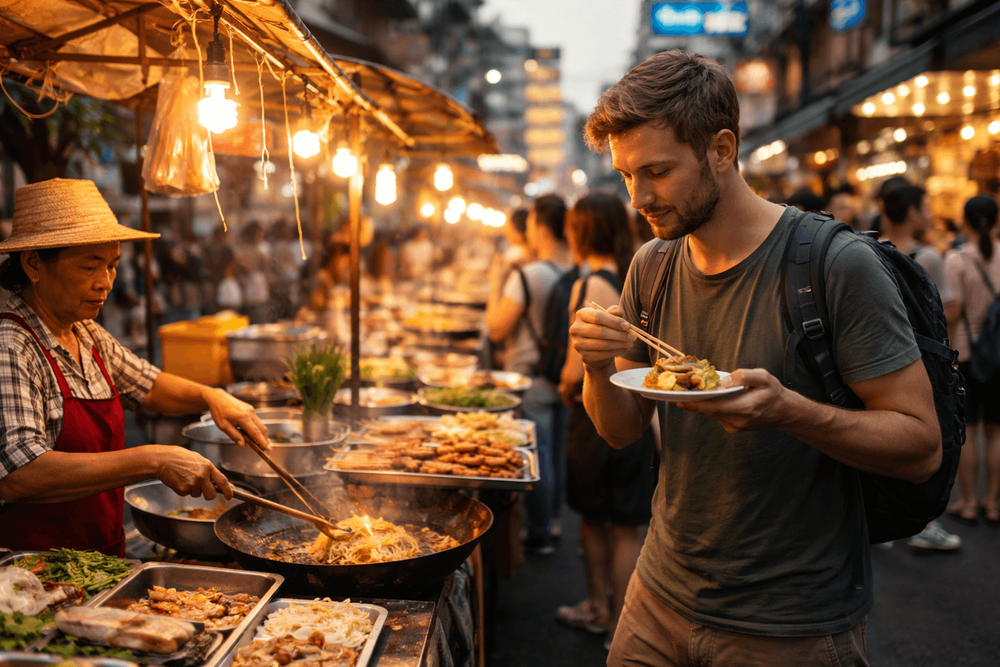
The wok hisses, a fist of garlic hits hot oil, and chili stings the back of our throat in the best possible way. We edge into a plastic stool on Rambuttri, fan ourselves with the menu that doubles as a fly-swatter, and lock eyes with a pile of glossy noodles. If Bangkok street food solo travel is your plan, we’re in it together: ducking under awnings in a sudden downpour, chasing the smell of grilling pork down a soi, and learning which auntie makes the best nam jim seafood dip on Phra Athit Road.
Bangkok street food solo travel: where to start
Bangkok rewards curiosity. As a solo traveler, you can follow your nose, hover near the hottest wok, and pivot when a queue appears out of thin air. These are the most beginner-friendly areas to eat solo without stress.
Khao San, Soi Rambuttri, and Phra Athit (Old Town/Banglamphu)
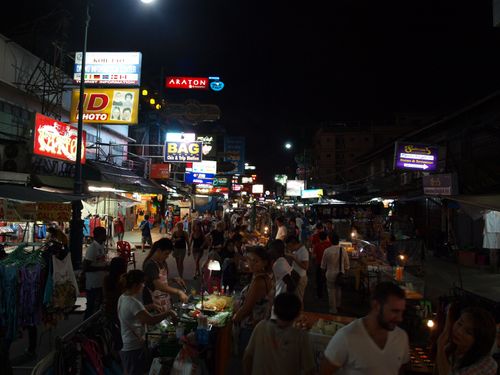
We start where many nights end: the Khao San Triangle. On Khao San Road the bass thumps and the neon never quits; it’s chaotic but handy when you land late and need a feed. Soi Rambuttri runs parallel with more trees and fewer touts; you’ll find pad thai, krapow moo (holy basil pork over rice), and mango sticky rice without much hunting. Swing down Phra Athit Road toward the river for quieter snacks—grilled squid skewers, moo ping (marinated pork sticks), and som tam (papaya salad) from pushcarts that materialize after dark.
- What to expect: Stalls change nightly; look for woks spitting fire and metal trays turning over fast. Prices run 50–90 baht for noodle or rice plates, 15–25 baht per moo ping, and 80–120 baht for mango sticky rice.
- When to go: Early evening (6–9 pm) is prime. Late-night cravings? Khao San can feed you until 2 am on weekends, sometimes later.
- Getting there: From the river, ride the Chao Phraya Express to Phra Arthit Pier (N13) and walk 10 minutes. MRT Sanam Chai or Sam Yot puts you a short taxi or tuk-tuk ride away.
Tip: If you want easy one-dish meals right by Khao San—no Thai required—scope our picks in Bangkok Street Food for Solo Travelers: Easy One-Dish Meals Near Khao San Road (/articles/bangkok-street-food-solo-travelers-one-dish-khao-san).
Chinatown (Yaowarat Chinatown Heritage Center and side sois)
Yaowarat glows like a movie set after sunset. Solo eaters do well here: counter seats, fast turnover, and menus with photos. Start on Yaowarat Road for grilled seafood, oyster omelets (hoy tod), and peppery fishball noodles; then dip into Soi Yaowarat 11 or Soi Nana (the Chinatown one) for Chinese herbal soups, dim sum, and sesame balls hot from the fryer.
- What to expect: It’s crowded, hot, and glorious. Dishes range 70–200 baht depending on seafood. Fresh pomegranate juice runs 40–60 baht a cup.
- When to go: 5–10 pm is peak; later is calmer but some stalls sell out early.
- Getting there: MRT Wat Mangkon drops you right into the action. Walk north to Yaowarat Road and follow the steam.
Wang Lang Hostel Market (across the river from the Old Town)
Wang Lang is our go-to daytime graze: a warren of alleys stacked with grilled chicken, boat noodles, khanom krok (coconut pancakes), and bags of fried pork crackling that crunch like thunder. It’s local, cheap, and friendly to indecisive solo snackers.
- What to expect: Lots of grab-and-go. Portions are snack-sized; 20–40 baht skewers, 40–60 baht noodle bowls, 10–20 baht per khanom krok set.
- When to go: Late morning to mid-afternoon, Monday–Saturday. Many stalls close by 4 pm.
- Getting there: Hop the cross-river ferry from Tha Phra Chan (near Sanam Luang) to Wang Lang Pier for pocket change (3–5 baht). Start eating immediately.
Victory Monument (boat noodles alley)
Under the BTS, khlongs (canals) feed legends. The alleys around Victory Monument still serve tiny bowls of boat noodles—dark, rich broth perfumed with star anise and beefy depth. Eating solo is easy: sit, point to beef or pork, hold up fingers for how many bowls.
- What to expect: “Small but mighty” bowls, 20–30 baht each. Five bowls will fill you; stack them like proud trophies.
- When to go: Late morning to late afternoon. Many shops close early evening.
- Getting there: BTS Victory Monument, then follow noodle posters and the smell of cinnamon broth.
Jodd Fairs (Rama 9)
A modern night market with tidy rows, neon signs, and enough seating that you won’t hover awkwardly with a tray. It’s great for solo sampling because stalls are used to tourists and post prices.
- What to expect: Trendy snacks (volcano ribs, Thai tacos), classics (krapow, pad kra pao), and fruit tea galore. Expect 60–120 baht for mains; 20–40 baht for skewers.
- When to go: Late afternoon to late night; go early to beat crowds.
- Getting there: MRT Phra Ram 9, then follow the flow of people.
Ratchawat & Sriyan (Dusit)
If you crave old-Bangkok charm, these sister markets in Dusit deliver charcoal smoke, ancient noodle pots, and curry stalls with bubbling trays. Tourists are rare; smiles are not.
- What to expect: Duck noodles, crispy pork rice, curries over rice (khao rad gaeng). 50–80 baht a plate.
- When to go: Daytime through early evening; best before dusk.
- Getting there: Short taxi ride from the Old Town; tell the driver “Talat Ratchawat” or “Sriyan Market.”
What to order when you’re flying solo
The joy of solo eating? We set the pace and never split a plate. Bangkok’s one-dish culture keeps things simple—fast, hot, and cheap.
Noodles worth chasing
- Boat noodles (kuay tiao reua): Deep, spiced broth; choose beef or pork. Start with “mai phet” (not spicy) and add chili yourself.
- Pad thai: Yes, the tourist cliché, but when the wok breathes fire—smoky, sweet, springy noodles. Ask for extra lime and peanuts on the side. 60–90 baht.
- Tom yum noodles (dry or soup): Sour, spicy, nutty; comes with minced pork, fish balls, herbs. 60–80 baht.
- Duck noodles (ba mee ped): Silky roast duck over egg noodles with greens. 60–100 baht.
How to order: Point, smile, and say your noodle type (sen lek = thin rice, sen yai = wide rice, ba mee = egg noodles). If you’re unsure, “mai phet” keeps it gentle; “phet nit noi” means “a little spicy.”
Rice plates that never fail
- Krapow moo/ gai: Chopped pork or chicken with holy basil, over rice, fried egg optional (say “kai dao”). Fiery and fast. 50–80 baht.
- Khao man gai: Poached chicken, fragrant rice, bright gingery sauce. Safe bet anywhere; 50–70 baht.
- Khao moo daeng: Red BBQ pork over rice, sweet-savory gravy, hard-boiled egg. 50–80 baht.
- Khao kha moo: Braised pork leg over rice, garlicky greens, chili-vinegar on the side. 50–80 baht.
Solo snacking strategy (skewers, fritters, buns)
- Moo ping + sticky rice: Portable breakfast, midnight snack, any time sanity saver. 15–25 baht per skewer; 10–15 baht for sticky rice bag.
- Gai yang (grilled chicken) and som tam: Order “som tam thai” if you’re chili-shy; “som tam lao” is funkier, fish-saucier.
- Gyoza/ dumplings and steamed buns: Easy to point-order; 20–40 baht each.
- Hoy tod (oyster omelet): Crispy edges, gooey center, sizzle soundtrack. 100–200 baht.
Sweets and sips
- Mango sticky rice: Peak when mango is fragrant and soft. 80–150 baht depending on size.
- Khanom krok: Mini coconut custards, two to a cup. 10–20 baht.
- Thai iced tea/coffee: Sweet enough to power a night market lap. 25–45 baht.
- Fresh fruit: Pineapple and watermelon are safest. Ask for “mai sai nam dip” (no syrup) if offered.
Budgeting your graze: If you’re calibrating by coin, we’ve mapped classic eats at 50, 100, and 200 baht in Bangkok Street Food by Budget (/articles/bangkok-street-food-by-budget-50-100-200-baht).
Practical solo street-stall strategy
Street food is fast, fun, and sanuk (joyful), but it pays to be a little tactical when you’re riding solo.
Hygiene tells we trust
- Follow the queue: Locals lining up means hot turnover and fresher ingredients.
- Heat is your friend: Stir-fried to order, grilled over charcoal, or soup boiling hard = safer. Avoid trays of pre-cut meat sitting warm.
- Watch the water: Ice from big, clear bags is common and fine. Stick to bottled water or sealed drinks.
- Utensils: Many stalls keep spoons/chopsticks in hot water. Give yours a quick wipe with a napkin if you like; a tiny hand sanitizer lives in our pocket.
Ordering like you’ve done this before
- Point-and-smile works: Hover where you can see the ingredients, then gesture to bowls or photos. Hold up fingers for quantity.
- Key phrases: “Mai phet” (not spicy), “phet nit noi” (a little spicy), “mai sai” (don’t add), “sai” (please add), “khop khun krub/ka” (thank you).
- Pay attention to the ticket system: Some busy noodle shops hand you a number; others you pay after you eat. If in doubt, ask “jaai nguen thee nai?” (where do I pay?).
Cash, QR, and tiny change
- Most street stalls are cash-first. Keep 20s, 50s, and 100s handy; don’t drop a 1,000-baht note on a 25-baht skewer.
- Some markets accept Thai QR payments, but foreign cards/apps may not play nice. ATMs and 7-Eleven are everywhere (and give you that blast of AC reprieve). A bottle of water is 10–15 baht.
Timing beats the heat
- Midday is furnace mode; day markets like Wang Lang are best late morning.
- Night markets start revving up around 5–6 pm. Go early for shorter queues, later for full sizzle.
- Rain plan: Showers blow through fast. Duck under an awning, order a soup, and enjoy the steam.
Getting around without getting fleeced
- River first: The Chao Phraya Express is cheap, breezy, and scenic. For Old Town eats, ride to Phra Arthit (N13) or Tha Chang (N9).
- BTS/MRT: For Victory Monument and Jodd Fairs, trains beat traffic every time.
- Taxis & tuk-tuks: Always ask for the meter in taxis; agree on a price in tuk-tuks before rolling. If someone offers a “special price” detour, smile and walk.
Travel day coming up? Packable snacks that won’t leak in your daypack are in our Bangkok Grab-and-Go Street Food Guide for Transit Days (/articles/bangkok-grab-and-go-street-food-guide-for-transit-days).
Safety and comfort when you’re eating alone
Bangkok is friendly, but the sensory blast can be a lot when you’re solo. Here’s how we keep it comfortable.
Crowds, seats, and your stuff
- Sit smart: Corner stools or spots with your back to a wall make it easier to watch your bowl and your bag. Loop a strap around a chair leg.
- Claim your seat: In busy shophouses, it’s normal to share tables. A nod and a “sawadee” breaks the ice.
- Music vs. peace: Khao San pumps bass; Phra Athit hums with buskers. Chinatown is shout-order loud. Pick your soundtrack.
Spice, smoke, and stomachs
- Pace the heat: Start “mai phet.” Add chili flakes, vinegar, or fish sauce from the condiment caddy to tune your bowl.
- Mind the smoke: Charcoal grills smell divine but can blast your eyes. Grab an upwind seat or take it to go and eat near a khlong.
- Hydrate: Street food is salty and sweaty. Between stalls, 7-Eleven for cold water is our default pilgrimage.
Dietary needs and allergy caution
Bangkok kitchens are fast and flexible, but communication is key.
- Vegetarian: Say “mangsawirat” (vegetarian) for no meat, but fish sauce or oyster sauce may still appear. “Jay” is the stricter Buddhist vegan style—no meat, seafood, egg, dairy, garlic, or onion. During the Vegetarian Festival (usually Oct), look for yellow “เจ” signs.
- No fish sauce: “Mai sai nam pla.” No oyster sauce: “mai sai sauce hoi nang rom.” No egg: “mai sai kai.” No peanuts: “mai sai tua-li-song” (cashew) or simply “mai sai tua” (nuts). If an allergy is severe, show a written Thai card and stick to plainly grilled items or fruit you peel yourself.
- Gluten: Soy sauce here often contains wheat. Ask for “mai sai si-iu khao/ dam” (no light/dark soy sauce). Rice noodles are typically gluten-free, but cross-contact happens.
For detailed allergy phrases, safe dishes, and how to ask for changes, lean on Bangkok Street Food for Travelers with Allergies (/articles/bangkok-street-food-allergies).
Make it memorable: tiny rituals and confident wandering
We don’t need a crowd to turn dinner into a night worth remembering. A few habits help solo eaters turn snacks into stories.
Build your own mini food tour
- Old Town loop: Start at The Giant Swing (Sao Chingcha) near Sam Yot MRT for curry puffs, amble to a pad thai shophouse off Dinso Road, then river-walk down Phra Athit for grilled squid and a cold beer by the water.
- Chinatown zig-zag: Yaowarat Road for oyster omelet, detour to a sesame bun stall on a side soi, finish with black sesame dumplings in ginger syrup on Soi Texas.
- Victory Monument tally: See how many boat noodle bowls you can responsibly stack before you need a sugarcane juice.
Learn the unspoken rules
- Don’t haggle over food: Prices are posted or fair; the smile is free.
- Return trays and bowls: It’s polite and buys you goodwill.
- Share condiments, not space: Reach, season, slide the caddy back. Everyone’s in this together.
Keep a tiny toolkit
- Napkins are scarce; a pocket pack is gold.
- Hand sanitizer for peace of mind.
- A reusable tote or container if you plan to graze as you walk.
Where to sleep to eat more
If eating is your itinerary, base yourself near Banglamphu (Soi Rambuttri/Phra Athit) for late-night grazing and river-boat breakfasts, or near an MRT/BTS stop (Wat Mangkon, Phra Ram 9, Victory Monument) for rapid-fire market hops. We usually crash close to the action so midnight moo ping and a sunrise bowl of jok (rice porridge) are always a short stroll away.
Know before you go (quick hits)
- Street food budgets: 200–300 baht fuels a generous multi-stop graze; 500 baht feels lavish.
- Heat strategy: Eat mornings and nights; nap or museum-hop at noon.
- Weekday vs. weekend: Many night markets explode on Fri–Sun; daytime markets keep steadier hours.
- Maps lie at dinner time: Stalls move. Trust your eyes and the crowd.
- Keep it fun: Sanuk is the point. If a stall feels off, bail and try the next wok.
When the last wok clangs and the auntie wipes down her cart, we’ll still be prowling for dessert—maybe a bag of luk chup (shiny mung bean sweets) or a tucked-away banana roti sizzling in butter. Tomorrow we’ll cross the river to Wang Lang before the sun turns mean, pockets jingling with small change and a new list of bowls to chase. Bangkok keeps feeding us; we’ll keep walking.
Related Hotels & Places
Khao San Road
Attractions
Bangkok’s backpacker carnival: curbside bars, live bands and DJs from 3pm–2am (midnight Sun). Street eats are cheap — pad thai 70–100 THB, mango sticky rice 60–100 THB. Come for wild people-watching; duck into Rambuttri for a calmer beer.
Rambuttri
Markets
Khao San’s calmer cousin: a tree‑shaded lane of VW van cocktail bars, open‑air foot massages, pad thai grills, and easygoing live bands. Best from sunset to 11pm; beers 80–120 THB, cocktails 150–220 THB. One block from the chaos, all the charm.
Yaowarat Chinatown Heritage Center
Attractions
Inside Wat Traimit by Chinatown Gate, this tidy museum charts Yaowarat’s Chinese roots with bilingual displays, period photos and short films. Open Tue–Sun 8:30am–4:30pm; closed Mon. Pair it with the Golden Buddha upstairs.
Wang Lang Hostel
Hotels
A 0-star hotel in Bangkok.
The Giant Swing
Attractions
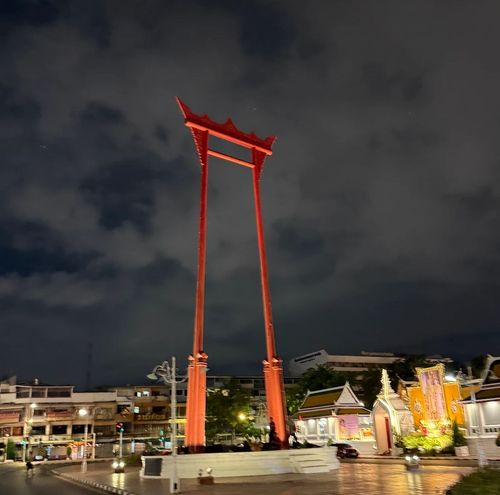
Bangkok’s scarlet Giant Swing towers outside Wat Suthat—free to visit, open all day, and best at sunset. Pair it with the temple across the street, then graze Dinso Road’s street food. A quick tuk‑tuk or 20‑minute walk from Khao San.
7-Eleven
Shops
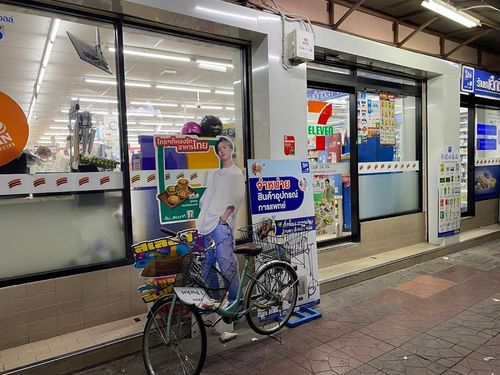
Khao San’s 24/7 reset button: ice‑cold A/C, ham‑cheese toasties, All Café iced lattes, water for 7–14 THB, and late‑night supplies from snacks to sunscreen—right by Rikka Inn.
More Khao San Road Guides
- Bangkok Street Food for Solo Travelers: Easy Dishes, Safe Ordering, and Where to Eat Near Khao San Road
- Bangkok Street Food for Solo Travelers: Easy One-Dish Meals Near Khao San Road
- Bangkok Street Food for Solo Travelers: Easy-Order Stalls, Quick Eats, and Safe Late-Night Options
- Bangkok Street Food for Heat-Safe Eating: The Best Low-Risk Dishes, Freshness Checks, and Stall Rules in Bangkok