Best Bangkok Street Food Near Temples and River Stops: Easy Eats Between Sightseeing Breaks
Temple-hop and snack like a local: the best Bangkok street food near Wat Pho, Wat Arun, and beyond—routes, respectful tips, prices, and easy river links.
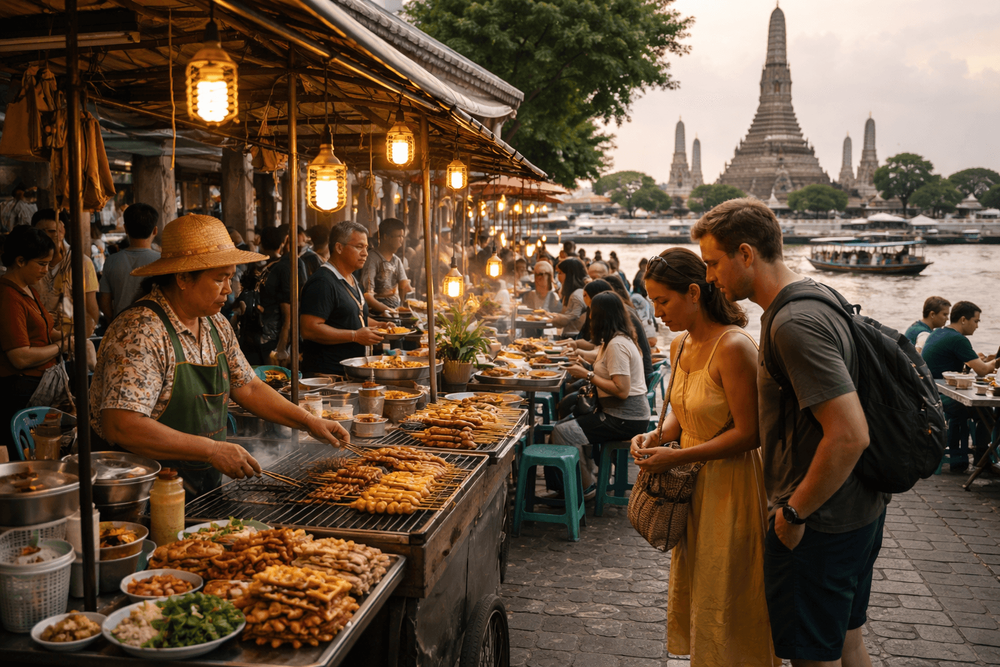
We spill out of Wat Phra Chetuphon Wimon Mangkhalaram Rajwaramahawihan into the glare, sandals clicking, incense still clinging to our shirts. A ferry horn blares from Tha Tien, a wok hisses somewhere down the soi, and a vendor fans charcoal under skewers of moo ping until the fat drips and flares. This is the sweet spot for Bangkok street food near temples: half sacred calm, half market chaos, and all appetite.
Where to Find the Best Temple-Area Street Food
Wat Pho, Wat Phra Kaew, and Tha Tien/Tha Chang Bangkok
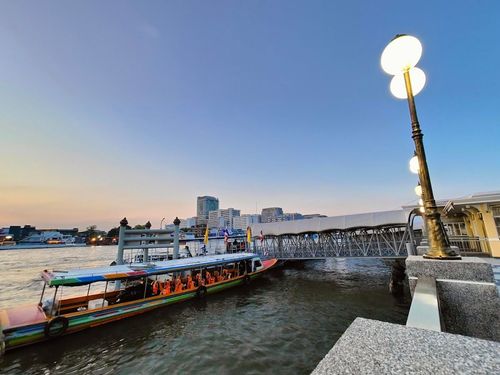
Between the reclining Buddha and the royal spires, we’ve got two river piers—Tha Tien (N8) for Wat Pho and Tha Chang (N9) for the Grand Palace—each with a maze of carts and shophouse kitchens. Morning is for soy milk and youtiao, grilled pork skewers (10–20 baht apiece), and plastic cups of olieng (Thai black coffee) sweating in the heat. Midday brings khao gaeng (rice topped with curries, usually 50–80 baht), fried chicken, and mango sticky rice.
If you’re temple-hopping this triangle, we’ve mapped favorite bites and shortcuts here: Where to Eat Between Wat Pho, the Grand Palace, and Golden Mount on a Khao San Road Temple Day.
Tip: Tha Tien’s lanes are tight. We drift with the flow, grab a skewer or a bag of fried bananas, and take it riverside where the breeze off the Chao Phraya takes the edge off the heat.
Wat Arun Ratchawararam Ratchawaramahawihan and Wang Lang Market
Cross the river from Tha Tien to Wat Arun’s pier and you can be licking coconut ice cream under those porcelain spires within minutes. From here, Wang Lang Market (by Siriraj) is a quick ferry hop south—one of our favorite lunch zones near any wat. Expect fried oysters (hoy tod), crispy pork with basil over rice, herbal sausages, and a dizzying dessert alley. Most stalls here are strongest late morning to mid-afternoon, and many wind down by dusk.
Golden Mount (Wat Saket), Loha Prasat, and Maha Chai Road
Around Wat Saket’s golden chedi and the iron spires of Loha Prasat, the old-town grid hides pockets of sanuk for your stomach: boat noodles by the khlong, chicken rice, and, along Maha Chai Road, wok thunder—pad thai, crab omelets, and sizzling seafood. Early lunch is best before the office crowd hits.
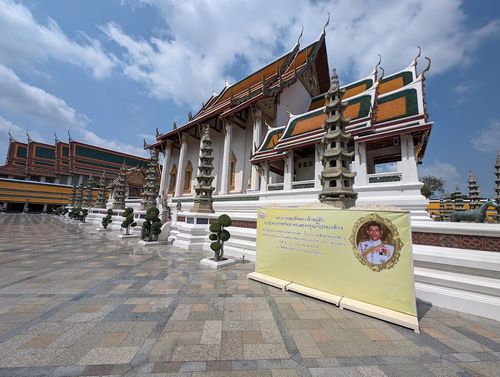
Wat Suthat Thepwararam Ratchaworamahawihan, The Giant Swing, and Old Town Alleys
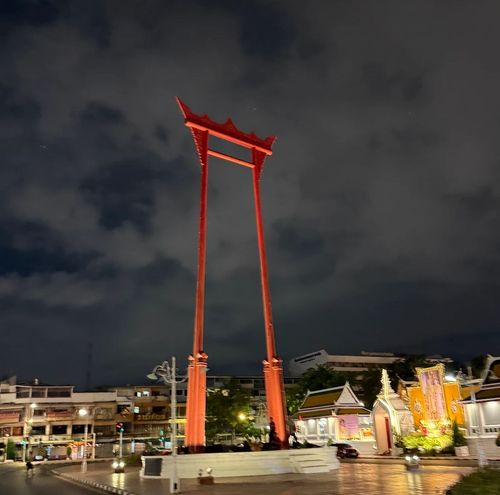
The Giant Swing marks a cluster of venerable shophouses and snack carts. We grab kanom buang (Thai crispy pancakes) hot off the griddle and duck into cool tile-floored noodle shops when the sun gets serious. Evenings bring satay smoke and the chatter of families out for roti.
Chinatown Temples: Wat Mangkon Kamalawat (Wat Leng Noei Yi) and Wat Trai Mit Witthayaram Worawihan
On the eastern edge of Yaowarat, Wat Traimit’s Golden Buddha catches the afternoon light; underground at MRT Wat Mangkon, we pop up into a neon river of snacks. This is where restraint evaporates: skewers, dim sum, peppery kuay jab (rolled rice noodles in pepper broth), and sesame-studded sweets. Daytime is calm; night is a thumping parade.
For broader neighborhood context beyond the wats, we tag in our deeper guide: Bangkok Street Food by Neighborhood: Where to Eat in Banglamphu, Old Town, Chinatown, and Riverside.
Phra Athit Road and Soi Rambuttri (Near Wat Chana Songkhram Ratchaworamahawihan)
North of Sanam Luang, we drift along Phra Athit under tamarind shade, cut into Soi Rambuttri, and—bam—plastic stools, pad kra pao, and springy noodles on all sides. It’s touristy, sure, but the turnover is fierce (good for freshness), and the mix of students and farang keeps things lively. Nights run late; midday is mellow. If we’re doing a temple-heavy day, we often base ourselves around here—easy river access plus quick walks to the old city.
Signature Temple-Side Bites We Chase
- Moo ping and sticky rice: The charcoal perfume gets us every time. Expect 10–20 baht per skewer, 5–10 baht for a fist of sticky rice.
- Boat noodles (kuay teow reua): Small, slurpable bowls laced with spice and herbs, often 20–40 baht a bowl—order two or three; they’re snack-sized on purpose.
- Khao gaeng: Point-and-choose curry over rice. We look for green curry, pad prik king (dry red curry with long beans), and caramel-rich moo wan (sweet pork). 40–70 baht depending on how many toppings.
- Pad thai & pad see ew: Near Mahachai Road and around Tha Chang, you’ll hear the wok sing. 60–100 baht, more if you add big shrimp.
- Hoy tod and oyster omelets: Crisp edges, soft center, a squeeze of chili vinegar. 80–140 baht depending on oysters vs. mussels.
- Khanom krok: Coconut custard cups, charred on the edges, molten within. A tray is usually 20–30 baht.
- Roti mataba: Flaky roti with savory curry filling, or go sweet with banana and condensed milk. 40–80 baht.
- Fresh fruit and coconut ice cream: Temple days are hot; fruit cups on ice are 20–40 baht, ice cream 30–60 baht.
Chasing something specific? Our cravings cheat sheet helps narrow it fast: Bangkok Street Food for Specific Cravings: Best Places for Noodles, Grilled Meat, Seafood, and Curries.
Bangkok Street Food Near Temples: Respect and Rhythm
Temple days are a dance: we bow to the Buddha, then bow to the wok. A few ground rules keep it smooth.
- Dress and demeanor: Shoulders and knees covered for entering temple halls; hats and sunglasses off inside. We save the street snacks for outside the sacred areas—no munching in ubosot or viharn halls.
- Timing: Avoid peak prayer moments (usually early morning and late afternoon). If the bells ring and you see congregants filing in, we step out quietly.
- Monks: Women must not touch monks; everyone keeps a respectful distance. Don’t offer food directly to monks unless it’s during the alms ritual and you know the etiquette.
- Shoes: Off when entering halls; on the street is fine. Don’t step on door thresholds—locals consider it bad form.
- Trash and tidiness: Most vendors have a bin or a bag. We pack out what we can and skip dripping sauces across temple courtyards.
- Alcohol and vaping: Not near temple grounds. Save it for later on Phra Athit or after you’ve crossed the river.
How We Pick Great Vendors Near the Wats
Even in a sea of sizzling griddles, some stalls call louder. Here’s what we scan for while we drift down a soi.
- Turnover and queue: A short, fast-moving line beats a long, stagnant one. High turnover means the pork skewers aren’t sunbathing.
- Heat and timing: Soups simmering, noodles cooked to order, curries piping hot. We avoid lukewarm anything, especially late afternoon.
- Oil and grills: Clear, fresh oil and a clean wok edge; grills wiped and coals glowing, not caked in sludge.
- Ice and fruit: Fruit should sit on ice, not in a warm tray. Shaved ice from sealed sacks is the norm; it’s widely considered safe.
- Water and washing: A hand-wash setup, tongs for ice, and separate boards for raw meats are green flags.
- Price boards: Menus with prices posted are common around temples—expect 40–80 baht mains, 10–30 baht snacks. If the quote feels sky-high, we smile, wai, and walk.
- “Clean Food, Good Taste” signs: Many stalls display this Thai Ministry of Health program sticker. Not a guarantee, but a reassuring nudge.
- Payment: Cash is still king. Some places accept PromptPay QR, but we keep small bills ready to avoid change drama.
Getting There: Boats, MRT, and Footpaths
Linking wats with eats is easiest when we stick to the river and a couple of key MRT stops.
- Chao Phraya Express Boat: BTS Saphan Taksin to the boat, then hop off at Tha Chang (N9) for the Grand Palace, Tha Tien (N8) for Wat Pho, Wat Arun Pier for Wat Arun, Phra Arthit (N13) for Khao San/Phra Athit, and Wang Lang for the market. Pier signage is clear; rides run every few minutes in daytime.
- MRT Sanam Chai: Pops you right by the Museum of Siam and a short walk to Wat Pho and Tha Tien.
- MRT Wat Mangkon: For Chinatown’s temple cluster and the night market surge.
- Walking: Old Town blocks look close but the sun is savage. We plan shady routes along Phra Athit and the riverfront, duck into 7-Eleven when the AC siren calls, and refill water often.
If you prefer to pin your eats to stations and piers, this overview helps: Bangkok Street Food Near Public Transit: Easy Eats by MRT, BTS, and River Boat.
Simple Routes: Temples + Eats You Can Actually Walk
Route 1: Morning Wat Pho, Ferry Flip, Wang Lang Lunch
- Start: 8:00–8:30 at Wat Pho to beat the tour groups. After your sawadee to the Reclining Buddha, slip out the south gate to Tha Tien lanes.
- Snack stop: Moo ping, fresh fruit, and a bag of fried bananas. 50–80 baht total if we keep it light.
- Ferry: Cross to Wat Arun (3–5 baht, coins handy). Gawk, climb, sip coconut ice cream.
- Lunch: Hop the local ferry to Wang Lang Market. Work through hoy tod, khao moo daeng (red pork on rice), and a cup of grass jelly. Figure 120–200 baht depending on appetite.
- Exit: Boat up to Phra Arthit (N13) for coffee by the river and an easy stroll back through the shade.
Why we love it: Zero tuk-tuk haggling, maximum khlong breeze, and constant snacks.
Route 2: Golden Mount Sunrise, Loha Prasat, Maha Chai Wok Thunder
- Start: Climb Wat Saket early for a gold-dipped skyline and temple bells for company.
- Mid-morning: Slip to a canal-side stall for boat noodles (20–40 baht per bowl). Two bowls each is our happy place.
- Culture hit: Walk to Loha Prasat and the quiet temple grounds nearby.
- Lunch: Cut down to Maha Chai Road. Find a pad thai stall where the wok tosses in tight arcs and the queue moves. 60–120 baht depending on protein.
- Optional: If we’re flagging, we drift to a nearby café for a blast of AC and a lime soda.
Route 3: Wat Suthat and Giant Swing, Old-Town Sweets
- Start: Wat Suthat’s elegant murals and a cool, dim hall. Keep voices soft, hats off.
- Snack: Kanom buang hot off the dome griddle; then roti with curry dip.
- Stroll: Wander lanes toward Democracy Monument, picking up khanom krok from a cart that sells out by lunch.
- Evening option: Street grills reappear with skewers and seafood; we grab a stool and let the night settle.
Route 4: Wat Traimit + Wat Mangkon, Chinatown After Dark
- Start: Golden Buddha at Wat Traimit in late afternoon.
- MRT one stop: Pop to Wat Mangkon station and rise into Yaowarat as the neon flickers on.
- Eat the street: Peppery kuay jab (50–80 baht), grilled squid, sesame balls, and sugarcane juice. We keep small change ready and follow the densest steam.
- Wrap: A final snack near the shrine gates, then back to the MRT before your feet stage a rebellion.
Route 5: Sanam Luang Sunset, Phra Athit and Rambuttri Late Bites
- Start: The grassy sweep of Sanam Luang at sunset with the Grand Palace glowing.
- Walk: Scoot down Phra Athit for river air, then pivot into Soi Rambuttri.
- Eat: Pad kra pao on rice (50–80 baht), tom yum noodles (60–90 baht), mango sticky rice to-go. Music thumps from Khao San; we post up where the fan actually points at the tables.
Know Before You Go: Heat, Crowds, and Little Frictions
- Heat management: We plan our heaviest temple time early, then eat under fans or by the river. Electrolyte drinks at 7-Eleven save lives (and hangovers).
- Crowds and tour buses: Grand Palace and Wat Pho erupt by mid-morning. We pivot to food either before 10:00 or after 13:30.
- Tuk-tuk “deals”: Around big wats, drivers push “special tours.” If we need a ride, we ask for the meter in a taxi or agree a sane fare in advance in a tuk-tuk. Otherwise, we boat or walk.
- Dress stash: A light scarf or sarong in the daypack solves shoulder-knee dramas at temple doors.
- Hands and sanitizer: We’re not germophobes, but temple railings and cash change hands. A quick squeeze before you grab that skewer keeps the belly happy.
Where We Base Ourselves for Temple + Street Food Days
When we’re stacking wats and snack runs, we like staying near Phra Athit or Soi Rambuttri—easy on foot to the old city and steps from the river boats. If we’re planning a Chinatown-heavy night, we crash closer to MRT Wat Mangkon or along the river near Tha Tien to cut commute time. Pools are a perk after a scorcher; we’ll happily trade a tuk-tuk ride for a post-temple plunge.
Final Bite
Bangkok rewards momentum. String two or three wats along the river, listen for the sizzle as you drift into the next soi, and let the city feed you between bells. If you spot us at Wang Lang with chili on our shirts, say sawadee and pull up a plastic stool—we’ll save you a spoon.
Related Hotels & Places
Wat Phra Chetuphon Wimon Mangkhalaram Rajwaramahawihan
Temples
Tha Chang Bangkok
Bars
Bar on Khao San Road.
Wat Arun Ratchawararam Ratchawaramahawihan
Temples
The Giant Swing
Attractions
Bangkok’s scarlet Giant Swing towers outside Wat Suthat—free to visit, open all day, and best at sunset. Pair it with the temple across the street, then graze Dinso Road’s street food. A quick tuk‑tuk or 20‑minute walk from Khao San.
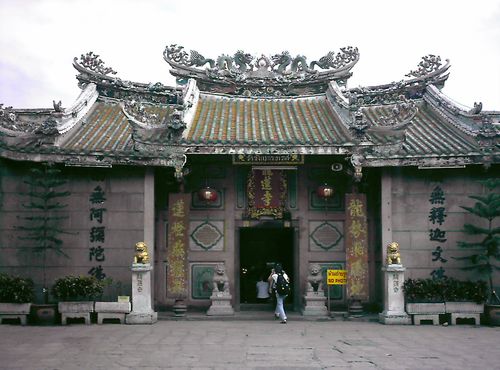
Wat Mangkon Kamalawat (Wat Leng Noei Yi)
Temples
Chinatown’s grand Chinese Buddhist temple—smoky incense, red lanterns, and gilded altars. Free entry, donations welcome. Best early morning; electric during Lunar New Year and the Vegetarian Festival. Steps from MRT Wat Mangkon, 8am–5pm daily.
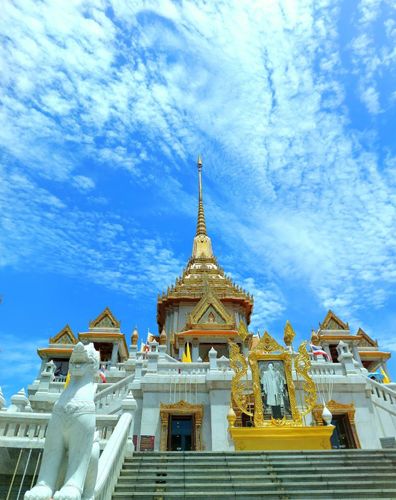
Wat Trai Mit Witthayaram Worawihan
Temples
Chinatown’s showstopper: a 5.5‑ton, 3‑meter solid‑gold Buddha in a marble shrine. Open daily 8am–5pm; tickets around 100 THB. Go early for quiet, then wander Yaowarat from Odeon Circle or hop off at Hua Lamphong MRT.
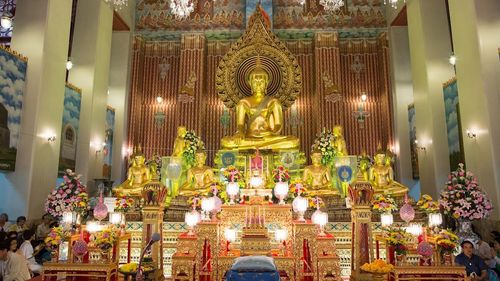
Wat Chana Songkhram Ratchaworamahawihan
Temples
18th‑century royal temple steps from Khao San. Slip into quiet courtyards and an opulent viharn with a gilded Buddha. Opens 7:30am daily (Mon to 6:30pm). Enter on Chakrabongse Rd by Phra Athit; dress modestly.
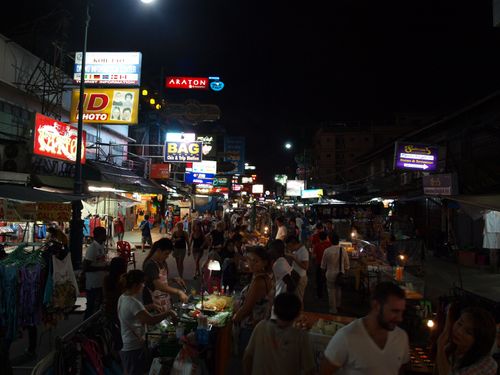
Khao San Road
Attractions
Bangkok’s backpacker carnival: curbside bars, live bands and DJs from 3pm–2am (midnight Sun). Street eats are cheap — pad thai 70–100 THB, mango sticky rice 60–100 THB. Come for wild people-watching; duck into Rambuttri for a calmer beer.
Wat Suthat Thepwararam Ratchaworamahawihan
Temples
Serene counterpart to the Giant Swing: a soaring hall, Sukhothai‑era 8 m bronze Buddha, and some of Bangkok’s finest murals. An easy 15‑minute walk from Khao San; open daily till 8pm for golden‑hour visits.
Wat Phra Kaew
Temples
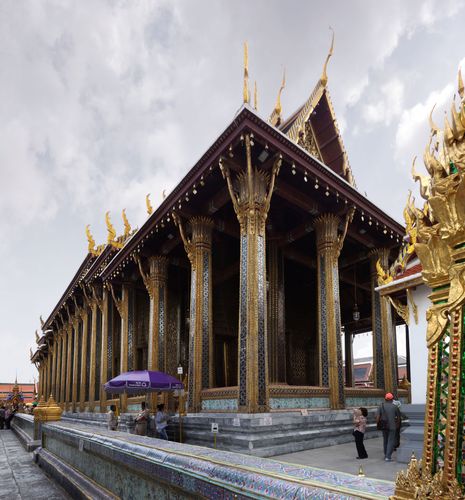
Bangkok’s holiest temple inside the Grand Palace. Go early (8:30am–3:30pm). Buy the 500 THB ticket at Na Phra Lan Rd gate. Dress code enforced. Marvel at Ramakien murals and the tiny Emerald Buddha whose robes change with the seasons. 10–15 minutes’ walk from Khao San.
More Khao San Road Guides
- Best Bangkok Street Food After Sightseeing: Easy Lunch Stops Between the Grand Palace, Wat Pho, and Khao San Road
- Bangkok Street Food Around Transit Hubs: Easy Eats Near MRT, BTS, and River Ferry Stops
- Bangkok Street Food at Tourist Landmarks: What to Eat Near the Grand Palace, Wat Pho, and Along the River
- Bangkok Street Food Near Ferry Piers: Easy Local Eats by Phra Athit, Tha Chang, and the Chao Phraya River