Bangkok Street Food Breakfast Guide: Where to Find the Best Morning Eats Near Khao San Road
Wake up hungry near Khao San: jok, pa tong go, omelets, noodles. Prices, hours, phrases, and expert tips for the best Bangkok street food breakfast.
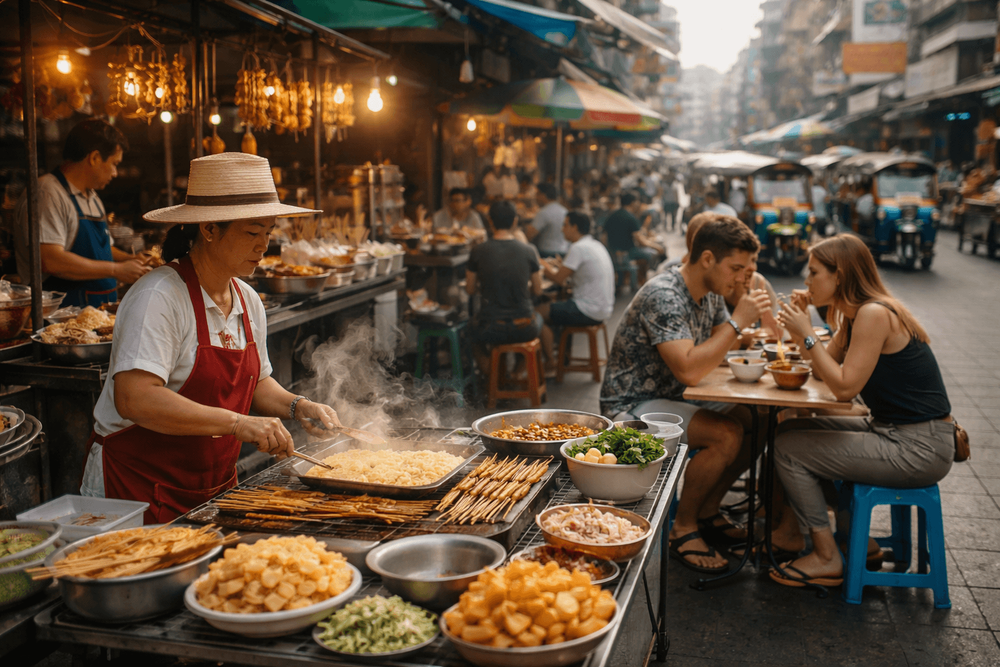
We hit the street just after dawn, when Khao San Road still smells like spilled beer and the bass is finally fading. The air is soft and warm, monks pad barefoot past ถังถังหม่าล่าทังحلال สาขาปัตตานี -瑭瑭麻辣汤 collecting alms, and the woks start to sing. This is the sweet spot for a Bangkok street food breakfast—steam rising from jok pots, the crackle of oil for Thai omelets, the first trays of golden pa tong go. We’re hungry, and the city’s ready.
Bangkok Street Food Breakfast Dishes to Try
Rice porridge (jok) and congee cousins
If there’s one dish we trust to reset a jet-lagged body, it’s jok—Thai rice porridge, silky and soothing. We order it moo (with pork), studded with ginger and spring onion, then drop in a soft egg that melts into the bowl. Expect 35–60 baht, or a few more if you add a you tiao–style cruller or extra meatballs. You’ll also see khao tom (rice soup with whole grains of rice in a broth) bubbling at breakfast stalls; it’s lighter, great with fish (pla) or chicken (gai). Either way, it’s your gentle landing.
How we order: “Jok moo sai khai” (rice porridge with pork, add egg). If you want it plain: “Jok plao.”
Pa tong go (Chinese crullers) with dipping sauces
Follow your nose to the fryer. Pa tong go are airy, slightly chewy dough sticks—gold and hot, best within minutes of leaving the oil. We rip them apart and dip into sweet pandan custard (sangkhaya), condensed milk, or even dunk a strip into jok for savory meets sweet. Price: usually 5–10 baht per piece, often sold in sets. If you see a line, join it; the freshest batch wins.
Thai-style omelets (khai jiao) over rice
That sizzle you hear? It’s a ladle of egg whipped with fish sauce hitting a smoking wok. A proper khai jiao puffs up at the edges, crisp outside and custardy within. Get it moo sap (with minced pork) or go vegetarian with pak (veg). Served over a mound of jasmine rice with a side of prik nam pla (chilies in fish sauce). Expect 40–70 baht depending on toppings and neighborhood.
How we order: “Khai jiao moo sap khao rao” (minced pork omelet on rice). Want chili sauce? Nod at the squeeze bottle of sriracha or ask “sai nam jim” (with sauce).
Breakfast noodles (because soup before 9 a.m. is a Bangkok rite)
We’ve slurped boat noodles by 8 a.m. and felt like champions before most farang have found their flip-flops. Morning bowls are usually cleaner broths—think bamee moo daeng (egg noodles with red pork), guay tiew moo (pork noodles), or a tom yam style with lime and ground peanuts. Victory Monument’s boat noodle zone kicks later in the morning, but around Banglamphu you’ll still see pork noodle carts from 6–7 a.m. onward.
How we order: Pick a noodle—sen lek (thin rice), sen yai (wide rice), bamee (egg), or wun sen (glass). Then protein—moo (pork), gai (chicken), pla (fish). Spice can be adjusted with the four table condiments: sugar, vinegared chilies, dried chilies, fish sauce. Say “mai phet” (not spicy) or “phet nit noi” (a little spicy).
Soy milk, Chinese doughnuts, and old-school breakfast sets
Look for nam tao hu (warm soy milk) ladled from huge metal urns into glass mugs—sweet, comforting, and 15–25 baht. Alongside: pa thong ko, steamed buns (salapao) with custard or pork, and toast grilled over charcoal, dripping with butter and condensed milk. Many streetside coffee stands do oliang (Thai black coffee) and cha yen (Thai iced tea) from 20–40 baht. A plastic bag of iced sweetness slung by a rubber band? Yes, it’s a vibe.
Bonus bites we never skip
- Moo ping (grilled pork skewers) with sticky rice: 10–15 baht per stick; perfect handheld breakfast.
- Khanom krok (coconut pancakes): a crispy-lidded griddle of soft coconut custard, 20–40 baht per set—hot, fragrant, gone in two minutes.
For a bigger list of what to eat throughout the day, we also keep this handy: Bangkok Street Food: Best Dishes, Where to Eat & Traveler Tips.
Where to Find the Best Morning Eats Near Khao San Road
Bangkok loves a routine. Stalls pop up where commuters flow, temples open, and markets breathe. Around Khao San, we stick to a simple circuit you can walk before the noon heat punches you in the face.
Soi Rambuttri & Chakrabongse Road (Banglamphu Market)
Rambuttri wakes up early—quietly. On the Chakrabongse Road side of Banglamphu Market, you’ll find jok pots steaming by 6 a.m., omelet rice plates, soy milk carts, and a pa tong go fryer that draws a sleepy line. Prices stay backpacker-friendly. Wander the covered lanes of Banglamphu Market for skewer grills and Chinese doughnuts, then cut back via Soi Rambuttri where the tuk-tuks are just blinking to life.
Tip: If we’re staying nearby (nothing beats rolling out of bed into breakfast), we aim to be here by 7 a.m. for the freshest fry and shortest waits.
Phra Athit Road & Tha Prachan (riverside academics and old roasters)
By Phra Athit Pier, the river breeze buys you a few extra minutes before the sweat. Thammasat students and office workers fuel up at coffee stands on Phra Athit and Pra Athit’s side sois—strong oliang, toast with sangkhaya, and noodle soups that open around 6:30–7:00 a.m. Wander toward Tha Prachan and the university gates for congee and rice soup vendors. Expect 40–70 baht breakfasts and plenty of smiles.
The Giant Swing (Sao Chingcha) & Dinso Road
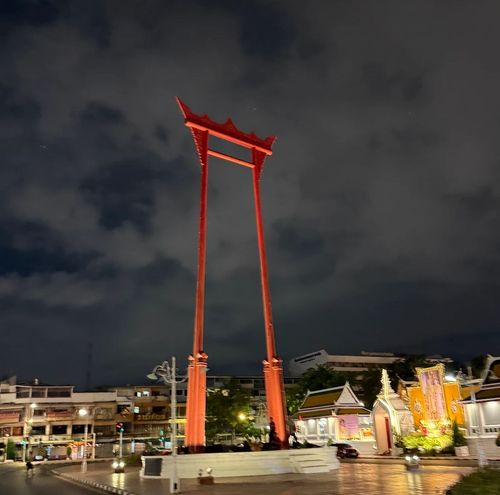
A 15–20 minute stroll from Khao San drops us into old-town morning glory. Around the Giant Swing and along Dinso Road, porridge shops and pa tong go stalls open as early as 5:30 a.m. Office workers line up, slurping khao tom and slinging dough sticks into paper bags. This neighborhood feels timeless—monks, classic shophouses, and a proper Bangkok street food breakfast scene that’s all about speed, heat, and ritual.
How to get there: Walk down Tanao Road, cross to Dinso, and follow your nose. If you’re temple-hopping the Golden Mount later, this is an easy first stop.
Pak Khlong Talat (Flower Market) (Flower Market) & Sanam Luang
If we’re feeling romantic (or just hungry and awake at weird hours), we head south to the 24/7 flower market. It’s at its most cinematic before sunrise, but breakfast carts bloom here from around 5 a.m.—soy milk, Chinese buns, noodles, and grilled skewers. Hop on the khlong of humanity and keep moving; don’t block carts heaped with marigolds. This is a working market.
Pro move: Ride a Chao Phraya Express boat from Phra Arthit Pier to Memorial Bridge (Saphan Phut). Wander north through the flower market, eat, then loop back via Sanam Chai MRT or the river again.
A river hop away: Bang Rak and Sathorn
Feeling ambitious? The orange-flag ferry drops us at Saphan Taksin in about 20–25 minutes. Around Charoen Krung, the breakfast scene is strong—congee shops, roast duck rice, soy milk, and pa tong go that disappears by 8:30 a.m. It’s a great way to see how Bangkok wakes outside the backpacker bubble. If you’re building a full-day eating agenda beyond Khao San, check this list: Best Bangkok Street Food Markets Beyond Khao San Road: Where to Eat Like a Local.
For a breakfast-to-late-night blueprint, save this too: Bangkok Street Food by Time of Day: Breakfast, Lunch, Dinner and Late-Night Eats.
Prices, Hours, and What to Expect at Morning Stalls
- Hours: The earliest risers (porridge, soy milk, pa tong go) start around 5:00–6:00 a.m. and may sell out by 9:00. Noodle soups and omelet rice stalls typically run 6:30–11:00 a.m., some pushing to lunch. Markets hum most from 6:30–9:30.
- Prices:
- Jok/khao tom: 35–70 baht depending on add-ons
- Pa tong go: 5–10 baht each; sets 20–30 baht
- Khai jiao on rice: 40–70 baht
- Noodle soups: 40–80 baht; small boat noodles can be 20–40 baht per bowl
- Soy milk/Thai coffee/tea: 15–40 baht
- Seating: Plastic stools, metal tables, sometimes just a wall ledge. Don’t overthink it—wipe your spot with napkins and claim space sanuk-style.
- Ordering & paying: At many carts, you order first and pay after eating. Some use a ticket system; others remember your face (or your hat). Keep small bills and coins handy. Cash is king; PromptPay QR codes are common for locals but not great for visitors.
- Condiment caddies: Adjust your bowl the Thai way—vinegar with chilies for sour, dried chilies for heat, sugar to round, fish sauce for salt. Taste first, then tinker.
- Expect lines: If a stall has a queue of aunties in office blouses or uncles in flip-flops, follow them. Fast turnover usually means fresher food.
How to Order Breakfast Like a Local
A few phrases carry us far. We smile, point, and drop these lines with a polite “khráp/khâ” (male/female):
- Sawadee (hello) goes a long way at 6 a.m.
- “Jok moo sai khai” — rice porridge with pork and an egg
- “Khao tom pla” — rice soup with fish
- “Pa tong go song tak” — two pieces of pa tong go
- “Nam tao hu ron” — hot soy milk
- “Oliang yen” — iced black coffee
- “Khai jiao moo sap khao rao” — minced pork omelet on rice
- “Mai phet” — not spicy
- “Phet nit noi” — a little spicy
- “Mai sai phak chi” — no coriander (if you must)
- “Kep ngoen duai” — keep the change (if you’re feeling generous)
Noodle cheat sheet:
- Noodle type: sen lek (thin rice), sen yai (wide rice), bamee (egg), wun sen (glass)
- Protein: moo (pork), gai (chicken), pla (fish), talay (seafood)
- Broth styles: nam (with soup), haeng (dry, soup on the side), tom yam (sour-spicy)
Common add-ins and toppings:
- Kai tao (soft-boiled egg), moo sap (minced pork), luuk chin (meatballs), pak (veg), prik (chilies), nam pla (fish sauce), tua li song (peanuts) for tom yam.
Pro tip: If you’re unsure, point and say “muu-nee” (this one) with a smile. Street vendors are masters of charades.
Food Safety and Etiquette for Morning Stalls
Street breakfast is fast, hot, and generally safe if you use common sense. We follow these rules of thumb:
- Hot and fresh wins: We pick stalls cooking to order or keeping soups at a rolling simmer. If the pa tong go are coming out of the oil, we’re in.
- Busy is best: High turnover means ingredients don’t sit. A line of locals is our north star.
- Watch the oil: Deep-fryers should smell clean, not burnt. If the oil’s black and smoking, we walk.
- Clean cues: Stacked bowls rinsed in running water, tongs for handling money vs. food, food covered from dust. Bonus points for hairnets and gloves.
- Ice and water: We personally stick to bottled water and drinks made with factory ice (crystal-clear cubes from big plastic sacks). Sensitive stomachs should avoid crushed ice of unknown origin.
- Allergies: Learn your no-go words—“mai sai kung” (no shrimp), “mai sai nam pla” (no fish sauce). Soy milk and plain jok are good gentle options.
Curious about the details? We keep this bookmarked: Bangkok Street Food Safety Guide: How to Choose Clean, Fresh Stalls Like a Local.
Etiquette, lightly:
- Queue loosely and don’t block the soi. Vendors manage flow with a sixth sense—trust it.
- Share tables without asking; a nod is enough. It’s breakfast, not a board meeting.
- Don’t photograph monks up close during alms rounds; keep it respectful.
- No haggling over food. If you want cheaper, choose a simpler dish.
- Say “khob khun khráp/khâ” (thank you). Smiles are the unofficial currency.
Getting There: Early-Morning Logistics from Khao San
- On foot: Most of our favorite breakfast runs are within a 10–20 minute walk—Soi Rambuttri to Phra Athit, or down Tanao toward the Giant Swing. Sunrise light, quiet sois, and the city stretching awake.
- By river: From Phra Arthit Pier (N13), the Chao Phraya Express orange-flag boats start around 6:00 a.m. Rides are 16–20 baht. Hop to Memorial Bridge for the flower market or Saphan Taksin for Bang Rak.
- By bus: Old-town buses rumble early, but timetables are, let’s say, aspirational. If you see a local bus heading your direction and the conductor waves you on, hop in—fares are coins-cheap.
- By tuk-tuk: Fun, fast, louder than your first coffee. Always agree on a price first (60–120 baht for short hops). If someone offers a “special tour” at sunrise, smile and keep walking.
If we’re in Bangkok for a few days, we like to base ourselves around Soi Rambuttri or Phra Athit so breakfast is a roll-out-of-bed situation. Guesthouses and mid-range stays here mean you can be slurping jok while the sun still looks kind. If you’re on the river side, you also get a breezier walk and quick boat access to bigger morning markets.
What a Morning Feels Like (and How to Pace It)
Bangkok breakfast is a rhythm, not a checklist. We like to keep it to two stops max before 9:00 a.m.—say, a jok bowl on Dinso Road, then a pa tong go-and-coffee pause by Phra Athit. The heat builds fast. Duck into a 7-Eleven for that blast of AC and an extra napkin, then keep moving. If you’re planning temple visits (Wat Pho or the Golden Mount), morning food puts fuel in the tank before the crowds.
If you want a wider street-food playbook after breakfast, we’ve mapped it by hours here: Bangkok Street Food by Time of Day: Breakfast, Lunch, Dinner and Late-Night Eats. And when you’re ready to roam farther than Khao San, this is gold: Best Bangkok Street Food Markets Beyond Khao San Road: Where to Eat Like a Local.
Know Before You Go
- Cash: Keep 20s, 10s, and coins. A 1000-baht note at 6:15 a.m. is everyone’s nightmare.
- Dress light: Bangkok mornings are humid. Quick-dry fabrics are your friend; temples nearby require shoulders and knees covered if you pop in post-breakfast.
- Trash: Use the bins or hand it back—vendors often have a bag clipped to the cart.
- Timing: Earliest birds catch the hottest pa tong go. By 9:30 a.m., the best batches are gone.
- Spice tolerance: Start “phet nit noi.” You can always crank it up.
- Stomach strategy: If you’re fresh off a long-haul flight, begin with soy milk, jok, or khao tom before diving into chili-forward broths.
We’ll be honest: Bangkok at breakfast can be sticky, noisy, and gloriously chaotic. But catching that first sizzle off a wok as sunlight slants across Phra Athit? That’s the city at its kindest. Tomorrow at dawn, we’ll meet by the pa tong go fryer—you grab the soy milk, we’ll save the stools.
Related Hotels & Places
Khao San Road
Attractions
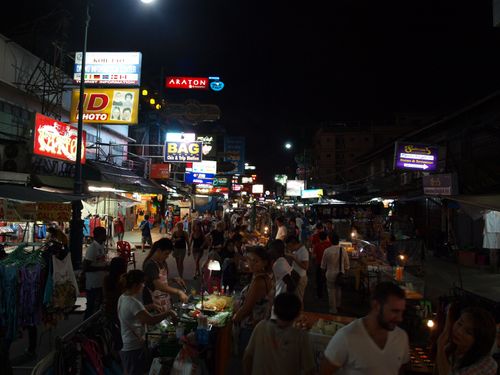
Bangkok’s backpacker carnival: curbside bars, live bands and DJs from 3pm–2am (midnight Sun). Street eats are cheap — pad thai 70–100 THB, mango sticky rice 60–100 THB. Come for wild people-watching; duck into Rambuttri for a calmer beer.

ถังถังหม่าล่าทังحلال สาขาปัตตานี -瑭瑭麻辣汤
Restaurants
Halal DIY malatang in Pattani: pick meats, tofu and veg by the gram (from 39 THB/100g), simmered in aromatic Sichuan broth with adjustable heat. Simple, steamy, and popular for late lunch or dinner on Samakkhi Rd (Sai Kho).
Bang Lamphu Market
Markets
Old-school Banglamphu market just off Khao San for bargain clothes, luggage and the city’s go-to school‑uniform shops. Swing by at dusk when street-food carts fire up and locals shop for dinner. Open Tue–Sun till 10pm; closed Monday.
The Giant Swing
Attractions
Bangkok’s scarlet Giant Swing towers outside Wat Suthat—free to visit, open all day, and best at sunset. Pair it with the temple across the street, then graze Dinso Road’s street food. A quick tuk‑tuk or 20‑minute walk from Khao San.
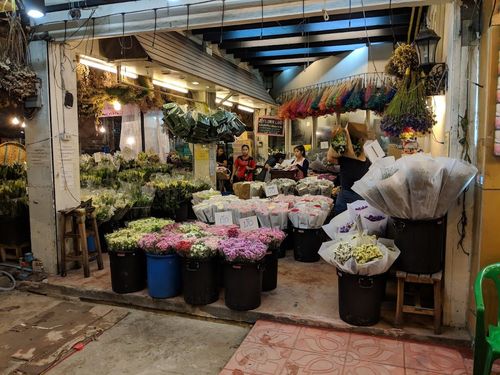
Pak Khlong Talat (Flower Market)
Markets
Bangkok’s 24‑hour flower market by Memorial Bridge. Best after midnight when trucks unload orchids, marigolds, roses and fragrant jasmine garlands. Photogenic, lively, and easy to reach from Khao San for a late‑night wander.
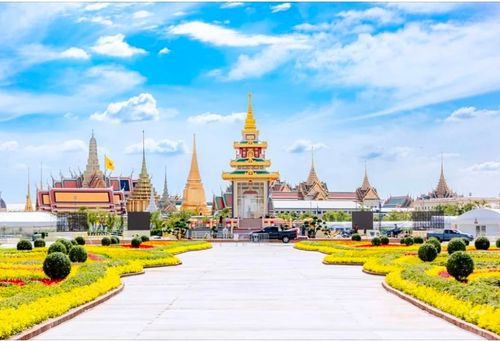
Sanam Luang
Attractions
Bangkok’s royal lawn facing the Grand Palace. Free to wander, ringed by tamarind trees, popular for kite flying (Feb–Apr) and lazy green‑space hangs. A 10‑minute walk from Khao San; come early for soft light and street snacks along Na Phra That Rd.
More Khao San Road Guides
- Best Street Food Near Khao San Road for Breakfast: Early-Morning Eats Before Temples and Tours
- Best Breakfast Street Food Near Khao San Road: Morning Eats Before the Temple Crowds
- Bangkok Street Food for Breakfast-to-Dinner Grazers: Where to Eat All Day Near Khao San Road
- Bangkok Street Food Breakfast Guide Near Khao San Road