
Bangkok Street Food for Adventurous Eaters: Offal, Skewers, and Regional Dishes Near Khao San Road
Chase Bangkok’s boldest street food near Khao San—offal, insects, fermented flavors—and learn where to go, what to order, and how to eat adventurous, safely.
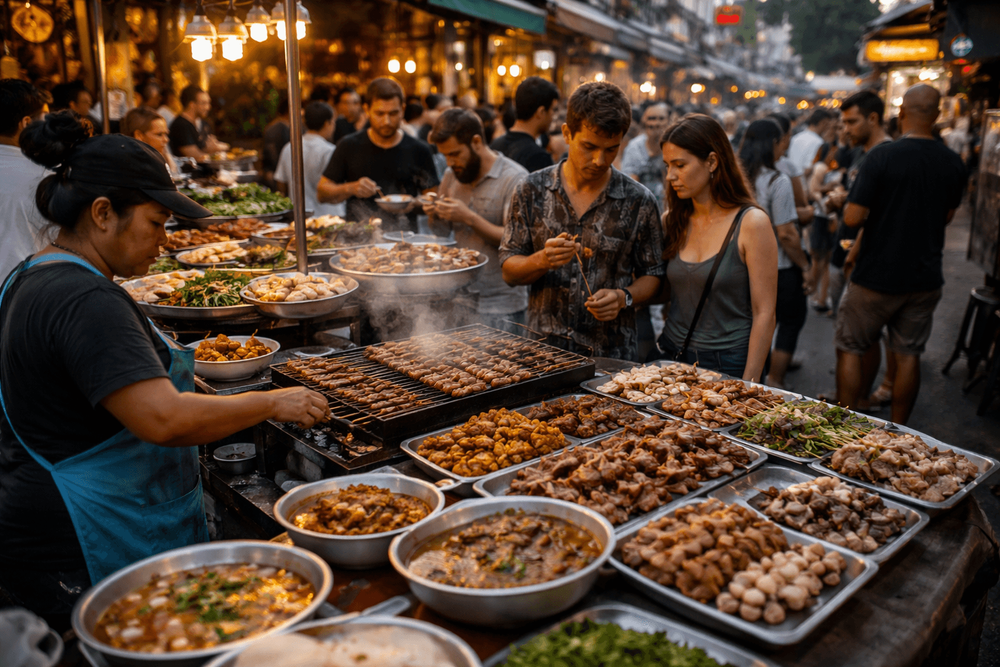
We’re shoulder-to-shoulder on Rambuttri, the wok smoke is sweet with palm sugar and garlic, and there’s a cart in front of us skewering something that looks suspiciously like chicken hearts. Bass thumps from a Khao San Road bar; we duck past a durian cart (hello, sweet rot) and into a lane where the night is just heating up. If you’re after bangkok street food adventurous eats, this is the kind of Bangkok we live for—cheap, loud, a little chaotic, and packed with bold flavors you won’t find on the tourist pad thai circuit.
Why Bangkok is a paradise for bold appetites
- Diversity on a plate: Bangkok is a mash-up of Thai regions—Isan, Northern, Southern—plus Chinese-Thai, Muslim, and Lao influences. That means fermented, fiery, and funky are always within sniffing distance.
- Affordability = freedom to experiment: Most street snacks land well under 100 THB (confirm locally), so we can say "gin len"—eat for fun—without sweating the bill.
- Late-night energy: After midnight, the city gets hungry. Near Khao San, Banglamphu, and Yaowarat Chinatown Heritage Center, grills hiss, mortars pound papaya salad, and soup pots burble until the first skytrain shuttles awake.
- A culture of snacking: Thais don’t wait for dinner; they graze. That means constant turnover at stalls—a good sign for freshness—and new temptations every few meters.
Bangkok street food adventurous: what to try when you want the wild stuff
We’ll skip the Insta scorpions priced for farang theatrics and head for dishes locals actually crave. Bring an open mind and a bottle of water; we’ll find the sanuk (fun) in the spice.
Insects done right (maeng)
- Crickets (jing reed), silk worms (non mai), grasshoppers (takatan), and water bugs (maeng da): Sprinkled with white pepper and soy, they’re salty, crunchy bar snacks. We look for carts where the oil is clear and the tray isn’t piled into a mountain (a sign they’re sitting too long). Expect a handful or cone typically under 100 THB; confirm locally.
- Pro tip: If the vendor offers a spray of “น้ำปลา + พริกไทย” (fish sauce + pepper), ask for “pet nit noi” (a little spicy) or “mai ao” (no thanks) if you want the clean roasty taste.
Offal heaven (tod, ping, tom)
- Grilled hearts, liver, gizzards: Show up near Khao San after sunset and you’ll hear the sizzle. Ask for “hai jai gai” (chicken heart) or “tab” (liver). A chili-lime dip (nam jim jaew) cuts the richness.
- Sai krok Isan: Fermented pork sausage with rice, a gentle tang and snap. Often served with raw ginger and chilies. Don’t confuse with sai ua (northern herb sausage)—we love both.
- Boat noodles with a twist: Kuay tiao ruea “naam tok” uses pig’s blood to enrich the broth—fully cooked, not scary, just deep and silky. Add crispy pork crackling, liver, or tripe if you’re feeling bold.
- Tom leng (spicy pork spine soup): Massive bones, sour-spicy broth, a mountain of herbs. Roll up sleeves; it’s a finger-lick mess in the best way.
- Duck everything: Braised duck noodles with blood jelly and offal bits—smooth, star anise-kissed, deeply comforting.
Fermented and funky (the flavor backbone)
- Som tam pu pla ra: Papaya salad with raw field crab (pu) and fermented fish essence (pla ra). It’s rustic, punchy, and powerfully aromatic. If you’re new to pla ra, start with “pet nit noi” and ask for fresh crab only from busy vendors.
- Naem and pla som: Sour, cured pork or fish. Usually lightly grilled or fried at stalls. Crunchy outside, tangy center; a beer’s best friend.
- Nam prik pla ra: Fermented fish chili dip with clean veg and herbs to scoop. It’s a regional thing; keep an eye out at Isan-focused carts.
Raw or near-raw dishes (proceed with caution)
- Koi or larb with raw beef/fish: We treat these as situational. If a stall is slammed with local regulars, turning over ingredients fast, we might try a small plate—otherwise we skip. Tell the vendor “suk suk” (well done) if you want it cooked.
- Raw crab som tam: Time and temperature matter. We only order if the ice is fresh, the crab is prepped to order, and the stall has a line. Otherwise, choose salted or steamed crab versions.
Spicy soups and pots that bite back
- Tom saep (Isan herbal soup): Light but explosive—lime, chilies, sawtooth coriander—often with beef tendon or tripe.
- Gaeng om: Northern-style herb stew, sometimes with offal; bitter greens bring grown-up depth.
- Kuay jap (rolled rice noodles) in peppery broth with pork offal: Chinatown classic; the pepper will wake your ancestors.
Want a primer on stall formats—grills, soup pots, and skewers—before we go? Skim the quick taxonomy here: Bangkok Street Food by Food Stall Type: Cart Classics, Skewers, Soups, and Grab-and-Go Meals.
Where to hunt the boldest bites near Khao San (and beyond)
We’re basing ourselves in Banglamphu—close enough to crash after a long crawl, far enough to dodge the worst neon trap.
Khao San, Soi Rambuttri, and Phra Athit (walkable cluster)
- Soi Rambuttri after dark: Skewers rule—hearts, liver, and the occasional pig intestine glisten under heat lamps. Listen for the pop-pop of charcoal as vendors fan the coals. Prices for skewers typically land under 100 THB; confirm locally.
- The Wharf Walking Street at lunch: Tucked shophouses ladle boat noodles and duck soups. Look for small bowls stacked high and a pot that never stops steaming. A couple of bowls make a meal.
- Banglamphu Market mornings: Offal soups, pork leg over rice (khao kha moo), and Isan sausage carts prepping for the day. Go early before heat turns the soi into a griddle.
Getting there: From Khao San Road, most spots are within a 5–15 minute walk. The Chao Phraya Express Boat to Chao Phraya Tourist Boat N13 Phra Arthit Pier drops you right by Phra Athit and Soi Chana Songkhram; fares are typically under 50 THB—confirm locally.
Wang Lang Market (across the river)
Hop the cross-river ferry from Phra Arthit to Wang Lang (Siriraj). The alley maze behind the pier is where we snack hard: sai krok Isan sizzling by the dozen, grilled pork neck, duck noodles with blood jelly, and the occasional tom saep pot wafting lemongrass. Best mid-day when hospital staff flood the lanes—turnover here is rapid.
Chinatown Bangkok (Yaowarat) (Chinatown) at night
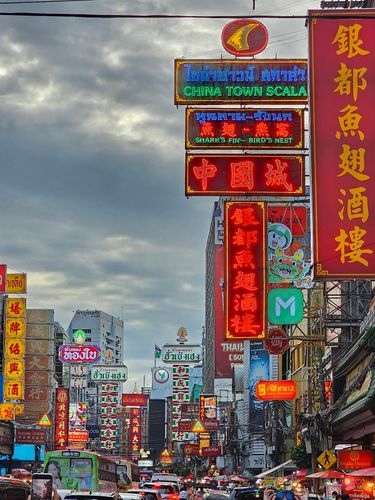
When sunset paints the gold shop signs, the grills come out. Kuay jap with offal, peppery and sharp; oyster omelets (hoy tod) crisped on cast-iron; fish maw soup rich with collagen; pork trotters over rice glistening under soy glaze. This is the place to chase that deep, old-school Chinese-Thai flavor. The MRT (Wat Mangkon Kamalawat (Wat Leng Noei Yi) Station) drops you right into the action.
Victory Monument’s boat noodle alleys
Tiny bowls, big personality. Order “naam tok” if you’re okay with blood-enriched broth, “tom yam” if you want sour-spicy. Add liver or tripe if you’re in the mood. We stack bowls like poker chips and still walk away with change to spare—exact totals vary; confirm locally. BTS Victory Monument gets you there fast.
Dusit’s Ratchawat and Sriyan markets
Less touristed, more neighborly. Think roasted duck, beef noodles with offal, and Southern curry vendors whose pots will melt your eyebrows. Good daytime wander if you’ve already done Khao San.
If you want to line up your cravings—noodles, grilled meats, curries—this handy bite-by-bite guide helps: Bangkok Street Food for Specific Cravings: Best Places for Noodles, Grilled Meat, Seafood, and Curries.
How to eat adventurous and stay upright
We don’t play fast and loose with street food; we play smart.
- Read the line: Locals first. A short queue is perfect; a mob means long waits and tired food. Avoid ghost stalls with heaping, drying trays.
- Watch hands and heat: A vendor who takes cash with one hand and handles garnish with the other is a red flag. We want sizzling-hot food, cooked to order, or kept steaming.
- Spice ladder: Default here is “pet” (spicy). If you want mellow, ask for “mai pet” (not spicy) or “pet nit noi” (a little). For papaya salad, “mai sai pla ra” means no fermented fish; “mai sai pu” means no crab.
- Offal prep: Sniff test matters. Properly cleaned tripe and liver smell clean, not funky. We skip stalls where offal sits in sun without shade or ice.
- Ice and raw: For raw crab or salad bars, look for fresh ice, covered bins, and quick turnover. If in doubt, go cooked.
- Allergies and diet: Street stalls can be flexible, but be precise. “Mai sai nam pla” (no fish sauce), “mai sai tua pe” (no peanuts). For deeper guidance, see Bangkok Street Food for Travelers with Allergies: What to Order, What to Avoid, and How to Ask for Changes.
- Money and manners: Have small bills. Smile. A quick “khop khun krub/ka” (thank you) goes far. Tipping isn’t standard at carts; rounding up is fine.
- Timing: Heat is the villain. We eat heavy stuff earlier in the evening and save grilled snacks for late-night grazing.
For a deeper dive on low-risk choices and stall checks, bookmark this: Bangkok Street Food for Heat-Safe Eating: The Best Low-Risk Dishes, Freshness Checks, and Stall Rules in Bangkok.
The culture behind the crunch
Bangkok’s bolder bites aren’t dares; they’re comfort. Offal reflects a no-waste kitchen—grandma’s soups were thrifty and delicious. Fermented flavors (pla ra, naem) preserve and boost umami in a humid climate. Spice isn’t machismo; it’s balance—heat to brighten fat, herbs to cool heat, lime to snap everything awake.
Meals are communal. We order a mix—grilled bits, a soup, a salad—and share. Thais eat with spoon and fork—fork to push, spoon to eat. At skewers, fingers are fine. We chase bites with “bia yen” (cold beer) or “nam oliang” (black iced coffee). Someone will ask, “gin khao rue yang?”—have you eaten? The answer, on these streets, is always “กำลังจะกิน” (about to eat).
Getting there and getting around
- Chao Phraya Express Boat: For Khao San/Phra Athit (N13) and Wang Lang ferries, we ride the river when traffic snarls. Single fares are usually under 50 THB; confirm locally.
- MRT/BTS: Wat Mangkon (MRT) for Chinatown; Victory Monument (BTS) for boat noodles. Fares vary by distance; expect small change money.
- Tuk-tuks and taxis: Agree the fare first for tuk-tuks. Taxis should use the meter. If a driver quotes a fantasy, we smile, say “mai pen rai,” and grab the next one.
- On foot: The last 200 meters always happen on foot. Expect broken sidewalks, errant scooters, and the blessed blast of 7-Eleven AC when you need a reset.
If you’re brand-new to the scene, this primer helps with ordering, pricing, and stall-spotting: Bangkok Street Food for First-Time Visitors: What to Order, How to Spot the Best Stalls, and What a Fair Price Looks Like.
Where we like to stay (no names, just vibes)
We usually base ourselves in Banglamphu—Soi Rambuttri or Phra Athit—because you can roll out of bed and into a bowl of something interesting by 10 a.m., then walk to late-night grills in under five minutes. If you need quieter nights, look one or two sois off the main drag. A pool is nice in the heat; morning swims reset spice fatigue.
Quick Plan
- Day 1: Khao San → Soi Rambuttri → Phra Athit (2–3 km, ~25–40 min walking)
- Key stops: Skewer carts on Rambuttri, boat noodles along Phra Athit, Banglamphu Market morning snacks
- Overnight base: Banglamphu (Khao San area)
- Day 2: Banglamphu → Wang Lang Market → Phra Nakhon (4–6 km incl. ferry, ~30–45 min total travel)
- Key stops: Duck noodles with blood jelly, sai krok Isan, grilled pork neck; riverside coffee cool-down
- Overnight base: Banglamphu
- Day 3: Banglamphu → Yaowarat (Chinatown) → Victory Monument (8–10 km, ~45–70 min via MRT/BTS/boat)
- Key stops: Kuay jap with offal, oyster omelet; boat noodle alley at Victory Monument for naam tok bowls
- Overnight base: Banglamphu
Optional ASCII route map: Banglamphu → Wang Lang ↘ ↘ Yaowarat → Victory Monument
Costs at a Glance (THB)
- Fuel price per liter (if you’re driving): ~35–45 THB/l (range; varies by grade and day) — Last checked: Oct 2026
- Estimated fuel per segment (urban 2–10 km legs, compact car ~12 km/l): ~10–40 THB/segment (estimate; confirm locally)
- Tolls per segment (routes above avoid expressways): 0 THB
- National park/attraction fees: Not applicable for this food crawl (0 THB)
- Parking per night near Banglamphu (if driving): Commonly paid lots in the area; expect ~100–300 THB/night (range; confirm locally)
- Public transport ballpark: River boat, MRT/BTS, and ferries for these routes are typically under 100 THB/ride; confirm locally
Last checked: Oct 2026
Booking Pathways
- Car rental: Compare rental deals at https://www.rentalcars.com/
- Hotels: Browse Bangkok stays near Khao San at https://www.booking.com/
- Tickets & tours: Explore Bangkok night food tours at https://www.klook.com/
Verification
- Prices and hours shift with season and vendor. We avoid exact stall pricing unless posted and current. Ranges above come from recent menu boards we checked in Oct 2026 (Banglamphu, Wang Lang, Yaowarat) and cross-reference with recent roundups by Bangkok-based outlets (e.g., Bangkok Post, Time Out Bangkok). Exact stall hours often vary; confirm locally at the cart.
- Fuel price range based on publicly posted pump boards (PTT OR) and the Thai Department of Energy Business summaries observed in Oct 2026.
- Public transport fare ranges are generalized from current signage and recent rider reports; confirm locally at the pier/station.
We’ll be back out there tonight—start at Phra Athit for a clean bowl of duck noodles, wander to Rambuttri for smoky hearts on a stick, then cap it with peppery kuay jap in Yaowarat. Bring loose clothes and a brave palate; Bangkok rewards the curious.
{
  "quick_plan": true,
  "costs_block": true,
  "booking_pathways": true,
  "verification_block": true,
  "internal_links_used": 4,
  "hotel_inventory_used": false
}
Related Hotels & Places
Khao San Road
Attractions
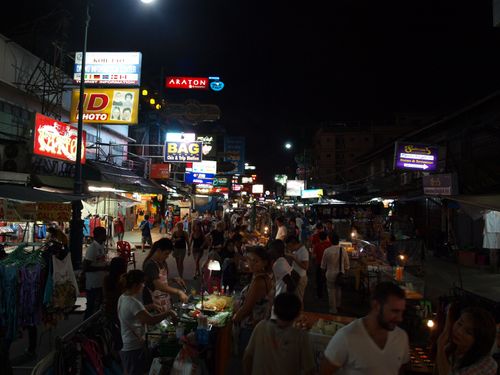
Bangkok’s backpacker carnival: curbside bars, live bands and DJs from 3pm–2am (midnight Sun). Street eats are cheap — pad thai 70–100 THB, mango sticky rice 60–100 THB. Come for wild people-watching; duck into Rambuttri for a calmer beer.
Rambuttri
Markets
Khao San’s calmer cousin: a tree‑shaded lane of VW van cocktail bars, open‑air foot massages, pad thai grills, and easygoing live bands. Best from sunset to 11pm; beers 80–120 THB, cocktails 150–220 THB. One block from the chaos, all the charm.

The Wharf Walking Street
Markets
Fisherman’s Village comes alive here: street-food grills, coconut ice cream, beachwear stalls, and live buskers by the sand. The Wharf Walking Street runs most Mon/Wed/Fri/Sun from ~5pm–11pm—ideal for grazing, browsing, then slipping onto Bophut Beach.
Yaowarat Chinatown Heritage Center
Attractions
Inside Wat Traimit by Chinatown Gate, this tidy museum charts Yaowarat’s Chinese roots with bilingual displays, period photos and short films. Open Tue–Sun 8:30am–4:30pm; closed Mon. Pair it with the Golden Buddha upstairs.
Chinatown Bangkok (Yaowarat)
Attractions
Neon, woks, and queues: Yaowarat is Bangkok’s street‑food strip. Start at Wat Mangkon MRT, graze T&K Seafood and Nai Ek’s peppery guay jub, snag toasted buns, and finish with mango sago at Sweet Time. Best 6pm–late; ~10‑minute taxi from Khao San.
Wat Mangkon Kamalawat (Wat Leng Noei Yi)
Temples
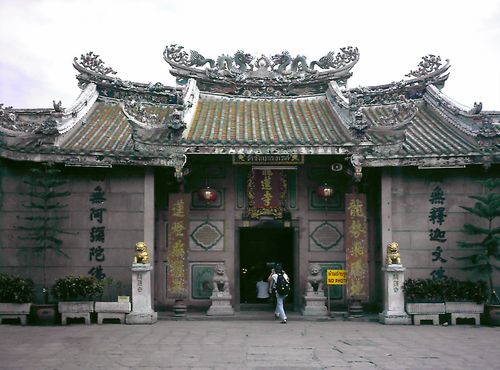
Chinatown’s grand Chinese Buddhist temple—smoky incense, red lanterns, and gilded altars. Free entry, donations welcome. Best early morning; electric during Lunar New Year and the Vegetarian Festival. Steps from MRT Wat Mangkon, 8am–5pm daily.

Chao Phraya Tourist Boat N13 Phra Arthit Pier
Services
Khao San's river gateway. N13 Phra Arthit is the Chao Phraya Tourist Boat stop: grab a day pass and hop to Wat Arun, the Grand Palace and Sathorn. Boats every ~30 mins; last around 7:15pm. The scenic, no-traffic way to get around.
More Khao San Road Guides
- Bangkok Street Food for Picky Eaters: Safe, Mild, and Familiar Options Near Khao San Road
- Bangkok Street Food for First-Timers: Must-Try Dishes Near Khao San Road and How to Spot the Real Version
- Best Street Food Markets Near Khao San Road: Where to Go for Authentic Bangkok Eats
- Bangkok Street Food Ordering Guide: How to Read Menus, Point to Dishes, and Avoid Surprises Near Khao San Road