
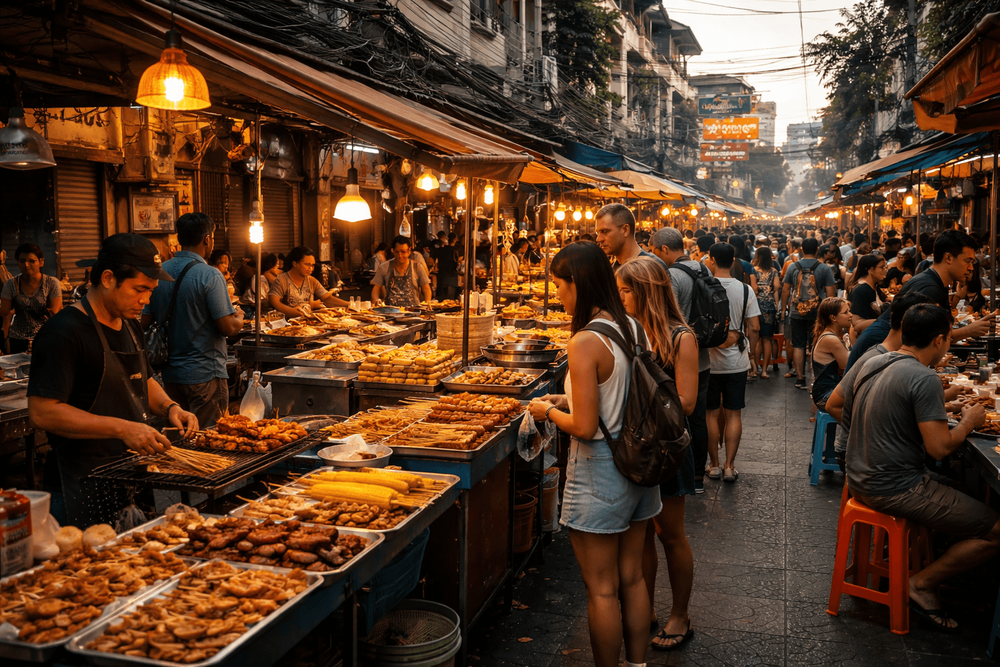
Best Street Food Streets Near Khao San Road: Where to Walk for Snacks, Meals, and Local Flavors
Walkable, wok-sizzling streets near Khao San: what to eat, when to go, budgets, and how to reach Phra Athit, Dinso, Maha Chai, Wang Lang, and Yaowarat.
The wok hits the flame on Rambuttri and we catch that first breath of garlic and chili—the kind that pricks your eyes and makes your stomach start bargaining with your wallet. This is why we walk, not Uber: street food by dish in Bangkok are best eaten on foot, from sizzling skewers by Phra Athit to midnight noodles on Maha Chai.
Data Freshness + Pricing:
- Prices are approximate and in THB.
- Last checked: July 2026.
- Happy hour and promo details change frequently—confirm locally.
The Best Street Food Streets Bangkok: Near Khao San Road
We’re zeroing in on the Old Town zone—Banglamphu, the Giant Swing, and the riverbanks—so you can graze within strolling or ferry distance of Khao San Road. These are the streets where we actually eat.
Soi Rambuttri: Easy Grazing, Late Nights, Classic Khao San Energy
- Why we go: It’s the friendliest first bite. Rambuttri wraps around Khao San with shade trees, fairy lights, and a parade of carts that don’t judge your jet lag.
- What to eat:
- Moo ping (grilled pork skewers), glossy with palm sugar—approx. 15–25 THB per stick.
- Banana roti flipped on a griddle, drizzled with condensed milk—approx. 40–70 THB per piece.
- Pad Thai or fried rice from steam-belching woks—approx. 60–120 THB per plate.
- Fresh fruit shakes—approx. 40–80 THB.
- Hours and peak: Vendors roll in late afternoon; it’s buzziest 7 pm–1 am. You’ll still find bites after 2 am on weekends.
- Vibe: Backpacker-meets-local date night. Music spills from bars, but you can still snag a curbside stool and watch tuk-tuks prowl by.
- Good for: First-timers, night owls, and anyone who wants comfort choices without a scavenger hunt.
Phra Athit Road and Phra Sumen: Riverside Chill With Real-Deal Bites
- Why we go: A five-minute walk from Khao San feels like another city—low-key, leafy, and with the Chao Phraya’s breeze doing its best against Bangkok’s heat.
- What to eat:
- Morning moo ping and grilled chicken thighs—approx. 20–30 THB per skewer.
- Khao gaeng (rice with curry trays): point-and-pick turmeric fish curry, green curry, or stir-fried holy basil—approx. 50–90 THB per plate.
- Evening som tam (papaya salad) pounded in clay mortars—approx. 60–100 THB.
- Hours and peak: Mornings 7–10 am for grills and coffee; evenings 6–10 pm for salads and noodles.
- Vibe: Students from Thammasat, tattooed creatives, and river commuters. Softer soundtrack than Khao San, sharper flavors.
- Good for: Daytime grazers, early birds, couples who like an amble before dessert.
Chakrabongse and Banglamphu Lanes: Lunch-Hour Local
- Why we go: Around Chakrabongse Road and the market lanes behind it, lunch explodes—office workers, aunties with gold bracelets, and vendors who know their regulars.
- What to eat:
- Kanom jeen (cold rice noodles) with nam ya curry—approx. 40–70 THB.
- Roast duck over rice—approx. 60–100 THB.
- Thai desserts (khanom) like foi thong and luk chup—approx. 20–50 THB per portion.
- Hours and peak: Best 10 am–2 pm; many stalls shut by late afternoon.
- Vibe: Unfussy, fast turnover. We hover, we point, we smile—food lands fast.
- Good for: Midday missions, serious eaters who aren’t chasing neon.
Dinso Road and Tanao Road to the Giant Swing: Old-Town Icons
- Why we go: Between Democracy Monument and the red Giant Swing (Sao Chingcha), you can hit a greatest-hits run of Old Town flavors.
- What to eat:
- Pad Thai that actually crackles: wok breath, dried shrimp, charred chives—approx. 90–180 THB.
- Grilled pork satay with peanut sauce—approx. 80–140 THB for 10 sticks.
- Mango sticky rice from century-old sweet shops—approx. 100–180 THB per box (seasonal price swings).
- Hours and peak: Late afternoon to late night for wok joints; sweet shops tend to close earlier (often by early evening). Peak 6–9 pm.
- Vibe: Monks drifting by from Wat Suthat Thepwararam Ratchaworamahawihan, families queuing politely, woks roaring like motorbikes.
- Good for: First-timers who want famous names, photos, and big flavors within a compact walk.
Maha Chai Road (Samran Rat): Night Noodles and Star Power
- Why we go: The smell of chili oil and crab fat hangs in the air. Lines form early at the heavy hitters, but side-streets throw down bowls that cure any case of jet lag.
- What to eat:
- Pad Thai masters and wok-fried noodles—approx. 90–220 THB.
- Guay jap (rolled rice noodles in peppery broth)—approx. 60–100 THB.
- Splurge alert: that famous crab omelette can run 800–1,500+ THB—worth it for bragging rights if you’re into culinary pilgrimages.
- Hours and peak: Mostly late afternoon till past midnight. Peak 7–10 pm.
- Vibe: Controlled chaos, camera crews some nights, locals who know the side doors.
- Good for: Night owls and trophy-hunters who don’t mind a queue.
Wang Lang Market: Cross for Crispy Things
- Why we go: Hop the ferry from Phra Athit Pier to Wang Lang (Prannok) and the world turns into a snack maze. Hospital workers, students, and aunties move fast, which is your cue: eat now.
- What to eat:
- Fried chicken and deep-fried pork belly so shatter-crispy it startles—approx. 30–60 THB per piece.
- Grilled pork neck with jaew dipping sauce—approx. 60–100 THB per portion.
- Boat noodles with dark, herbal broth—approx. 40–80 THB.
- Thai desserts: khanom buang (crispy crepes), pandan custard buns—approx. 15–40 THB each.
- Hours and peak: Best 10 am–4 pm on weekdays; thinner on Sundays.
- Vibe: Zero pretense, maximum snacking. We eat standing up and keep moving.
- Good for: Daytime grazers, budget hunters, anyone who loves markets that still serve locals first.
Nang Loeng Market (Nakhon Sawan Road): Dessert Destiny
- Why we go: One of Bangkok’s oldest markets hums with lunchtime energy and old recipes.
- What to eat:
- Slow-braised beef noodles—approx. 60–120 THB.
- Kanom mor gaeng (Thai custard cake) and golden-egg-yolk sweets—approx. 25–60 THB per slice/pack.
- Hours and peak: Morning to early afternoon, peak 11 am–1 pm. Many stalls close by 3 pm; some close Sundays.
- Vibe: Vintage shophouses, ceiling fans pushing warm air, aunties guarding recipe secrets.
- Good for: Travelers who plan around lunch and care more about flavor than hype.
Further Afield but Worth the Ride
Yaowarat Road (Yaowarat Chinatown Heritage Center): Night Feast
- Why we go: Bangkok’s neon dragon breathes fire after dark. Stalls spill onto Yaowarat Road with seafood grills and dessert carts.
- What to eat:
- Grilled prawns and squid—approx. 120–300 THB per plate depending on size.
- Guay jub with white pepper and pork belly—approx. 60–100 THB.
- Oyster omelette, sticky and crisp at once—approx. 120–200 THB.
- Chinese-Thai desserts: sesame dumplings in ginger syrup—approx. 40–80 THB.
- Hours and peak: 6 pm–midnight (later on weekends). Peak 7–10 pm.
- Getting there: From Khao San, take the Chao Phraya Express boat to Ratchawong Pier, then walk 10 minutes; fare approx. 16–30 THB.
- Vibe: Electrified. Elbows out. The thump of woks keeps time with the traffic.
Victory Monument: Boat Noodle Alley
- Why we go: Tiny bowls stack up like poker chips by the khlong. We order three and pretend it’s portion control.
- What to eat:
- Boat noodles—herbal, dark broth, pork or beef—approx. 20–30 THB per small bowl. Most of us need 3–5 bowls to call it dinner.
- Hours and peak: Late morning through mid-afternoon; many stalls rest by evening.
- Getting there: Easiest via BTS to Victory Monument, then a short walk. From Khao San, a taxi or bus works; budget approx. 120–200 THB by taxi depending on traffic.
- Vibe: Fast, cheap, gloriously messy.
What to Eat on These Streets: Must-Try Bites
We’re not here to gatekeep—order what calls your name. But if you want a greatest-hits card for the street food streets Bangkok delivers, start here:
- Moo Ping + Sticky Rice: Sweet, smoky pork over hot, salty sticky rice. Breakfast, midnight snack, spiritual practice. Approx. 35–50 THB for a set.
- Pad Thai: Look for orange glow from shrimp oil and a quick, smoky sear. Add lime and chili flakes. Approx. 90–180 THB.
- Som Tam + Gai Yang: Papaya salad pounded to your heat level with grilled chicken. Approx. 120–200 THB for both.
- Guay Jub (Peppery Rolled Noodles): Nose-tingling broth with crispy pork. Approx. 60–100 THB.
- Boat Noodles: Small bowls that stack fast. Approx. 20–30 THB each.
- Khao Moo Daeng (Red Pork on Rice): Honey-red pork, crackling, sweet gravy. Approx. 60–90 THB.
- Mango Sticky Rice: When mangoes are perfect, this is non-negotiable. Approx. 100–180 THB.
- Roti (Banana, Egg, or Plain): Flaky, stretchy, and sticky with condensed milk. Approx. 40–70 THB.
If you’re planning nights around food markets, this roundup pairs well with our deeper dive in Bangkok’s after-dark scene: Bangkok Street Food Night Market Guide: Best Stalls, Hours, and What to Order.
When to Go and What to Budget
- Mornings (7–10 am): Grills and curry rice shine around Phra Athit and Chakrabongse. Coffee carts pull strong Thai iced coffee—approx. 25–50 THB.
- Lunch (10 am–2 pm): Banglamphu lanes and Nang Loeng are prime. Expect lines, fast turnover, the good kind of chaos.
- Evenings (6–10 pm): Dinso, Tanao, Maha Chai, and Soi Rambuttri light up. Chinatown kicks off around 6 pm.
- Late Night (10 pm–2 am+): Rambuttri and Maha Chai keep feeding us; Chinatown often runs late on weekends.
Budget per person:
- Snack crawl: approx. 120–200 THB for 3–4 small bites.
- Casual meal with drink: approx. 100–200 THB.
- Big seafood plate or famous-name splurge: approx. 250–600 THB+ (more if you’re chasing celebrity crab omelettes).
For planning your baht like a pro, bookmark our price-based rundown: Bangkok Street Food by Budget: What to Eat for 50, 100, and 200 Baht.
Vibe Check: Which Street Suits You
- First-Time Visitors: Soi Rambuttri and Dinso/Tanao. English menus appear, but flavors stay legit. Sidewalk seating, low risk, high reward.
- Night Owls: Maha Chai and Yaowarat. Bring patience; the lines move, the woks move faster.
- Serious Food Hunters: Wang Lang by day, Nang Loeng for lunch, Victory Monument for an afternoon broth bender. Short taxi hops, massive flavor payoffs.
- Chill Evenings: Phra Athit. We grab papaya salad, sit on a bench by Phra Sumen Fort, and let the river breeze do its thing.
- Photo-Focused: Giant Swing zone at golden hour, or Chinatown’s neon gauntlet after dark.
Getting There From Khao San Road
- Walkable Zone (5–20 minutes): Soi Rambuttri, Phra Athit, Dinso/Tanao, Chakrabongse, Banglamphu lanes, Maha Chai.
- River Ferry: From Phra Athit Pier to Ratchawong (for Chinatown) or Wang Lang (for Siriraj Market). Fares approx. 16–30 THB; boats run every few minutes at peak.
- Tuk-Tuk: Fun for short hops, but haggle. Old Town runs typically land around 80–150 THB depending on distance and hour—agree on price first.
- Taxi: Ask for the meter; if they refuse, try the next one. Short rides in Old Town are approx. 70–140 THB depending on traffic.
Pro move: We base ourselves in Banglamphu so we can walk more and ride less. Simple guesthouses and mid-range stays cluster around Soi Rambuttri and Phra Athit, many with breezy courtyards and the kind of AC blast that feels like a reward after a chili-heavy crawl.
Safety, Hygiene, and Etiquette Tips
- Follow the crowd: High turnover = fresh food. We look for sizzling woks, busy chopping boards, and lines of locals.
- Watch the water: If raw greens sit in a tub of still water in the sun, we skip them.
- Plates and spoons: Vendors usually rinse fast; if you’re unsure, ask for disposable utensils or give cutlery a wipe. Bring tissues or napkins.
- Heat levels: “Pet nit noi” means a little spicy. “Mai pet” is not spicy. Smile helps.
- Cash is king: Small bills speed things along. Some stalls accept QR payments now, but don’t count on it.
- Order flow: Point, say the dish name, hold up fingers for quantity. Pay when the plate lands unless they wave you off.
- Street smarts: Beware touts promising “special pad thai.” If it sounds too curated, we pass. Keep an eye on your bag in thick crowds.
If you want a deeper primer on staying healthy without killing the fun, read our field-tested notes: Bangkok Street Food Hygiene Guide: How to Spot Clean Stalls and Eat Safely Without Killing the Experience.
Dietary Restrictions: You’ve Got Options
- Vegetarian/Vegan: Look for jay (เจ) signs near the wok; ask for “mai sai neua/sai kai” (no meat/egg). Papaya salad can be made without fish sauce—ask for “mai sai nam pla.”
- Halal: Phra Athit and Wang Lang have Halal-friendly bites; ask vendors or follow the green Halal signage around mosque areas.
- Gluten-Free: Rice noodles, grilled meats, and papaya salad are your friends. Watch soy sauce and marinades.
For a full run-down, we made a dedicated guide: Bangkok Street Food for Dietary Restrictions: Vegetarian, Vegan, Halal, and Gluten-Free Options.
Know Before You Go
- Heat and Rain: Midday can melt resolve; go early or late. Sudden downpours are Bangkok’s personality—stalls often soldier on under tarps.
- Seating: Many carts are stand-and-eat or perch-on-a-stool. If you want a table, gravitate to shophouse fronts behind the carts.
- Trash: Bins hide in plain sight; if you can’t spot one, vendors will point you to a can.
- Weekday vs. Weekend: Some markets (Wang Lang, Nang Loeng) are stronger on weekdays. Weekends push more crowds into Rambuttri, Chinatown, and Maha Chai.
Where We Crash Between Bites
We like to keep our base within flip-flop distance of the action. Around Soi Rambuttri and Phra Athit you’ll find everything from fan rooms to boutique stays, often with leafy courtyards and a pool that saves the afternoon. The Old Town keeps nights lively but not relentless if you stick just off Khao San itself. Ask for a back-facing room if you’re a light sleeper; bass lines travel.
One Last Walk
If you only have one night, we start at sunset on Phra Athit with moo ping and iced tea, cut behind the fort, weave down Dinso for satay and mango sticky rice, then finish under the neon of Maha Chai with a peppery bowl of guay jub. If the legs still have sanuk in them, we boat to Yaowarat for a final oyster omelette. See you by the Giant Swing—we’ll save you a stool next to the wok.
Related Hotels & Places
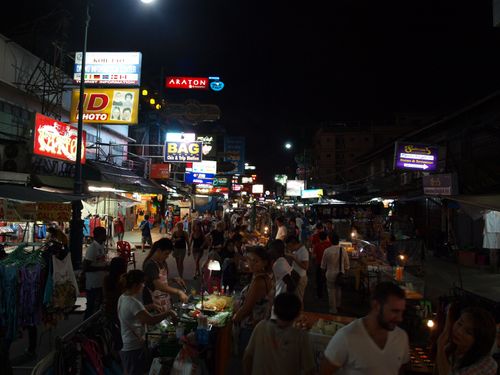
Khao San Road
Attractions
Bangkok’s backpacker carnival: curbside bars, live bands and DJs from 3pm–2am (midnight Sun). Street eats are cheap — pad thai 70–100 THB, mango sticky rice 60–100 THB. Come for wild people-watching; duck into Rambuttri for a calmer beer.
Rambuttri
Markets
Khao San’s calmer cousin: a tree‑shaded lane of VW van cocktail bars, open‑air foot massages, pad thai grills, and easygoing live bands. Best from sunset to 11pm; beers 80–120 THB, cocktails 150–220 THB. One block from the chaos, all the charm.
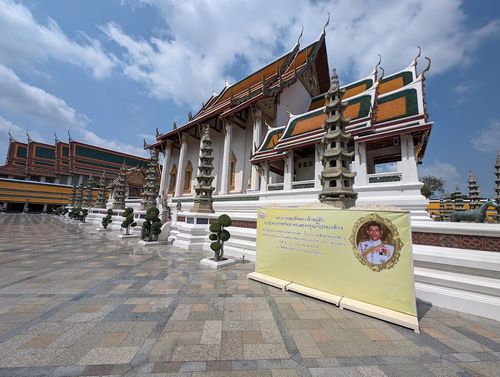
Wat Suthat Thepwararam Ratchaworamahawihan
Temples
Serene counterpart to the Giant Swing: a soaring hall, Sukhothai‑era 8 m bronze Buddha, and some of Bangkok’s finest murals. An easy 15‑minute walk from Khao San; open daily till 8pm for golden‑hour visits.
Yaowarat Chinatown Heritage Center
Attractions
Inside Wat Traimit by Chinatown Gate, this tidy museum charts Yaowarat’s Chinese roots with bilingual displays, period photos and short films. Open Tue–Sun 8:30am–4:30pm; closed Mon. Pair it with the Golden Buddha upstairs.
More Khao San Road Guides
- Where to Find Authentic Bangkok Street Food Near Khao San Road Without the Tourist Markup
- Best Bangkok Street Food Streets Near Khao San Road: Where to Go When You Want Real Local Dishes
- Bangkok Street Food by Dish: Where to Find the Must-Try Classics Near Khao San Road
- Bangkok Street Food by Dish: Must-Try Classics Near Khao San Road and the Old Town