
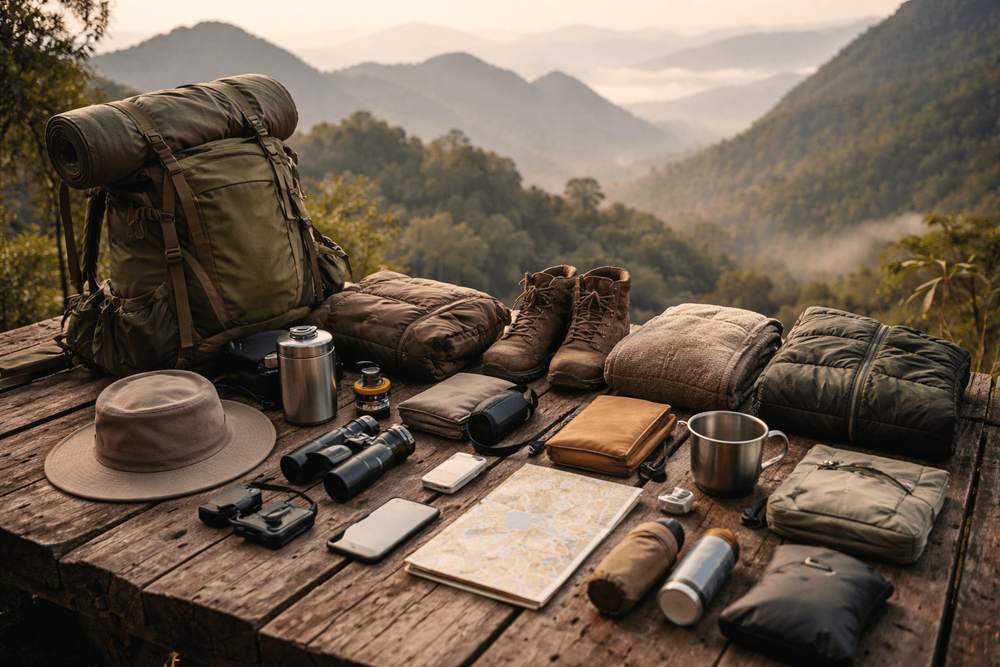
Backpacker Packing List for Thailand’s Northern Border Areas: Early-Morning Chill, Mountain Roads, and Remote Stay Essentials
Northern-border smart packing: layers for dawn chill, rock-solid docs, cash strategy, and border hacks so you glide through Mae Sai and Chiang Khong.
We breathe steam into the dawn at Chiang Khong’s riverfront, watching the Mekong move like a dark silk ribbon while a longtail coughs to life. Our breath fogs, our fingers thank the fleece we almost didn’t pack, and somewhere in our daypack a pen clacks against a passport sleeve. This is where a Thailand border packing list stops being theoretical and becomes the difference between gliding through the Friendship Bridge and backtracking to find a photocopy shop that won’t open for another hour.
Let’s pack smart for Thailand’s northern borders—Mae Sai–Tachileik, Chiang Khong–Houayxay, the fog-thick ridges around Phu Chifa ดาวเรือง—where mornings bite, roads wind, and ATMs sometimes blink out just when you need them.
Thailand border packing list: the documents you can’t afford to lose
Borders reward the organized. We keep these items in a waterproof pouch in our daypack, with backups stashed separately.
- Passport with enough validity: Six months remaining is a safe cushion many officers like to see. Keep it clean, unbent, and dry.
- Visa or exemption proof: Screenshots and printed copies of any eVisas, approval letters, or visa-exemption criteria relevant to your nationality. Digital evidence is good; paper calms nerves when the 4G drops.
- Entry/exit forms (if required): Border paperwork changes. Some forms are suspended, then return; some crossings issue their own slips. Carry a pen and confirm locally what’s needed that week.
- Onward travel and accommodation details: A printed or offline copy of your first night’s stay and any onward transport. Even if nobody asks, it’s handy when the officer does the eyebrow-raise.
- Passport photos: Four small photos (3x4 cm or 2x2 inch) live in our wallet. Border booths, visa-on-arrival counters, and permits sometimes want them, and photo kiosks open late.
- Multiple paper copies: Passport ID page, previous Thai entry stamp, insurance summary, and any eVisa confirmations. We keep one set in our bag and share a second set between us in case one bag wanders off.
- Insurance summary: A one-page PDF printed and saved offline showing your name, policy number, and emergency contact. If a staffer asks, you’re ready.
- Pens and a small binder clip: Forms, receipts, and waiver slips multiply at borders; clip them together so they don’t scatter in the wind.
- Cash: Small bills go a long way at land borders. Keep crisp Thai baht plus a little USD in clean, newer notes for fees where required. If you’ll enter Laos, some counters prefer USD or local kip; Myanmar rules are volatile—confirm locally.
If you want a deeper dive into admin must-haves and how we stash them, our piece on documents and cash is a solid companion: Backpacker Packing List for Thailand: Documents, Cash, and Travel Admin Essentials and the ultra-practical What to Pack for Thailand for Border Crossings and Multiple Entry Days: Documents, Photos, and Small-Format Travel Gear.
Pro tip about stamps and stays: Don’t treat overstay fines as a budgeting tool. Rules tighten without notice, and it’s a lousy way to meet immigration.
Clothes and personal gear that make border mornings less bracing
Northern mornings can nip at your ears, especially from December to February and on high ridges year-round. We dress like onions: peelable layers. Think mountain bus rides at dawn, foggy checkpoints, then blazing sun by noon.
- Lightweight insulated layer: A thin fleece or packable synthetic jacket. Down is fine if you keep it dry in a compression sack.
- Windproof shell or rain jacket: Mountain switchbacks funnel wind. A hooded shell earns its space.
- Rain poncho or pack cover: Afternoon squalls can soak you between the bus and the checkpoint awning.
- Quick-dry trousers or hiking tights: Jeans dry slowly and stay cold. We like zip-offs or softshell pants with stretch.
- Base layers (seasonal): Merino or synthetic top for dawn rides to Mae Sai or Phu Chi Fa. You’ll bless it at 5:00 a.m.
- Breathable tops for daytime heat: Temple-appropriate options (shoulders covered) if you’ll detour to Wat Rong Khun or Doi Tung.
- Footwear: Grippy trainers or light hikers for slick border curbs and ridge trails. Flip-flops for guesthouse showers.
- Sun armor: Cap, sunglasses, and reef-safe sunscreen. The mountain sun sneaks up on you.
- Warm accessories: Beanie and buff/neck gaiter for sunrise viewpoints and the back of a songthaew. Lightweight gloves if you’re on a scooter.
- Daypack (18–24L) with hip belt: Holds your docs, water, jacket, and snacks without hunching your shoulders.
- Dry bags and zip-top sacks: Keep your passport and phone safe when fog turns to drizzle.
If you’re stringing buses, vans, and the Chao Phraya Express boat later on, it’s worth optimizing total carry weight—see our advice for budget-airline limits here: Thailand Backpacker Packing List for Budget Airlines and Weight-Limit Fees.
Health, hygiene, and safety for delays, dust, and detours
Borders breed waiting. Stalls steam with noodle broth, the air smells like diesel and green papaya, and bathrooms swing between spotless and… character-building. We pack for both.
- Personal meds + copies of prescriptions: In original packaging, split between bags. Add a couple days’ buffer for unexpected closures.
- First-aid mini-kit: Plasters, blister pads, antiseptic wipes, pain/fever meds, antihistamines, rehydration salts, and a few motion-sickness tablets for mountain switchbacks.
- Insect repellent: DEET or picaridin for sunset mozzies along the khlongs and riverbanks.
- Sunscreen and lip balm: High UV at altitude, even when cool.
- Hand sanitizer and tissues: Some checkpoints run out. Wet wipes for mystery benches.
- Foldable water bottle: Refill at cafe jugs; skip single-use if you can.
- Light mask: For dust on roadside shoulders; double-duty during smoky season.
- Headlamp: Pre-dawn starts to Phu Chi Fa or power cuts at rural bus depots.
- Compact travel towel: Homestays and ultra-budget guesthouses sometimes don’t provide one.
Electronics and money management that actually work at the border
We love a romantic paper map as much as the next farang, but this is one place where electronics save the day.
- Unlocked phone + Thai SIM or eSIM: AIS/DTAC/True all work well across the north. Buy at a 7-Eleven on Khao San Road before you go or in Chiang Rai’s bus terminal. Keep your passport handy for registration.
- Offline maps: Download maps for Chiang Rai, Mae Sai, Chiang Khong, and Nan. Screenshots of bus schedules don’t hurt.
- Power bank (10,000–20,000 mAh) and cable kit: One USB-C, one Lightning, one micro-USB. Add a short multi-plug if you’ll charge top-ups for friends—sanuk!
- Universal adapter + short extension: Thailand runs 220V, 50Hz, and you’ll find both round and flat-pin sockets. A short extension turns one outlet into a social hub.
- Surge-protected strip (optional): Rural power spikes happen.
- Backup storage: Cloud or tiny USB for scans of passport, visas, and insurance.
- Multiple payment methods: ATMs in border towns can glitch. We carry:
- Thai baht in small notes (20/50/100) divided into two stashes
- One debit + one credit card from different banks/networks
- Emergency USD (clean, newer notes) for visa desks where applicable
For smarter cash setups and stashing tricks, here’s how we carry money without drama: Thailand Backpacker Packing List for Carrying Cash, Cards, and Travel Security.
ATM fees: Many Thai banks charge a flat fee for foreign cards. We plan withdrawals to minimize hits and use in-store cash when we can. Exchange kiosks near borders may undercut you with poor rates; compare before you commit.
Border-specific practical items that save time (and face)
- Confirmed transport details: Printed bus or van tickets, or at least a booking code screenshot. Some counters want to see onward intent.
- Accommodation address: Even if you plan to wander, have a first-night address ready. A screenshot of a guesthouse map keeps the queue moving.
- Snacks and small bills: Border towns are great for grilled pork skewers and sticky rice—keep a snack in the queue and 20–50 THB ready for bathrooms, photocopies, or songthaews.
- Lightweight lock and strap: Security through obscurity works—loop your daypack to a bench if you’re solo and sleepy.
- Spare passport photos and a pen: We said it already, but we’ll say it again. The day you forget, the only kiosk will be “closed five minutes.”
- Modest clothing at the top of your bag: If you roll out of Mae Sai into a temple stop, you can cover shoulders and knees without a full repack.
- Patience and a smile: Sawadee, a wai, and a steady tone make everything smoother. Tuk-tuk haggles too.
If you’re building a longer overland route—trains, buses, ferries, and a couple of border hops—this round-up keeps it lean: What to Pack for Thailand for Overland Backpacking: Buses, Trains, Ferries, and Border Crossings.
Know before you go: hours, closures, and common snags
- Border hours change: Festive holidays and local events can shorten days. Morning openings are usually early to mid-morning; evenings often close by dusk. Confirm locally the week you travel.
- Visa policy shifts: Especially for Myanmar-side crossings and certain nationalities. Check official sources and your embassy advisories before committing to an out-and-back.
- Photocopy shops: Open late, close early. Don’t rely on them for last-minute prints.
- “Overtime” fees and currency curiosities: You might hear about after-hours charges or “mandatory” exchange windows. If something sounds off, politely ask for a receipt or official notice; many gray fees evaporate under a friendly stare.
- Mountain road reality: Fog, potholes, and dogs sleeping on the warm asphalt. If you ride or drive, leave earlier than you think and brake before the curve.
What we actually carry (the short checklist)
- Passport + printed visas/exemptions + 4 photos
- Insurance printout + digital copies of everything
- Pen, binder clip, zip-top docs pouch
- THB small bills + USD backup + 2 cards
- Lightweight insulated jacket + wind/rain shell
- Quick-dry trousers + temple-top + warm hat/buff
- Trainers/light hikers + flip-flops
- Daypack 18–24L + rain cover + dry bags
- Headlamp + power bank + cables + adapter
- Meds + mini first-aid + sanitizer + sunscreen + repellent
- Offline maps + bus/hotel screenshots
- Snacks + water bottle
Quick Plan
Here’s a simple northern-border loop that pairs perfectly with this packing list.
ASCII route: Chiang Mai → Chiang Rai → Mae Sai (Tachileik) → Golden Triangle → Chiang Khong (Houayxay) → Phu Chi Fa → Pua/Nan → Chiang Mai
- Day 1: Chiang Mai → Chiang Rai (190–200 km, 3–3.5 hrs). Stops: Mae Kachan hot springs, Wat Rong Khun (White Temple). Overnight: Chiang Rai city.
- Day 2: Chiang Rai → Mae Sai/Tachileik (60 km, ~1.5 hrs). Stops: Doi Tung viewpoints, Mae Sai market. Optional side to Golden Triangle (Chiang Saen). Overnight: Mae Sai or Chiang Saen.
- Day 3: Mae Sai → Chiang Khong (95 km, ~2 hrs). Stops: Hall of Opium (Golden Triangle Park). Overnight: Chiang Khong riverside.
- Day 4: Chiang Khong → Phu Chi Fa (70 km, ~2 hrs steep). Activity: Sunset/sunrise ridge hike. Overnight: Phu Chi Fa village homestay.
- Day 5: Phu Chi Fa → Pua/Nan (160 km, 4–5 hrs mountain roads). Stops: Tham Pha Tub Forest Park. Overnight: Pua or Nan town.
- Day 6: Nan → Chiang Mai (300–330 km, 6–7 hrs). Stops: Phrae old town, Lampang chicken-bowl noodles. Overnight: Chiang Mai Old City.
Costs at a Glance (THB)
Last checked: Sep 2026 (ranges provided; confirm locally)
- Fuel price per liter: 35–50 THB, varies by station and grade.
- Estimated fuel cost per segment (assuming 6–7 L/100 km economy car):
- Day 1 (200 km): ~420–700 THB
- Day 2 (60 km): ~125–210 THB
- Day 3 (95 km): ~200–335 THB
- Day 4 (70 km): ~150–245 THB
- Day 5 (160 km): ~335–560 THB
- Day 6 (320 km): ~670–1,120 THB
- Tolls per segment: Typically 0 THB on these northern routes.
- National park/attraction fees per person (indicative):
- Wat Rong Khun: ~50–150 THB (confirm locally)
- Hall of Opium: ~200–300 THB (confirm locally)
- Phu Chi Fa Forest Park: often free or nominal community fee (0–50 THB; confirm locally)
- Parking per night: 0–150 THB (many guesthouses include parking; city hotels may charge).
Booking Pathways
- Car rental: Compare rental deals at DiscoverCars to pick up in Chiang Mai and drop in Chiang Rai if needed: https://www.discovercars.com/
- Hotels: Scan Agoda for last-minute guesthouse deals in Chiang Rai and Nan with good cancellation policies: https://www.agoda.com/
- Attraction tickets: Browse Klook for Chiang Rai area tours (White Temple, Blue Temple, Golden Triangle) if you want to bundle transport: https://www.klook.com/en-TH/city/87-chiang-rai/
Verification
- Prices and fees in this guide are given as safe ranges unless we can verify exact figures from at least two recent sources. Border fees, visa-on-arrival costs, and opening hours change frequently—confirm locally at the bus station, border control office, or official websites the week you travel.
- Fuel price ranges reflect typical northern Thailand rates observed recently across major chains and independents; actual prices vary with global markets and station location.
- Attraction fees (Wat Rong Khun, Hall of Opium, forest parks) vary by nationality, season, and local policy; treat the provided ranges as planning ballparks and check posted prices on the day.
A quick word on sleep and sanity
In border towns we usually keep it simple—clean sheets, hot shower that groans but delivers, and a kettle for instant noodles after a long van ride. Guesthouses near Mae Sai market or along Chiang Khong’s riverfront tend to be friendlier to early departures. In foggy hamlets like Phu Chi Fa, we ask for extra blankets and confirm the first-morning coffee time; nothing like stepping into a sea of clouds with a warm cup and a clear head.
Final nudge: pack the pen, wear the fleece

When the fog lifts over the Mekong and the officer’s stamp thunks approval, we’ll shoulder our daypacks and hunt down a bowl of boat noodles that tastes like pepper and victory. Northern borders reward the prepared. Pack lean, layer up, carry the copies, and we’ll spend our time on mountain roads and misty viewpoints—not in the photocopy queue.
Related Hotels & Places

Recommended Products
More Khao San Road Guides
- Backpacker Packing List for Thailand’s Northern Highlands: Cool Mornings, Mountain Roads, and Layering Basics
- Backpacker Packing List for Thailand’s Northern Loop: Mountains, Cooler Nights, and Long Travel Days
- Thailand Packing List for Backpackers in Northern Thailand: Mountains, Cooler Nights, and Long-Distance Travel
- Backpacker Packing List for Thailand’s Northern Loop: Cool-Night Layers, Trekking Gear, and Small-Town Basics