What to Pack for Thailand for Border Crossings and Multiple Entry Days: Documents, Photos, and Small-Format Travel Gear
The border-day kit we actually carry: documents, photos, cash, small-format gear, and smart tips to breeze Thailand’s land crossings without the headaches.
We’re shoulder to shoulder in the pre-dawn shuffle at Mo Chit, iced coffee sweating through the plastic bag, daypacks clipped tight. The bus to Aranyaprathet wheezes, a chorus of aunties selling grilled pork skewers, and we do that last nervous pocket pat-down: passport, photos, cash, pen. If you’ve ever done a land hop out of Bangkok—to Poipet for Cambodia, Nong Khai for Laos, Padang Besar for Malaysia—you know border days are their own sport. This Thailand border crossing packing list is the kit we actually carry, the stuff that keeps the queues short, the fees fair, and the day mostly sanuk instead of sweat, guesswork, and tuk-tuk detours.
Your Thailand border crossing packing list: the essentials
Border days move fast until they move slow. Officials point, lines switch, a form appears from a plastic tray that wasn’t there five seconds ago. Having the right items at hand—documents on top, small bills tucked, photos ready—turns that chaos into choreography. Thailand Packing List for Backpackers: Day Bag Essentials from Khao San Road to the stamped exit.
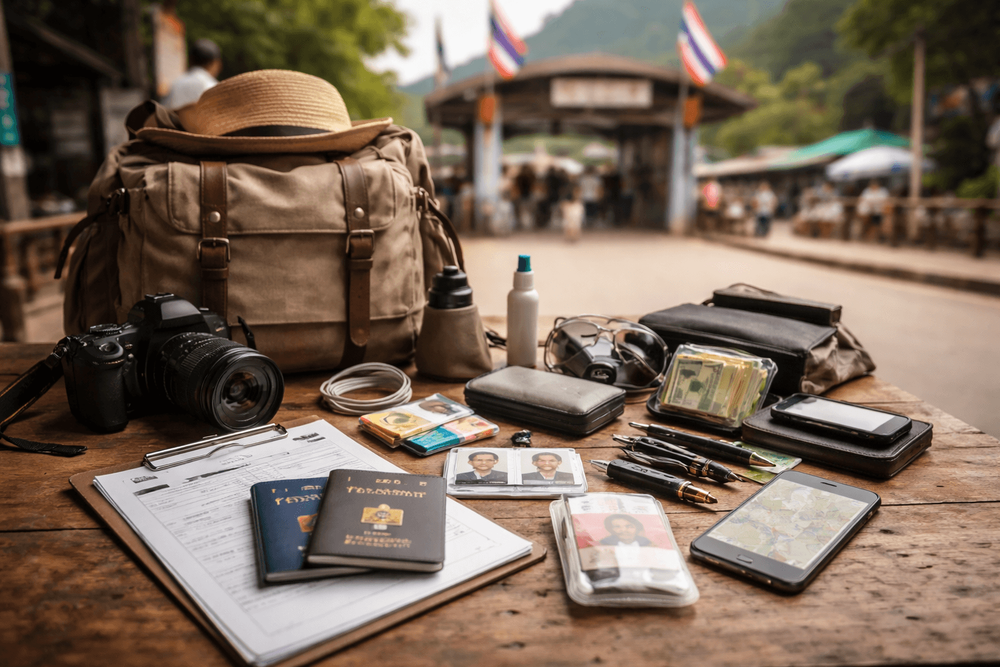
Quick-hit checklist (print or screenshot this)
- Passport with 6+ months’ validity (safer standard) and 1–2 blank pages
- Printed copies of passport bio page + current Thai entry stamp
- 2–4 passport photos (Thai 4x6 cm work well; 2x2 inch also fine)
- Proof of onward travel and accommodation details (printed or offline)
- Cash: Thai baht in small bills + crisp USD for neighboring visas/fees
- Cards: one debit, one credit, kept in separate places
- Pen, phone with offline maps and key docs saved
- Power bank + cables, universal adapter, SIM/eSIM plan
- Water, salty snacks, tissues/wet wipes, small sanitizer
- Lightweight rain layer/poncho, hat, sunscreen, insect repellent
- Basic meds and any prescriptions (in original packaging)
1) Essential documents you need at land borders
Nothing kills the buzz like getting bounced for paperwork you could’ve sorted on Rambuttri the night before. Here’s how we prep.
Passport, validity, and pages
- Validity: Aim for at least 6 months remaining at the time of crossing. Some officers are flexible, some aren’t—we play it safe.
- Blank pages: Keep at least 1–2 empty pages. Visas and entry/exit stamps can sprawl.
Visas and entry policies (yours may differ)
- Thailand policy: Many nationalities enter visa-exempt for a set number of days and may re-enter by land a limited number of times per year. The exact rules change; we screenshot the current policy the night before and keep it offline.
- Neighbor visas: Cambodia and Laos often allow visas on arrival for many nationalities; Malaysia typically stamps visa-free for many travelers. Fees and eligibility vary—check your nationality’s specifics and bring enough cash in the specified currency.
Proof of onward travel and funds
- Onward ticket: Land borders sometimes ask. A bus, train, or flight confirmation (screenshot/print) usually does the trick.
- Funds: Officers can ask for proof of means. We carry a mix of cash and keep a bank balance screenshot offline.
Entry/exit forms and photos
- Arrival/departure cards: These come and go. Some crossings hand you TM.6 or local arrival cards; some don’t. Have a pen. Don’t pay “helpers” for free forms.
- Passport photos: 4x6 cm Thai photos cover most cases. We carry 2–4 in a Ziploc. You can get a set around Khaosan Palace Hotel for 100–200 baht; border photo booths exist but cost more and burn time.
Copies and backups
- Physical copies: Passport bio page, current Thai stamp or visa, and any e-visa letters. Keep one set in your daypack, one deep in your main bag.
- Digital backups: Save everything to phone + cloud: passport scan, insurance, visas, tickets, hotel bookings. Download for offline access.
deeper docs-and-copies rundown (/articles/thailand-visa-run-packing-list-documents-copies-transit-essentials).
2) Clothing and gear for land crossings
We dress for Bangkok humidity, bus AC set to antarctic, and the chance of a sideways monsoon the second we step off at Aranyaprathet.
Wearable layers
- Top: Breathable tee or quick-dry shirt. If you’ll hit a temple on the far side, pack a lightweight scarf/sarong for shoulders.
- Outer: Ultralight rain shell or a cheap poncho from 7-Eleven (30–50 baht). Doubles as seat cover in soggy tuk-tuks.
- Bottoms: Quick-dry shorts or light pants with zip pockets. Avoid the heavy denim sauna.
- Footwear: Broken-in sneakers or breathable walking shoes. Slip-on styles help at checkpoints where shoes come off.
- Hat and sunnies: Sun hits harder on open border roads.
Daypack essentials (top-access)
- Travel wallet: Passport, photos, printed docs, small bills—packed flat in a waterproof pouch. We’re not flashing a whole wad at a window.
- Phone kit: Power bank (10,000–20,000 mAh), cables, and a universal adapter. Southeast Asia runs 220V; sockets generally accept two flat or two round pins.
- Hydration: 1L bottle minimum. We add electrolyte tablets—border queues plus midday heat equals salt loss.
- Microfleece or thin scarf: For buses that think 17°C AC is hospitality.
- Compact umbrella: If you hate ponchos, the tiny brolly is worth its grams.
Thailand Packing List for Backpackers: Day Bag Essentials for Flights, Temples, and Tours (/articles/thailand-day-bag-packing-list).
3) Money and travel logistics you’ll actually use
Borders love exact change. We keep cash staged like a street-food mise en place: small bills ready, big notes buried.
Cash, currencies, and denominations
- Thai baht: Lots of 20s, 50s, and 100s for songthaews, photocopies, snacks, and legit fees priced in baht.
- USD: Crisp $1, $5, and $10 bills. Many neighboring visas/fees are priced in USD and some booths reject torn/old notes.
- Neighbor currency: If you know you’ll need Lao kip or Malaysian ringgit sooner than later, exchange a small starter stash in Bangkok for a fairer rate.
Cards and ATMs
- Bring two cards in separate places. If one gets swallowed or flagged, you’re not stuck.
- ATMs often sit after immigration; fees and limits vary. We sometimes pull a small amount from a money changer for immediate tuk-tuk/bus fare, then hit an ATM in town.
Phone, SIMs, and eSIMs
- Thai SIMs generally roam; check your plan’s border data rates. Otherwise, buy a local SIM post-crossing (passport required for registration). An eSIM set up the night before saves a scavenger hunt.
- Keep a SIM tool or paperclip and a tiny Ziploc for the SIM you swap out. Label it—every SIM looks the same at 6 a.m.
Power and apps
- Power bank topped up; cables coiled. We also download offline maps, a translation app, and a currency converter. Screenshots beat no-signal purgatory.
Copies of the important stuff
- We print hotel names and addresses in both English and local script when possible. It makes haggling with drivers easier and form-filling faster.
4) Health, safety, and comfort that pay off in queues
Think of this as your mini 7-Eleven—minus the blast of AC and the durian chips.
Water, snacks, and sun
- Water: 1L plus a backup plan. We refill at stations or buy big bottles to split. Electrolyte packets help after long queues in full sun.
- Snacks: Peanut bars, dried fruit, or seaweed packets. You’ll smell grilled pork; you won’t want to abandon your place in line.
- Sunscreen and lip balm: SPF 50 goes on in Bangkok; reapply at the border.
Meds and first aid
- Motion sickness pills for bus and minivan swerves. Paracetamol/ibuprofen, antihistamines, and loperamide for the unlucky moments.
- Any prescriptions in original packaging with a copy of the script. If you carry controlled meds, bring a doctor’s letter.
- Band-aids, antiseptic wipes, and a couple of blister patches. Border days are somehow 12,000-step days.
Hygiene and comfort
- Tissues and wet wipes. Some checkpoints have squat toilets and a pay-to-pee box; bring coins.
- Small hand sanitizer and a bar of soap in a travel tin. We’ve seen sinks; we haven’t always seen soap.
- Light face mask if you’re sensitive to dust or diesel.
- Compact travel towel to wipe sweat or a sudden downpour.
Smart Packing for Thailand: Medications, Toiletries, and Travel Documents Checklist (/articles/thailand-travel-checklist-medications-toiletries-documents).
5) Border-crossing tips tied to what you pack
These are the habits that make or break a quick crossing, learned the spicy way.
Keep the right things on top
- Documents pouch rides in your daypack’s top pocket. Don’t bury it under laundry. We stage it night-before on Phra Athit Road with a mango smoothie and a checklist.
- Photos and small USD bills in a flat Ziploc you can slip out without flashing your bankroll.
Don’t bring what gets you fined
- Vapes and e-liquids: Don’t carry them across borders into Thailand—penalties can be steep.
- Cannabis or infused products: Don’t import or export. Whatever you’ve heard on the street, border rules are not vibes-based.
- Drones: Heavily regulated; permits vary. If you don’t have paperwork, leave it.
- Knives and “tactical” gear: Skip anything that looks like a problem on an x-ray.
- Fresh produce, meat, and dairy: Varies by country and can attract attention; better to buy food on the other side.
Expect “helpers,” avoid detours
- Tuk-tuk drivers at some crossings love the “visa agency” loop. You don’t need an agent for standard crossings. Stick to the official windows—signposted and usually the ones with the longest, slowest-moving line.
- Forms are free. If someone asks for payment for a basic arrival card, smile, sawadee, and step away.
Timing and queues
- Early beats everything. We aim to hit immigration within an hour of opening to dodge the tour-bus crush.
- Rain gear on top in wet season. Nothing says welcome like a paper form in a monsoon.
Money and receipts
- Official fees are posted. If someone quotes more, politely ask to see the rate sheet or pay at the window.
- Keep receipts—especially for visas on arrival. Take a quick phone photo too.
Land border realities
- Border hours change. Check the specific crossing the night before; closures happen around holidays or for local reasons.
- Some borders require you to walk a few hundred meters between exit and entry points. Comfortable shoes and a sunhat save the day here.
Know before you go: customs, allowances, and logistics
- Alcohol/cigarettes into Thailand: Typical personal allowances apply (often around 1 liter of alcohol and 200 cigarettes), but rules can shift—pack light and check current limits.
- Dutiable goods: Big electronics or stacks of brand-new clothes can raise eyebrows. Keep receipts handy if you must carry expensive gear.
- Insurance: Keep policy details offline. A stamped denial is rare but medical mishaps are not.
- Address in Thailand: Many forms ask for where you’ll stay. We keep the name and address of our Bangkok guesthouse/screenshotted booking handy. Around Khao San, places on Soi Rambuttri and Phra Athit Road make easy landmarks for forms and taxi drivers.
If you’re building out a bigger kit beyond border days, our general Backpacker Packing List for Thailand (/articles/backpacker-packing-list-for-thailand-2026-06-06) has you covered.
Getting there from Bangkok: common land hops
- Aranyaprathet/Poipet (Cambodia): Buses and minivans from Mo Chit. Beware the visa-agency carousel; you can get the visa at the official Cambodian window if eligible. Have USD and a photo.
- Nong Khai/Thanaleng (Laos): Trains from Krung Thep Aphiwat (Bangkok) and buses from Mo Chit. The Thai–Lao Friendship Bridge shuttle links the checkpoints; small fee in cash.
- Padang Besar (Malaysia): Trains run all the way through when timetables behave. Malaysia often stamps many nationals visa-free—check yours.
- Hat Lek/Koh Kong (Cambodia, via Trat): Minivans from Ekkamai or Mo Chit. Good to pack extra water; facilities thin out here.
- Ranong/Kawthaung (Myanmar): Status can change; check openings. Crossings may involve a short boat hop—dry bag your docs.
We like to stage in Bangkok near Khao San the night before—grab last-minute photos on Soi Rambuttri, hit the 7-Eleven for snacks, and catch an early taxi to the bus terminal while the city is still yawning.
Sample border-day packing layout (10-second access)
- Right hip pocket: Phone with boarding/ticket screenshots
- Left hip pocket: Small wad of 20/50/100 baht notes
- Neck wallet or inner jacket pocket: Passport + 2 photos + USD in a Ziploc
- Daypack top pocket: Pen, printed docs, sanitizer, tissues
- Daypack main: Water, snacks, rain shell, power bank
- Deep bag: Extra clothes, bigger cash reserve, backup cards
Train your hands to go to the same places every time. When the officer asks for a photo and your fingers already know the Ziploc, the line breathes easier—and so do we.
Common mistakes we see at borders (and how to dodge them)
- Loose cash explosions at the window
- Fix: Stage small bills up front. Keep the fat stack hidden.
- No pen, no photos, no copies
- Fix: Pen clipped inside the pouch, photos in a Ziploc, copies printed the night before.
- Relying on signal for everything
- Fix: Offline maps and screenshots. Airport-grade dead zones happen at rural borders, too.
- Wearing the wrong shoes
- Fix: Comfy, breathable, easy on/off. Wet floors and 200-meter walks are common.
- Overpacking the day bag
- Fix: Keep it nimble. Border security searches are easier when your bag isn’t a yard sale.
- Carrying banned or risky items
- Fix: Leave vapes, cannabis, drones, and big knives at the guesthouse. Save the lectures for the bass-thumping bar on Khao San, not a customs table.
Final prep: the night before on Khao San
We do a last kit check on Phra Athit Road with a plate of moo ping and sticky rice, then swing past a photocopy shop for fresh printouts. Passport photos? Snag them tonight, not at the border. Water and electrolytes? 7-Eleven’s blast of AC and fluorescent hum makes it an easy grab. Then it’s early to bed, early to Mo Chit, and a smooth stamp out. Pack smart, move early, smile often—you’ll be on the other side before the wok at the border noodle stall hits its second sizzle.

If you want a master list to cross-check your setup, our Backpacker Packing List for Thailand (/articles/backpacker-packing-list-for-thailand-2026-05-08) is a good final sweep.
Related Hotels & Places
Khao San Road
Attractions
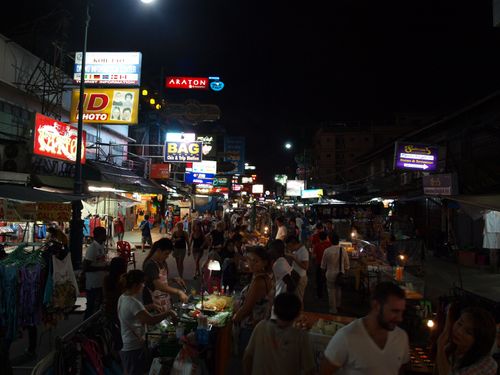
Bangkok’s backpacker carnival: curbside bars, live bands and DJs from 3pm–2am (midnight Sun). Street eats are cheap — pad thai 70–100 THB, mango sticky rice 60–100 THB. Come for wild people-watching; duck into Rambuttri for a calmer beer.
Khaosan Palace Hotel
Hotels
Khaosan Palace Hotel provides flawless service and all the necessary facilities for visitors. Stay connected with your associates, as complimentary Wi-Fi is available during your entire visit. The hotel offers reception amenities including concierge service, luggage storage and safety deposit boxes
Rambuttri
Markets
Khao San’s calmer cousin: a tree‑shaded lane of VW van cocktail bars, open‑air foot massages, pad thai grills, and easygoing live bands. Best from sunset to 11pm; beers 80–120 THB, cocktails 150–220 THB. One block from the chaos, all the charm.
Recommended Products
More Khao San Road Guides
- What to Pack for Thailand for Visa Runs and Border Crossings: Documents, Copies, and Transit Essentials
- Backpacker Packing List for Thailand: Documents, Cash, and Travel Admin Essentials
- What to Pack for Thailand for Document Safety: Passport Protection, Copies, Wallet Setup, and Travel Insurance Papers
- Backpacker Packing List for Thailand’s Southeast Border Trips: Beach, Jungle, and Small-Town Basics