
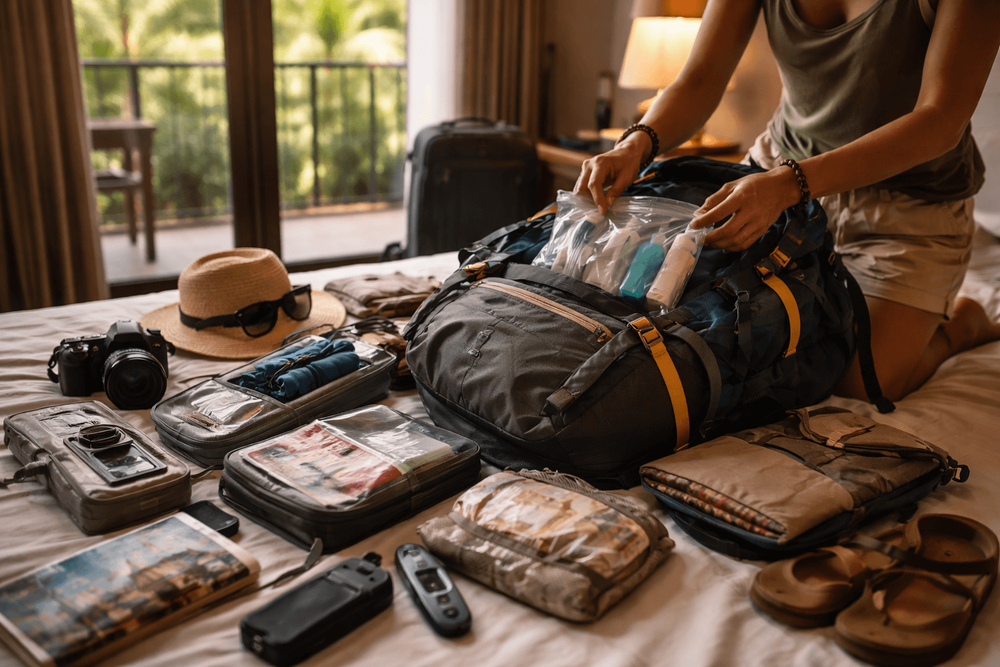
Thailand Backpacker Packing List for Budget Airlines and Weight-Limit Fees
Beat airline fees with a Thailand baggage allowance packing strategy: what to bring, weight limits, and savvy tips for budget flights and domestic hops.
We step out of the blast-chilled 7-Eleven on Khao San Road and straight into Bangkok’s soupy heat, the kind that sticks your shirt to your back before you finish your first sawadee. This is exactly why thailand baggage allowance packing matters: every kilo you don’t need is one less thing to haul down Baan Manee BKK, one less fee to argue about at Don Mueang’s check-in scales, and one more bowl of boat noodles you can afford on Phra Athit Road.
Data Freshness + Pricing:
- Prices are approximate and in THB.
- Last checked: June 2026
- Happy hour and promo details change frequently—confirm locally.
Thailand baggage allowance packing: what airlines actually allow
Here’s the part no one reads until they’re sweating at the gate: allowances change by airline, route, and even fare class. Budget carriers flying into and within Thailand are famously strict on weight, less strict on dimensions—until they’re not. We’ve watched farang ahead of us re-pack into cargo pants on the floor at Suvarnabhumi (BKK) while the gate agent’s scale blinks 7.9 kg.
Budget (low-cost) airlines you’ll likely meet
- AirAsia, Thai VietJet, Thai Lion Air, Nok Air (domestic specialist). These guys usually allow around 7 kg carry-on total; some permit one bag + a small personal item if both together stay under 7 kg. Dimensions are typically around 56 x 36 x 23 cm for the main bag, but what matters most is weight. Expect spot checks at the gate, especially at Don Mueang (DMK).
- Add checked baggage when you book. Prepaid bundles are much cheaper than airport rates—often by 30–60% (approx. 300–700 THB difference depending on route and weight band).
Full-service airlines
- Thai Airways and most intercontinental carriers usually include checked baggage (20–23 kg for economy on many routes) plus a carry-on (~7 kg) and a personal item. On domestic Thai Airways flights, economy often includes 20 kg checked, but verify your fare bucket.
Domestic vs international quirks
- Domestic flights: More weight policing at the gate with LCCs. Prepaying 15–20 kg checked can be cheaper than rolling the dice with a “7 kg” backpack that’s really 9. Airport counter overage is often charged per kg (approx. 200–400 THB/kg domestic), which hurts quickly.
- International legs into Thailand: Your originating airline’s rules apply until your first stopover. If you switch to a separate domestic ticket (e.g., BKK to Chiang Mai on a low-cost carrier), your previous allowance dies at the transfer. Reweigh and re-plan for the domestic hop.
Tip: We keep a tiny digital scale (approx. 150–300 THB from MBK Center) clipped in the pack’s lid. Saves tears at the counter.
If you’re gunning for carry-on only, our deeper dive on strategy is here: Thailand Carry-On Packing Guide: How to Travel with Just a Backpack.
What to pack for Thailand’s climate and activities
Bangkok’s climate is a wet sauna, Chiang Mai cools off in the evenings November–February, and the islands bless you with sun, salt, and sand in every crevice. We pack light, breathable, quick-dry pieces that layer for AC blasts on the BTS and temple modesty.
Clothing (hot, humid, temple-ready)
- 3–4 lightweight tops (merino or technical quick-dry). Dark colors hide the sweet rot of durian drips and street-food splatter.
- 2 pairs breathable shorts; 1 pair light pants for temples and night buses.
- 1 airy dress or sarong/pha khao ma multipurpose wrap—beach towel, temple cover, night-bus blanket.
- 3–5 pairs quick-dry underwear, 2–3 socks (you’ll be in sandals a lot).
- Ultralight rain shell or poncho (monsoon insurance; packs to a fist).
- Compact hat and sunglasses (the sun on the Chao Phraya boat is relentless).
Footwear
- Sandals with grip for rainy sois and boat piers.
- Lightweight sneakers for city miles and hikes up the Golden Mount stairs.
Wash kit and health
- Sunscreen (reef-safe if island-bound). Buy here if you want local brands (approx. 150–400 THB), but some have whitening agents—read labels.
- DEET or picaridin repellent (approx. 80–200 THB locally). Mosquitoes thrive near khlongs.
- Basic meds: rehydration salts, Imodium, antihistamines, painkillers. Pharmacies are everywhere, but we pack a starter stash.
- Reusable 1L bottle (empty at security, refill at water stations; many hostels provide filtered water).
- Microfiber towel (beach and hostel handy, dries fast in fan rooms).
Day tools
- Ultralight daypack that stuffs into your main bag for day trips to Ayutthaya or Chatuchak.
- Small lock for hostel lockers; eye mask and earplugs for The Gravitique Hotel Khaosan bass thump.
- Sarong for temple shoulders/knees (rentals exist but cost time and a small fee, approx. 20–50 THB).
For a tighter, minimalist breakdown, see: Carry-On Packing for Thailand: A Minimal Backpacker Checklist for Long Trips.
Carry-on vs checked: liquids, electronics, and what goes where
The rules in Thailand track global norms, with a few local gotchas.
Liquids and toiletries
- 100 ml limit per container in carry-on, in a 1-liter transparent bag. Security at BKK and DMK enforces this. Decant that aloe gel before your Koh Phangan run.
- Aerosols: check airline guidance; most allow travel-sized deodorants in carry-on within the 100 ml rule.
- Razors: disposable and cartridge razors are typically allowed in carry-on; straight razors and blades are not.
Power banks, batteries, and electronics
- Power banks must go in carry-on, not checked. Most airlines in Thailand follow IATA: up to 100 Wh without approval; 100–160 Wh usually requires airline approval; over 160 Wh not allowed. Check the label—many 10,000 mAh banks are ~37 Wh.
- Spare lithium batteries: carry-on only, terminals taped or in protective cases.
- Drones: allowed by some airlines in carry-on; Thailand has local registration rules if you’ll fly them. If unsure, pack in carry-on and ask your airline.
Adapters and voltage
- Thailand uses 220V, 50Hz. Sockets commonly accept two flat (US-style) or two round (EU-style) pins; grounded plugs vary. We carry a compact universal adapter and a short 3-outlet travel power strip. Many coffee shops—especially along Phra Athit—have limited sockets; one splitter makes friends fast.
Valuables and documents
- Passport, cards, meds, camera, laptop—carry-on only. We stash backups of key docs on a cloud drive and a USB key tucked in a dopp kit.
What belongs in checked baggage (if you have it)
- Multi-tools, trekking poles, large sunscreen or repellent bottles, pocket knives, scissors, and any liquids over 100 ml.
If you’re mixing a checked bag into your plan, this longer list helps balance weight: Thailand Packing List for Backpackers with Checked Bags: What to Bring When You Can Pack Bigger.
Fees, weight limits, and the nasty little surprises
We love low fares as much as a cold Chang on Soi Rambuttri, but budget airlines make money on the margins. Expect the following—and budget for it.
Prepaid vs airport baggage
- Prepaying 15–25 kg checked when booking or online check-in is usually the sweet spot. Airport purchase can be 30–60% more (approx. +300–700 THB vs prebook) for the same allowance.
- Tiers matter: 15, 20, 25, 30 kg—go one tier up if you’re close. Paying airport overage per kg (approx. 200–400 THB/kg domestic; 400–900 THB/kg regional) adds up faster than a tier bump.
The scale shuffle at the gate
- Some LCCs weigh carry-ons at the gate and charge a gate-check fee if you’re over (often a flat fee plus per-kg overage; approx. 600–1,500 THB total depending on route). Wearing your heaviest shoes and stuffing pockets is a time-tested, slightly cheeky move.
Sports gear and odd items
- Surfboards, dive gear, golf clubs, and musical instruments usually require special handling or a sports bundle. Prebook online—airport rates are steep (approx. 800–2,500 THB depending on item and sector).
Interline traps
- Two separate tickets? Your international allowance won’t protect you on your domestic LCC hop. Collect bags, re-check, re-weigh. Plan time and weight.
Airport storage and lockers
- Suvarnabhumi and Don Mueang both have left-luggage counters and some locker options. Day rates run approx. 80–200 THB for lockers and 150–300 THB/day for staffed storage, size-dependent. If you’re ditching a bag for a quick island loop, this is sanuk insurance.
For domestic hops with strict caps, this guide zooms in on the gotchas: Thailand Packing List for Backpackers in Domestic Flights and Baggage-Strict Travel.
Practical packing for beaches, temples, nightlife, rain, and long stays
Thailand isn’t one-size-fits-all. We tweak the kit by region and plan.
Beaches and islands (Samui, Phuket, Krabi, Koh Tao)
- Sarong, reef-safe sunscreen, rash guard, dry bag (5–10L) for longtail transfers. Your pack will ride in the bow and get splashed.
- Flip-flops for beach, sandals with tread for slick pier planks. Pack sandals light to keep that 7 kg dream alive.
- Snorkel? Rent on site (approx. 100–200 THB/day) unless you’re picky about mouthpieces.
Temples and culture days (Wat Pho, Wat Saket/Golden Mount, Ayutthaya)
- Shoulders and knees covered. We pack a light button-up and those miracle pants that look formal but weigh nothing.
- Slip-on shoes help with in-and-out at temple thresholds.
- Small change for donations and rental wraps (approx. 20–50 THB).
Nightlife (Khao San, Thonglor, RCA)
- Earplugs for the bass thump; cash-light, phone-heavy. Keep valuables front-facing on crowded sois.
- Dress codes vary—Khao San is sandals-and-shorts; rooftop bars can require closed shoes and long pants. One smart-casual outfit handles the skybar without the markup shock.
Rainy season (roughly May–Oct, varies by coast)
- Ultralight poncho or shell, quick-dry clothes, and a pack cover (or use a large trash bag liner—cheap and effective).
- Electronics in zip pouches inside the pack. A 5L dry bag doubles as beach kit and rain insurance.
Long-stay or work-from-Bangkok
- SIM or eSIM is cheap; a tiny USB-C or Lightning ethernet adapter helps in cafes with jittery Wi‑Fi.
- Laundry is everywhere (per-kilo service approx. 40–80 THB). Pack fewer pieces, wash more.
- If you’ll bounce between cities on LCCs, treat 7 kg like a religion and stash a foldable duffel (approx. 200–400 THB) to convert to checked only when needed.
Weight-saving tricks we actually use
- Wear the bulkiest shoes and layers on flight days. Bangkok’s airport AC will make that hoodie feel reasonable until you hit the taxi rank.
- Swap heavy cotton for tech fabrics; a merino tee can air out overnight on a Soi Rambuttri balcony and be fine by sunrise.
- Pack cubes to compress and keep gate repacks civilized.
- Ditch heavy guidebooks; download offline maps and lists over hostel Wi‑Fi. Screenshot your QR boarding pass—airport Wi‑Fi sign-ins can be fussy.
- Share chargers and adapters if traveling as a duo; one 30W brick can juice a phone and small tablet.
If you fly the cheapest fares a lot, this is the granular, fee-dodging playbook: What to Pack for Thailand for Budget Flight Travel: Airline Weight Limits, Compression, and Carry-On Organization.
Getting around Bangkok with bags (and keeping your cool)
- BTS/MRT vs taxis: Trains are predictable but involve stairs and crowds at rush hour. Elevators exist but can be hidden; follow the blue wheelchair signs. Taxis are cheap for two with bags (meter + airport surcharge where applicable), but watch for drivers who quote flat rates—ask for the meter or bail politely.
- Chao Phraya Express boats are fun but not with massive luggage at peak times; piers get jammed and decks get wet. Keep your bag’s rain cover handy.
- Tuk-tuks are for sanuk, not big duffels. They can manage one bag, two people, and a breeze through Old Town—but agree on price upfront (approx. 80–200 THB for short hops) and expect showtime driving.
- Khlong boats (canal boats) splash. Anything not water-resistant lives in a dry bag.
Know before you go: small rules, big impact
- Check-in cutoffs: LCC counters close punctually (30–45 minutes before departure). Late = rebook fee (approx. 800–2,000 THB depending on route).
- ID checks: Domestic flights accept passports; Thais use national ID. Some counters ask to verify the payment card used to book—have a photo or the card handy.
- Duty-free liquids on transfers: If you’re connecting to a domestic flight, keep duty-free alcohol sealed in STEBs or pack it into checked baggage before the domestic leg.
- Weigh stations: Many Thai airports have public scales in the check-in hall. We do a sneak weigh and shuffle items before queuing.
Sample ultralight, 7 kg carry-on build
- 30–35L backpack (~1–1.2 kg)
- Clothing above, total ~2.5–3 kg packed
- Toiletries (decanted) ~300 g
- Electronics: phone, small camera, e-reader, 10,000 mAh power bank, 30W charger, cables ~1–1.2 kg
- Sandals strapped outside or worn; sneakers on feet
- Sarong + microfiber towel ~250 g
- Dry bag + locks + meds ~300 g
That leaves a little buffer for snacks and that Chang singlet you’ll swear you won’t buy on Khao San (approx. 120–180 THB; you will).
Where we stash ourselves between flights
We aim for places near transit—short walks to the Airport Rail Link or easy taxi access keeps the bag schlep civilized. In the Old Town, staying near Soi Rambuttri or Phra Athit means food, river boats, and mellow nights, without Khao San’s 3 a.m. bass testing your earplugs. If you’ve got an early DMK hop, consider a spot on the north side of the city to dodge the dawn taxi meter crawl. No need to overpack—Bangkok rooms almost always have toiletries and spare towels, and laundry shops lurk on every soi.
Final word from the scales
Etekcity Digital Luggage Scale
We’ll be the ones nursing iced Thai tea on a plastic stool, smug that our packs slide under the seat and the gate agent waves us through. Pack for sweat, temples, and sudden downpours; prepay the kilos you truly need; and keep your liquids small and your power bank handy. When in doubt, we’d rather buy a cheap extra T‑shirt on Phra Athit than pay a per‑kilo penalty at DMK. See you on the river—first round of boat noodles is on whoever had to repack at the gate.
Related Hotels & Places
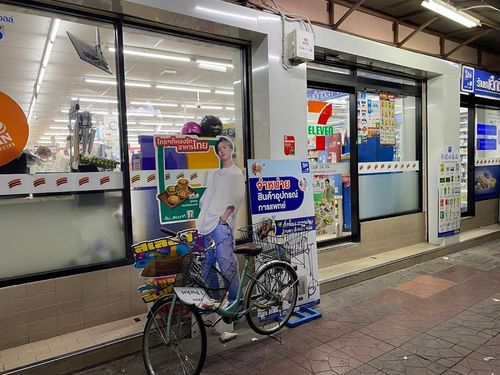
7-Eleven
Shops
Khao San’s 24/7 reset button: ice‑cold A/C, ham‑cheese toasties, All Café iced lattes, water for 7–14 THB, and late‑night supplies from snacks to sunscreen—right by Rikka Inn.
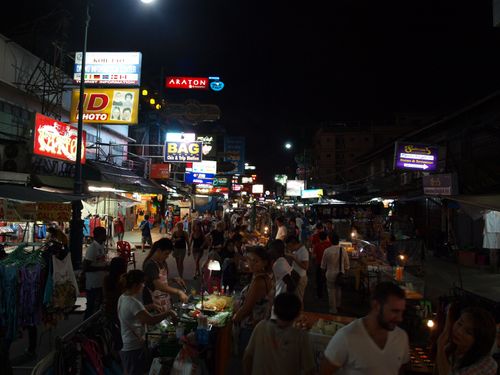
Khao San Road
Attractions
Bangkok’s backpacker carnival: curbside bars, live bands and DJs from 3pm–2am (midnight Sun). Street eats are cheap — pad thai 70–100 THB, mango sticky rice 60–100 THB. Come for wild people-watching; duck into Rambuttri for a calmer beer.
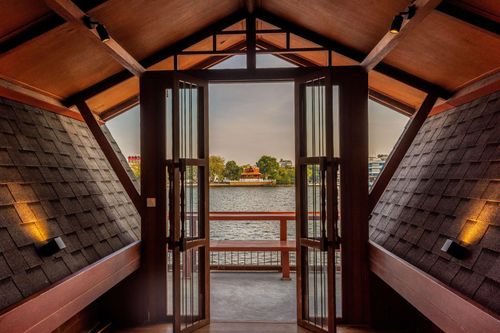
Baan Manee BKK
Hotels
A 118‑year‑old riverside house turned boutique stay and café. Sunset terrace, a small bar and a fire pit on the Chao Phraya. Ten minutes across from Khao San—come for proper coffee by day, drinks after dark, and quiet sleep away from the noise.
The Gravitique Hotel Khaosan
Hotels
Experience an abundance of unparalleled facilities and features at The Gravitique Hotel Khaosan.Maintain seamless communication using the complimentary Wi-Fi at hotel.Effortlessly arrange transportation to and from the airport using the hotel's airport transfer services.Discovering Bangkok becomes e
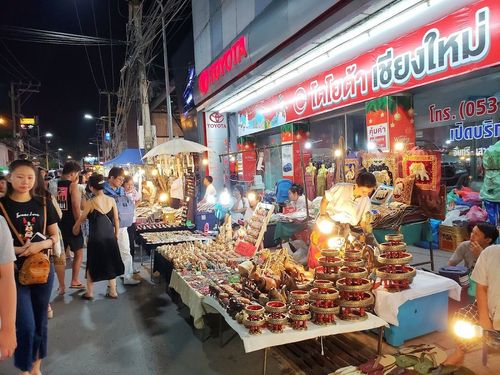
Tha Phae Walking Street
Shops
Recommended Products
More Khao San Road Guides
- Thailand Packing List for Backpackers on a Pack-Light Budget: Rewear, Buy-Local, and Reduce Luggage Costs
- Backpacker Packing List for Thailand for Daily Carry and Daypack Setup
- Thailand Packing List for Backpackers on a Tight Clothing Budget: How Many Outfits You Actually Need
- Backpacker Packing List for Thailand: Pack for Wet and Dry Adventures in One Trip