Wat Pho Guide from Khao San Road: Reclining Buddha, Massage School, and Best Time to Visit
Beat the crowds to Wat Pho from Khao San Road. See the Reclining Buddha, explore quiet courtyards, snag a Thai massage, and time your visit like a local.
We step out from the shade of Soi Rambuttri into the late-morning blaze, past a cart blistering pork skewers and a tuk-tuk idling like a dragon. Incense drifts on the breeze from Sanam Luang, and in ten minutes the spires of Wat Phra Chetuphon Wimon Mangkhalaram Rajwaramahawihan—officially Wat Phra Chetuphon Wimon Mangkhalaram—glint like scales. This Wat Pho guide is our playbook for ducking the tour groups, finding the quiet corners, and yes, getting the kind of Thai massage that resets your spine and your soul.
Why Wat Pho matters
Wat Pho isn’t just “the temple with the Reclining Buddha.” It’s one of Bangkok’s oldest and most important temple complexes, predating the city’s founding and expanded under Rama I when Bangkok became the capital. The monastery became a national repository of knowledge—sculptures, inscriptions, and murals that once functioned as a public university. That’s why you’ll see those stiff yet charming stone hermits demonstrating yoga-like poses (ruesi dat ton) and long marble tablets inscribed with anatomy diagrams and massage points. Culture here isn’t a display—it’s a working practice.
You’ll also find the largest collection of Buddha images in Thailand (over a thousand), four monumental chedis honoring early Chakri kings, and courtyards where mosaic shards catch the sun in constellations. Wat Pho hums with that Bangkok paradox: ancient, sacred, and yet absolutely alive.
The highlights you don’t want to miss
The Reclining Buddha (Phra Buddhasaiyas)
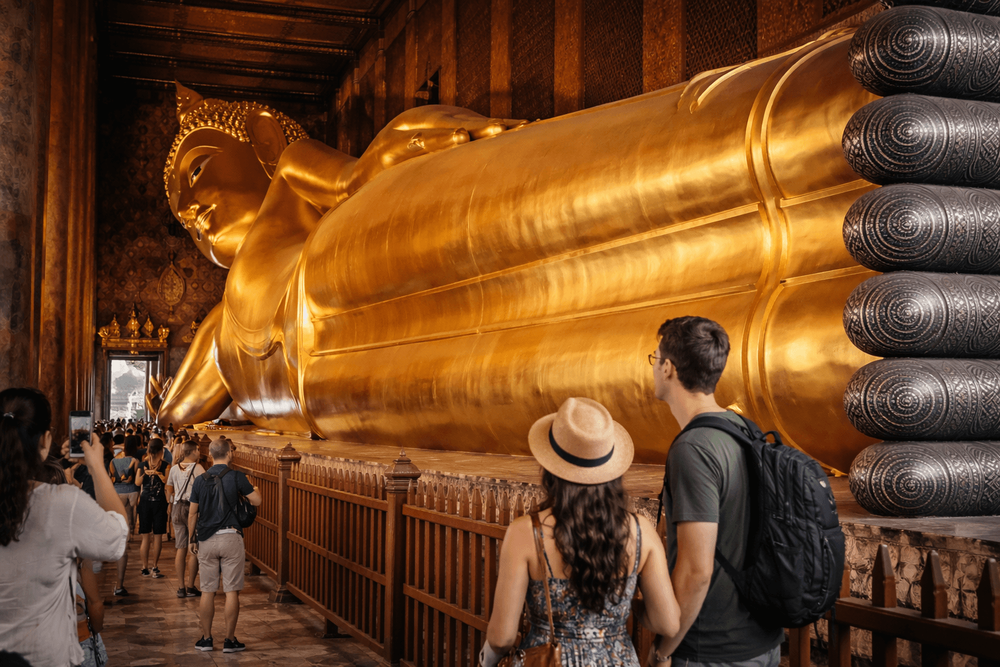
We slip off our shoes and pad across cool tiles into the viharn. Then he appears: 46 meters of serene gold, 15 meters high at the shoulder, a Buddha just after enlightenment, reclining into nirvana. It’s enormous but somehow intimate—the mother-of-pearl soles of the feet shimmer with 108 auspicious symbols; the hall smells faintly of wood polish and incense. Along the back wall, 108 bronze bowls line the corridor. Drop a cascade of coins—sanuk and meditative all at once—and listen to the soft ping-ping-ping. You can buy a little cup of coins at the entrance; it’s a small donation and a nice way to slow down.
Pro tip: step near the midsection first to let your eyes adjust, then circle to the feet for the best intricate detail.
Phra Ubosot (Ordination Hall)
Fewer visitors make it to the ubosot, which means fewer selfie sticks. Slip in and settle on the floor (feet tucked away from the Buddha—big etiquette point). The principal image, Phra Buddha Deva Patimakorn, sits on a gilded tiered pedestal. The mural work here rewards patience: lotus ponds, mythical creatures, scenes of daily life from the early Rattanakosin era. It’s a quiet counterpoint to the big wow of the Reclining Buddha.
Phra Maha Chedi Si Rajakarn
Four towering chedis—green, blue, yellow, and white—burst with floral mosaics. These honor Kings Rama I–IV. Stand at the base and look up; the sky narrows into a kaleidoscope of ceramic blossoms. If you’re a pattern nerd or a photographer, this is your sweet spot.
Courtyards, cloisters, and Buddha galleries
Wat Pho’s cloisters wrap around courtyards studded with smaller chedis and bodhi trees whispering in the heat. The galleries are lined with Buddha images in serene repetition—it’s like walking inside a mantra. In the northern compound you’ll also spot the contorted hermit statues—the original instruction manuals for Thai medical arts.
The Traditional Thai Massage School
Wat Pho’s Thai Traditional Medical and Massage School is the beating heart of the temple’s living knowledge. Massages here are the classic deal: pressure-point, stretch, and twist—no oils, just skill. Expect posted rates for 30- and 60-minute sessions (typically a few hundred baht; the board at the entrance has the exact price). It’s not a spa vibe. It’s wood benches, the soft rustle of cotton pants, a chorus of contented sighs. We like to book a session after exploring; your calves will thank you after all that tile time.
- Hours: generally mid-morning to early evening
- What to expect: you’ll change into loose pants; communication is minimal but friendly—say “bao bao” for lighter pressure, “nak nak” for stronger
- Tipping: not required but appreciated
Wat Pho guide: practical info from Khao San Road
Location
Wat Pho sits just south of the Grand Palace, bounded by Chetuphon Road and Thai Wang Alley, a short walk from the Chao Phraya at Tha Tien Pier. From Khao San Road and Soi Rambuttri, you’re practically neighbors—temple bells sometimes carry on the breeze all the way to Phra Athit.
Opening hours
Daily, roughly 8:00–18:30 (last entry around 18:00). The Reclining Buddha hall can close briefly for cleaning or ceremonies—if you find it closed, loop the grounds and try again.
Tickets and what’s included
- Entrance fee: adults typically 200 THB, payable at the main gate (prices can change; bring cash)
- Sometimes a small bottle of water is included—grab it; Bangkok doesn’t mess around with heat
- Children: free or discounted depending on height/age—check the posted sign
Dress code
Shoulders and knees covered; no see-through tops, short shorts, or crop tops. Bring a light scarf or pack-away pants. You’ll remove shoes to enter main halls—slip-ons beat laced boots every time. If you forget, sarongs or cover-ups are often available near the gate for a small fee or refundable deposit.
How to get there from Khao San
- Walk: 20–25 minutes. Head south along Tanao or Na Phra Lan past Sanam Luang, then follow signs to Wat Pho on Chetuphon Road. Early morning is best when the air’s still soft and the city yawns awake.
- Chao Phraya Express boat: our favorite. Walk to Phra Athit Pier (N13), hop the orange-flag boat (about 15–20 THB) to Tha Tien (N8), then walk 5 minutes. If boats are your thing, dive into the Chao Phraya River Guide: History, Boats, Cruises & Top Sights before you go.
- Tuk-tuk: fun, breezy, and occasionally detour-happy. Agree a fare upfront (expect around 80–150 THB from Khao San), and avoid “special stops” at gem shops.
- Taxi: insist on the meter; it’s a quick hop outside rush hour. From Khao San, fares usually land under 120 THB.
- MRT: Sanam Chai Station (Blue Line) is steps from Wat Pho. From Khao San you’ll still need a taxi, tuk-tuk, or river boat to connect.
Time on site: 60–90 minutes if you’re brisk; 2–3 hours if you linger in the ubosot, hit the massage school, and chase patterns with your camera.
Tips for visiting respectfully and efficiently
- Best time to go: Be there at opening (around 8:00) to have the Reclining Buddha more or less to ourselves. Late afternoon (after 16:00) also thins out and the light on the chedis is gorgeous. Tour groups peak 9:30–13:00.
- Heat strategy: It’s Bangkok—hydration is a sport. Freeze a bottle overnight, grab a backup from 7-Eleven (you’ll feel that blast of AC like a hug), and move between shaded cloisters. A small towel does wonders.
- Etiquette basics: Shoes off in main halls; hats off too. Keep voices low. Never point your feet at the Buddha; sit on your heels or cross-legged. Couples—save the cuddles for outside. Women shouldn’t touch monks; if offering something, place it on a nearby surface.
- Photos: Allowed in most areas; no flash in the Reclining Buddha hall and no tripods in busy spaces. Watch your framing—don’t block worshippers.
- Coin bowls: The little cup of coins for the 108 bowls costs a small note and buys a surprisingly serene minute of pinging merit.
- Scams: Outside the gates you may hear “Temple closed.” It isn’t. That line is Bangkok folklore. Walk to the ticket booth and you’ll be fine.
- Footwear: You’ll be in and out of shoes multiple times—easy-on sandals or slip-ons beat sweaty laces.
- Cash vs. cards: Bring small bills for donations, sarong rental, coin bowls, and street snacks near Tha Tien market.
- Respect the lines: The pathway along the Reclining Buddha gets narrow; go with the flow and pull off to the side for photos.
Nearby sights to build a perfect temple day
You’ve come this far—let’s stack the day so it sings.
Grand Palace and Wat Phra Kaew
From Wat Pho, the Grand Palace is a 10–15 minute walk north. It’s dazzling—and busy. If you plan to tackle both in one punch, read the Grand Palace Bangkok: Complete Visitor Guide (from Khao San Road) for dress code specifics and timing tips. Pairing the palace either before 9:00 or after 14:30 works best.
Wat Arun (Temple of Dawn)
From Tha Tien Pier, a tiny cross-river ferry shuttles you to Wat Arun for a handful of baht. Climb the steep prang steps for river views and a breeze that feels earned. Late afternoon light on Wat Arun is magic; sunset over the Chao Phraya will make your camera smug.
Museum Siam and Sanam Chai
If you want air-con and context, Museum Siam sits just behind Wat Pho near MRT Sanam Chai. It’s playful and modern—great for understanding how Thailand tells its own story.
Amulet Market and riverside rambles
Cut toward Tha Chang and lose yourself in the Amulet Market’s talismans and murmur of bargaining monks. Or head back upriver via Phra Athit Road for coffee, bars, and leafy verandas; our riverside cheat sheet lives here: Phra Athit Road Bangkok: Riverside Guide to Cafes, Bars & Attractions.
Food stops we swear by nearby
- Tha Tien Market: The air is a jumble—dried seafood funk, sizzling woks, just-cut coconut. Grab a plate of khao gaeng (curry over rice), or a bowl of tom yum with river prawns if you find a packed shophouse—locals know.
- Street sweets: Coconut ice cream with sticky rice; mango when it’s in season; a bag of guava dusted with chili-salt.
- Maha Chai Road detour: If you’re chasing the legendary wok breath, the city’s most famous crab omelette is a 15–20 minute walk west. Prices are high, queues are real, and the spectacle is undeniable.
Where to base ourselves near Khao San
We like to keep our temple days easy. Staying around Khao San, Soi Rambuttri, or Phra Athit makes Wat Pho an unrushed morning walk or one breezy boat ride. Our usual formula:
- Budget: a guesthouse on Soi Rambuttri with a shady courtyard, ceiling fans, and coffee within arm’s reach
- Mid-range: something with a pool—post-Wat Pho dips are bliss in April heat
- Quiet nights: Phra Athit’s small hotels along the khlong side streets trade bar noise for river breezes
Wherever you land, confirm late checkout or a luggage stash so you can freshen up after the sweat marathon that is a Bangkok afternoon.
Sample routes we actually use
- Early bird: Walk from Khao San at 7:45, tickets at Wat Pho by opening, ubosot first, then Reclining Buddha as the buses roll in. Coffee break, cross to Wat Arun, late lunch at Tha Tien, siesta. If you’re mapping a bigger day, our step-by-step plan is here: Khao San Road to Wat Pho, the Grand Palace, and Golden Mount: The Best Temple Day Route.
- River ramble: Phra Athit Pier to Tha Tien, Wat Pho + massage, ferry to Wat Arun for sunset, then back upriver for beers on Phra Athit. Study up with the Chao Phraya River Guide: History, Boats, Cruises & Top Sights.
Know before you go
- Ceremony days: Parts of the complex may close for monastic rites. If a hall’s roped off, take it as a gift—more time with the chedis.
- Weather: Rain can slam down and vanish in 15 minutes. Carry a tiny umbrella or packable poncho.
- Accessibility: The grounds are mostly flat, but thresholds into halls can be tricky. Take your time; staff are helpful.
- Deep dive: If you want more detail on hours and what’s nearby, we keep a broader reference here: Wat Pho Bangkok Guide — Reclining Buddha, hours, tips & nearby hotels.
We’ll meet you at the coin bowls—drop a wish in each one, then chase the breeze toward the river. When the orange-flag boat thumps into Tha Tien and the skyline lifts, you’ll know you timed Wat Pho right.
Related Hotels & Places
Sanam Luang
Attractions
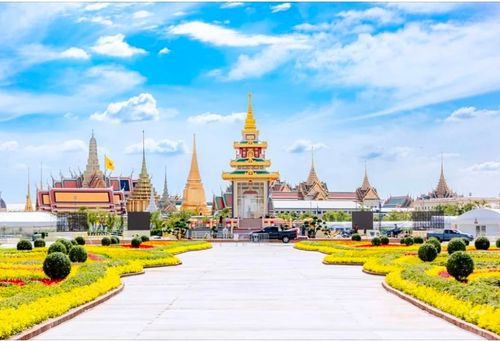
Bangkok’s royal lawn facing the Grand Palace. Free to wander, ringed by tamarind trees, popular for kite flying (Feb–Apr) and lazy green‑space hangs. A 10‑minute walk from Khao San; come early for soft light and street snacks along Na Phra That Rd.
Wat Phra Chetuphon Wimon Mangkhalaram Rajwaramahawihan
Temples
More Khao San Road Guides
- Wat Pho from Khao San Road: Reclining Buddha Visit Guide, Tickets, Dress Code, and Best Time to Go
- Wat Pho from Khao San Road: Reclining Buddha, Massage School, and River-Edge Visit Tips
- Wat Pho from Khao San Road: Reclining Buddha, Massage School, and the Best Time to Visit
- Wat Pho Visitor Guide: Reclining Buddha, Massage School, and Temple Tips from Khao San Road