Wat Pho Bangkok Guide — Reclining Buddha, hours, tips & nearby hotels
Slip off your shoes and meet Wat Pho Bangkok: Reclining Buddha, hours, tickets, dress code, massage, how to get there from Khao San, and where we stay nearby.
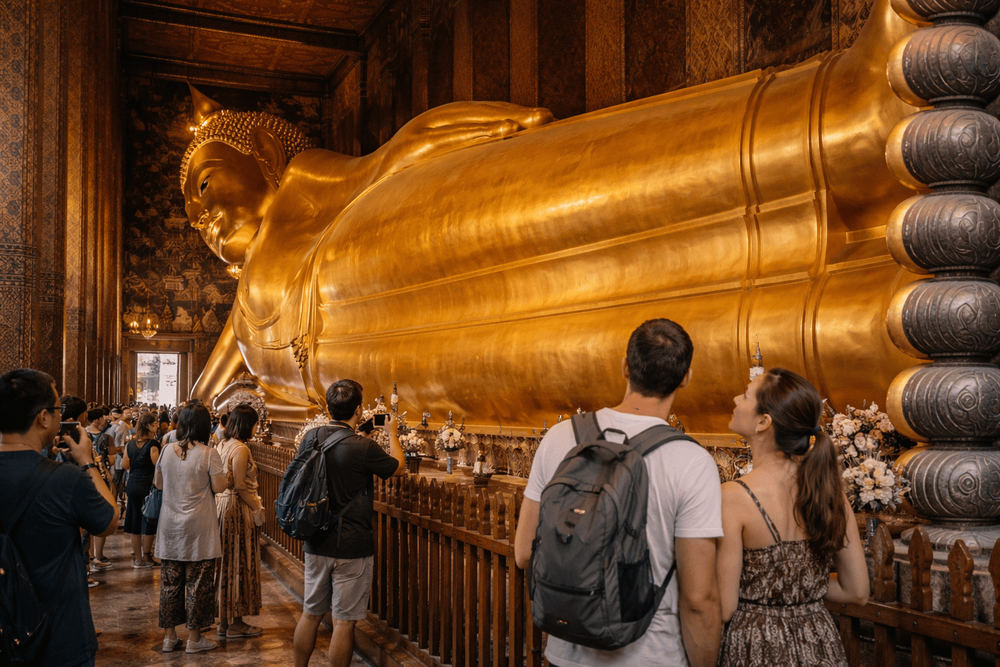
We slip off our shoes and the heat of the flagstones gives way to cool tile. A fan chops the thick air. Incense, a hint of jasmine, and the metallic clink of coins threading 108 bowls. We crane our necks and there it is: the golden sweep of the Reclining Buddha filling the hall like a sunbeam at rest. This is Wat Pho Bangkok—the temple you can feel in your chest as much as you see with your eyes.
Why Wat Pho belongs on your Bangkok short list
Wat Pho (Wat Phra Chetuphon Wimon Mangkhalaram) is one of Bangkok’s most storied temples, famous for its 46-meter-long Reclining Buddha, its sea of serene Buddha images, and its role as the birthplace of traditional Thai massage. It’s a stone’s throw from the river at Tha Tien and a short hop from the Grand Palace, which makes it ideal if you’re temple-hopping on limited time.
Beyond the postcards, Wat Pho Bangkok rewards slow looking: mother-of-pearl inlay on the Buddha’s feet, walled cloisters hiding hundreds of gilded statues, glazed-tile stupas glowing jade and saffron in the sun, and shady salas where rishi (hermit) statues demonstrate massage and yoga poses that have soothed sore muscles since the days when khlongs were highways.
Tip we live by: if we’re planning an early temple run from Khao San, we usually crash at Lamphu House. The price-to-comfort ratio is a Bangkok unicorn, and being in Banglamphu means a quick river hop to Tha Tien before the tour buses roll in.
A little history and the big highlights
Wat Pho predates Bangkok itself. When King Rama I moved the capital to Rattanakosin in 1782, he expanded an existing temple on this site and filled it with Buddha images collected from across the kingdom. Later kings added the iconic Phra Maha Chedi Si Rajakarn—four towering tiled stupas honoring the first four Chakri kings—plus libraries, cloisters, and the scripture halls. Somewhere along the way, stone plaques and hermit statues turned the grounds into a living encyclopedia of Thai medicine, yoga, and massage.
- The Reclining Buddha: 46 meters long and 15 meters high, gilded and dreamy, with 108 auspicious symbols picked out in mother-of-pearl on the soles of his feet. It’s a tight squeeze in the viharn (chapel), so we slide along the right-hand side first for the classic head shot, then loop behind to admire the inlay.
- The massage school: Officially Wat Pho Thai Traditional Medical and Massage School. You can book a foot or Thai massage right on the grounds—pure sanuk after dusty temple wandering. Expect a queue during peak hours.
- Phra Ubosot (ordination hall): The main hall with Phra Buddha Theva Patimakorn shimmering on a tiered altar. It’s calmer here than the Reclining Buddha hall; we like to linger and watch the light move across the murals.
- Cloisters and courtyards: More than 300 Buddha images line the galleries, all calm half-smiles and graceful mudras. Between them are stone giants and rishi statues frozen mid-stretch, guardians and teachers for anyone paying attention.
What to see: our must-not-miss list
We love to loop Wat Pho clockwise from the main Chetuphon Road entrance so we can hit the showstoppers, then drift into the quiet corners.
1) Reclining Buddha hall (Viharn Phra Nok)
- The feet: Don’t rush past. The mother-of-pearl panels detail 108 auspicious symbols—fans, parasols, flowers, mythical beasts—like a cosmic resume. Photograph from the back corner for the full sole shot.
- The 108 bowls: Pick up a small bag of coins (usually 20 THB) and drop one in each bowl along the wall. The rhythmic clink-clink is oddly meditative, and proceeds go to temple upkeep.
2) Phra Ubosot (ordination hall)
- Murals of the Ramakien and daily life scenes reward close looking. The hall is active for ordinations, so move quietly and follow the lead of worshippers.
- Look up: The ceiling medallions and chandeliers are a riot of red and gold.
3) Phra Maha Chedi Si Rajakarn (the four giant stupas)
- Green, white, yellow, and blue chedis representing Ramas I–IV. Glazed tiles glint in the sun—great for photos just after opening or late afternoon when the light rakes across the relief.
- Duck into the surrounding galleries for an ocean of serene Buddhas collected from Ayutthaya, Sukhothai, and beyond.
4) Massage pavilions & rishi statues
- The open-air salas display bas-relief diagrams of pressure points and contortionist poses that informed traditional Thai massage. Nearby stone hermits demonstrate the stretches. It’s Bangkok’s most photogenic anatomy lesson.
5) Scripture hall and small museum
- Phra Mondop (scripture hall) protects sacred texts; admire from the outside unless it’s open for special occasions.
- The small on-site museum (hours vary, often limited to weekends/afternoons) holds Buddha images, ceramics, and historical oddities. If it’s open when you pass, pop in for 15 minutes of cool air and context.
Practical info: Wat Pho hours, tickets, dress code and photos
- Opening hours: Daily, roughly 08:00–18:30 (last entry around 18:00). The massage pavilions usually operate from late morning to early evening. Hours can shift on Buddhist holidays.
- Tickets: Expect 200 THB per foreign adult. Kids under a certain height are sometimes free. Your ticket typically includes a small bottle of water—swap the stub at the kiosk inside. Cash and cards are generally accepted, but a pocketful of baht speeds things up.
- Dress code: Cover shoulders and knees; no see-through clothing. Sarongs are sometimes lent or rented at the gate, but bring a light scarf or wear long shorts and you’ll breeze in. Hats off inside chapels. Shoes off before you enter any main hall.
- Photography: Allowed in most outdoor areas and inside the Reclining Buddha hall, but no flash near Buddha images, no tripods, and never climb or lean on anything sacred. Drones are a hard no.
- Time needed: 60–90 minutes if you’re focused; 2 hours if you’re the kind who reads murals and stops for a foot massage.
- Heat: This is Rattanakosin—shadeless in the wrong moment. Carry water, duck into shadows, and budget a 7-Eleven blast of AC outside Tha Tien Pier if needed.
Getting to Wat Pho from Khao San Road (and everywhere else)
Bangkok traffic is a trickster; boats and MRT often beat roads.
From Khao San Road / Banglamphu
- Boat: Walk 10–15 minutes down Phra Athit Road to Phra Arthit Pier (N13). Hop the Chao Phraya Express Boat (orange flag is fine; 16–20 THB). Get off at Tha Tien (N8). From the pier, follow signs past the dried fish stalls and amulet vendors; Wat Pho’s gate is a 5-minute stroll.
- Bus: Public bus 47 rumbles along Ratchadamnoen toward Wat Pho and Hua Lamphong; fares from 10–20 THB depending on AC/no-AC. It’s slower, but fun if you like local color.
- Tuk-tuk/taxi: 10–15 minutes without traffic, 60–120 THB tuk-tuk or metered taxi. If anyone says “temple closed,” smile, say “mai pen rai,” and keep going—the classic scam.
From Sukhumvit, Silom, Chinatown
- BTS + Boat: Skytrain to Saphan Taksin (S6), exit 2 to Sathorn Pier, then Express Boat to Tha Tien (N8). Easy and scenic.
- MRT: Blue Line to Sanam Chai Station, Exit 1 (next to Museum Siam). From there it’s a 5–7 minute flat walk to Wat Pho’s Chetuphon gate. This is the least sweaty option in the hot season.
- From Yaowarat (Chinatown): It’s a short taxi or a leisurely 20–25 minute walk via Song Wat and Maharat roads if the weather’s kind.
Best time to visit and how to dodge the crowds
- Be there at 08:00: The first hour is hush and gold. You’ll shoot the Reclining Buddha without bobbing heads.
- Or go late: After 16:30 the heat backs off and the tour groups thin.
- Weekdays beat weekends, non-holiday days beat Buddhist holidays.
- Rainy season perk (May–Oct): Afternoon showers clear the air and the crowds; bring a light rain jacket and temple-friendly sandals.
Visitor tips: entrances, tours, accessibility, and etiquette
- Entrances: The main ticket gate sits along Chetuphon Road, near Sanam Chai MRT Exit 1. There’s also an entrance near Tha Tien Pier that funnels in boat arrivals. If one gate looks mobbed, try circling to the other.
- Guided tours: On-site guides often wait near the gates; agree a price up front (typical 300–800 THB for a quick 45–60 minutes). Audio guides are sometimes available; otherwise, your phone plus a printed map from the ticket booth works fine.
- Massage without the wait: If the queue at the massage pavilion is spilling out, swing by again after 16:30. Prices vary by treatment and duration; expect roughly 300–700 THB for 30–60 minutes.
- Accessibility: Grounds are mostly flat with a mix of smooth tile and old stone. Ramps exist at key thresholds but some chapel steps are unavoidable. Wheelchair users can see the Reclining Buddha (ask staff for the easiest route) and much of the courtyards. Accessible toilets are limited; plan ahead.
- Etiquette: Keep voices low, don’t point your feet at Buddha images, and step aside for worshippers. Sit with your feet tucked to the side if you take a rest inside the ubosot. Shoulders and knees covered, always.
- Safety & sanity: Sunscreen, hat, water. Keep your ticket—staff check it at multiple halls. Beware pickpockets in tight corridors. If you’re temple-hopping, stash a light sarong in your daypack.
Nearby attractions to combine with Wat Pho
You’re in the holy triangle here: Wat Pho, Wat Arun across the river, and the Grand Palace just to the north. Khao San and Banglamphu are a breezy tuk-tuk away for food and a sundowner.
- Wat Arun (Temple of Dawn): From Tha Tien, the cross-river ferry is a few baht and runs constantly. Climb the steep prangs for mosaic details and river breezes.
- Grand Palace & Wat Phra Kaew: Bangkok’s crown jewel of glitter and myth. We wrote up the nitty-gritty here: Grand Palace Bangkok: Complete Visitor Guide (from Khao San Road). Check hours and dress code (stricter than Wat Pho) and budget 2 hours minimum.
- Food near Tha Tien: Stalls around the pier sling grilled squid, kanom krok (coconut pancakes), and icy Thai tea. After you ferry or boat back to Banglamphu, we love dropping chopsticks at Tom Yum Kung Banglamphu for a brash, lemongrass blast.
- Post-temple evening: Clean up and catch a set at Din Restaurant and Jazz Bar on a mellow night. Nothing resets temple legs like live sax and a cold Singha.
Half-day itineraries from Khao San Road
We like to build around river timings and heat.
Option A: Dawn calm, temple trio, lunch back in Banglamphu (5–6 hours)
- 07:30 — Leave Khao San; walk to Phra Arthit Pier (N13).
- 08:00 — Boat to Tha Tien (N8); walk to Wat Pho right at opening.
- 08:10–09:30 — Wat Pho: Reclining Buddha first, then ubosot, chedis, and a 30-minute foot massage if the queue is short.
- 09:40–10:40 — Cross-ferry to Wat Arun; climb and cool down by the river.
- 11:00–12:30 — Back to Banglamphu by boat; lunch at Tom Yum Kung Banglamphu or graze Soi Rambuttri snacks.
- 12:30 — Siesta back at your guesthouse; if you booked at Lamphu House Bangkok, that courtyard pool hits different after temple heat.
Option B: Grand Palace first, then Wat Pho and sunset at Wat Arun (6–7 hours)
- 08:15–10:30 — Grand Palace & Wat Phra Kaew. Read up with our Grand Palace guide to nail the dress code.
- 10:45–12:00 — Stroll down Maharat Road to Tha Tien; snack stop; then Wat Pho late morning.
- 12:00–13:00 — Massage at Wat Pho (if queue manageable) or lunch around Tha Tien.
- 16:30 — Return to Wat Arun for golden-hour mosaics and river breeze.
- 18:30 — Boat back to Phra Arthit; dinner on Phra Athit Road, then a quiet beer as the bass thumps awake on Khao San.
Where to stay near Wat Pho (and why we pick Banglamphu)
Staying riverside is romantic, but we tend to base in Banglamphu for boats by day and noodle carts by night. For repeat runs to Wat Pho Bangkok and the Grand Palace, Lamphu House Bangkok keeps us close to Phra Athit Pier without the sticker shock—you’ll be at Tha Tien in 20 minutes door-to-door. Otherwise, any guesthouse within a 10-minute walk of Khao San or Soi Rambuttri sets you up for easy river rides and late-night mango sticky rice.
Know before you book: Wat Pho and the Grand Palace open early and shut relatively early. That’s another reason we sleep near the river—easier dawn departures, far fewer taxi headaches.
We’ll be up early tomorrow, chasing that first slant of light across the chedis. If you’re up for it, we’ll meet you by the bells just inside the Chetuphon gate—shoes off, eyes up, and let Bangkok slow our pulse for a minute.
Related Hotels & Places
Lamphu House Bangkok
Hotels
Din Restaurant and Jazz Bar
Bars
Great food paired with live jazz music near Khao San Road. A refined dining and music experience in Banglamphu.
Tom Yum Kung Banglamphu
Restaurants
Big seafood restaurant near Khao San Road with neon lights, massive plates, and the signature tom yum kung.
More Khao San Road Guides
- Wat Pho from Khao San Road: Reclining Buddha, Massage School, and the Best Time to Visit
- Wat Pho Visitor Guide: Reclining Buddha, Massage School, and Temple Tips from Khao San Road
- Wat Pho Guide from Khao San Road: Reclining Buddha, Massage School, and Best Time to Visit
- Wat Pho from Khao San Road: Reclining Buddha Visit Guide, Tickets, Dress Code, and Best Time to Go