Chao Phraya River Guide: History, Boats, Cruises & Top Sights
Ride Bangkok’s Chao Phraya River like a local: boats, tickets, top sights, cruises, and how to hop from Khao San to temples without the traffic.
We step onto Phra Arthit Pier just as the Orange Flag roars in, diesel and river spray in the air, saffron robes flickering at the edge of our vision. The Chao Phraya River is alive beneath us—long-tail boats knifing the chop, ferries clanging against wood, a conductor whistling us aboard. Two stops later we’re at Tha Chang, dodging tuk-tuks and the sweet rot of durian near the market, that thump of bass from a Khao San bar receding behind us. This is Bangkok’s backbone, and if we ride it right, the city opens up.
What is the Chao Phraya River? Quick overview & history
They call it Mae Nam Chao Phraya—the River of Kings. Fed by the Ping and Nan rivers up north, it gathers at Nakhon Sawan and slides 372 km south to the Gulf of Thailand, carving Bangkok into shimmering ribbons of water and khlongs (canals). Kings, monks, merchants, farang—everyone has ridden its brown-green back.
Bangkok became the capital in 1782 on Rattanakosin Island, the fortified bend on the river’s east bank. Khlongs were the first highways—food, teak, ceramics arriving by boat; letters ferried by paddle at dawn. Communities bloomed along the banks: Portuguese Catholics built Santa Cruz Church; Chinese traders set up shop around Sampeng and Yaowarat; Muslims, Mon, and Lao communities dotted Thonburi’s west bank. In the 19th century, trade houses rose along Charoen Krung Road—the city’s first paved road—because the river demanded it.
Today, barges still haul rice, the Chao Phraya Express Boat whistles commuters aboard, and dinner cruises sweep past temple spires lit like lanterns. For us travelers, the Chao Phraya River is the easiest way to jump between Bangkok’s most iconic sights and to feel the city breathe.
Why the river matters for Bangkok travelers
- It’s faster than traffic. When Sukhumvit is a parking lot and taxis shake their heads, the river gets us there.
- It’s cooler. Breeze off the water beats standing on a baking sidewalk.
- It stitches the greatest hits into one line: Grand Palace, Wat Pho, Wat Arun, Chinatown, ICONSIAM, Asiatique—hop, skip, boat.
- It’s cheap. Most rides on the express boat cost less than a latte.
- It’s the city’s story. Floating kitchens, clanging ferries, monk boats at dawn—riding the Chao Phraya River is the Bangkok we came for.
Top attractions along the Chao Phraya
We’ll run south from the Old Town to the malls, pier by pier. Keep small bills handy—coins are king on the river.
Grand Palace & Wat Phra Kaew (Tha Chang Pier, N9)
We spill out at Tha Chang and aim for the white walls of the Grand Palace. Inside, Wat Phra Kaew guards the Emerald Buddha under a roof of gold and green. It’s dazzling and it’s crowded—sanuk (fun) in its own chaotic way.
- Hours: roughly 8:30–15:30 daily (check official notices on holidays)
- Dress code: shoulders and knees covered; no ripped jeans; bring a light scarf/sarong
- Entry: expect around 500+ baht per person
- Watch for the “Grand Palace is closed” scam outside the gate; if anyone assures us it’s shut, we smile, sawadee, and keep walking to the real entrance
Wat Pho (Tha Tien Pier, N8)
A few minutes south is Wat Pho, the Reclining Buddha’s home. We hear bells, smell incense, and grab a Thai iced tea from a cart as the afternoon heat climbs.
- Hours: typically 8:00–18:30
- Entry: around 200 baht
- Tip: Early morning is hushed and photogenic; late afternoon shade is kinder
Wat Arun (cross-river ferry from Tha Tien)
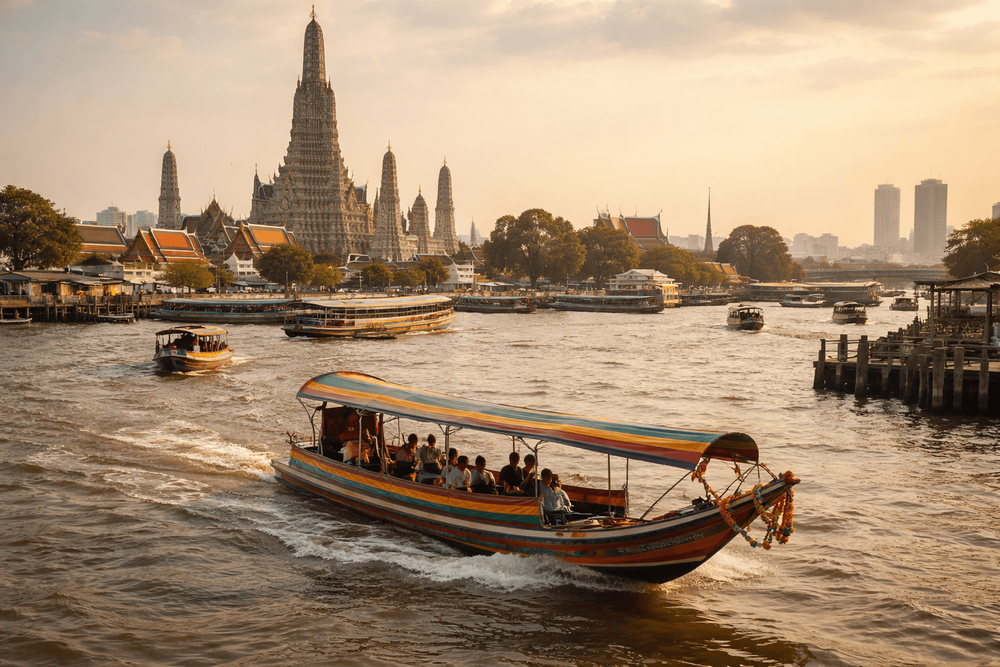
The Temple of Dawn rises on the Thonburi side like a porcelain rocket. We hop the tiny cross-river ferry—5 baht, coins, quick smiles—to the west bank. Up close, Wat Arun’s prang is tiled with broken ceramics that glitter when the sun hits. Climb a little for the view and the breeze.
Phra Athit Park & Fort Phra Sumen (Phra Arthit Pier, N13)
If we started from Khao San, we probably wandered past this pocket park, river grass rippling, teens rehearsing guitar under a banyan. The old white fort keeps watch at the bend. Sunset here is easy.
Chinatown & Talat Noi (Ratchawong Pier, N5 / Marine Dept., N3)
Hop off for steaming bowls and neon chaos on Yaowarat Road. In Talat Noi, machine parts, street art, and little Chinese shrines share lanes where the river smell mingles with soy and garlic.
Pak Khlong Talat Flower Market (Memorial Bridge, N6)
Petals spill onto the pavement at all hours. We inhale jasmine and marigold, grab a snack by the river, and watch the ferries thump in and out.
ICONSIAM (Charoen Nakhon Pier / ICONSIAM Pier)
A temple to shopping and snacks. Even if we’re not buying, the food hall is a playground. There’s also the BTS Gold Line to Charoen Nakhon for an easy rail transfer.
- Hours: generally 10:00–22:00
- Tip: ICONSIAM often operates shuttle boats from Sathorn/Central Pier—check the signboards at the pier
Asiatique The Riverfront (Asiatique Pier)
Night bazaar vibes with a ferris wheel and an open-air promenade. We come for the breeze, the grilled squid, and the river glittering by.
- Hours: late afternoon into the night (shops usually open around 16:00)
- Tip: Look for the shuttle boat from Sathorn in the early evening—it’s part of the fun
Bonus stops for river nerds
- River City Bangkok (Si Phraya, N3): antiques, galleries, riverfront cafes
- Wang Lang Market (Wang Lang Pier, N10): behind Siriraj Hospital; fantastic street food at lunch—grilled pork skewers, herbal drinks, curry puffs
- Santa Cruz Church & Kudi Chin: cross near Memorial Bridge for pastel charm, khanom farang (Portuguese-style cakes), and river-lane wandering
Getting around the river: Chao Phraya Express Boat, long-tail boats, ferries & tickets
We navigate the river like locals once we crack the flag system and a few pier names.
Piers to know
- Sathorn/Central Pier (Saphan Taksin BTS): the main hub. If we’re coming from the Skytrain, this is our on-ramp to the water.
- Phra Arthit (N13): best for Khao San Road and Soi Rambuttri.
- Tha Chang (N9), Tha Tien (N8): for the Grand Palace, Wat Pho, and the ferry to Wat Arun.
- ICONSIAM/Charoen Nakhon: for the mall and Gold Line BTS.
The flag colors (what to ride and when)
- Orange Flag (Chao Phraya Express Boat): the workhorse. Frequent, cheap, and stops at most interesting piers. Runs roughly 06:00–19:00 with 5–15 minute intervals at peak.
- Blue Flag (Chao Phraya Tourist Boat): slower, clear English signage, and staff to help. Day passes available; handy if we’re hopping on/off a lot.
- Yellow/Green Flags: commuter services with fewer stops—fast but may skip what we want.
- No-flag locals: hyper-local, very cheap, usually limited stops.
Fares: Expect the Orange Flag to be typically under 20 baht for most hops; the Tourist Boat single rides cost more, and day passes hover around a couple of hundred baht—good value if we’re zigzagging. Fares are posted at the pier windows. We buy tickets at the counter or pay on board when the conductor clacks through.
Cross-river ferries
At short crossings like Tha Tien–Wat Arun, a tiny ferry shuttles back and forth all day. It’s usually 5–10 baht, cash only, and the crossing takes a minute or two.
Long-tail boat charters
For backwater adventure, we hire a long-tail (hang yao) and explore the Thonburi khlongs where wooden houses lean over the water and monitor lizards sun on steps. Charters are typically priced by boat and hour; expect something in the 800–1,500 baht per hour range depending on boat size and route. Agree on the price and duration before we step in. Avoid the hard-sell touts with laminated “special tours” at inflated rates; the official piers have posted prices.
Buying tickets and avoiding hassles
- We buy from the official counter windows, not from anyone chasing us with a brochure.
- Keep small bills and coins ready; conductors work fast.
- If a tuk-tuk tries to steer us away with “boat closed” stories, we smile and keep heading for the pier.
Best Chao Phraya experiences: daytime sightseeing, sunset/dinner cruises, river markets
Bangkok days belong to the water. We pick our rhythm—temples at dawn, breezy afternoons mall-hopping, or a slow drift into sunset.
A perfect daytime circuit (DIY, cheap, no rush)
- Morning: From Phra Arthit Pier, Orange Flag to Tha Chang for the Grand Palace & Wat Phra Kaew. Hit the palace right at opening before tour buses.
- Mid-morning: Walk or boat down to Tha Tien for Wat Pho. Ten minutes of AC and a cold water in 7-Eleven when the heat punches.
- Late lunch: Cross to Wat Arun, then ride up to Wang Lang Market for street snacks—fried bananas, basil chicken over rice, herbal iced drinks.
- Afternoon: Boat to ICONSIAM for Thai desserts and air-con laps, or continue to Chinatown for a food crawl.
Sunset and golden hour
We time it so we’re on a boat between 17:00–18:30, when the temples flush gold and the breeze softens. Good spots: Phra Athit Park for casual sunset, ICONSIAM’s river steps, or the ferry back from Wat Arun with the Old Town glowing.
Dinner cruises (romance, neon, and a little kitsch)
We board near River City, ICONSIAM, or Asiatique. Expect 1.5–2 hours of gliding past the Grand Palace and Wat Arun lit up, with either buffet or set menus. Prices vary by operator and inclusions, usually starting around the mid-hundreds of baht and rising with live music, seafood spreads, and open bars. Dress light-smart (it’s still Bangkok), charge the phone, and book earlier in high season.
River markets and weekend waterside eats
Bangkok’s famous “floating markets” are mostly outside the city center but still worth the early start.
- Taling Chan & Khlong Lat Mayom: closer-in weekend markets on the Thonburi side—canal boats, grilled river prawns, and coconut ice cream.
- Oh Amphawa Boutique Resort: an atmospheric evening floating market about 1.5–2 hours from Bangkok, with firefly boat trips at night. If we want a day out on the water beyond the Chao Phraya River, we make it a Saturday and go late afternoon. Read more here: Amphawa.
Chao Phraya & Khao San Road: how to get between them and ideal itineraries
Khao San Road hums until sunrise—street pad thai sizzling, buckets clinking, bass rolling down the soi. When we’re ready to swap party lights for temple spires, the river is just a short walk away.
The easy route
- From Khao San Road, cut to Soi Rambuttri, then down to Phra Athit Road. Phra Arthit Pier (N13) is a 10-minute wander, tops.
- Hop the Orange Flag to Tha Chang (for the Grand Palace), Tha Tien (for Wat Pho and the ferry to Wat Arun), or ride all the way to Sathorn/Central Pier to connect to the BTS Skytrain at Saphan Taksin.
Two foolproof itineraries from Khao San
- Temple Trifecta: Boat to Tha Chang (Grand Palace), walk/boat to Wat Pho, cross-ferry to Wat Arun. Late lunch at Wang Lang Market, then float home by sunset to Phra Athit for cold beers on the river.
- River-to-Rooftop: Morning temples, late afternoon boat to ICONSIAM for air-con and snacks, then across to Asiatique for night-bazaar grazing. Tuk-tuk back to the Old Town if our feet quit.
Tip: If we’re short on time and long on energy, a tuk-tuk from Grand Palace back to Khao San should be inexpensive; insist on the meter or agree on a fair price before we hop in.
Where to stay: riverfront areas & booking tips
We’re not naming names here, but we can talk strategy. The Chao Phraya River splits the city into distinctive stays.
- Old Town/Phra Athit–Rambuttri: Simple guesthouses tucked behind mango trees, walking distance to Khao San and Phra Arthit Pier. Great if we want temples by day and bars by night. Expect basic rooms and loads of character.
- Riverside/Charoen Krung–Bang Rak: Classic river views, restored shophouses, galleries, and easy access to Sathorn/Central Pier. Many riverside places run their own shuttle boats—handy after dinner at Asiatique or ICONSIAM.
- Thonburi side: Quieter, more local, often better value for a river view. Neighborhood markets, wooden walkways, long-tail engines purring at dawn.
Booking tips we swear by:
- Ask for a “river-facing” room on a high floor if views matter; east-bank rooms catch sunset over Thonburi.
- Confirm pier access and shuttle schedules before we book; a 5-minute boat ride saves 30 minutes in traffic.
- In Old Town, proximity to Phra Athit or Tha Chang piers matters more than being on the water.
- Peak season (Nov–Feb) sells out river-view rooms first—book those early.
Practical tips: schedules, fares, safety, best times, and what to pack
We keep it smooth with a little planning and a lot of water.
Schedules & fares
- Orange Flag boats run roughly 06:00–19:00; frequency rises at rush hour.
- Tourist Boats start later and run into the evening, with day passes available.
- Cross-river ferries operate continuously throughout the day with short breaks.
- Fares are posted at pier windows; keep coins handy. Tourist Boats cost more but include English announcements and maps.
Safety & comfort
- Piers and boat steps can be slick—shoes with grip beat flip-flops.
- Hold the rail when boarding; boats don’t always stop dead.
- Life jackets are required by law; ask if we don’t see them on a long-tail.
- Watch for wake from big barges; that bump is normal.
- Heat is real. We drink water, chase shade, and duck into 7-Eleven for an AC blast when needed.
Best times to ride
- Early mornings (07:00–09:00) are cool and photogenic; mid-day can be punishingly hot.
- Golden hour (about an hour before sunset) turns Wat Arun and the Old Town into a postcard.
- Rainy season (May–Oct) brings dramatic squalls. Carry a poncho; wait 20 minutes and the storm usually blows past.
What to wear & pack
- Temple-ready clothes (shoulders/knees covered) or a light scarf/sarong.
- Sunscreen, hat, sunglasses; small umbrella or rain poncho in wet months.
- Refillable water bottle; electrolytes don’t hurt.
- Small notes/coins for fares; a dry bag or ziplock for the phone if we’re riding long-tails.
- Mosquito repellent for dusk, especially in the khlongs.
Etiquette & little things
- Offer seats to monks; avoid sitting next to them if we’re women (Thai custom).
- No feet on seats; don’t point our shoes at Buddha images.
- Smile. A friendly “khop khun ka/krub” (thank you) goes a long way.
A final nudge from the pier
If we do one thing right in Bangkok, we let the Chao Phraya River carry us. Ride it hungry, with a loose plan and a pocket of coins. We’ll watch the city unfold—a monk boat at sunrise, diesel grit on our tongue, the glow of Wat Arun at dusk—and we’ll know we did it properly. We’ll be the ones on Phra Athit with sticky rice and a cold drink, plotting which pier to hit next.
Related Hotels & Places
More Khao San Road Guides
- Best Banglamphu Hotels and Hostels Near the Canal and River Boats: Easy Transport for Sightseeing Days
- Bangkok Temple Hopping by Boat: How to Visit Wat Arun, Wat Pho, and the Old Town from Khao San Road
- Bangkok Temple Run with the Chao Phraya Ferry: A Boat-and-Walk Guide from Khao San Road
- Bangkok Rooftop Bars with the Best Chao Phraya River Views from Khao San Road