
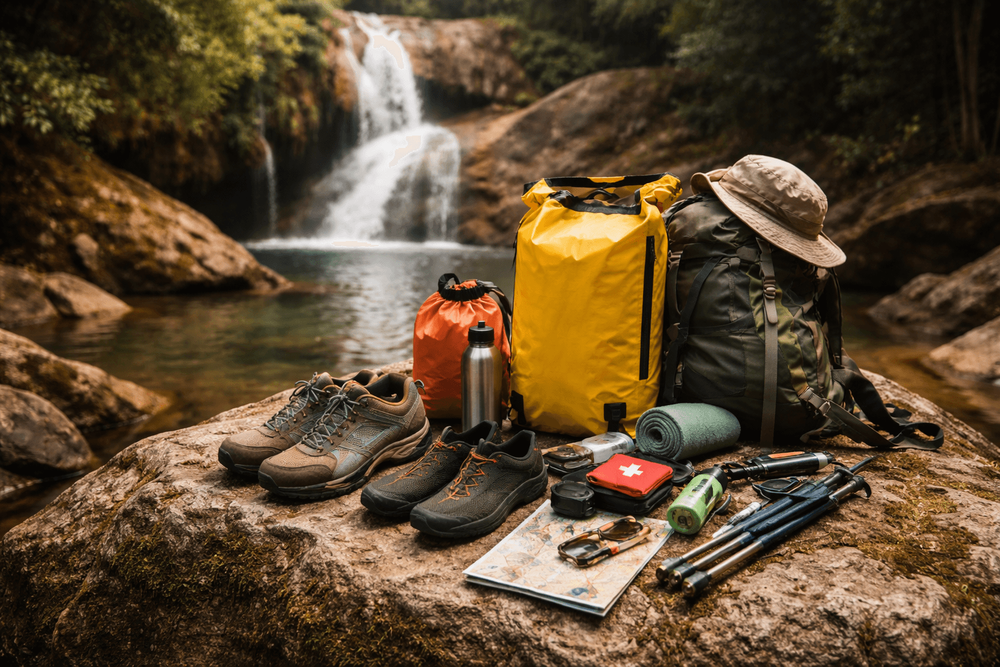
What to Pack for Thailand for Waterfalls, Caves, and National Parks: Footwear, Dry Bags, and Trail Essentials
What to pack for Thailand’s national parks: clothes, footwear, dry bags, and day-trip + camping essentials to beat heat, rain, mud, and leeches.
We’re standing under a tin awning outside Mo Chit Bus Terminal at dawn, coffee sweating in one hand, backpack straps biting the shoulders. The air is already thick—cicadas warming up, diesel drifting, that sweet rot of a durian cart rolling by. Today it’s waterfalls and limestone caves instead of wats and rooftop bars, so we’ve ditched the city kit for a leaner, meaner Thailand national parks packing list that keeps us light, dry, and leech-free. Let’s pack like we’ve done this before—and still smile when a cloud empties on us mid-trail.
Thailand National Parks Packing List: Essential Clothing
When the jungle steams and the trail turns to chocolate mousse, fabrics matter more than fashion. We’re going for quick-dry, sun-smart, and park-appropriate. Bonus points if we can rinse it in a guesthouse sink and wear it again by morning.
What we wear on trail
- Quick-dry tops: 2–3 lightweight synthetic or merino T-shirts. Add one long-sleeve sun shirt (UPF helps when the sun ambushes us between bamboo stands).
- Pants/shorts: 1 pair lightweight hiking pants (zip-offs are farang dorky but useful). 1 pair quick-dry shorts for swimming at falls or lazy camp sunsets.
- Rain layer: A compact rain jacket or a sturdy Thai poncho from a market stall. Thin shower-proof shells won’t cut it in monsoon—go for something with a brim or pair with a cap.
- Swimwear: Wear under trail clothes for waterfall dips. Modest is easiest around ranger stations and family areas.
- Modesty layer: A light scarf/sarong comes in handy if we pass a shrine or pop by a local temple post-hike. Also good shade, picnic blanket, or emergency towel.
- Sleepwear: Something dry and soft for camp. A thin base layer if we’re going up-country or into higher elevation.
- Warm layer: Cool season (Nov–Feb) mornings at altitude can bite. A thin fleece or insulated mid-layer lives at the bottom of our pack until it suddenly saves the day on Doi Inthanon.
- Socks: 2–3 pairs synthetic or merino hiking socks. If we hate blisters, toss in thin liners. For leechy trails (hello, rainy season), pack leech socks or snug high socks we can tape.
Pro tip: Laundry is everywhere. A 20–30 baht detergent sachet from 7-Eleven and a bit of soap in the sink means we carry less. Hang stuff under a fan; Bangkok’s AC blast cures the rest when we duck into 7‑Eleven for a Slurpee post-bus.
If you’re still building a base wardrobe, our broader city-to-island kit helps too: see the BACKPACK STATION we swear by when we’re not knee-deep in a khlong-side jungle trail. We like this version: Backpacker Packing List for Thailand.
Footwear and Trail Safety: Grip, Bites, and Band-Aids
Our feet do the work; everything else is commentary. Caves mean slippery guano-slick rock, waterfalls mean algae, and rainforest means…life. Lots of it.
Shoes and sandals
- Trail runners or light hiking shoes with real tread: Closed-toe for caves, ladders, and snaky undergrowth. If it rains, they’ll still grip where city sneakers slide.
- Strap sandals (sporty): Great for river crossings, camp showers, and casual strolls. Not for steep mud chutes after a downpour.
- Flip-flops: Camp only. We’re not that person on a limestone scramble in beach thongs.
Bugs, sun, and basic medical
- Insect repellent: DEET (20–30%) or picaridin works; reapply if we sweat like we’re supposed to. Treat clothing with permethrin before the trip if bugs love us.
- Sunscreen: SPF 50, sweat-resistant. Neck and ears get torched even under canopy on ridge lines.
- Hat + buff: A cap for rain under a hood, or a wide-brim for open tracks. A buff mops sweat and doubles as dust mask in pickup beds.
- First-aid mini kit: Plasters, antiseptic wipes, blister pads, painkillers, antihistamines, and oral rehydration salts (ORS are magic after a 35°C stairmaster by a waterfall). Add any prescriptions.
- Headlamp: Trails and caves go dark fast. We carry a headlamp with a red-light mode for wildlife, plus spare batteries.
- Trekking poles (collapsible): Worth it on long descents or when the trail is 70% clay, 30% ambition.
- Whistle: Tiny, loud, and universal.
Waterproofing the lifelines: a phone pouch and a small dry bag keep our map, cash, and ego alive if we slip into a pool because we were looking at a hornbill.
Weather and Park Conditions by Season
Thailand has opinions about weather. We listen, pack smart, and stay flexible.
Hot season (roughly Mar–May)
- Hazards: Brutal midday heat, scorched open trails, dehydration sneaking up on us.
- Pack tweaks: Extra electrolytes, 2–3 liters of water capacity, a sun shirt, and deliberate shade breaks. Start early; reward ourselves with a late lunch by the ranger canteen fans.
Rainy/monsoon season (roughly May–Oct, regional wiggles apply)
- Hazards: Sudden downpours, swollen streams, slippery roots, leeches. Some caves and trails close for safety and habitat protection.
- Pack tweaks: A reliable rain shell or heavy poncho, pack cover or dry bags, leech socks, and patience. Obey closure signs; flash floods don’t take selfies.
Cool season (roughly Nov–Feb)
- Hazards: We think it’s “cool” until we’re shivering in a tent at 1,500 m.
- Pack tweaks: A light fleece, beanie, and warm socks for nights. Morning mist makes everything damp—store a dry sleep set in a separate bag.
Overnights and elevation
- Many parks rent tents, pads, and bags so we can travel light. Nights can dip to single digits Celsius at altitude, so even if we rent, we carry a liner and warm layer. Condensation is real—vent the tent and keep electronics dry.
For waterfall-heavy days, we also consult our more water-focused checklist: Backpacker Packing List for Thailand’s Waterfall and National Park Trips: Wet Trails, Mud, and Day-Trip Essentials.
Day-Trip Essentials: Water, Dry Bags, and the Little Stuff That Saves the Day
You know that smug happiness when you pull exactly the right thing from a tiny pocket? That’s this section.
Hydration and food
- Water: 2–3 liters capacity per person. A hydration bladder keeps hands free, plus a bottle for mixing ORS. Many parks have refill points; if unsure, boil or filter.
- Snacks: Bananas, sticky rice in banana leaf, nut mixes, 7‑Eleven onigiri, and a victory mango for post-hike. Pack out all trash—monkeys remember your face.
Navigation and power
- Offline maps: Download before we leave Wi‑Fi. Mobile signal fades in valleys and caves.
- Power bank: 10,000–20,000 mAh with cables. Airplane mode saves battery; photos still happen.
Waterproofing and comfort
- Dry bag (5–10 L): For phone, wallet, camera, and that emergency dry shirt.
- Zip bags: For wet socks and muddy sandals, or to corral snacks.
- Microfiber towel: Hand-sized is enough for waterfalls; dries fast dangling off the pack.
Money, documents, and admin
- Cash: Park entry for foreigners ranges widely (often 100–400 baht), plus camping, shuttle trucks, or songthaews. Small bills help.
- ID: Passport or a photo copy on phone; parks may ask. Keep tickets and campsite receipts dry.
- Small cable lock: To tether a daypack on buses or in open pavilions while we nap.
Trail hygiene and extras
- Tissue, hand sanitizer, a tiny soap. Some facilities are BYO.
- Earplugs: For night cicadas, snorers, or that one sanuk-loving group at the next campsite.
- Lightweight gloves: Useful for cave ladders and rough rope handlines.
Building a bulletproof day bag? We keep a separate cheat sheet for that: Thailand Packing List for Backpackers: Day Bag Essentials for Flights, Temples, and Tours.
Special Packing: Camping, Wildlife Watching, and Families
Camping without carrying the kitchen sink
- Rentals: Most big parks offer tents, pads, and sleeping bags for a few hundred baht. We still bring a sleeping bag liner, headlamp, warm layer, and a pillowcase we can stuff with a fleece.
- Cooking: Many parks have simple canteens open around mealtimes; hours can be short. We bring a mug, spork, instant noodles, and a coffee sachet as insurance. Check rules—some parks restrict stoves.
- Camp comforts: A sit pad, quick-dry towel, and a thin cord to make a clothes line between trees (don’t nail or cut bark). A tiny bottle of biodegradable soap keeps rangers smiling.
If you plan regular nights under canvas, we’ve got a deeper dive on budget camping and what to rent vs. buy: Thailand Backpacker Packing List for Budget Camping and National Park Stays.
Wildlife watching kit
- Binoculars: 8× or 10× makes hornbills pop and macaques less “who’s that on the path?”
- Camera: A zoom lens helps frame gibbons without bushwhacking. Keep it in a dry bag; jungle air chews electronics.
- Colors and noise: Earthy clothes, quiet soles. We give elephants and gaur a king’s distance—minimum 30 m and always behind barriers.
- Light discipline: Headlamp on red mode at night so we’re not blinding owls or each other.
Family tweaks
- Child carrier with sunshade and a rain cover beats a stroller on roots.
- Extra snacks, extra socks, and a bright hat for each kid (easy to spot near water).
- Whistles and a “we-stop-here” rule at every junction. Monkeys: look, don’t feed—those tiny hands unzip faster than we do.
Getting There and Know Before You Go
From Bangkok to the wild
- Khao Yai: Buses/minivans to Pak Chong from Mo Chit, then songthaews or park shuttles. Watch for last-ride times.
- Erawan Waterfall (Kanchanaburi): Southern Bus Terminal (Sai Tai Mai) to Kanchanaburi, then local buses to the park. Bring cash; small food stalls ring the car park.
- Khao Sok and southern parks: Overnight buses or trains south, then local transfers. Book transport at reputable agencies; avoid touts promising “express VIP” miracles.
We usually crash near Rambuttri the night before an early bus—cheap eats, quick 7‑Eleven runs, and an easy taxi to Mo Chit before the city fully wakes. On the flip side, we love a no-frills guesthouse near trailheads (Pak Chong, Kanchanaburi) so we can start pre-heat.
Fees, hours, and rules
- Fees vary by park and by nationality; bring cash and keep the ticket—re-entry sometimes allowed same day.
- Hours generally hug daylight. Trails and caves often close in heavy rain or nesting seasons.
- Drones are usually restricted; glass bottles are often banned. Ask rangers—“sawadee krap/ka” goes a long way.
- Leeches spike in rainy season; local shops near park gates sell leech socks cheap. Dab repellent on boot rims and tuck pants.
- Safety: Register at trailheads where required. Signal can vanish; tell someone our route if we’re going off the main drag.
Staying light and park-friendly
- Pack multi-use items: sarong, buff, headlamp, dry bag.
- Rent big stuff locally instead of hauling it across provinces.
- Buy what you missed at a Thai big-box (Decathlon, Big C) rather than overstuffing before you know what you need.
Quick Checklist: Copy, Tweak, Go
Clothing
- 2–3 quick-dry T-shirts, 1 long-sleeve sun shirt
- Lightweight hiking pants (zip-off) + 1 shorts
- Rain jacket or heavy-duty poncho
- Swimwear + light scarf/sarong
- Warm layer (thin fleece), sleep set
- 2–3 pairs hiking socks (+ liners), optional leech socks
Footwear and safety
- Trail runners/light hikers; strap sandals
- Insect repellent; sunscreen; hat/buff
- Mini first-aid + blister care + ORS
- Headlamp + spare batteries; whistle
- Collapsible trekking poles (optional)
Day bag and admin
- Water capacity 2–3 L; snacks
- Dry bag 5–10 L; zip bags; microfiber towel
- Offline maps; power bank + cables
- Cash; ID/passport copy; tickets/receipts
- Tissue; sanitizer; tiny soap; cable lock
Camping (if overnight)
- Liner; warm layer; mug + spork; instant food
- Sit pad; clothes line; biodegradable soap
- Binoculars/camera in dry bag
If your trip is waterfall-heavy and mud is guaranteed, cross-check with our water-and-trail specific cheatsheet here: Backpacker Packing List for Thailand’s Waterfall and National Park Trips: Wet Trails, Mud, and Day-Trip Essentials.
Final word from the trail
Pack light, respect closures, and hydrate like a monk counts our sips. The jungle will still throw curveballs—rain that starts sideways, leeches that don’t RSVP, a hornbill that finally wings overhead just as we stash the camera. That’s the fun—the sanuk—of the parks. When we roll back into Bangkok, mud on our calves and a memory card full of green, we’ll grab boat noodles on Phra Athit Road and compare leech-proofing strategies. You bring the stories; we’ll bring the ORS.
Related Hotels & Places

考山路
Shops
Bangkok’s backpacker circus on one 400‑meter strip: neon bars, bucket cocktails (฿150–250), street pad thai, and foot massages from ฿200. Action starts after 3pm, peaks 9pm–midnight, runs to 2am most nights (midnight Sun). For a softer warm‑up, drift to leafy Soi Rambuttri next door.
BACKPACK STATION
Hotels
A 2-star hotel in Bangkok.
7-Eleven
Shops
Khao San’s 24/7 reset button: ice‑cold A/C, ham‑cheese toasties, All Café iced lattes, water for 7–14 THB, and late‑night supplies from snacks to sunscreen—right by Rikka Inn.
Rambuttri
Markets
Khao San’s calmer cousin: a tree‑shaded lane of VW van cocktail bars, open‑air foot massages, pad thai grills, and easygoing live bands. Best from sunset to 11pm; beers 80–120 THB, cocktails 150–220 THB. One block from the chaos, all the charm.
More Khao San Road Guides
- Backpacker Packing List for Thailand’s Waterfall and National Park Trips: Wet Trails, Mud, and Day-Trip Essentials
- Backpacker Packing List for Thailand’s Jungle and Waterfall Trips: Trek Shoes, Bug Defense, and Fast-Dry Clothes
- Backpacker Packing List for Thailand’s Rainforest and Wildlife Trips: Binoculars, Dry Bags, and Bug-Proof Essentials
- What to Pack for Thailand for Day Hikes and Jungle Treks: Trail Shoes, Hydration, and Bug Protection