
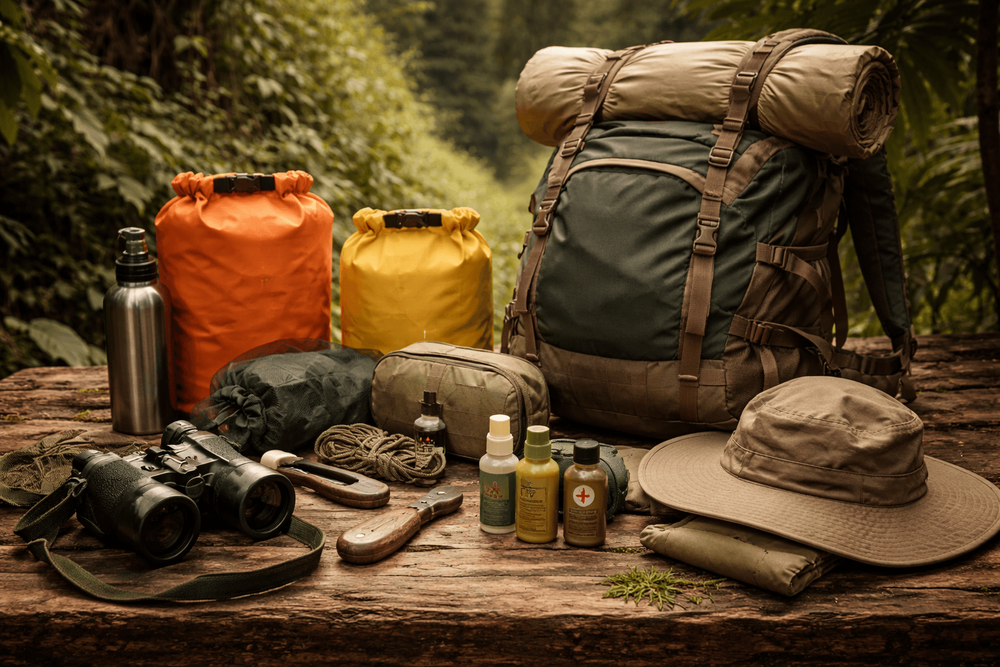
Backpacker Packing List for Thailand’s Rainforest and Wildlife Trips: Binoculars, Dry Bags, and Bug-Proof Essentials
What to pack for Thailand wildlife trips—breathable layers, leech socks, dry bags, binoculars, and the bug-proof basics that survive jungle rain and boat spray.
Dawn on Cheow Lan Lake tastes like mist and woodsmoke. A long-tail idles, its prop slapping the khlong as gibbons whoop from the limestone walls. We shove our sandals into a dry bag, sip 7-Eleven coffee gone lukewarm, and do a quick pocket-pat for the essentials. If you’re heading for the hides at Kui Buri, the boardwalks in Khao Yai, or the raft houses of Khao Sok, this Thailand wildlife packing list will keep you dry, quiet, and ready when a great hornbill ghosts across the canopy.
Thailand Wildlife Packing List: Essential clothing and gear
The jungle sticks, sweats, and soaks you. We pack light, breathe easy, and assume everything might get wet.
Breathable layers that cover, not smother
- Quick-dry shirts with long sleeves: Sun, bugs, and abrasive vines don’t care how tough you are. Two to three lightweight, UPF-friendly tops are enough. Neutral, quiet colors (olive, gray, tan) help you blend in—no neon farang festival shirts in the hide, please.
- Hiking pants that roll and vent: Zip-offs are fine, but any thin, fast-drying fabric beats denim. We like a pair with ankle cinches to lock out leeches in monsoon months.
- Light fleece or thin windbreaker: Mornings on high ground (Doi Inthanon, Thungyai) can feel crisp. A 200-gram layer weighs nothing and saves the sunrise.
Rain protection that actually works
- Packable rain jacket or poncho: A decent jacket breathes better than the 30–60 THB corner-shop ponchos (those are backups). Expect downpours that flip from drizzle to bucket in thirty seconds.
- Ultralight umbrella: Laugh all you want—on boardwalks and boat landings it’s a quiet, dry blessing for cameras.
Footwear for mud, boardwalks, and boat ramps
- Trail shoes with toothy tread: The jungle is slick clay over roots. Low-cut trail shoes dry faster than boots and handle 95% of Thai park trails. If you’re new to trail footwear, see our notes in What to Pack for Thailand for Day Hikes and Jungle Treks: Trail Shoes, Hydration, and Bug Protection.
- Lightweight sandals with heel strap: For river crossings, showers, and long-tail boat hops. Avoid flip-flops on muddy steps; you’ll ski.
- Leech socks (monsoon bonus): Cheap nylon gaiters (100–200 THB at park shops) that tuck into your shoes—less blood, more sanuk.
Dry bags and pack liners
- 10–20L dry bag: Boats spray, jungles sweat. Cameras, phones, and passports live in here. Expect to pay 150–300 THB for a basic PVC bag in tour towns; bring better from home if you shoot serious.
- Trash-bag liner or pack rain cover: Because downpours don’t ask permission.
Headlamp and hands-free light
- Headlamp with red mode: Red preserves night vision in hides; it also spooks wildlife less than a blazing white beam. Spare batteries or a power bank to recharge.
Sun, sweat, and stink management
- Wide-brim hat or cap with neck shade
- Microfiber towel: Dries fast on bungalow rails, doubles as sweat rag. If waterfalls are on your plan, you’ll want to read our Backpacker Packing List for Thailand’s Waterfall and National Park Trips: Wet Trails, Mud, and Day-Trip Essentials.
- Quick-dry underwear and socks: Two pairs each. Wash nightly, dry by morning fan.
Health, safety, and comfort essentials
The jungle is generous with life—and insects. We keep it simple and preventative.
Insect repellent that actually repels
- DEET or picaridin repellent: Go at least 20–30% DEET or 20% picaridin. Local roll-ons and sprays run 60–150 THB; we bring a small bottle from home to be sure.
- Permethrin-treated clothing (optional): Treat shirts/socks at home; it’s not common in Thai shops.
- Anti-itch cream or antihistamine gel: Mosquito karma catches everyone eventually.
Sun and heat strategy
- High-SPF, sweatproof sunscreen: Reef-safe if you’ll be island-hopping after Khao Sok. Expect 250–450 THB in Thai pharmacies for mid-range brands.
- Electrolyte sachets: Toss a couple in the daypack; one packet in your water can save an afternoon.
- Reusable water bottle or bladder: 1–2 liters per trail session. We refill cold water at 7-Eleven for 13–20 THB and decant.
First-aid basics for farang feet
- Blister kit: Hydrocolloid plasters, tape, and a small tube of antiseptic
- Pain relief and antihistamines: Pharmacies are everywhere, but we pack travel sizes.
- Any personal meds: Keep a photo of prescriptions and the generic names.
Hygiene and comfort in damp places
- Hand sanitizer and tissues: Park toilets vary wildly.
- Lightweight sarong: Shade, towel, privacy curtain in mixed bungalows, impromptu pillowcase.
Wildlife-specific equipment and etiquette
We’re here to watch, not to star in the animals’ day. Good gear helps, but behavior matters more.
Optics and cameras
- Binoculars: 8x42 is the sweet spot—wide, bright, and still steady on a moving long-tail. If you wear glasses, look for long eye relief.
- Camera setup: A telephoto zoom (200–400mm on APS-C) is enough for hornbills and macaques. For night walks, a fast prime and quiet shutter help. Wrap the strap with a soft cloth so it won’t squeak.
- Lens cloths and silica gel: Lenses fog in AC-to-jungle transitions. Stash a cloth in your pocket, not buried in the pack.
Sound, color, and scent discipline
- Quiet colors and fabrics: No swishy rain pants. No jangly bracelets. The thump of bass is for Khao San, not Kui Buri.
- Unscented sunscreen/repellent if possible: Strong fragrances can draw insects or distract wildlife.
Ethics that keep the jungle wild
- Keep distance and stay on trails: Rangers know where hides and viewpoints minimize disturbance—follow their lead.
- No feeding, calling, or baiting: That “close encounter” ruins behavior and draws animals to roads and bins.
- Red light at night, low voices always: We can whisper “sawadee” to the ranger later—mammals move when it’s quiet.
- Drones require written permits: Parks are strict. Assume no unless you’ve arranged it officially.
Packing by season, region, and itinerary
Thailand’s wildlife calendar swings with rain and wind. We adjust kit to the coast, the mountains, and the month.
Monsoon maneuvers (roughly May–Oct west coast; Nov–Jan heavier on the Gulf)
- Leeches and mud: Leech socks, ankle-cinch pants, and a second pair of socks in the dry bag.
- Rain layers: A real jacket over a poncho; pack liner mandatory.
- Electronics care: Add a small desiccant pouch and ziplocks. Keep your phone in the dry bag on boats.
Dry-season tweaks (cooler mornings, dusty trails)
- Light fleece and buff: Early starts in higher parks can flirt with single digits Celsius; a thin layer changes everything.
- Dust protection: A buff keeps grit out of the lens and your teeth on dusty access roads.
Island add-ons (after the jungle)
- Reef-safe sunscreen and quick-dry swimwear
- Spare dry bag and a mesh bag for wet clothes on ferries
- Boat shoes or rubber-soled sandals for slippery piers
Forest treks and overnights
- Sleeping bag liner: Park bungalows usually provide blankets; a liner adds cleanliness and a smidge of warmth.
- Earplugs: Long-tail engines, cicadas, and enthusiastic neighbors—silence is rare.
- Compact cookware and meals (only if permitted): Many Thai parks have canteens; some remote stations require self-sufficiency. Ask rangers—don’t assume.
For colder northern hills, we bring a touch more warmth and patience. Our full layering thoughts live here: Backpacker Packing List for Thailand’s Northern Hill Trips: Cool-Morning Layers, Trekking Basics, and Village Comfort.
Helpful extras travelers always thank themselves for
Power and paperwork
- Power bank (10,000–20,000 mAh): Headlamp and phone insurance when the bungalow outlet is a single, wobbly friend.
- Universal adapter: Thailand runs 220V, 50Hz; sockets often accept flat or round two-pin plugs.
- Passport copies (paper and digital): Rangers sometimes request ID at checkpoints.
- Small cash stash: Many park canteens and songthaews are cash-only; keep 20s and 50s handy.
Navigation and comms
- Offline maps and Thai sim/eSIM: Rural towers can be patchy, but a local number helps for guides and pickups.
- Whistle: Easier than shouting if you get separated on a boardwalk.
Day-bag organization
- Zip pouches: One for optics, one for meds, one for snacks. In rain, you’ll be rummaging one-handed.
- Daypack with sternum strap: It keeps the bounce down on rooty trails and narrow stairs.
If you’re still dialing your in-flight and day-tour kit, our Thailand Packing List for Backpackers: Day Bag Essentials for Flights, Temples, and Tours trims the faff.
Know before you go: parks, guides, and reality checks
- Rangers rule: Thai national parks are serious about trails, closures, and wildlife safety. If a ranger says “not today,” we smile and save it for next time.
- Guides enrich: In Kui Buri, rangers know which meadows draw elephants at dusk. In Khao Yai, they hear gibbons long before we do. Budget for tips; 200–500 THB split across a group feels right after a great day.
- Waste is weight: Many parks are cracking down on single-use plastics. Bring a bottle and refill; pack out snack wrappers.
- Heat happens: The blast of AC when we duck into a 7-Eleven is a shock; give yourself a minute before stepping back into the sauna so lenses and glasses don’t fog blind.
- Transport quirks: Minivans and buses to trailhead towns often leave from Bangkok’s north or east terminals; tuk-tuks will happily over-quote on last-mile runs down a quiet soi—negotiate with a smile or use an app car where coverage exists.
Where we base ourselves between jungle runs
Between park pushes we like a simple riverside guesthouse near Phra Athit Road or a quiet lane off Soi Rambuttri. It’s an easy amble to the Chao Phraya Express boat for breezy rides and an early getaway to bus stations. In the south, we pick a place with a fan that doesn’t rattle and a laundry line that actually catches sun—romance is great, but dry socks are better.
Your concise wildlife checklist
Copy this into your notes, then halve your clothing and double your ziplocks.
- Quick-dry long-sleeve shirts (2–3), neutral colors
- Lightweight hiking pants with ankle cinch; shorts (1) for camp
- Trail shoes; strap sandals; spare socks (3–4 pairs)
- Rain jacket; backup poncho; pack liner
- Hat; buff; light fleece
- 10–20L dry bag; ziplocks; silica gel
- Headlamp with red mode; spare batteries/power bank
- Binoculars (8x42 ideal); camera with telephoto; lens cloths
- DEET/picaridin repellent; anti-itch cream; compact first aid
- Sunscreen (reef-safe if island-bound); lip balm with SPF
- Reusable bottle/bladder; electrolyte sachets; snacks
- Tissue, sanitizer, microfiber towel, sarong
- Passport copy; small cash; universal adapter; whistle
- Leech socks (monsoon); sleeping bag liner (overnights)
Sample daypack load-out for a Khao Yai or Khao Sok outing
- Front pocket: sunscreen stick, repellent, tissue, tiny snack
- Main compartment: camera wrapped in a tee, binoculars, light fleece in a dry bag, 1–2L water, microfiber towel
- Top lid: headlamp, electrolytes, plasters, antihistamines, spare socks in ziplock
- Side pocket: packable rain jacket, umbrella
Want to go deeper on trail footwear, hydration, and jungle basics? Circle back to What to Pack for Thailand for Day Hikes and Jungle Treks: Trail Shoes, Hydration, and Bug Protection and keep that towel handy for slippery cascades with our Backpacker Packing List for Thailand’s Waterfall and National Park Trips: Wet Trails, Mud, and Day-Trip Essentials.
Nikon ACULON A211 8x42 Binoculars
We’ll see you at first light by the pier—the long-tail thrum will be low, the mist will be lifting, and with this kit dialed, we’ll be ready when the forest starts to move.
Related Hotels & Places

Recommended Products
More Khao San Road Guides
- Backpacker Packing List for Thailand’s Jungle and Waterfall Trips: Trek Shoes, Bug Defense, and Fast-Dry Clothes
- Backpacker Packing List for Thailand’s Waterfall and National Park Trips: Wet Trails, Mud, and Day-Trip Essentials
- What to Pack for Thailand for Waterfalls, Caves, and National Parks: Footwear, Dry Bags, and Trail Essentials
- Backpacker Packing List for Thailand’s Adventure Islands: Snorkeling, Boat Days, and Waterproof Tech Protection