
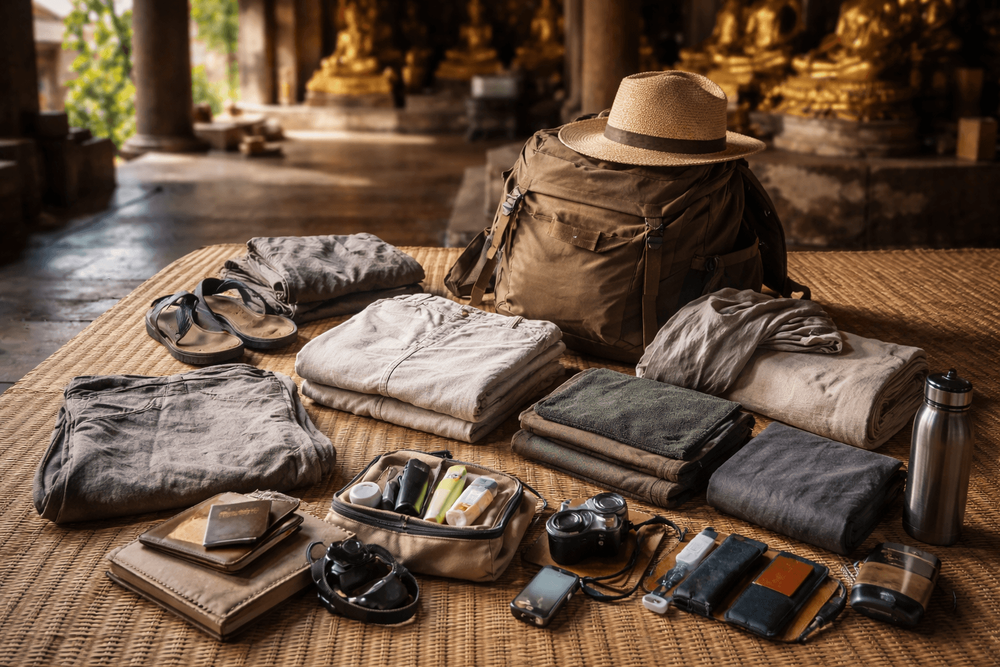
Backpacker Packing List for Thailand for Temple and Monastery Stays: Modest Clothing, Quiet Gear, and Overnight Basics
What to pack for Thai monastery stays: modest clothes, quiet gear, and overnight basics—plus etiquette and seasonal tips from Bangkok regulars.
We’re up before the first long clang of the bell, padding across cool tiles while incense curls into the dawn. A monk’s broom whispers along the corridor, the soi dogs are still yawning, and our bag? It’s small, quiet, and respectful—built from lessons learned between Khao San Road’s thump at midnight and a meditation hall at 4:30 a.m. If you’re hunting for a Thailand monastery packing list that works for day visits and overnight stays, this is the one we actually use.
Thailand Monastery Packing List: What We Actually Bring
Essential clothing: modest, breathable, respectful
In temples (Wat) and monasteries, shoulders and knees should be covered—no exceptions because it’s hot. We dress for reverence and survival.
- Two lightweight tops with sleeves: breathable cotton or moisture-wicking, not sheer. We like pale or muted colors; bright, flashy prints can feel loud in a meditation hall. Expect 150–300 THB if you buy near Khao San or Khao San Road Night Market.
- One long-sleeve layer: thin, UV-protective or linen button-up for sun, mosquitoes, and A/C blasts. Also good for overnight chill in open halls.
- Two pairs of modest bottoms: loose trousers or ankle-length skirts. Quick-dry fabrics win when hand-washing after alms or chores.
- Optional white set for retreats: many Thai monasteries request white clothing for meditation programs. A simple white tee and loose white pants/skirt does the job. White sets run 200–400 THB locally.
- Light shawl or scarf: doubles as shoulder cover, sit cloth on temple floors, or pillowcase. A phaa khao ma (Thai multipurpose cotton) is perfect, 80–150 THB.
- Underlayers that don’t show through: nude-toned for white clothing; avoid loud logos.
- Sleepwear that stays modest: a loose tee and long shorts or pajama pants; you may shuffle to shared bathrooms at night.
Tip: If you’re new to temple dress, we’ve got a modest options in our guide to Buddhist sites here: Thailand Packing List for Backpackers Visiting Buddhist Sites: Modest Clothing, Easy Shoes, and Temple-Ready Extras.
Footwear and socks: on/off in two seconds
You’ll slip shoes off constantly—prayer halls, kuti porches, sometimes even at office doors. Make life easy.
- Slide-on sandals with grip: temple steps get slick after rain. Soft soles are quiet on tiles. 200–500 THB in most markets.
- A backup pair of light flip-flops: for showers or late-night toilet runs. 60–120 THB.
- Thin ankle socks: floors can be hot at noon; socks help in areas where bare feet feel uncomfortable. Pack 2–3 pairs; quick-dry is best.
- For forest monasteries: breathable trail shoes (low-cut) plus sandals. In rainy season, socks dry on your bag straps while you walk.
Pro move: stash a small mesh bag (40–60 THB) to hang your sandals so they don’t vanish in a pile of farang flip-flops.
Respectful accessories and quiet personal items
We keep everything low-key—no crinkly plastic, no jangly zippers, no perfume cloud.
- Small day bag (10–15L): soft, neutral color, minimal straps that won’t clatter. We like a top handle for temple shoe racks.
- Reusable water bottle (500–750 ml): refill at 7-Eleven (10 THB for water) or filtered stations when available.
- Electrolyte packets: the midday sun is a champ at wringing you out. 10–20 THB per packet.
- Sun hat with crushable brim: temples are big complexes with little shade. 120–300 THB.
- Compact umbrella or ultralight poncho: sudden khlong breezes can whip rain sideways. Umbrellas 80–150 THB; ponchos 20–40 THB.
- Microfiber towel: dries fast between shower blocks and dawn sits. 120–250 THB.
- Quiet headlamp or small torch with red mode: for pre-dawn chanting walks. Avoid blinding people.
- Earplugs and eye mask: roosters, bells, the world. These weigh nothing and save your sleep.
- Minimal toiletries, unscented: deodorant, toothbrush, tiny toothpaste, face wash, sunscreen (reef-safe if you’re headed south after). Go easy on fragrance—keeping the meditation hall scent-neutral is respectful.
- Insect repellent: unscented or herbal; if you’re forest-bound, consider long-sleeve + repellent after dusk.
- Small sit cloth or sarong: keeps clothing clean and signals care for the hall.
- Tissue packs and hand sanitizer: many temple bathrooms are BYO tissue.
- Discreet valuables storage: neck pouch or flat waist wallet you can tuck under your shirt. Keep passport photocopy; secure the rest in a zipped pocket.
- Laundry soap leaves and elastic travel clothesline: monastery stays often last longer than you plan. Laundry by hand is easy and free.
For dialing in your day-bag setup, we mapped an ultra-practical list here: Thailand Packing List for Backpackers: Day Bag Essentials for Flights, Temples, and Tours.
Overnight basics for monastery stays
Sleeping arrangements vary—thin mattress on a wooden platform, shared dorm, or a simple kuti with a fan. Pack for calm and quiet.
- Lightweight sleep sack or sheet: keeps you comfortable on loaner bedding.
- Compact travel pillowcase: doubles as a bag for dirty clothes.
- Small padlock: some halls have lockers; bring your own shackle. 60–120 THB.
- Quick-dry underwear and one spare outfit: you’ll thank yourself on day three.
- Simple alarm (vibration on phone): keep it silent; airplane mode overnight is appreciated.
- Modest swim shorts only if the monastery allows bathing at a pond or open well—ask first. Often, a bucket shower area is provided; keep covered.
Cultural and etiquette cues that shape your bag
Monasteries are living communities, not museums. Pack with that in mind and we blend in, even if we’re fresh off the Chao Phraya Express boat with wind-tangled hair.
- Dress code is real: covered shoulders and knees, no ripped denim, no transparent fabrics. White sets are standard for meditation retreats; otherwise, subdued colors.
- Foot etiquette: remove footwear when asked; never point feet at Buddha images or monks. Sitting cross-legged is fine; tucking feet behind you in seiza style is safest in front of a shrine.
- Sound control: choose soft fabrics, quiet zippers, and avoid plastic bags that crackle during chanting.
- Scent control: go easy on perfume and aftershave. Mosquito coils may be used by the monastery—let their scent be the strongest thing in the room.
- Gender interactions: women don’t hand items directly to monks—place objects on a cloth or table. Men and women may sleep in different areas; dress and move respectfully.
- Cleanliness: bring that microfiber towel, keep your space tidy, and return any loaned bedding folded.
- Photos: ask before shooting; never pose with your back to a Buddha or climb on structures for a better angle.
- Donations: most monasteries won’t quote a “price.” A 100–300 THB daily donation for lodging/food is common, more if staying longer or if they provide classes. Use the donation box or follow the abbot’s instructions.
For women-specific comfort and modesty hacks, this guide is solid backup: Thailand Backpacker Packing List for Women: Comfort, Modesty, and Bathroom Basics.
Seasonal and situation-based packing tips
We tweak our kit based on the sky over Golden Mount and the forecast drifting off the Gulf. Here’s how we pivot without overpacking.
Hot season (March–May): the sun wants your energy
- Fabrics: ultra-breathable cotton or tech tees; swap denim for loose trousers.
- Shade kit: hat + umbrella; sleep near a fan if possible.
- Sweat strategy: carry electrolyte sachets and a tiny talc or anti-chafe balm (keep it discreet and unscented). Laundry dries in hours—pack fewer pieces, wash more.
Rainy season (roughly May–Oct): puddles, moss, and sudden joy
- Grip sandals and quick-dry socks are heroes on slick tiles.
- Stash a packable umbrella; you’ll go from chanting to a downpour in two breaths.
- Bags within bags: a couple of zip pouches keep your white clothes actually white.
If you’re headed to forest monasteries or village wats, this deep-dive on rural essentials is worth a read: Backpacker Packing List for Thailand’s Remote Temple and Village Visits: Modest Clothing, Insect Protection, and Small-Day-Bag Essentials.
Cool season (Nov–Feb): light breezes, easy mornings
- A thin long-sleeve is the difference between teeth-chatter and zen at 5 a.m.
- Mosquitoes still lurk; long pants after sundown keep bites down.
Long travel days between multiple wats
- Wear the bulkiest set (long sleeves, trousers) so your bag sleeps small.
- Keep your shawl and socks within reach for temple stops en route.
- Pack snacks: bananas, sticky rice in banana leaf, or a 7-Eleven onigiri. 12–30 THB and you’re golden for hours.
Meditation retreats vs. casual overnights
- Retreats: bring full white kit, a notebook, and a pen that doesn’t click. Phones off, airplane mode if you must keep the time.
- Casual stays: neutral colors are fine; confirm mealtimes—many monasteries eat before noon. Pack extra snacks if dinner isn’t provided.
Know before you go: how monastery stays actually work
We’ve knocked on a lot of doors, from Phra Athit Road’s friendly visitor centers to forest gates far from any tuk-tuk. Here’s what smooths the path.
- Ask ahead when possible: some monasteries host structured English-language meditation programs; others welcome drop-ins with a simple wai and a few questions. A smile and a soft “sawadee” go a long way.
- Bring ID: passport and a photocopy. Some wats note your details for safety.
- Pack patience: schedules change with ceremonies and funerals; you may be asked to help sweep, prepare offerings, or join chanting—sanuk in service form.
- Early to bed, earlier to rise: lights out can be 9 p.m.; wake-up gong at 4–5 a.m. Your earplugs and eye mask are mission-critical.
- Food rhythms: monks don’t eat after noon; lay guests might receive a simple evening drink or snack, or nothing. Carry a quiet snack stash (nuts, bananas) and avoid rustling wrappers during evening meditation.
- Money matters: small bills for donations and transport. Songthaews and bus rides around Bangkok are still 10–30 THB short hops; a long taxi across town can be 150–300 THB—agree on meter or price first.
If you’re polishing your broader temple wardrobe and gear, this article pairs neatly with our monastery specifics: Thailand Packing List for Backpackers Visiting Buddhist Sites: Modest Clothing, Easy Shoes, and Temple-Ready Extras.
How we base ourselves between temples
When we’re stringing together a few wats—say, morning chanting near Wat Bowonniwetwiharn Ratchaworawiharn, afternoon quiet at a riverside monastery, and sunset stroll up the Golden Mount—we like staying within sandal distance of Khao San, Soi Rambuttri, or Phra Athit Road. You can walk to the Chao Phraya Tourist Boat ICONSIAM Pier, hop the orange flag line, and be drifting past temples with a postcard breeze on your face for 16–20 THB. In between stays, we do laundry by the kilo (40–60 THB), sip bagged iced coffee for 25 THB, and re-pack so that all the “temple kit” sits right on top.
Our repack ritual the night before a stay
- White set rolled tight on top, shawl tucked inside sandals.
- Headlamp, earplugs, and eye mask in the hip belt pocket.
- Toiletries halved—no clacky bottles, no heavy scents.
- Donation envelope ready with small bills.
Quick checklist you can screenshot
- Clothing: 2 modest tops, 1 long-sleeve, 2 modest bottoms, optional white set, shawl/scarf
- Footwear: grip sandals, flip-flops, 2–3 socks, optional light trail shoes
- Quiet kit: headlamp (red mode), earplugs, eye mask, microfiber towel
- Health: water bottle, electrolytes, sunscreen, unscented deodorant, insect repellent
- Admin: passport + copy, small bills for donations, padlock
- Extras: sit cloth, umbrella/poncho, laundry soap leaves, notebook + non-click pen
Pack this way and we move from the bass of Khao San to the hush of the ordination hall without missing a beat—or scuffing a single tile. If you spot us on Soi Rambuttri with a bag of sticky rice at dawn, say sawadee; we’ll point you to the right pier and the quietest seat on the boat.
Related Hotels & Places
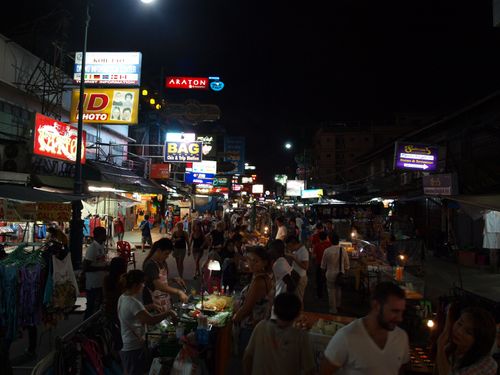
Khao San Road
Attractions
Bangkok’s backpacker carnival: curbside bars, live bands and DJs from 3pm–2am (midnight Sun). Street eats are cheap — pad thai 70–100 THB, mango sticky rice 60–100 THB. Come for wild people-watching; duck into Rambuttri for a calmer beer.
Khao San Road Night Market
Markets
Khao San’s nightly street market fires up from 3pm and peaks 7pm–midnight: pad thai and roti carts, fruit shakes, bargain tees and “elephant pants,” foot massages, tattoos, and those infamous cocktail buckets—all packed into one neon‑loud strip.
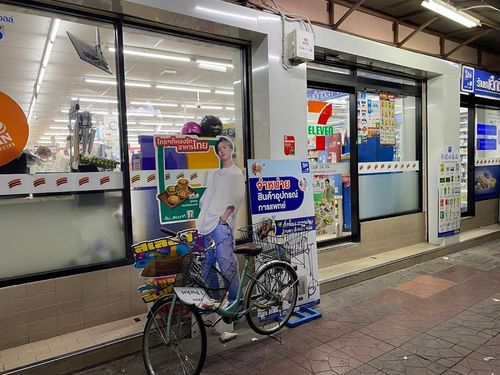
7-Eleven
Shops
Khao San’s 24/7 reset button: ice‑cold A/C, ham‑cheese toasties, All Café iced lattes, water for 7–14 THB, and late‑night supplies from snacks to sunscreen—right by Rikka Inn.
Wat
Temples
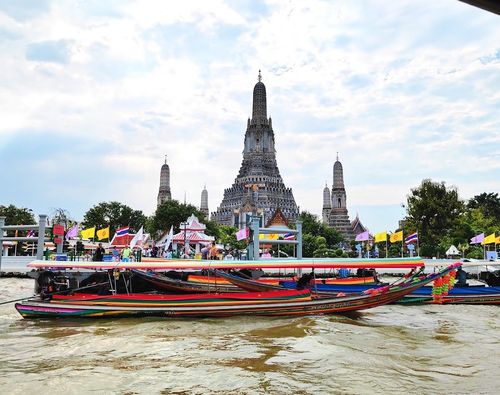
Chao Phraya Tourist Boat ICONSIAM Pier
Services
Hop on the blue‑flag tourist boat at ICONSIAM to cruise Wat Arun, Wat Pho, the Grand Palace and Chinatown. Day pass ~150 THB, boats every ~30 mins, last runs around 7:15pm. Easiest river launchpad via BTS Gold Line to Charoen Nakhon.
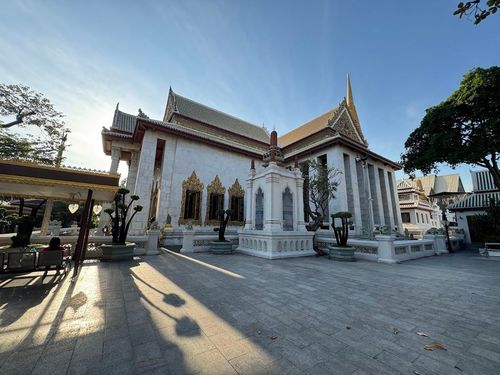
Wat Bowonniwetwiharn Ratchaworawiharn
Temples
Royal monastery on Phra Sumen Rd, a short walk from Khao San. Home to the 14th‑century Phra Phuttha Chinnasi Buddha and a gleaming chedi. Quiet, photogenic grounds; best in the morning. Open daily 6:30am–4pm.
More Khao San Road Guides
- What to Pack for Thailand for Temple Stays and Almsgiving Mornings: Modest Clothing, Respectful Layers, and Early-Start Essentials
- Backpacker Packing List for Thailand’s Remote Temple and Village Visits: Modest Clothing, Insect Protection, and Small-Day-Bag Essentials
- Backpacker Packing List for Thailand’s Sunrise Temple and Early-Morning Travel Days: Modest Clothes, Light Layers, and Fast-Access Essentials
- What to Pack for Thailand for Backpackers Visiting Temples and Rural Areas: Respectful Clothing, Footwear, and Light Layers