
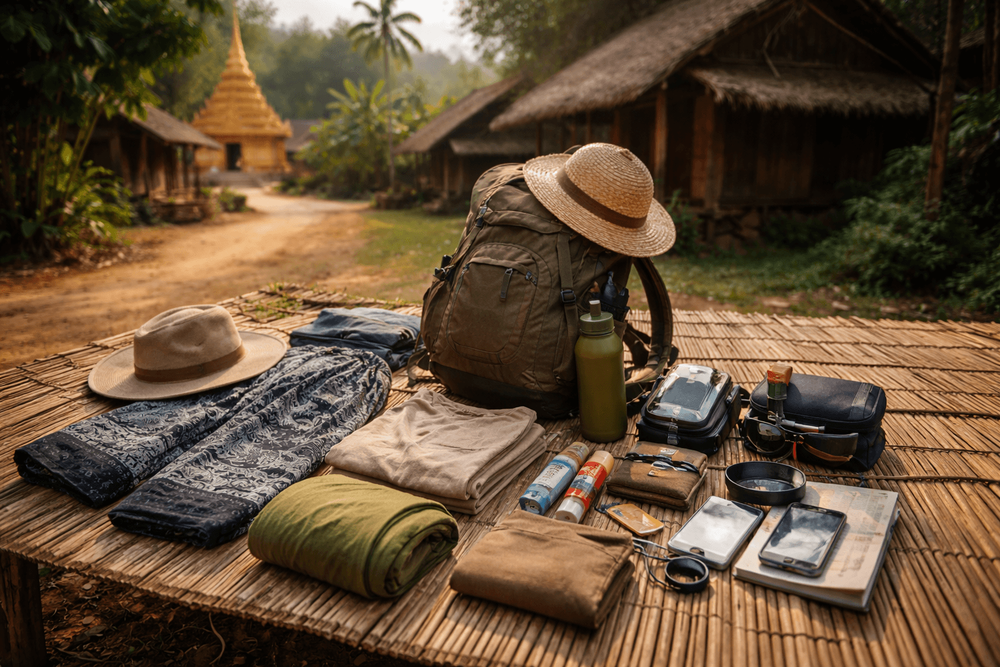
Backpacker Packing List for Thailand’s Remote Temple and Village Visits: Modest Clothing, Insect Protection, and Small-Day-Bag Essentials
Pack smart for Thailand’s villages: modest outfits, insect defense, day-bag essentials, etiquette, and region-by-season tweaks for temples and homestays.
We’re shoulder to shoulder on Rambuttri just before dawn, the air thick with grilled pork skewers and incense from a sidewalk shrine. The tuk-tuk drivers are barely awake; the cats definitely are. We duck into the 7-Eleven for that blissful blast of AC and a last-minute poncho, then hop a bus for the kind of trip where pavement gives way to red dirt and the soundtrack shifts from Khao San Road bass to cicadas. this Thailand village packing list is everything we actually carry when we leave the city glow for temple stays, homestays, and small-town markets where a smile and a scarf go further than any gadget.
Your Thailand Village Packing List (and Why It Matters)
Village and temple days are not like Bangkok days. Out there, modesty matters, shade is your best friend, and you can’t count on a pharmacy or ATM. Think breathable layers, respectful silhouettes, and a small day bag that survives sudden rain and bouncing in the back of a songthaew. We’ll weave in sanuk (fun) with common sense so we’re comfortable, respectful, and ready for whatever the khlong-side breeze or mountain mist throws at us.
If you want a deeper dive into temple-specific outfits, we also keep this handy: Thailand Packing List for Backpackers Visiting Temples and Remote Towns. For broader countryside runs, see Backpacker Packing List for Thailand’s Countryside: Small-Town Stays, Dirt Roads, and Rural Comforts.
1) Essential Clothing and Footwear for Village Travel
The trifecta: heat, humidity, respect. Villages and temples lean conservative, and shade is patchy. We dress to breathe, to blend, and to handle an afternoon cloudburst.
- Lightweight, breathable tops with sleeves
- Two or three quick-dry T-shirts or loose cotton shirts. Sleeves matter at temples and feel better in sun than strappy tops.
- Modest bottoms that move
- One pair of airy trousers (linen or technical). One mid-calf skirt or long shorts that cover the knee. Rural communities appreciate coverage.
- Temple-ready layer
- A light scarf/sarong to slip over shoulders or legs as needed. If you forget, some temples rent wraps for 20–50 baht, but we prefer our own.
- Sun-smart outer layer
- Featherweight long-sleeve (UPF if you have it). Doubles as mozzie defense at dusk.
- Rain gear that actually gets used
- Thin poncho or packable rain jacket. Those 20–30 baht ponchos from 7-Eleven save many a camera and dignity.
- Footwear matrix
- Village/market days: breathable trainers or trail runners you don’t mind dusting up.
- Homestay/temple: slip-on sandals for quick on/off (we remove shoes often).
- Optional: flip-flops for shower or river dips.
- Socks that dry fast
- Two pairs lightweight, one thicker pair for cool northern mornings.
- Sleepwear that can pass for “outside” wear
- You might shuffle to a squat loo past grandma at 5 AM. Keep it modest.
- Hat and shades
- Wide-brim or cap; polarized sunnies if you’ve got them. Shade is sanity.
- Packable warmth (for the North and monsoon evenings)
- Light fleece or synthetic puffy if you’re heading into mountain villages.
Temple note we live by: shoulders and knees covered, no ripped clothes, nothing sheer. Save the beach looks for the beach. If you want more on staying modest without overheating, browse What to Pack for Thailand for Rural Villages and Small-Town Stops: Modest, Practical Backpacker Essentials.
2) Health, Hygiene, and Personal Care for Remote Stops
When the nearest Boots is a two-hour songthaew ride away, your day kit becomes your lifeline. The goal: prevent problems before they start.
- Insect repellent that works
- DEET (20–30%) or picaridin. Pocket spray from 7-Eleven runs ~80–120 baht. Apply at dusk and before jungle edges.
- Sunscreen you’ll actually reapply
- Broad-spectrum SPF 30+; village shop brands exist but can be whitening. Expect 200–400 baht for a small bottle.
- Electrolytes and hydration
- Oral rehydration salts or electrolyte tabs for hot afternoons and post-hike sluggishness. Sachets are ~10–20 baht each.
- First-aid minimalist kit
- Plasters, blister cushions, antiseptic wipes, a small roll of gauze/tape, ibuprofen/paracetamol, antihistamine for bites, and something for tummy troubles (rehydration first; loperamide for emergencies only). Pack meds you personally need—don’t count on village stock.
- Hand hygiene
- Small alcohol gel and a ziplock of tissues. Toilets vary wildly.
- Menstrual supplies or cup
- Rural shops may not stock your preferred brand; bring what you trust in a discreet pouch.
- Laundry basics
- Travel soap or small powder packet; many villages are bucket-wash territory. Town laundries are 40–60 baht/kg when you get back.
- Light travel towel and soap leaves
- Microfiber dries fast in humid air; soap sheets dodge the leaky-bottle curse.
- Sleep and comfort
- Earplugs (roosters and motorbikes start early), eye mask, and a tiny sachet of tiger balm for bites and bus legs.
- Mosquito net?
- Most homestays provide one. If you’re picky or heading very remote, a compact permethrin-treated net can be worth the grams. Ask ahead when you can.
We’re not your doctor. For vaccines or malaria advice (usually not needed for most Thailand routes, except some border pockets), talk to a professional before wheels-up.
3) Practical Gear and Documents You’ll Actually Use
Villages can be cash-based, power can be spotty, and Thai bureaucracy loves a photocopy. This is the brain of our thailand village packing list.
- Day bag, 15–20L
- Enough for water, layers, gifts, and a camera without looking like a farang pack mule.
- Dry bag or big ziplocks
- Phone and passport stay happy when a storm unloads or you hop in a longtail.
- Power bank + dual cable
- 10,000–20,000 mAh keeps maps and translation apps alive. Some homestays have one outlet for the whole family.
- Headlamp or small torch
- Paths are dark, dogs nap everywhere, and the bathroom might be outside.
- Universal adapter + short extension
- Thailand is 220V, mixed sockets; an extension turns one outlet into a civilized charging station.
- Water strategy
- Two reusable bottles or one filter bottle. Refill stations are increasingly common; otherwise buy 10–20 baht jugs and decant.
- Cash in small bills
- 20s, 50s, 100s. Some villages have no ATM; markets, songthaews (20–40 baht in many towns), and homestays often prefer cash.
- Passport + copies + visa pages
- Paper and digital. A shot of your passport on your phone helps with homestay registers.
- Travel insurance details
- A PDF offline; we’ve needed it exactly twice and were grateful both times.
- Thai SIM or eSIM with data
- AIS/True/DTAC tourist packs frequently run 150–300 baht for starter data. Coverage in valleys is patchy but better than it used to be.
- Phrase help and offline maps
- Download Thai on Google Translate and an offline map of the district. A scrappy hand-drawn map from a local is still gold.
- Reusable cutlery and cup
- Great for markets and reducing waste. Spoon-and-fork is Thai standard; chopsticks mostly for noodles.
- Tiny gift pouch
- Space for host gifts (more below) so they don’t get squished under your sandals.
- Notebook and pen
- For names, directions, and the recipe auntie just recited while stirring a vat of curry.
4) Regional and Seasonal Packing Considerations
Thailand is many climates stitched together by night buses and steaming bowls of boat noodles. Tweak your kit by region and time of year.
Northern Highlands (Chiang Mai, Mae Hong Son, Nan)
- Mornings can be 12–18°C in cool season; bring a light puffy or fleece and a warmer pair of socks.
- Leeches in rainy season on forest trails — pack leech socks or tight leggings and high socks if you’re squeamish.
- Dusty roads in dry season — a buff saves lungs on the back of a motorbike.
- Thinking of multi-day treks or village overnights? Cross-check with our hill-country add-ons here: Backpacker Packing List for Thailand’s Northern Hill Trips: Cool-Morning Layers, Trekking Basics, and Village Comfort.
Isaan and Central Plains (Ubon, Surin, Loei, Suphan Buri)
- Brutal sun and long distances between shade — extra electrolytes and a proper brimmed hat.
- Festival season (bun bang fai, silk fairs) means crowds — keep valuables deep in your bag and carry small bills for snacks.
Southern Mainland & Islands (Trang, Satun, Phang Nga)
- Monsoon flips by coast: Andaman (Phuket/Krabi) wetter May–Oct; Gulf (Koh Samui) wetter Oct–Jan.
- Even if you’re coastal, villages remain modest — a light beach dress is fine in homestays if you add a scarf and avoid sheer.
- Sand + salt destroy zips: rinse gear and keep your dry bag handy for longtail rides.
Coastal & Mangrove Communities
- Mud loves sandals with heel straps and closed-toe shoes with rinseable uppers.
- Mosquito pressure goes up around mangroves at dusk; long sleeves trump more repellent.
Rainy Season Anywhere (roughly May–Oct)
- Poncho lives in the top pocket of your day bag.
- Phone+passport in a ziplock at all times.
- Trails get slippery; switch from street sneakers to something with bite.
- Laundry dries slow; pack an extra quick-dry top so you’re not wearing yesterday’s storm.
5) Local Etiquette and Respectful Items for Homestays and Markets
The best part of rural Thailand is people — market aunties bargaining with laughter, monks smiling at dawn, kids racing you to the noodle cart. Pack a few things that say we’re guests who get it.
- Modest gift for hosts
- We like good tea, small packets of quality coffee, spice mixes from home, or neatly wrapped sweets to share. Fresh fruit from the local market also plays well. Keep it simple and consumable.
- Photos from home
- A few postcard prints of your family or hometown ice-break instant friendships faster than any Thai phrase book.
- Small towel or indoor socks
- Homes are shoes-off; if feet make you shy, socks help. Bring a compact towel for shared bathrooms.
- Respect toolkit
- Learn to wai (palms together, slight bow) and say sawadee krub/ka. Keep voices low around temples; don’t point feet at Buddha images; cover shoulders and knees; ask before photographing people.
- Waste-less kit
- Reusable bottle, cup, and cutlery reduce plastic in villages where trash collection can be rare.
- Market savvy
- Carry exact change; smile while bargaining; never haggle over 10 baht and then tip big elsewhere. Sanuk, not stress.
If you’re mixing temple circuits with rural overnights, skim our broader kit here too: Backpacker Packing List for Thailand.
Know Before You Go (Transport, Money, and Staying Sane)
- Getting there
- From Bangkok, big buses head north and northeast from the Chatuchak/Mo Chit area and south from the Southern Bus Terminal (Sai Tai Mai). Trains to the North and Isaan run from Krung Thep Aphiwat (Bang Sue). In provincial towns, you’ll change to songthaews (20–40 baht), motorbike taxis (negotiate), or local vans.
- Connectivity
- Download offline maps and Thai on your translator app before you leave city data comfort. Coverage dips in valleys; plan screenshots of addresses in Thai.
- Money
- ATMs get sparse fast. Pull cash in the last big town and break it into 20/50/100 notes. Some homestays can’t change 1,000 baht.
- Food and water
- Eat where the wok sizzles and the queue is lively. If the ice comes from a big clear bag with a stamp, it’s the standard food-grade stuff. Carry electrolytes for sticky afternoons.
- Heat strategy
- Shade at midday, slow down, and carry that hat. Step into a shop for an AC blast if you feel woozy — even village 7-Elevens exist more often than you think.
- Safety
- Stray dogs nap, then bolt. A calm walk and a headlamp after dark help. Keep valuables cross-body and low-flash.
- Accommodation
- In transit towns we’ll usually crash at a simple guesthouse near the bus terminal — a fan room, a laundry line on the balcony, and a host who knows which morning market stall does the best jok (rice porridge). No need to overthink it; save your baht and energy for the village.
Quick-Grab Checklist (Copy/Paste Friendly)
- Tops: 2–3 breathable, sleeve-bearing
- Bottoms: 1 airy trouser, 1 knee-covering skirt/long shorts
- Scarf/sarong for temples
- Lightweight long-sleeve (sun/mosquito)
- Poncho or packable rain jacket
- Trainers + sandals (+ optional flip-flops)
- Hat, sunglasses
- Light fleece/puffy (North/cool season)
- Insect repellent (DEET/picaridin)
- Sunscreen SPF 30+
- Electrolyte sachets
- First-aid mini kit
- Hand gel + tissues
- Menstrual supplies
- Travel towel
- Earplugs + eye mask
- Day bag 15–20L
- Dry bag/ziplocks
- Power bank + adapter
- Headlamp/torch
- Reusable bottle (or filter bottle)
- Cash (small bills), passport + copies
- Thai SIM/eSIM
- Reusable cutlery/cup
- Host gift (tea/coffee/sweets)
- Notebook + pen

We’ll still improvise — that’s half the joy — but this thailand village packing list keeps us cool, covered, and welcome from bamboo floors in Mae Kampong to river-edge kitchens in Ubon. Pack light, smile often, and we’ll meet you on the back of a songthaew when the clouds lift and the jackfruit seller starts yelling the day’s price.
Related Hotels & Places
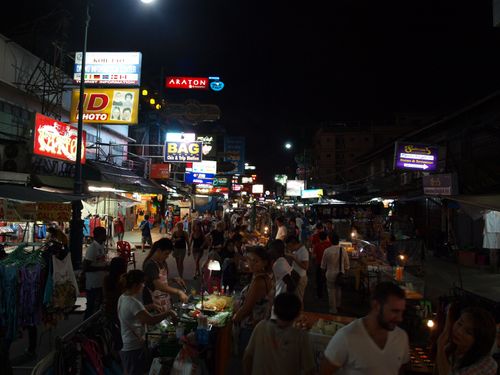
Khao San Road
Attractions
Bangkok’s backpacker carnival: curbside bars, live bands and DJs from 3pm–2am (midnight Sun). Street eats are cheap — pad thai 70–100 THB, mango sticky rice 60–100 THB. Come for wild people-watching; duck into Rambuttri for a calmer beer.
Rambuttri
Markets
Khao San’s calmer cousin: a tree‑shaded lane of VW van cocktail bars, open‑air foot massages, pad thai grills, and easygoing live bands. Best from sunset to 11pm; beers 80–120 THB, cocktails 150–220 THB. One block from the chaos, all the charm.
Recommended Products
More Khao San Road Guides
- Backpacker Packing List for Thailand’s Sunrise Temple and Early-Morning Travel Days: Modest Clothes, Light Layers, and Fast-Access Essentials
- Backpacker Packing List for Thailand’s Rural Village Stays: Respectful Clothing, Toiletries, and Power Backup
- Backpacker Packing List for Thailand for Temple and Monastery Stays: Modest Clothing, Quiet Gear, and Overnight Basics
- What to Pack for Thailand for Backpackers Visiting Temples and Rural Areas: Respectful Clothing, Footwear, and Light Layers