
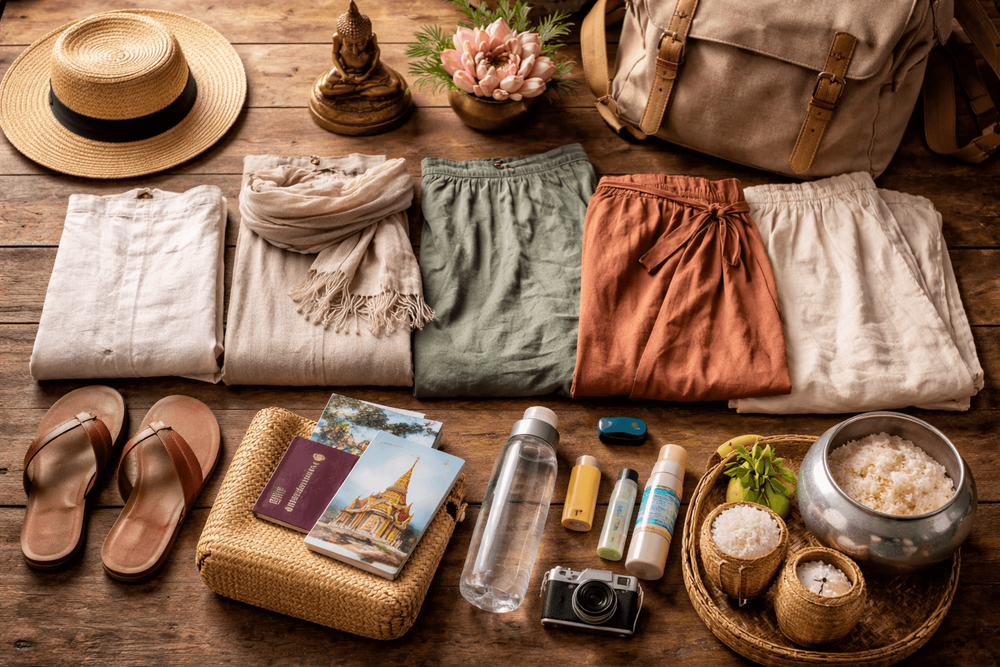
What to Pack for Thailand for Temple Stays and Almsgiving Mornings: Modest Clothing, Respectful Layers, and Early-Start Essentials
Our temple stay packing list covers modest clothing, almsgiving essentials, and smart gear for respectful, comfortable nights at Thailand’s wats.
We’re kneeling on cool tiles in the half-light on Phra Athit Road, steam rising off sticky rice while saffron robes drift past like sunrise. The city hasn’t found its voice yet; just the clink of alms bowls, a tuk-tuk yawning awake, the faint thump of last night’s bass from Khao San Road dying in the khlong air. If you’re here for a temple stay or those early almsgiving mornings, your bag needs to play by the rules of the wat. Consider this our Thailand temple stay packing list — field-tested between Rambuttri breakfasts, meditation halls near Sanam Luang, and overnight stays where the gong is your alarm clock.
Thailand Temple Stay Packing List: Clothing That Keeps You Cool and Respectful
Temples (wats) are living spiritual spaces, not museums. When we stay overnight or join dawn almsgiving (tak bat), we dress modestly, breathe easy, and keep it simple.
- Light, breathable tops with sleeves: Two to three quick-dry or cotton tees or blouses that cover shoulders and midriff. Whites or neutrals are ideal — many meditation centers prefer white.
- Long, airy trousers: One to two pairs of loose linen/cotton pants or lightweight trekking pants. Keep knees fully covered. Skip leggings unless layered under a skirt.
- Calf-length or ankle-length skirt/sarong: One piece you can wrap over pants for added modesty or use as a meditation layer. Sarongs double as blankets.
- Light cardigan or shawl: For chilled meditation halls and for covering up between buildings. A thin white or neutral layer signals respect and keeps the sun off.
- Sleepwear that passes the hallway test: Shorts and tank tops are for private rooms only. In shared corridors, keep shoulders and knees covered. A soft tee and light joggers work.
- Undergarments you can sink-wash: Quick-dry is your friend. Ladies, a sports bra is handy for repetitive chores (sweeping leaves, carrying water) some retreats assign as meditation in motion.
- Sun hat or cap, plus sun sleeves: Respectful coverage without broiling. Sun sleeves beat slathering sunscreen every ten minutes.
- Socks: At least two pairs. Many meditation halls are shoes-off; socks save your soles from warm tiles.
- Light rain layer or umbrella (seasonal): Bangkok storms are dramatic and fast. A fold-up brolly fits the temple vibe better than a crinkly poncho in the dhamma hall.
- Simple belt or drawstring: Keeps your sarong or loose pants from moonlighting.
- Compact laundry kit: A bar of laundry soap (or sachets), a few pegs, and a travel clothesline for overnight dries on the balcony rail.
Where to pick up last-minute pieces: Along Soi Rambuttri and Khao San you’ll find white cotton tops for 150–300 THB, sarongs for 100–200 THB, and elastic-waist pants that actually breathe. Haggle a little, smile a lot.
How much clothing to bring?
- 2–3 tops
- 2 bottoms (pants or long skirt)
- 1 sarong/wrap
- 1 light sweater/shawl
- Sleepwear + 2–3 pairs of underwear That’s plenty for a week if you hand-wash. Less to carry, more sanuk.
Toiletries and Health: Simple, Unscented, Heat-Smart
Temple stays are minimalist — concrete floors, fans, sometimes simple shared bathrooms, almost always a sense of calm. Pack the basics and keep scents low so the dhamma hall smells like teak and incense, not a nightclub.
- Toothbrush, toothpaste, floss
- Biodegradable soap and shampoo in small bottles
- Quick-dry towel or sarong-as-towel
- Deodorant (unscented if possible)
- Sunscreen SPF 30–50 (reef-safe if you’ll continue to the islands)
- Lip balm with SPF
- Wet wipes and tissues: Don’t assume TP will be stocked; carry your own for day trips. Dispose properly.
- Hand sanitizer, small bar of laundry soap
- Feminine hygiene products or menstrual cup — availability varies upcountry
- Basic first-aid: plasters, antiseptic cream, ibuprofen/paracetamol, antihistamines for bites, motion-sickness pills for winding minivan roads, rehydration salts (45–60 THB per pack at 7-Eleven)
- Insect repellent (DEET 20–30% or picaridin): Mosquitos love dusk and shady courtyards
- Tiger Balm or cooling oil: For temples inside your temples (sore knees from sitting)
- Earplugs and eye mask: Roosters don’t read curfews and the 4:00 a.m. gong doesn’t care if you’re jet-lagged
- Any prescription meds + copies of prescriptions
Thailand runs on 220V, 50Hz. Most sockets take two flat (US) or two round (EU) pins. A universal adapter is handy, a small power strip even better if the room has one ancient outlet hiding behind a wardrobe.
For more detailed temple-appropriate kit ideas, we’ve got a deeper dive here: What to Pack for Thailand Temple Visits and Cultural Sites.
Comfort and Convenience: The Little Things That Change Your Day
- Footwear strategy:
- Slip-on sandals with a heel strap: Easy on/off for moving between halls, grippy in rain, more respectful than flips in formal spaces.
- Lightweight closed-toe shoes: For chores, rain, or longer walks to nearby wats. Your future knees will thank you.
- Simple shower flip-flops: If bathrooms are shared.
- Headlamp or small flashlight: Courtyards get inky after lights-out; watch those uneven bricks.
- Power bank (10,000–20,000 mAh): For long days and basic rooms. Alarms still need juice when you’re up at 5:00 a.m.
- Reusable water bottle (750 ml–1 L): Fill at the dining hall or filtered taps if provided. Bangkok heat laughs at tiny bottles.
- Reusable tote or small daypack: To carry alms offerings or a shawl, bottle, and wipes around the compound.
- Dry bag or zip pouches: Keep your phone and journal dry during sudden storms or boat rides on the Chao Phraya.
- Notebook and pen: Meditation notes, Thai phrases, or the name of the soi where that perfect boat noodle stand hides.
- Lightweight scarf or meditation shawl: Doubles as a blanket during late-night sits.
- Sleep sheet or liner: Optional. Most temple lodgings provide basic bedding; a liner adds a layer between you and well-loved mattresses.
- Small combo lock: For lockers or to secure zippers.
- Donations envelope: Many temple stays are free or by donation. 100–300 THB/day for meals/utilities is a respectful baseline unless stated otherwise.
For a tight, ready-to-grab day bag, we also swear by this quick primer: Thailand Packing List for Backpackers: Day Bag Essentials for Flights, Temples, and Tours.
Etiquette Essentials: Pack for the Rules as Much as the Weather
Temple culture asks us to dial down the farang volume. Good packing sets you up to blend into the rhythm — the bowing, the barefoot thresholds, the hush that hangs under Bodhi leaves.
- White clothing for formal meditation: Many Bangkok retreats (think Wat Mahathat’s Section 5 near Sanam Luang) prefer white tops and bottoms. Pack at least one all-white set if you plan to sit.
- Shoulders, chest, and knees covered: Always inside temple grounds and when offering alms. A shawl solves sudden wardrobe sins.
- No loud patterns, sheer fabrics, or flashy jewelry: You’re not a walking soi market stall.
- Remove shoes before entering buildings: Keep socks clean. Don’t point feet at Buddha images — tuck legs to the side if sitting on the floor.
- Phones silent, cameras respectful: No shutter symphonies during chanting. Avoid selfies with monks.
- Gender rules around monks: Women should not touch monks or hand items directly; place offerings on a cloth or in a lay assistant’s hands.
- Early alarms, not late nights: Many temple stays enforce quiet hours around 9:00 p.m., wake-ups around 4:00–5:00 a.m. Earplugs are for you, not the morning bell.
- Scents and snacks: Go light on perfume; bring quiet, simple snacks if allowed. Never eat in dhamma halls unless invited.
- Trash and cleanliness: Pack your own small trash bag. Leave courtyards cleaner than you found them.
Curious what else to bring for broader temple traveling? We created a temple-focused checklist here: Thailand Packing List for Backpackers Visiting Temples and Sacred Sites.
Seasonal and Trip-Specific Extras
Bangkok is a sauna with wi-fi. Head north and the air gets crisp in the evenings. Swing into rainy season and everything turns emerald — and slippery.
- Rainy season (May–Oct):
- Compact umbrella or poncho
- Non-slip sandals and a spare pair of socks
- Fast-dry clothing, dry bag, and a small microfiber towel
- Patience for sudden, cinematic downpours around 3:00 p.m.
- Cool season (Nov–Feb), especially Chiang Mai, Mae Hong Son, Kanchanaburi:
- Light fleece or long-sleeve base layer for dawn alms runs (15–20°C mornings happen)
- Thin beanie or scarf for predawn sits
- Hot season (Mar–Apr):
- Electrolyte packets and extra sun protection
- Loose, pale fabrics; dark clothes absorb karma and heat
- Long stays or multi-stop trips:
- Travel clothesline and solid detergent bar
- Extra notebook pages for dhamma reflections
- Thai SIM or eSIM for easy temple coordination
- Photocopies of passport for check-in at some wats
- Almsgiving mornings kit (prepped the night before):
- Simple, respectful outfit + socks
- Small bag of offerings (fresh fruit, cooked rice, sealed snacks if advised)
- Cash for the market (100–200 THB goes a long way)
- Headlamp for the sleepy shuffle pre-dawn
For a complete backpacker’s framework to layer on top of this, bookmark our country-wide checklist: Backpacker Packing List for Thailand.
Know Before You Go: How Temple Stays Work (and How to Get There)
- Not every wat hosts overnight guests: Some offer structured meditation retreats; others just welcome respectful day visitors. Always call ahead or ask in person mid-day when monks and lay staff aren’t in session.
- Donations and meals: Many meditation centers provide two vegetarian meals (breakfast/lunch). Dinner might be tea only. Donations vary; think 100–300 THB/day unless posted otherwise.
- Daily rhythm: Pre-dawn chanting, morning chores (sweeping, flowers, water), meditation instruction, quiet study. Curfews around 9:00 p.m., lights low soon after.
- Language: Some Bangkok and Chiang Mai temples run English-language instruction. A few phrases help: “sawasdee” (hello), “khop khun” (thank you), “mai pen rai” (no worries). Your smile carries most of the weight.
- Getting to the Old City (Rattanakosin) temples:
- Chao Phraya Express Boat: Hop off at Tha Chang or Tha Tien for the big hitters near the river; fares 16–32 THB, first boats around 6:00 a.m.
- City buses and motorbike taxis: Cheap, chaotic, effective. Agree on motorbike price first (usually 20–60 THB for short hops in Banglamphu).
- Grab or meter taxi: AC bliss after a midday sit. Traffic is a beast near Sanam Luang—add buffer.
- Safety and valuables: Temples are peaceful but not hermetically sealed. Bring a small lock, keep passport and cash close, and don’t leave electronics in public corridors.
Where We Stage Our Bangkok Temple Stays
For night-before staging, we like to stay within striking distance of Sanam Luang, Soi Rambuttri, and Phra Athit Road—easy dawn walks, plenty of simple food, and a breeze off the river.
- For shoestrings and sanuk: We usually crash at a no-frills guesthouse a few sois off Khao San, but when we want a reliable base with staff used to 5:00 a.m. departures, A.T Guesthouse - Hostel keeps it simple and kind to the wallet.
- For Old City quiet: If we’re planning a full day around Rattanakosin’s wats and an early meditation session, The Chedee Krungthep puts us near the action without being in the chaos. Sunrise strolls around Sanam Luang feel easy from here.
- For a splurge-with-silence buffer: When we want to float between river breezes and thick curtains before the gong, Sunday in Banglamphu gives us grown-up calm within tuk-tuk range of the dhamma halls.
Quick-Grab Checklist for Almsgiving Morning
- Set your alarm (twice). Alms rounds often start 5:30–6:00 a.m.
- Dress modestly (covered shoulders/knees) in neutrals or white
- Prepare offerings (fresh, simple food; sealed goods if advised). Avoid meat-heavy dishes; fruit, rice, and sweets are common
- Small bills/coins for the market
- Water bottle, hand sanitizer, tissues
- Headlamp/flashlight for pre-dawn lanes
- Calm mind and soft voice — this is not a photo op parade
Packing Light, Traveling Far

Bangkok rewards the light packer. You’ll sweat, you’ll wash, you’ll thank past-you for choosing airy pants. Pack for respect first, comfort second, and the city takes care of the rest. After your stay, treat yourself to a bowl of boat noodles on Soi Samsen or a ferry ride that turns the river into a breeze. If you see us on Phra Athit, shawls over shoulders and coffee in hand after a dawn sit, say sawadee — we’ll point you to the best mango sticky rice without the tourist markup.
Related Hotels & Places
Wat
Temples
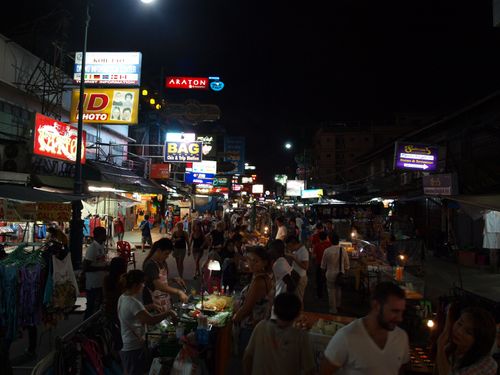
Khao San Road
Attractions
Bangkok’s backpacker carnival: curbside bars, live bands and DJs from 3pm–2am (midnight Sun). Street eats are cheap — pad thai 70–100 THB, mango sticky rice 60–100 THB. Come for wild people-watching; duck into Rambuttri for a calmer beer.
Rambuttri
Markets
Khao San’s calmer cousin: a tree‑shaded lane of VW van cocktail bars, open‑air foot massages, pad thai grills, and easygoing live bands. Best from sunset to 11pm; beers 80–120 THB, cocktails 150–220 THB. One block from the chaos, all the charm.
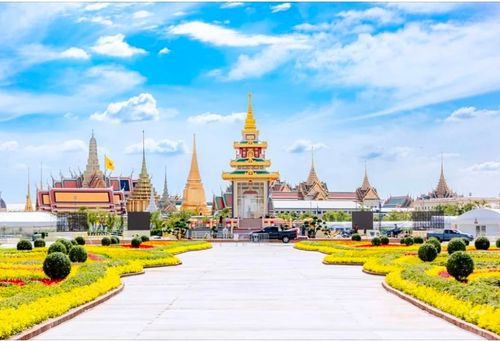
Sanam Luang
Attractions
Bangkok’s royal lawn facing the Grand Palace. Free to wander, ringed by tamarind trees, popular for kite flying (Feb–Apr) and lazy green‑space hangs. A 10‑minute walk from Khao San; come early for soft light and street snacks along Na Phra That Rd.
The Chedee Krungthep
Hotels
A 3-star hotel in Bangkok.
Recommended Products
More Khao San Road Guides
- Backpacker Packing List for Thailand for Temple and Monastery Stays: Modest Clothing, Quiet Gear, and Overnight Basics
- What to Pack for Thailand for Temple Visits and Respectful Dress: Clothing Rules and Practical Essentials
- What to Pack for Thailand for Temple and Mosque Visits: Modest Clothing, Covers, and Easy-Remove Shoes
- What to Pack for Thailand for Backpackers Visiting Temples and Rural Areas: Respectful Clothing, Footwear, and Light Layers