How to Photograph Wat Pho, the Grand Palace, and Golden Mount: Best Viewpoints, Light, and Photo Rules
Bangkok temple photography tips for Wat Pho, the Grand Palace, and Golden Mount: best light, angles, etiquette, and gear—mapped to Khao San’s orbit.
The kettle drums at Wat Phra Chetuphon Wimon Mangkhalaram Rajwaramahawihan thump somewhere behind the chedis as dawn mist lifts off the Chao Phraya. A tuk-tuk coughs awake on Maharat Road, and the sweet rot of durian rolls in from a street cart. We sip iced coffee on Phra Athit, watch the sky bruise pink, and start swapping Bangkok temple photography tips like we’re plotting a heist. The plan: chase light, dodge crowds, and come home with shots that smell like incense and sound like monk chants.
Bangkok Temple Photography Tips: Best Light and Timing
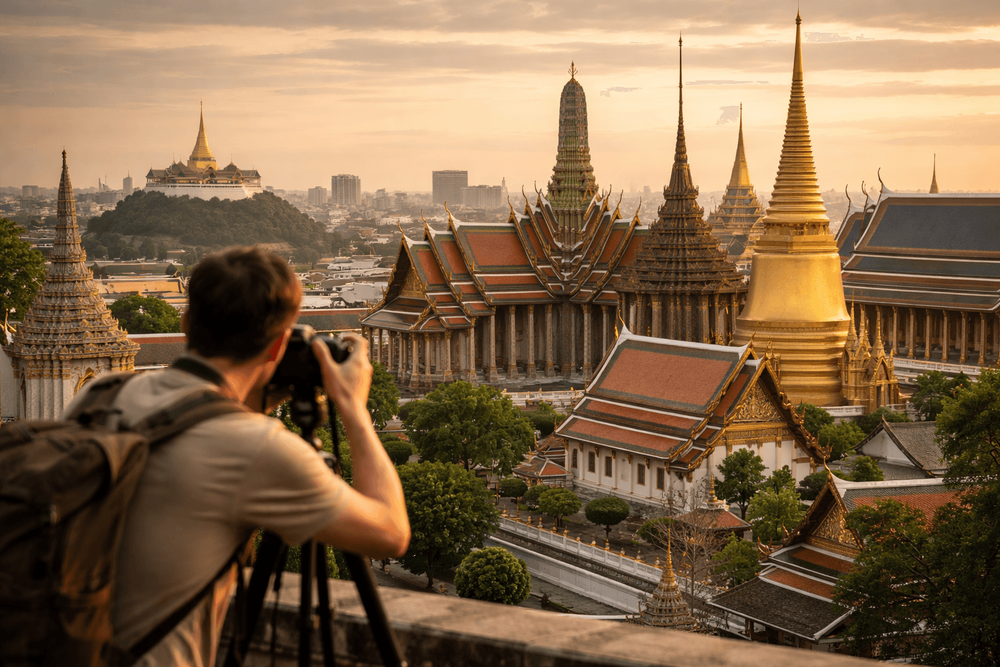
- Golden hour sings. Bangkok’s golden hour is fast but glorious—expect warm, low-angle light that kisses gold leaf and porcelain tiles. Morning is kinder than afternoon (cooler and less smoggy). If we’re after quiet frames, we stage up near Tha Tien before Wat Pho opens, then roll in with the first wave. The Grand Palace lights best in the morning; Wat Saket Ratchawora Mahawihan is our sunset finisher.
- Midday is not a villain—just tricky. The noon sun is brutal and flat. Use it on your terms: go graphic with shadows under the cloisters, chase reflections on marble floors, shoot tight detail (nagas, yaksha, roof eaves) where contrast pops. A collapsible diffuser or using a friend’s white shirt as bounce can be clutch.
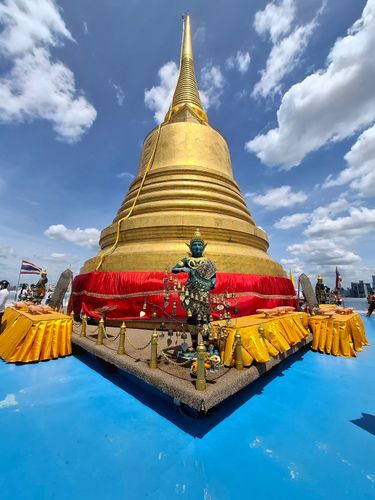
- Blue hour is Bangkok’s secret sauce. After sunset, the city goes electric—temple gold goes deep orange against cobalt sky. From the top of Golden Mount (Wat Saket), you’ll catch a 360 city glow. We like to frame Loha Prasat’s spires to the west as the lights flick on.
- Rainy season drama. Storm cells muscle in fast from May–Oct. Embrace moody clouds and wet pavements for reflections; pack a rain sleeve. After the downpour, everything gleams like lacquer.
If you want a ready-made sunrise-to-sunset plan with shot order, angles, and timing, our favorite run starts near Khao San Road and loops Wat Pho → Grand Palace → Golden Mount. We laid it out here: Bangkok Temple Run for Photographers: The Best Light, Viewpoints, and Shot Order for Wat Pho, the Grand Palace, and Golden Mount.
Respectful Temple Etiquette (and Photo Rules) You Need to Know
Temples are living spaces, not backdrops. A little respect means better karma—and often better access.
- Dress code: shoulders and knees covered. Light cotton is your friend. The Grand Palace is strict; ripped jeans and see-through tops get you turned away. Sarongs are rentable, but who wants polyester in this heat?
- Shoes off, always. When you see a shoe pile, add yours to it. Slip-ons save time.
- Inside sacred halls: no flash, and often no photos. The Emerald Buddha hall at the Grand Palace is a hard no-photo zone. Signs are clear—heed them.
- Monks: always ask. A simple “Sawadee krub/ka, okay photo?” plus a smile goes far. Don’t touch monks (especially if you’re a woman), and never block a monk’s path.
- Don’t turn your back to Buddha for selfies, and don’t climb on anything. Seems obvious, but the heat scrambles farang brains.
- Tripods and drones: large tripods are often restricted or draw security attention. Drones are effectively a no-go around major temples and royal sites without permits. Keep it simple.
For a gentle refresher on respectful shooting around Khao San’s temple circuit, keep this handy: Temple Photo Tips for Wat Pho, the Grand Palace, and Golden Mount from Khao San Road.
Camera and Phone Techniques That Work in Bangkok’s Temples
- Go wide, then go tight. A 14–24mm (or your phone’s ultrawide) makes courtyards breathe, while a 50–85mm compresses chedi layers and picks off roofline details. On a phone, step back and use the 2x or 3x lens instead of digital zoom.
- Expose for the gold. Bangkok’s temples are shiny. Set highlight-weighted metering if you can, or dial in –0.3 to –1 EV. Burn the sky, not the Buddha.
- Polarizer magic. A circular polarizer knocks glare off lacquer, glass mosaics, and those mirror-inlaid prangs. Rotate for punch; don’t overdo it on ultrawides (you’ll band the sky).
- RAW and HDR, mindfully. Shoot RAW if your phone allows. Bracket frames when murals or interiors mix neon windows and dark corners, but keep people still or you’ll ghost the worshippers.
- Lines, layers, and symmetry. Frame through gates, bells, and archways. Use gridlines; line the horizon with roof ridges or marble seams. At Wat Pho, we love stacking chedi cones so they echo each other like brass instruments.
- Murals: 45 degrees and no flash. Raking light brings out brush strokes; stand off-axis to avoid your reflection. A small rubber lens hood helps you “cup” stray glare.
- Reflections: hunt them. After rain, the marble courtyards are mirrors. Dry days? Still bowls, polished floors, even a puddle under a leaky spout—drop the camera low and flip the world.
- People as scale. A saffron robe sweeping past a 40-meter prang does more for scale than any wide lens. Don’t stage; wait, watch, breathe.
- AC shock and fogging. Jumping from 7-Eleven arctic air to Bangkok soup fogs glass instantly. Keep your camera in the bag a minute to acclimate.
- Light travel kit. A micro-fiber cloth, silica gel, a small blower, and a palm-sized tripod or clamp. Heavy rigs kill sanuk when we’re darting between cloisters. If you like gear talk, we put a pack list here: Bangkok Temple Run for Camera Gear: What to Pack for Wat Pho, the Grand Palace, and Golden Mount from Khao San Road.
The Best Temples and Viewpoints (and What to Shoot There)
We’re focusing on the Khao San orbit—you can hit these on foot or with a quick hop on the river boat.
Wat Pho (Temple of the Reclining Buddha)
- Doors open in the morning; go first thing for cool air and fewer tour groups. Expect an entrance fee around 200 baht for foreigners (subject to change).
- Shoot: the mother-of-pearl soles of the Reclining Buddha’s feet (no flash), the phra chedi si rajakarn (four massive chedis with colored porcelain tiles), and the monk school courtyards where light pools softly mid-morning.
- Angles: kneel low between two chedis to stack them, or frame a spire through a red-lacquer door for a color pop. Tiles shine after rain—great for reflection tricks.
The Grand Palace & Wat Phra Kaew (Temple of the Emerald Buddha)
- Get there early; last entry is mid-afternoon (often around 15:30). The entrance fee runs about 500 baht for foreigners and includes some annexes. It’s strict on dress.
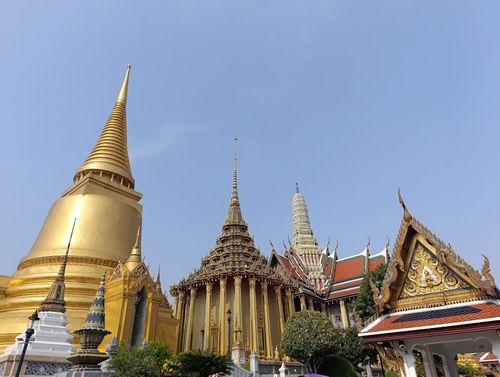
- Shoot: the Ramakien murals under the cloister (shade, depth, repeating pillars), the golden Phra Si Rattana Chedi against blue morning sky, and the guardian yaksha giants that bookend the gates.
- Rules: no photos inside the Emerald Buddha hall. Outside, be a ninja—wait for tour groups to pass and take clean frames of details.
Golden Mount (Wat Saket)
- The climb is part of the story: bells, gongs, banyan-draped switchbacks. Entrance for foreigners is usually around 100 baht; sunset is the money shot.
- Shoot: Bangkok 360—old town roofs to the west, skyscraper spine to the east. On blue hour, set a small tripod on the parapet corners, keep elbows tight, and ride the ambient glow.
Wat Arun (Temple of Dawn) from Across the River
- The best angle is actually from the Tha Tien/Tha Wang Lang side. Grab a table at a riverside cafe or shoot from the public walkway near Tha Tien Pier.
- Shoot: prangs as they flare orange at sunset, then wait for the floodlights. Long exposures smooth ferry wakes; frame boats for streaks.
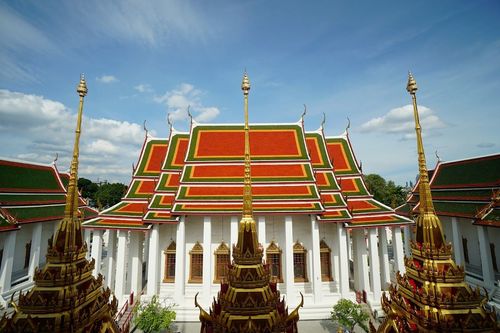
Loha Prasat and Wat Ratchanatdaram Worawihan
- A short stroll from Khao San past Democracy Monument. The metal spire forest gives crisp geometry. Go late afternoon for side light on the latticework.
- Shoot: stairwell spirals from above, or punch-in details of the finials.
If you want angle-by-angle breakdowns for the big three—foreground tricks, clean backdrops, and where to stand—we put our favorite framings here: Bangkok Temple Run for Art and Photo Lovers: Best Angles, Quiet Corners, and Framing Tips at Wat Pho, the Grand Palace, and Golden Mount and a sunrise-first variant here: Bangkok Temple Run for Photographers: Best Morning Light, Viewpoints, and Photo Stops at Wat Pho, the Grand Palace, and Golden Mount.
Practical Shooting Advice So You Don’t Melt (or Mess Up)
- Crowds: beat them by being there 10 minutes before doors. At the Grand Palace, duck into the cloistered mural walk when the main plaza swells. At Wat Pho, loop to the quieter monk school side first.
- Heat and hydration: Bangkok is a sauna with traffic. Carry a 20–30 baht bottle of water from 7-Eleven, re-up constantly, and stash electrolyte powder. A tiny sweat towel is worth its grams.
- Gear limits: many temples frown on big tripods. A mini tripod, clamp, or even a rice bag works. Keep your kit lean—one body, two lenses, spare battery. Phones do heroic work here.
- Security and bags: large backpacks sometimes draw side-eye. We bring a small sling and leave the camera out to breeze through.
- Scams near the Grand Palace: the classic “It’s closed today, my friend” line still lives. It isn’t. Walk to the gate, follow official signs, or catch the Chao Phraya boat to Tha Chang.
- Rain plan: storm hits? Hide under a cloister, sip a 30-baht iced tea, and shoot reflections when the rain quits. The air will be clean and the gold will glow.
- Food and fuel: slam a 40–60 baht bowl of boat noodles on Soi Samsen or pad thai smoke-show on Soi Rambuttri when the bass starts thumping on Khao San. Fuel equals patience equals better frames.
- Where we crash between shoots: we like simple guesthouses near Phra Athit for river breezes and quick pier access. If you need a pool to cool off before editing, look for spots along Soi Rambuttri or Chakrabongse Villas—prices swing wildly, but deals exist if you walk in midday.
Getting There (from Khao San and the River)
- Chao Phraya Express Boat: from Phra Arthit Pier (near Phra Athit Road), ride south. Tha Chang Pier drops you at the Grand Palace; Tha Tien Pier is for Wat Pho and the cross-river hop to Wat Arun. Fares run roughly 16–30 baht depending on the flag line.
- On foot: Khao San to the Grand Palace is a 20–25 minute walk via Sanam Luang. It’s hot—hat and sunscreen are not optional.
- Tuk-tuk and taxis: haggle tuk-tuk fares before you hop in (short rides around old town are usually 60–120 baht). Ask taxis for the meter—“mit-TAA” with a smile often works.
Shot List Cheat Sheet
- Wat Pho: chedi stacks at 24–35mm; Reclining Buddha feet close-ups; monk corridors mid-morning.
- Grand Palace: Ramakien mural vanishing point; golden chedi + blue sky at –0.7 EV; yaksha giants for scale with a 50mm.
- Golden Mount: bell corridor motion blur; skyline layers at 70mm; blue-hour long exposure at ISO 100.
- Wat Arun (across river): ferry light trails; prang close-ups with CPL; sunset-silhouette of spires.
When the last bell rings at Wat Saket and the city switches to neon, we like to drift down to Phra Athit for grilled pork skewers and one last look at the river. Pack light, be kind, chase the glow—and we’ll see you under the chedis tomorrow.
Related Hotels & Places
Wat Phra Chetuphon Wimon Mangkhalaram Rajwaramahawihan
Temples
The Grand Palace
Attractions
Bangkok’s royal showpiece a short hop from Khao San: glittering Wat Phra Kaew, Ramakien murals, and gold-on-gold rooftops. Go 8:30am to dodge the heat, dress modestly, and boat to Tha Chang for the prettiest arrival.
Wat Phra Kaew
Temples
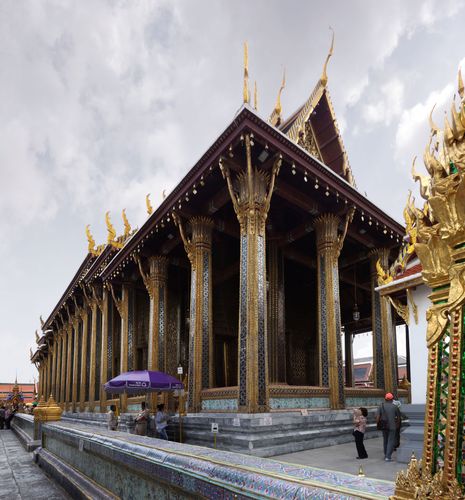
Bangkok’s holiest temple inside the Grand Palace. Go early (8:30am–3:30pm). Buy the 500 THB ticket at Na Phra Lan Rd gate. Dress code enforced. Marvel at Ramakien murals and the tiny Emerald Buddha whose robes change with the seasons. 10–15 minutes’ walk from Khao San.
Wat Saket Ratchawora Mahawihan
Temples
Wat Ratchanatdaram Worawihan
Temples
Bangkok’s Loha Prasat “metal castle” steals the scene—37 spires, serene courtyards, and golden-hour light. An easy 15‑minute walk from Khao San, open daily 8am–5pm. Come early for quiet, or late for the best photos.
Khao San Road
Attractions
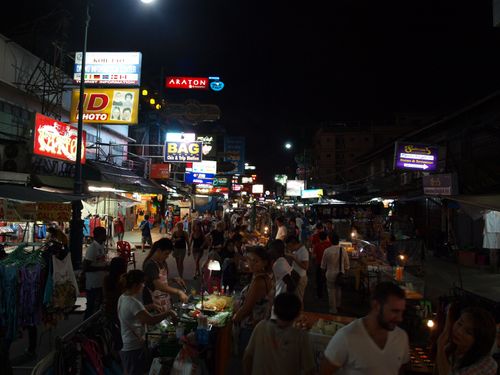
Bangkok’s backpacker carnival: curbside bars, live bands and DJs from 3pm–2am (midnight Sun). Street eats are cheap — pad thai 70–100 THB, mango sticky rice 60–100 THB. Come for wild people-watching; duck into Rambuttri for a calmer beer.

Chakrabongse Villas
Hotels
A 5-star hotel in Bangkok.
Wat Arun Ratchawararam Ratchawaramahawihan
Temples
More Khao San Road Guides
- Best Photo Spots at Wat Pho, the Grand Palace, and Golden Mount for a Temple Day from Khao San Road
- How to Photograph Wat Pho, the Grand Palace, and Golden Mount from Khao San Road: Best Angles, Light, and Photo Stops
- Bangkok Temple Run for Photographers: The Best Light, Viewpoints, and Shot Order for Wat Pho, the Grand Palace, and Golden Mount
- Bangkok Temple Run for Photographers: Best Light, Angles, and Low-Crowd Shots at Wat Pho, the Grand Palace, and Golden Mount