Bangkok Temple Run for Photographers: The Best Light, Viewpoints, and Shot Order for Wat Pho, the Grand Palace, and Golden Mount
A photographer-led temple run through Wat Pho, the Grand Palace, and Golden Mount—best light, angles, timing, etiquette, and booking tips for stunning shots.
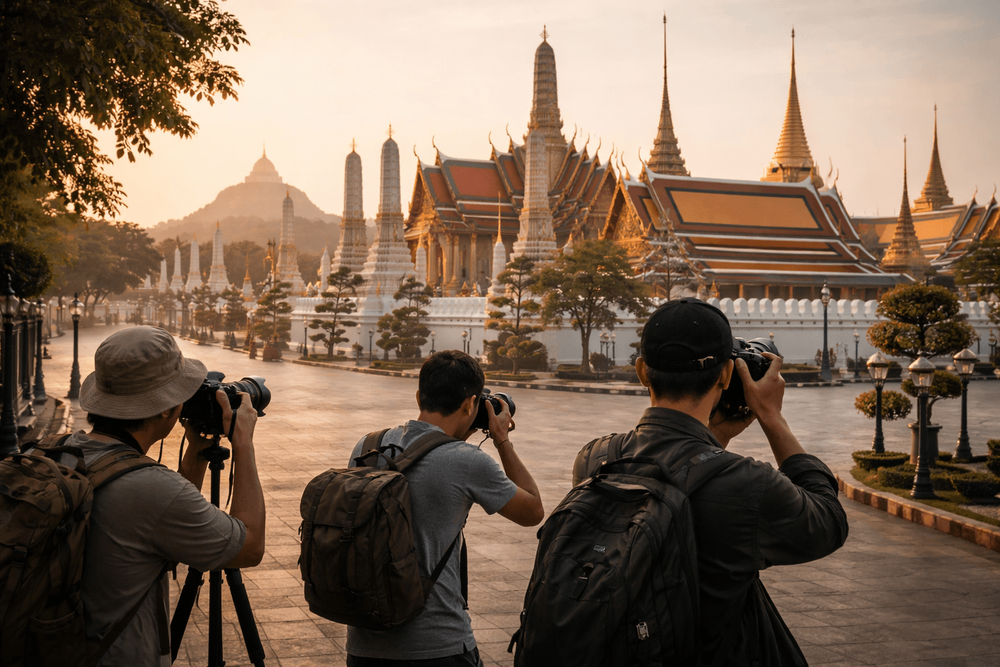
We’re standing outside Wat Pho just after dawn, when the air still has a cool edge and the incense smoke hangs low like a film set. A monk pads by in saffron, the marble is slick from last night’s rain, and the city hum hasn’t crept over the temple walls yet. This is when bangkok temple run photographers earn their keep—reading the light, moving us three steps left to catch the gold chedi flare, and shooing away a tuk-tuk driver who wants to take us on a “special” detour. We’re here for the frames, not the scams.
What “Bangkok Temple Run Photographers” Do—and Why We Hire Them
A “temple run” is a photo-focused hop through the Old City’s big three—Wat Pho, the Grand Palace (Wat Phra Kaew), and Golden Mount (Wat Saket)—timed for the best light and thinnest crowds. Bangkok temple run photographers plan a route and a rhythm: dawn calm at Wat Pho’s courtyards, mid-morning geometry under the Grand Palace colonnades, and sunset wind on Golden Mount’s terrace with the Rattanakosin skyline punching into a molten sky.
Why hire one? Three reasons:
- Timing and angles: Local shooters know when the chedi mosaics actually sparkle, which cloister gives you leading lines, and where the yaksha guardians look massive without a fisheye.
- Cultural fluency: They’ll help us navigate dress codes, no-photo zones, and when to wai (palms together) versus when to simply smile and say sawadee.
- Logistics, sanuk, and sanity: From grabbing a river boat at Phra Athit to flagging a tuk-tuk that won’t detour to a gem shop, they keep it fun and flowing. We get art, not sweat and arguments.
If you’re camera-shy, a photographer will loosen you up. If you’re a solo traveler, you’ll finally be in your own photos (not just a shadow on a temple door). Couples? You’ll get those natural frames without posing like it’s prom.
The Best Temples and Nearby Spots for Photo Sessions
We build our run around the trio, then plug in side streets and markets for texture. Outfits? Lightweight fabrics that breathe, cover knees and shoulders, and pop against ivory stucco and jade tiles—think rust, emerald, or cobalt. Sarongs are a lifesaver; sandals that slip off easily are non-negotiable.
Wat Pho: Marble, Mosaics, and Morning Calm
- Best light: 7:00–9:00-ish, when sunlight slants through and the marble courtyards still feel hushed.
- Angles: Get low under the cluster of chedis near the north courtyard; frame a leading line of tiled stupas pulling to the center. Catch reflections after rain—those puddles are your free mirror box. Use doorways as natural frames for portraits, one foot outside the threshold to respect the sanctity inside.
- Inside vs. outside: The Reclining Buddha is jaw-dropping but crowded and reflective; it’s often better for context shots than posed portraits. Most photographers focus on exterior cloisters with their porcelain flowers and patterned columns.
- Respectful shots: If we pass monks, we shoot from behind or at a distance. No flash in prayer halls, and we avoid blocking entrances for “just one more.”
Grand Palace & Wat Phra Kaew: Gold on Gold
- Best light: Mid-morning before the heat becomes a villain. Harsh sun? Hide under the colonnades; their shadow gives us sweet, contrasty frames with repeating murals.
- Angles: Put the emerald-green and gold prangs behind us for scale. Let the demon yaksha guardians flank the frame like bouncers at an exclusive club. Use the mirrored tiles for creative reflections without getting cheeky.
- Photo rules to remember: No photos inside the Emerald Buddha ordination hall. Shoulders and knees must be covered here more strictly than anywhere else; shawls are fine if they stay put. Tripods are usually frowned upon; we keep it handheld and nimble.
Golden Mount (Wat Saket): Sunset, Bells, and Breeze
- Best light: Golden hour into blue hour. We time the climb so we reach the terrace as the city warms to amber.
- Angles: Ring the brass bells for a candid mid-action shot; capture flag ribbons fluttering like streaks. On top, angle toward the old city for layered rooftops and temple spires; for a modern contrast, pivot for a sliver of Siam’s towers in the distance.
- Night: Long exposures are gorgeous, but we keep tripods small or brace against the ledge; space is tight and we leave room for fellow sunset-chasers.
Nearby Texture Stops We Love
- Tha Tien market for gritty baskets of dried fish and the sweet rot of durian—just a few minutes from Wat Pho.
- Pak Khlong Talat (Flower Market) for morning blossoms piled like confetti; perfect for a soft portrait backdrop.
- Phra Athit Road and Santichaiprakan Park by the river—shade trees, Fort Phra Sumen in the background, and the Chao Phraya Express boats slapping past.
- Soi Rambuttri at dusk for fairy lights and noodle smoke; the thump of bass from Khao San Road is your ambient soundtrack.
If you want deeper framing tricks—like working with temple roof lines and how to avoid distorted giants—bookmark our route-friendly tips here: Bangkok Temple Run for Art and Photo Lovers: Best Angles, Quiet Corners, and Framing Tips at Wat Pho, the Grand Palace, and Golden Mount.
Styles and Services: Pick Your Photographer Vibe
Bangkok temple run photographers usually slot into a few styles. We like to ask for a hybrid—some editorial, some candid—so the gallery feels like a day we actually lived.
- Portrait/classic: Clean, bright, and flattering. You’ll get those postcard-perfect poses with temples as backdrops. Great for families and solo travelers.
- Couple/love story: Movement-focused. A spin under a chedi, a shared laugh on a cloister bench, a cinematic stairway shot at Golden Mount.
- Street-travel candid: More grit, more layers. Think monks passing tuk-tuks, incense smoke, market chaos. You move, they follow.
- Editorial/fashion: Bolder posing, graphic lines, shadow play along colonnades, maybe a bit of motion blur.
- Film or hybrid: Some shooters carry a film camera or instant prints; it adds texture and a keepsake in your pocket before edits land.
Deliverables and turnaround:
- We typically see 40–120 edited images for a 2–4 hour run, depending on style and group size.
- Turnaround ranges from 48 hours to two weeks. Rush fees are common if you need them for a visa or proposal reveal.
- RAW files: Often not included; ask if you need them (there may be a surcharge).
Add-ons:
- Makeup and hair can be arranged; touch-ups are clutch in Bangkok’s heat.
- Wardrobe support (sarongs, scarves) and a midday cool-down café stop are standard with thoughtful shooters.
- Transportation: Many include tuk-tuk or Grab; some prefer we handle boats and short walks to keep it nimble.
For packing the right gear without breaking your back, we laid out a Khao San–friendly checklist here: Bangkok Temple Run for Camera Gear: What to Pack for Wat Pho, the Grand Palace, and Golden Mount from Khao San Road.
Booking the Run: Pricing, Timing, Transport, Permissions, Weather
Let’s talk brass tacks so we’re not haggling in the heat.
- Pricing expectations (ballpark):
- 2 hours: around 3,500–7,500 THB with an experienced freelancer; more for studio teams.
- Half-day (4 hours): roughly 6,000–12,000 THB.
- Full-day (6–8 hours): 12,000–20,000+ THB depending on deliverables, retouching, and crew.
- Add-ons: Makeup 1,000–2,500 THB; express delivery 500–1,500 THB; extra person 500–1,000 THB.
- Entrance fees (subject to change): Grand Palace tickets cost more and have the strictest dress rules; Wat Pho and Golden Mount are less. Budget a few hundred baht per temple and check the latest rates before you go.
- Transport:
- Tuk-tuk hops between Old City spots: 60–150 THB depending on distance and mood. Confirm the price before you sit.
- Grab car across the Old City and riverside: 120–250 THB in light traffic.
- Chao Phraya Express boat: 16–30 THB per ride—fast, breezy, and photogenic.
- Best timing and shot order:
- Wat Pho at dawn for courtyards and soft tones.
- Grand Palace mid-morning before crowds crescendo.
- Lunch/AC break—cool down, swap outfits if needed.
- Golden Mount for sunset into blue hour, then street scenes on Soi Rambuttri.
- Permissions and limitations:
- Commercial shoots: If this is for advertising or a big production, you’ll need formal permits; your photographer should handle the legwork.
- Drones: No-fly near the Grand Palace and many temples. Citywide drone rules are strict; don’t wing it.
- Tripods: Often discouraged inside compounds; a small travel tripod or monopod is the least intrusive option.
- Weather plan:
- Dry season (Nov–Feb): Best for low humidity and crisp mornings.
- Hot season (Mar–May): Begin absurdly early; carry electrolytes, a small towel, and blotting paper.
- Rainy season (Jun–Oct): Embrace moody skies and reflections. Bring a compact umbrella; plastic covers for camera and bag. Rain breaks can be magic—empty courtyards and glassy marble.
Route nerds, we mapped a photo-first path from Khao San here: Bangkok Temple Run with the Best Photo Stops: Wat Pho, Grand Palace, and Golden Mount from Khao San Road.
Etiquette and Cultural Rules for Photographing in Temples
This is living heritage, not a backdrop. We keep it beautiful and respectful.
- Dress code: Knees and shoulders covered for all genders. Tight or sheer clothing can still get turned away. Pack a light scarf or sarong in your day bag.
- Shoes off: Always before stepping onto temple platforms or into halls. Snap the shoes neatly—nothing screams farang like flip-flops flung everywhere.
- No flash or loud shutters: Set silent mode. In worship spaces, a single discrete frame beats a 20-shot burst.
- Don’t point your feet at Buddha images: Sit with legs tucked or to the side. Watch thresholds—don’t step on them.
- Monks and portraits: Ask permission with a smile and a wai. Women should avoid direct physical contact with monks.
- No climbing: Chedis and sculptures are not furniture. If a spot looks off-limits, it is.
- Stay out of ceremonies: If a chanting circle forms, we keep back and shoot context, not close-ups.
- Tipping and donations: We drop a small note in the box when we’ve lingered; it’s good karma and good manners.
If you want a quick refresher before you go, stash this practical rules rundown: Bangkok Temple Run with Dress Code, Bag Check, and Photography Rules from Khao San Road.
Know Before You Go: Little Things That Save the Day
- Hydration strategy: Two bottles of water each and a salty snack. The blast of AC at 7-Eleven on Maharat Road feels like a temple blessing.
- Bags: Crossbody and compact. Security checks are routine; keep batteries and a small power bank handy.
- Scams: The classic “Temple closed, special Buddha day” line outside the Grand Palace is still alive. Smile, keep walking.
- Cash: Small bills for boats, tuk-tuks, and donation boxes.
- Rest stops: Coffee at Phra Athit Road or a lime soda at a riverside café resets the crew without killing momentum.
Getting There and The Smoothest Start
If we’re based around Khao San, we roll out via Rambuttri while the street carts are setting up, cut down to Phra Athit Road, then hop the Chao Phraya Express at Phra Arthit Pier to Tha Tien for Wat Pho—it’s the breeziest way to start, and the river wake slaps against the hull like a metronome. From Wat Pho, we walk or tuk-tuk to the Grand Palace, then later cut over to Wat Saket via a short tuk-tuk ride or a lazy walk through back sois that smell like pandan waffles and incense.
We’ve run this loop more times than we can count, but it never gets old. Hire the right photographer, pack light, and let the morning light do the heavy lifting. We’ll meet you at the river at first light—bring a sarong, a smile, and enough curiosity to follow the shadows.
Related Hotels & Places
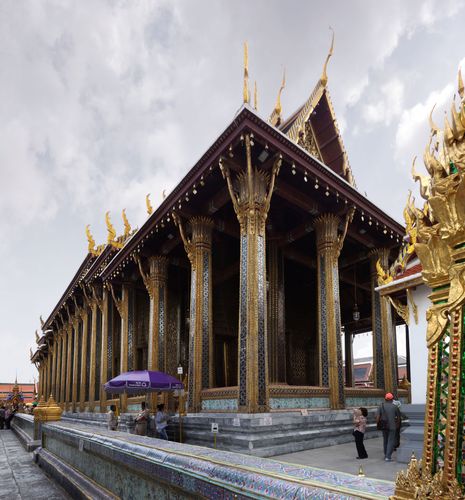
Wat Phra Kaew
Temples
Bangkok’s holiest temple inside the Grand Palace. Go early (8:30am–3:30pm). Buy the 500 THB ticket at Na Phra Lan Rd gate. Dress code enforced. Marvel at Ramakien murals and the tiny Emerald Buddha whose robes change with the seasons. 10–15 minutes’ walk from Khao San.
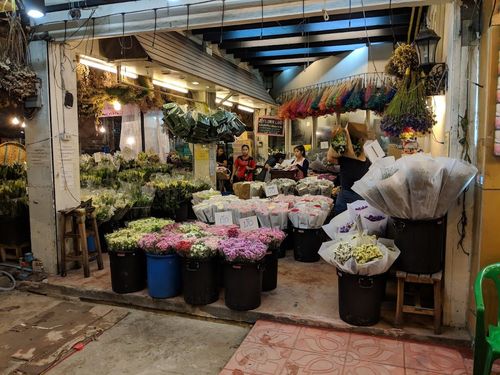
Pak Khlong Talat (Flower Market)
Markets
Bangkok’s 24‑hour flower market by Memorial Bridge. Best after midnight when trucks unload orchids, marigolds, roses and fragrant jasmine garlands. Photogenic, lively, and easy to reach from Khao San for a late‑night wander.
Khao San Road
Attractions
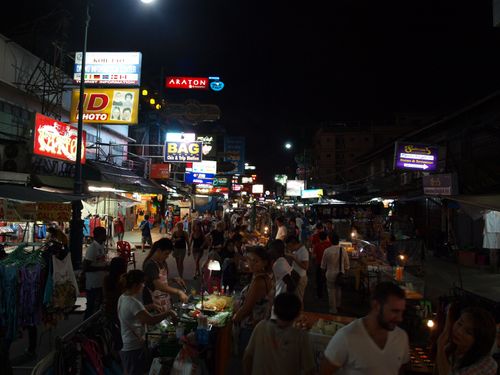
Bangkok’s backpacker carnival: curbside bars, live bands and DJs from 3pm–2am (midnight Sun). Street eats are cheap — pad thai 70–100 THB, mango sticky rice 60–100 THB. Come for wild people-watching; duck into Rambuttri for a calmer beer.
Rambuttri
Markets
Khao San’s calmer cousin: a tree‑shaded lane of VW van cocktail bars, open‑air foot massages, pad thai grills, and easygoing live bands. Best from sunset to 11pm; beers 80–120 THB, cocktails 150–220 THB. One block from the chaos, all the charm.
More Khao San Road Guides
- Bangkok Temple Run for Photographers: Best Light, Angles, and Viewpoints at Wat Pho, the Grand Palace, and Golden Mount
- Bangkok Temple Run for Photographers: Best Light, Angles, and Low-Crowd Shots at Wat Pho, the Grand Palace, and Golden Mount
- Bangkok Temple Run for Photographers: Best Morning Light, Viewpoints, and Photo Stops at Wat Pho, the Grand Palace, and Golden Mount
- Bangkok Temple Run for Art and Photo Lovers: Best Angles, Quiet Corners, and Framing Tips at Wat Pho, the Grand Palace, and Golden Mount