Bangkok Temple Photography Rules and Best Photo Spots: Wat Pho, Grand Palace, and Golden Mount
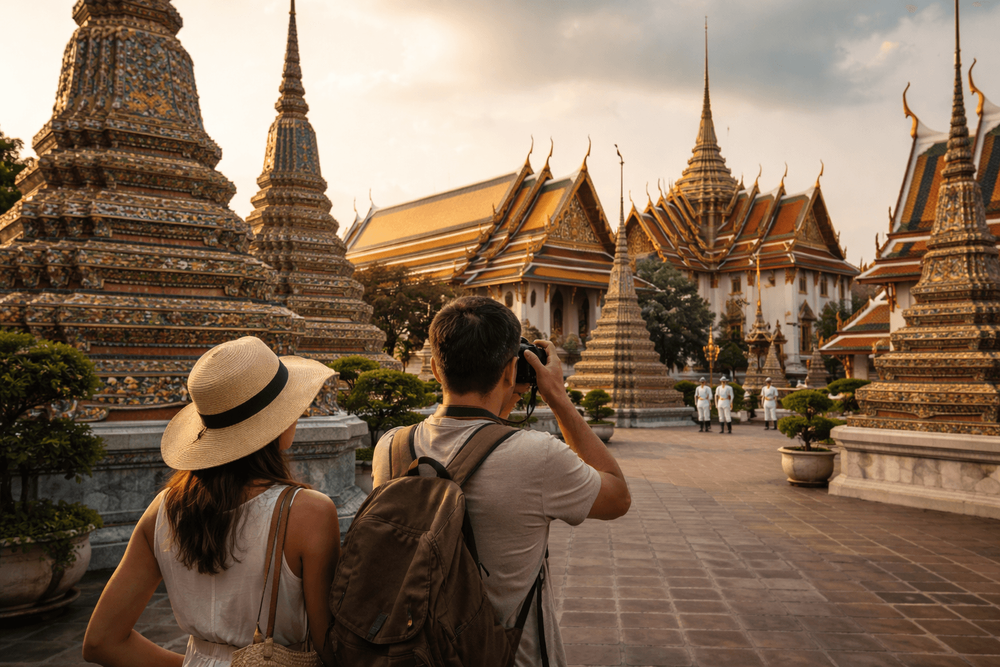
Essential rules and respectful tips for temple photography in Bangkok—what’s allowed, what’s not, and the best spots at Wat Pho, Grand Palace, and Golden Mount.
We slip our sandals off at the threshold of Wat Pho, the stone cool under our feet as incense threads the air. A monk’s chant drifts through the cloisters, the sizzle of a wok from Soi Tha Tien floats over the wall, and the Reclining Buddha glows like poured gold in the half-dark. This is where bangkok temple photography rules stop being abstract and start guiding how we move—the difference between getting that shot and getting a sharp tap on the shoulder from a smiling-but-firm attendant.
Bangkok Temple Photography Rules: The Basics
Let’s set the ground rules we’ve learned the hard way (read: a few polite scoldings and one confiscated selfie stick, temporarily):
Read the signs and follow staff instructions
- Signs are everywhere—Thai and English—often pictograms: camera with a slash (no photos), lightning bolt (no flash), tripod with a cross (no tripods). If you can’t decode it, ask a staff member. A quick “Sawadee krub/ka, photo okay?” goes a long way.
- If a staff member waves you along or says “no photo,” we smile and move. Arguing will only sour the sanuk for everyone.
Respect restricted areas and lines
- Temple halls (ubosot and viharn) often have red ropes or floor lines. Photograph from behind them and keep the walkway flowing. Don’t step over thresholds—those raised wooden bars are sacred, not trip hazards.
- Never climb on chedis, stupas, or Buddha bases. It’s disrespectful and you can be fined.
Understand that rules protect worship
- These aren’t tourist attractions first—they’re living places of worship. Rules prioritize quiet, safety, and respect for monks and worshippers. Your camera is a guest here, same as us.
Commercial shoots need permission
- If you’re shooting for clients, using lights, staging models, or anything beyond casual travel photography, you’ll need prior approval. Expect formalities and fees, especially on royal or historic grounds.
For more detail on dress code, bag checks, and what guards actually enforce on the ground, we keep this handy: Bangkok Temple Run with Dress Code, Bag Check, and Photography Rules from Khao San.
What’s Allowed vs Not Allowed (Most of the Time)
Temple policies can shift with renovations, holidays, or crowds, but these guidelines hold across Bangkok’s big hitters and neighborhood wats.
Flash
- Outdoors: Usually fine but rarely needed; the Thai sun is savage by 10 am.
- Indoors: Often banned. Even if not, turn it off. Flash is jarring during prayers and can bounce glare off gilding and lacquer.
Tripods and monopods
- Commonly restricted inside halls and at the The Grand Palace complex. Security may treat a monopod as a tripod.
- On open temple grounds they’re sometimes tolerated if you’re not blocking paths, but staff can still say no. Have a plan B: brace against a pillar (without touching sacred surfaces), use a railing, or a small bean bag.
Drones
- Don’t. Central Bangkok airspace is tricky, CAAT registration is required, and temples generally prohibit UAVs outright.
Selfie sticks and gimbals
- Outside: Often okay, until crowds swell.
- Inside halls: Frequently banned—too many near-misses with delicate murals and eyes.
Buddha images and sacred spaces
- Photos allowed from a respectful distance unless signs say otherwise. Absolutely no climbing, touching, or posing with your back against the Buddha. Keep your head lower than the Buddha image when seated.
Monks and novices
- Always ask before shooting close portraits. A nod and lifted camera can be enough. Women shouldn’t make physical contact with monks; give space.
- Avoid photos during alms rounds, chanting, or when a monk is advising a layperson—private moments, public setting.
Worshippers
- Shoot wide, from behind, or wait. Turn on silent shutter or use a soft touch. If someone is mid-prayer, we move along and come back later.
Shoes and thresholds
- Shoes off inside prayer halls—keep them tidy at the rack. Don’t step on or over the carved threshold; step over carefully without touching it.
Bags and props
- Big rigs can be subject to searches at major sites. Leave light stands, reflectors, and big backpacks back at the guesthouse.
Shooting Respectfully: Behavior, Dress, and Flow
- Dress like you’re meeting someone’s grandmother.
- Shoulders covered, knees covered, no ripped shorts. It’s practical too—less sunburn, fewer stares.
- Keep voices down.
- A whisper carries under high teak ceilings. Save the lens debate for the 7-Eleven curb with an icy bottle of water and that blissful blast of AC.
- Don’t block the line.
- At popular halls (hello, Reclining Buddha), shoot your frame, step aside, reset, repeat.
- Watch where your feet point.
- Pointing feet at a Buddha image is considered rude. Sit on your heels or cross-legged.
- Drop a small donation if you linger.
- If you use a quiet corner for 10 minutes of framing practice, a 20–50 THB donation is goodwill in action.
We fold plenty more etiquette with route planning here: Bangkok Temple Day Photo Guide: Best Angles, Viewpoints, and Shot Ideas at Wat Pho, Grand Palace, and Golden Mount.
Why Rules Vary by Temple
Bangkok’s wats are not one-size-fits-all. Management bodies differ (royal temples, monastic orders, private foundations), and so do layouts, crowd levels, and conservation needs.
Wat Pho (Temple of the Reclining Buddha)
- What to expect: Friendly but firm attendants, clear signage.
- Photography: Allowed across the compound and cloisters. Inside the Reclining Buddha hall, no flash and keep moving along the walkway—selfie sticks are often barred here. Tripods generally discouraged everywhere inside.
- Best light: Early morning for soft gold on chedis and those glossy, guardian giants. Late afternoon for shadows along the khlong-side cloisters.
- Ticket and hours: Around 200 THB, roughly 8:00–18:30. Bring small bills.
Grand Palace & Wat Phra Kaew (Temple of the Emerald Buddha)
- What to expect: The strictest rules in town, crowds to match, and a guard presence that means business.
- Photography: Allowed in outdoor areas. Inside the Emerald Buddha ordination hall—no photos at all. Tripods and professional rigs are typically refused at the gate. Stick to handheld and keep your bag light.
- Watch for scams: If a tuk-tuk driver says “Palace closed,” it almost never is. Use the main gate at Na Phra Lan Road; we ignore any detours.
- Ticket and hours: About 500 THB, 8:30–15:30 daily. Dress checks are serious—no shawls-as-sleeves loopholes here.
Golden Mount (Wat Saket)
- What to expect: A slow spiral stair, bells to ring, breeze at the top. The skyline pops without paying rooftop-bar prices.
- Photography: Very photo-friendly. Tripods may be waved off during busy times or festivals—walkways must stay clear. Handheld long exposures at dusk are doable with steady elbows on the parapet.
- Best light: Sunrise for moody layers over Rattanakosin; blue hour for city glow. During Loy Krathong, crowds and controls tighten.
- Ticket and hours: Around 100 THB, typically 7:00–19:00, later during festivals.
Smaller local wats
- What to expect: Calmer, more intimate. Rules can feel looser but courtesy matters more precisely because you’re visible.
- Photography: Always ask if you’re unsure. Monks are approachable; a smile and wai (palms together) go far.
- Tip: Avoid staging influencer-style shoots in quiet neighborhood shrines—save those poses for a public plaza.
If you want the optimal order, light, and where to stand for clean shots without heads in your frame, this route helps: Bangkok Temple Run for Photographers: Best Morning Light, Viewpoints, and Photo Stops.
Practical Photo Tips That Keep You in Bounds
- Work with the light
- Golden hour paints gilding like honey. Midday is harsh; look for reflected light in cloisters and shade patterns under bodhi trees.
- Go handheld, get sharp
- Boost ISO without fear; modern sensors handle 1600–3200 fine. Use image stabilization and brace against a column base (not the Buddha plinth).
- Pack small, move fast
- One wide (24–28mm) and one normal/short tele (35–50mm or 85mm) covers 90% of shots. Big lenses draw attention and fatigue.
- Polarizer with care
- Cuts glare on lacquer and tiles, but watch for rainbowing on glass cases.
- Mind your reflections
- After rain, puddles in temple courtyards give mirror shots—just don’t block foot traffic to guard them.
- Compose around the crowd
- Frame through doorways, shoot low along tile lines, wait for group gaps. We count to 15—Bangkok flows in waves.
- Quiet your camera
- Silent shutter or “quiet mode” saves the moment. Turn off focus beeps.
- Be ready for color
- Saffron robes, teal tiles, vermillion doors—shoot RAW to tame intense hues without losing texture.
- Keep gear discreet
- A small sling beats a backpack in narrow walkways. Tuck straps so they don’t sweep candles or offerings.
- Hydrate and cool off
- Hit 7-Eleven on Maharat Road for a cold drink and that glorious AC blast between locations.
If you’re wondering what exactly to toss in your day kit (and what to leave in the room), we break it down here: Bangkok Temple Run for Camera Gear: What to Pack for Wat Pho, the Grand Palace, and Golden Mount from Khao San Road.
Getting There, Hours, and Costs (From Khao San and Old Town)
Wat Pho
- Best route: Chao Phraya Express Boat from Phra Arthit Pier to Tha Tien (N8), then a 5-minute walk.
- On foot: 20–25 minutes across Sanam Luang and down Maharat Road; shady in the morning, punishing at noon.
- Hours/fee: About 8:00–18:30; ~200 THB.
-
- Boat: Phra Arthit to Tha Chang (N9), follow the crowd to the main gate on Na Phra Lan Road.
- Tuk-tuk: Quick but agree the price first (80–120 THB from Khao San, depending on traffic). Don’t accept “closed” detours.
- Hours/fee: Roughly 8:30–15:30; ~500 THB.
Golden Mount (Wat Saket)
- Walk: 15–20 minutes from Democracy Monument down Ratchadamnoen Klang to Boriphat Road.
- Taxi/Grab: Easy from anywhere Old Town—show the driver “วัดสระเกศ” if needed.
- Hours/fee: About 7:00–19:00; ~100 THB.
Carry small bills for tickets and donations. Shoulders and knees covered saves time at bag checks and entry. If you’re doing all three in a day, start with Wat Pho at opening, slip the Grand Palace in before lunch, then coast to Golden Mount for sunset.
Where We Base Ourselves (So We Make Sunrise)
We usually crash near Soi Rambuttri or along Phra Athit Road—close enough to walk to the river at dawn and grab the Chao Phraya boat before the tour groups. If you prefer quiet, a small guesthouse on a side soi off Phra Sumen is gold; for river breezes, a midrange place near Tha Tien makes pre-opening queues at Wat Pho painless. Budget hostels around Khao San are plentiful; just check you’ve got a locker so the big lenses can sit the day out.
Final Frames: Keep It Smooth, Keep It Kind

Bangkok rewards patience. Learn the bangkok temple photography rules, move with the rhythm—wai the attendant, slip off the shoes, wait for the lull—and the city will open angles most farang never see. Set your alarm for blue hour; we’ll meet you at Phra Arthit Pier with iced coffees and catch the first boat downriver.
Related Hotels & Places
The Grand Palace
Attractions
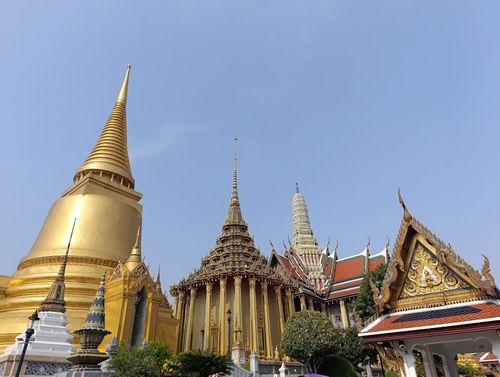
Bangkok’s royal showpiece a short hop from Khao San: glittering Wat Phra Kaew, Ramakien murals, and gold-on-gold rooftops. Go 8:30am to dodge the heat, dress modestly, and boat to Tha Chang for the prettiest arrival.
Wat Phra Kaew
Temples
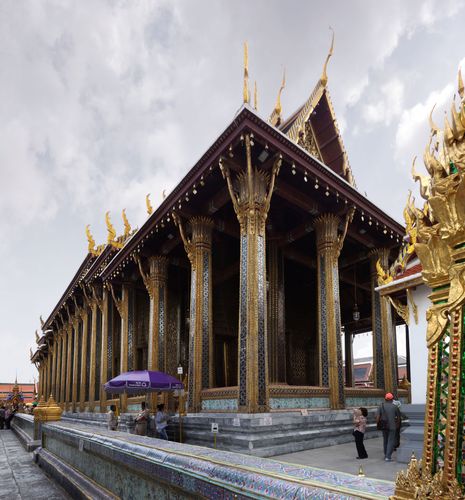
Bangkok’s holiest temple inside the Grand Palace. Go early (8:30am–3:30pm). Buy the 500 THB ticket at Na Phra Lan Rd gate. Dress code enforced. Marvel at Ramakien murals and the tiny Emerald Buddha whose robes change with the seasons. 10–15 minutes’ walk from Khao San.
7-Eleven
Shops
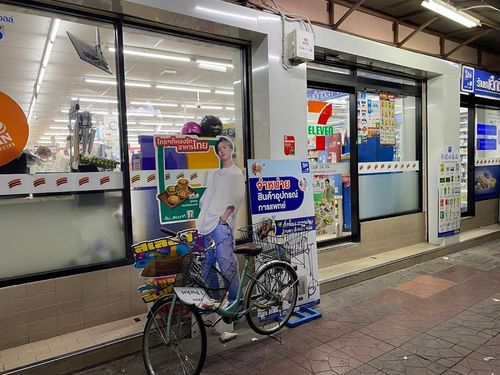
Khao San’s 24/7 reset button: ice‑cold A/C, ham‑cheese toasties, All Café iced lattes, water for 7–14 THB, and late‑night supplies from snacks to sunscreen—right by Rikka Inn.
Recommended Products
More Khao San Road Guides
- Bangkok Temple Run for Photographers: The Best Light, Viewpoints, and Shot Order for Wat Pho, the Grand Palace, and Golden Mount
- Bangkok Temple Day Photo Guide: Best Angles, Viewpoints, and Shot Ideas at Wat Pho, Grand Palace, and Golden Mount
- Best Photo Spots at Wat Pho, the Grand Palace, and Golden Mount for a Temple Day from Khao San Road
- How to Photograph Wat Pho, the Grand Palace, and Golden Mount: Best Viewpoints, Light, and Photo Rules