Bangkok Street Food Payment Guide: Cash, QR Codes, and What to Carry for Small Vendors
Cash or QR? Here’s how to pay at Bangkok street food stalls and night markets—what to carry, how much to bring, and smooth-payment tips for every setup.
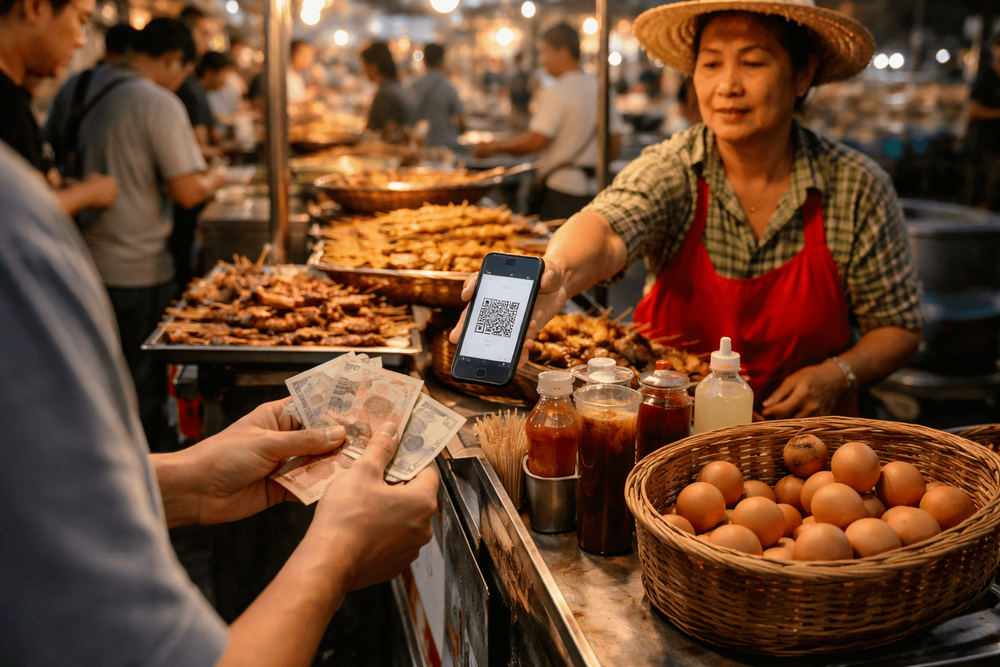
We step off Phra Athit Road into a halo of wok steam and chili, a fan wheezing above us like it’s running a marathon in April. Auntie slides a plate of pad kra pao across the counter, and we do the Bangkok street food payment dance: one hand fishing for crinkled twenties, the other hovering over a QR sign taped to a cooler with sun-faded masking tape. The bass from a Khao San Road bar thumps through the soi, and we have to pick—cash or scan—before the fried egg starts drooping.
This is our no-drama guide to paying your way through Bangkok’s street food—what actually works, what to carry, and how to keep payments sanuk: smooth, friendly, and fair.
Bangkok street food payment methods explained
Bangkok street food payment isn’t one-size-fits-all. Vendors range from grandma-and-a-wok on Soi Rambuttri to semi-permanent stalls at Yaowarat Chinatown Heritage Center night market to mall food courts with industrial AC. Here’s what we’ll see (and use):
Cash (still king at the curb)
- What to expect: Notes and coins rule at tiny carts, morning markets, boat noodle alleys near Victory Monument, and anywhere the signboard looks like it’s been there since Thaksin’s first term. Many vendors can break small notes, but high-denomination bills slow everything down.
- Where we rely on it: Roadside skewers, moo ping stands, khao man gai carts by schools, and late-night noodles around Khao San and the quiet end of Soi Rambuttri.
- Bonus: Cash is fastest when there’s a queue snaking down the soi and the auntie is plating five bowls at once.
PromptPay QR (everywhere-ish, with caveats)
- What it is: Thailand’s standard QR payment. You’ll spot printed squares with the PromptPay logo by the grill or taped to a tip jar. Many vendors in busier markets and newer food halls accept QR.
- What we need: A Thai banking app or a travel-friendly app that supports Thai QR payments. Some foreign e-wallets and multi-currency apps support EMV-style QR here, but availability varies—check your provider before you fly. If your home card’s mobile wallet only works on card terminals, it won’t help at a cart with QR only.
- When to use: Busy night markets (Jodd Fairs, Talad Rot Fai–style setups), newer Chinatown stalls on Yaowarat Road, and anywhere the vendor gestures to the squiggly square before we’ve even opened our wallet.
Cards and contactless (mostly indoors)
- Where they work: Malls and food courts like Terminal 21 Pattaya’s Pier 21 and MBK’s food halls. Some use stored-value cards you top up with cash; others have regular card/contactless terminals at each stall. On the street itself, card acceptance is rare-to-nonexistent.
- Tip: If we’re headed to a food court for a cool-down and a feast, we bring one contactless card and a bit of cash for the top-up counter.
Mobile wallets beyond QR
- For tourists: Apple Pay/Google Pay work only where there’s an actual card terminal (think malls, not street corners). QR-only stalls won’t accept them unless your wallet can scan Thai QR.
- For locals/long-stayers: Thai wallets like TrueMoney or bank apps are widely used. If we’re here a while, opening a local account or using a travel app that supports Thai QR can be worth it.
How much cash to carry (and which notes actually help)
Let’s build a street-food-ready wallet that won’t make us the farang holding up the line.
- Daily cash target: For a night grazing around Chinatown or Khao San/Phra Athit, we carry a float of small bills—think 300–800 THB in 20s, 50s, and a couple of 100s. That comfortably covers multiple snacks, a drink or three, and a dessert or two. If we plan craft beers or café stops, we bump it up.
- Denominations to stack: A brick of 20s is gold. Add a few 10-baht coins for water or khlong boat kiosks, a handful of 50s, and two crisp 100s. Keep the 500s/1000s for convenience stores or malls where change is easier.
- Typical street prices (safe ranges; confirm locally):
- Skewers (moo ping, gai yang): 10–25 THB each
- Noodles (boat noodles, yen ta fo): 40–90 THB per bowl
- Fried rice/pad kra pao: 50–100 THB per plate
- Fruit shakes or Thai tea: 30–70 THB
- Mango sticky rice (small tray): 60–120 THB
- Why ranges matter: Prices flex with neighborhood, portion size, and the mood of the mango season. We ask “tao rai?” (how much?) before ordering, with a smile.
If you’re calibrating your nightly budget, our bite-by-bite playbook is handy: see Bangkok Street Food by Budget: What to Eat for 50, 100, and 200 Baht (/articles/bangkok-street-food-by-budget-50-100-200-baht).
Paying smoothly at night markets, roadside stalls, and food courts
Each setup has its own flow. We lean into the rhythm and pay the way locals do.
Night markets (Yaowarat, Jodd Fairs–style, Ratchada pop-ups)
- Scout first, pay fast: We do a lap to clock prices and lines, then hit our top two. Have a 20 or 50 ready so you’re not unpeeling a 1000 with greasy fingers.
- QR stations: If a stall has a QR sign, they’ll often point to it before cooking. Scan, confirm the stall name on screen, and show the green tick to the vendor. If signal’s weak, we switch to cash without drama.
- Tray technique: Many markets hand you food immediately after payment. If it’s a multi-stall food court area, secure a table first so you’re not juggling four bowls and a melted Thai tea.
Roadside stalls and shophouses (the auntie-and-wok classics)
- Order-then-pay: Most places around Soi Rambuttri, Samsen, or near the Golden Mount will tally at the end. We keep mental notes of prices and ask if unsure.
- Change dance: Handing over a 1000 at a 40-baht noodle cart can grind service to a halt while the vendor hunts for change from a neighbor. We break big notes at 7-Eleven first (and enjoy that blessed AC blast while we’re there).
- Condiments and add-ons: Some stalls charge extra for egg, extra meat, or takeaway containers. If in doubt, we ask; we don’t assume it’s free.
New to the street scene? Our etiquette refresher helps with ordering flow, seating, and payment order: Bangkok Street Food Etiquette: How to Order, Pay, Sit, and Eat Like a Local (/articles/bangkok-street-food-etiquette).
Food courts (Terminal 21, MBK, Robinson, Big C)
- Top-up cards: Many courts give you a stored-value card. We load a modest amount (say 100–200 THB), then refund the unused balance before leaving. Others take cash or cards directly at each stall.
- Receipts and refunds: Keep the top-up slip. Refund counters usually close near food court closing time—don’t leave it to the last slurp.
- QR inside: Increasingly common at individual stalls; we still keep small cash ready in case the QR terminal is down.
Common Bangkok street food payment issues (and fixes)
Street eating is meant to be effortless, but a few hiccups are part of the bang for your baht. Here’s how we sidestep the snags.
- No change for big bills: We pre-break 500s/1000s at a convenience store, BTS/MRT ticket machine, or mall. If we forget, we politely ask “mee bai lek mai?” (do you have small change?). Vendors often borrow from neighbors if we’re patient and smiling.
- Minimum spend for QR or cards: Some stalls and mall kiosks set small minimums. We combine orders (two skewers plus a drink) or switch to cash.
- Weak mobile signal at peak hours: Yaowarat and packed markets can choke data. We step a few meters away to rescan, hop on mall Wi‑Fi if nearby, or go back to cash.
- Price confusion: Menus might show price “per piece” or “small/large” only in Thai. We point and ask “rao ja dai ao sai yai/lek?” (large/small?) and confirm the baht amount before cooking starts.
- Takeaway tax or cup charge: Some stalls add a few baht for containers. It’s small, but we account for it if we’re carrying food back to the river by Phra Athit.
- The rain scramble: In a squall, vendors tuck cash boxes under tarps. We keep our notes in a zip pocket or a cheap dry bag; vendors appreciate dry money.
- Dead phone: No QR without juice. We carry a small power bank if we’re leaning on digital payments.
If you’re rolling with friends and splitting bills, we’ve got tactics for cleaner group payments here: Bangkok Street Food for Groups: Sharing Plates, Budgeting, and What to Order with Friends (/articles/bangkok-street-food-for-groups).
Etiquette and safety: pay confidently, avoid overpaying
Bangkok smiles go a long way. So does knowing when and how to hand over the baht.
- Ask price first when there’s no sign: We point at the dish, say “tao rai?” and listen. If we don’t catch it, we hand our phone calculator over for the vendor to type the number.
- Pay at the right moment: For cook-to-order wok stalls, we usually pay after eating. For skewer grills and pre-made curry rice (khao rad gaeng), we pay on the spot.
- Tipping: Not expected at street carts. Rounding up a few baht is fine if we’re feeling grateful and the jar is there.
- Keep it tidy: We hand notes flat and clean—vendors working in oil and steam appreciate easy-to-handle money.
- Avoid the “tourist price” spiral: Most stalls run fixed prices. If something feels off, we smile, decline, and move to the next cart. There’s always another great bowl within 50 meters.
- Mind the wallet: Markets get cozy. We keep cash split between front pocket and a zip pouch, and we don’t flash the bankroll.
New to the streets? This primer helps with spotting good stalls, typical prices, and ordering basics: Bangkok Street Food for First-Time Visitors: What to Order, How to Spot the Best Stalls, and What a Fair Price Looks Like (/articles/bangkok-street-food-first-time-visitors-what-to-order-best-stalls-fair-prices).
Know before you go: SIMs, ATMs, and exchange
- Local data is your payment lifeline: If we’re planning to use QR, we grab a Thai SIM at the airport or a mall. Even a light data pack keeps QR and banking apps alive in crowded markets.
- ATMs: Foreign-card withdrawals often include a local machine fee and your bank’s fee. The local fee can vary; we plan for a rough 150–250 THB range per withdrawal and confirm locally at the machine screen before accepting.
- Exchange houses: Competitive rates cluster around central areas (Ratchadamri, Phaya Thai). We check rates on boards and exchange enough small notes for our first few meals.
- 7-Eleven float: We buy water, break a 500, step into the icy AC, and stride back to Soi Rambuttri like heroes.
For more context on what a fair street price looks like, we lean on this budget guide when calibrating our cash: Bangkok Street Food by Budget: What to Eat for 50, 100, and 200 Baht (/articles/bangkok-street-food-by-budget-50-100-200-baht).
Quick Plan
A simple two-evening wander to practice your Bangkok street food payment chops.
- Day 1: Banglamphu loop → Khao San/Soi Rambuttri → Phra Athit riverside (3–5 km walking; optional 10–15 min tuk-tuk hop). Stops: pad thai cart on Tanao Road, khao man gai near Dinso Road, mango sticky rice by Phra Sumen Fort. Overnight base: Old Town/Banglamphu area.
- Day 2: Chinatown (Yaowarat) → Charoen Krung side-streets → MRT back (4–6 km walking; 15–25 min MRT/Grab back to base). Stops: grilled seafood stall on Plaeng Nam, black sesame dumplings on Yaowarat Soi 6, late-night guay jab pepper soup.
ASCII route: Old Town → Khao San/Soi Rambuttri → Phra Athit Old Town → Yaowarat/Charoen Krung → MRT → Old Town
Costs at a Glance (THB)
Last checked: Oct 2026
- Fuel (if you’re driving between areas): Safe city petrol range ~32–45 THB/L; confirm locally. Using a small car at ~7–10 L/100 km, a 10 km city hop is roughly 25–45 THB in fuel.
- Segment estimates: Old Town ↔ Yaowarat (≈4–6 km): ~10–30 THB fuel. Old Town ↔ Asok/Terminal 21 (≈7–9 km): ~20–40 THB fuel. Assumes no heavy traffic idling; confirm locally.
- Tolls: City hops on surface streets: 0 THB. If you take expressways, expect a small range per gantry; plan 0–80 THB per segment and confirm on the toll board.
- National park/attraction fees: Not applicable for night markets and street food areas listed.
- Parking per night: Street parking varies widely; malls/hotels often 0–200 THB for short evening stays. Always confirm locally on entry.
Booking Pathways
- Car rental: Compare rental deals at Rentalcars.com to see city pickup options and parking notes for central Bangkok (https://www.rentalcars.com/).
- Hotels: Compare Bangkok hotel deals and filter for Old Town/Chinatown bases on Agoda (https://www.agoda.com/city/bangkok-th.html).
- Tickets and tours: Browse Bangkok street food tours and night market experiences on Klook (https://www.klook.com/en-TH/city/2-bangkok-things-to-do/).
Verification
- Prices above are presented as safe ranges based on current on-the-ground norms in Bangkok; we recommend confirming exact dish prices at the stall, on posted menus, or verbally before ordering.
- QR acceptance is widespread at many markets and food courts in Bangkok via PromptPay. Availability at individual stalls varies; we verify in person by looking for the PromptPay sign or asking “QR dai mai?” (can I pay by QR?). For travelers using non-Thai banking apps, support for Thai QR depends on the provider; confirm with your app/card issuer prior to use.
- ATM local withdrawal fees and food court refund policies vary by bank and venue; we check the on-screen prompts or posted counter signs and confirm locally.
If you want the full street-food playbook—from spotting the best carts to paying without fuss—save this for later alongside our how-to: How to Eat Bangkok Street Food Like a Local: Stall Etiquette, Payment, and Peak Hours (/articles/how-to-eat-bangkok-street-food-like-a-local).
When we’re back near the river and the sky goes orange over the Chao Phraya, we stash a stack of twenties, top up a food court card for AC breaks, and keep a QR-capable app charged—then let the sizzling woks of Bangkok do the rest.
Related Hotels & Places
Khao San Road
Attractions
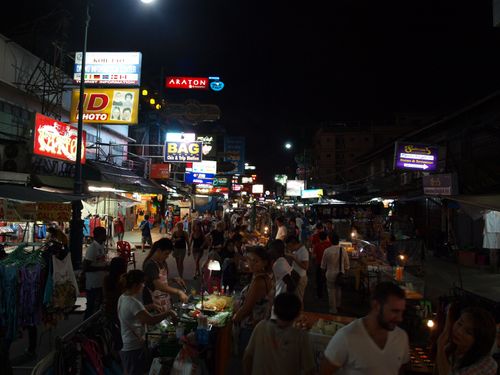
Bangkok’s backpacker carnival: curbside bars, live bands and DJs from 3pm–2am (midnight Sun). Street eats are cheap — pad thai 70–100 THB, mango sticky rice 60–100 THB. Come for wild people-watching; duck into Rambuttri for a calmer beer.
7-Eleven
Shops
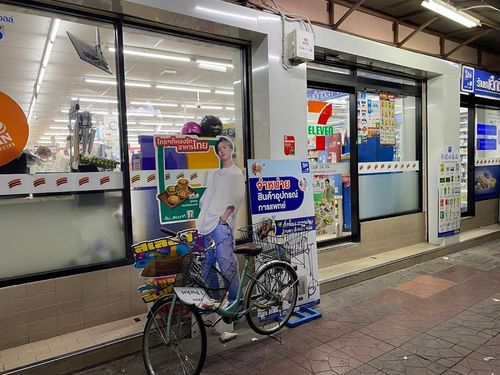
Khao San’s 24/7 reset button: ice‑cold A/C, ham‑cheese toasties, All Café iced lattes, water for 7–14 THB, and late‑night supplies from snacks to sunscreen—right by Rikka Inn.
Yaowarat Chinatown Heritage Center
Attractions
Inside Wat Traimit by Chinatown Gate, this tidy museum charts Yaowarat’s Chinese roots with bilingual displays, period photos and short films. Open Tue–Sun 8:30am–4:30pm; closed Mon. Pair it with the Golden Buddha upstairs.
Terminal 21 Pattaya
Shops
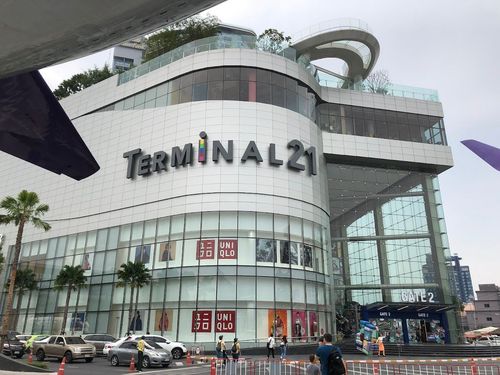
Airport‑themed mega‑mall by Dolphin Circle with city‑style photo ops, a bargain‑friendly Pier 21 food court (dishes ~40–70 THB), cafés, and an SF Cinema upstairs. Easy Baht‑bus hop for an air‑conned break from the beach, open daily from 11am.
More Khao San Road Guides
- How to Eat Bangkok Street Food Like a Local: Stall Etiquette, Payment, and Peak Hours
- Bangkok Street Food for First-Time Visitors: How to Order, Pay, and Eat Safely
- Bangkok Street Food Etiquette: How to Order, Pay, Sit, and Eat Like a Local
- Bangkok Grab-and-Go Street Food Guide for Transit Days: Snacks, Packable Meals, and Quick Bites