
Bangkok Street Food Condiments Guide: How to Use Chili, Vinegar, Fish Sauce, and Sugar Like a Local
Master Bangkok’s condiment caddy—chili, vinegar, fish sauce, and sugar. Learn how to season noodles, rice, and grills like a local (safely and deliciously).
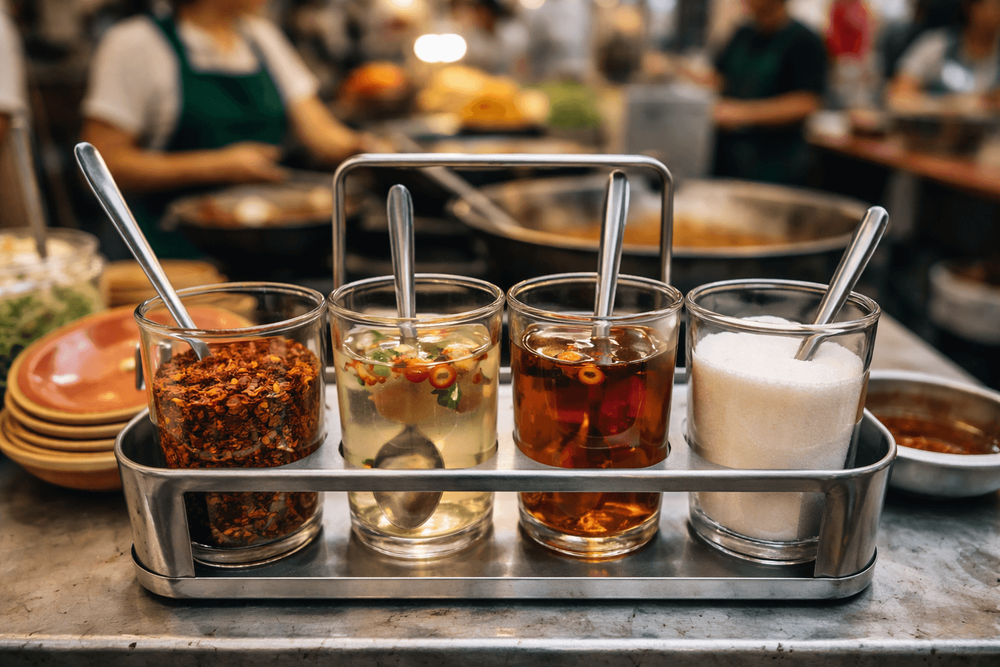
We’re hunched over a wobbling plastic table on Rambuttri, the wok’s hiss cutting through the motorbike whine, and a tin caddy lands between us like treasure. Four jars, four personalities. This is the control panel for Bangkok street food condiments—your license to tune a bowl of noodles or a skewer of moo ping until it sings in your mouth. We’ll show you what’s in the caddy, how locals balance the big four (spicy, sour, salty, sweet), and which condiments pair with which dishes so we can eat like we actually live here.
Bangkok Street Food Condiments: What’s in the Caddy?
In Thai, the table-top condiment set is called a “kruang prung” (seasoning kit). The classic foursome shows up at noodle shops and shophouse counters from Banglamphu to Victory Monument. Here’s who’s who and what each is for:
- Dried chili flakes (prik pon): Red, toasty, and immediate. This is your heat dial. A pinch lifts a bland broth; a teaspoon will make your lips hum. Expect this at almost every noodle stall.
- White vinegar with sliced chilies (prik nam som): Bright, tangy, heat that tiptoes in. Great for pork boat noodles, duck noodles, and anything that feels heavy or oily. A few drops wake the dish up.
- Fish sauce (nam pla): The salty backbone. Use drops, not glugs. It deepens savory flavors in soups and stir-fries. If you see chopped green bird’s-eye chilies floating in it, that’s prik nam pla—fish sauce supercharged with chili and lime. Perfect with rice dishes.
- Sugar (nam tan): Don’t flinch—sugar isn’t about making food “sweet” so much as rounding corners. In tom yum and pad thai, a quarter-teaspoon smooths sour and heat.
Beyond the caddy, watch for these frequent flyers:
- Ground white pepper (prik thai): Warm, peppery kick for congee (jok), rice soup (khao tom), and clear broths.
- Chili paste in oil (nam prik pao) or chili oil: Smoky, sweet-umami. A tiny spoon transforms tom yum, wonton soup, or yen ta fo.
- Pickled green chilies (prik dong): Thin rings soaking in vinegar; a noodle shop default.
- Lime wedges: Squeeze for sour without the bite of vinegar.
- Crushed peanuts: Common with pad thai, tom yum, and some boat noodles for texture.
- Light and dark soy sauce (si-iew khao, si-iew dam): More common at rice-and-stir-fry counters; dark soy is sweet and molassesy, light soy is salty.
- Maggi seasoning: Some rice stalls keep a bottle for that quick soy-umami hit.
- Pickled garlic (kratiem dong): Often near boat noodles; a stealthy sour punch.
- Seafood dipping sauce (nam jim seafood): Electric green—lime, garlic, chili. If it’s on the table, it’s begging to meet grilled prawns.
- Isaan chili dip (nam jim jaew): Tamarind, roasted rice powder, chili. Look for it near grilled meats.
If you want to match these flavors to what’s actually in your bowl (herbs, proteins, noodles), keep this handy read for later: Bangkok Street Food Ingredients Guide: Chili, Herbs, Noodles, and Proteins You’ll See at Khao San Road Stalls.
How We Customize Like Locals: The Four-Flavor Balancing Act
Bangkok cooking runs on balance—spicy (phet), sour (priao), salty (kem), and sweet (wan)—with umami drifting in via fish sauce and roasted pastes. Locals taste first, then season to their own “rot” (flavor preference). We’ll do the same.
- Start with a taste. Always. The cook’s version deserves a clean audition.
- Adjust one axis at a time:
- Too flat? A few drops of fish sauce for salt, or a dusting of chili flakes for heat.
- Too fatty or heavy? A touch of vinegar (prik nam som) or a squeeze of lime.
- Too sharp (sour or spicy biting hard)? A whisper of sugar to smooth the edges.
- Needs oomph? A dab of nam prik pao adds smoke and depth.
- Respect the spoon. Use the tiny shared spoon in the caddy, not your soup spoon. Tap off the excess; don’t drip broth back into the jar.
- Go slow. A 1/4 teaspoon of anything can swing a dish. You can always add more, but there’s no Ctrl+Z in a noodle bowl.
Phrases that help when ordering:
- “Phet noi” (or “phet nit noi”): a little spicy
- “Mai phet”: not spicy
- “Mai sai prik”: no chili added
- “Sai prik nam pla dai mai?”: can I have fish sauce with chilis?
If you’re wary of heat, this guide is your friend: Bangkok Street Food by Spice Level: Mild Dishes, Safe Picks, and How to Ask for Less Heat.
Which Condiments Go With What: Our Table-Side Playbook
We roam from Phra Athit Road to Yaowarat, and the caddy evolves with the menu. Here’s how we match condiments to the dish in front of us.
Noodles (Guay Tiew)
- Boat noodles (guay tiew reua) around Victory Monument: Start with a sip, then a pinch of chili flakes for lift and a few drops of vinegar to slice through the rich broth. Pickled garlic if the stall has it = chef’s kiss.
- Tom yum noodles: Already sour-spicy. We nudge sweetness with a pinch of sugar and toss in crushed peanuts for crunch.
- Duck noodles (ba mee ped): A little prik nam som brightens the duck fat. White pepper works magic on clear duck broth.
- Wonton or egg noodles with roast pork (ba mee moo daeng): Prik nam pla on the side for salty heat; a squeeze of lime if it feels flat.
- Yen ta fo (pink tofu noodles): Often sweet-sour out of the gate. We add chili oil or flakes to cut through the sweetness.
Stir-Fried Noodles and Rice
- Pad thai on Khao San Road: Chili flakes and a squeeze of lime, plus extra peanuts if you like texture. A tiny dusting of sugar can balance if the tamarind runs sour.
- Pad see ew on a Banglamphu corner: A few drops of fish sauce for depth; a pinch of chili flakes if it’s too gentle.
- Fried rice (khao pad) at the late-night wok stall: Prik nam pla + lime = sharp, salty jolt that wakes up the dish.
Rice Plates (Khao Rad Gaeng, One-Plate Meals)
- Khao man gai (Hainanese chicken rice): The stall’s gingery, soybean-based sauce is the star. If you want more zip, spoon a bit of prik nam pla over the rice.
- Khao moo daeng (red pork over rice): Often comes with a sweet gravy; we counter with vinegar chilies or a squeeze of lime.
- Khao kha moo (stewed pork leg): Brighten the porky richness with pickled mustard greens (on the table or by request) and prik nam som. Raw garlic cloves and bird’s-eye chilies are fair game too if they’re offered.
Grilled Meats and Skewers (Moo Ping, Gai Yang)
- Moo ping and sticky rice near the khlong: Dip in nam jim jaew (tamarind-chili dip). If none is out, ask. A drizzle of prik nam pla over sticky rice is a secret move when the pork runs sweet.
- Isaan-style grilled chicken (gai yang): Typically comes with two sauces—jaew (smoky-sour) and a sweeter chili sauce. Mix them to taste.
Soups and Congee
- Clear pork soup with glass noodles: White pepper for warmth; vinegar if it’s fatty.
- Jok (rice porridge) near Ratchadamnoen in the morning: White pepper, sliced ginger, soy sauce, and prik dong if you like a gentle sour tickle.
- Khao tom (rice soup): Similar to jok, but looser. We add fish sauce and a squeeze of lime; pepper to finish.
Seafood and Chinatown Classics
- Grilled prawns by the river: Nam jim seafood is non-negotiable—limey, garlicky, bright. Dip and grin.
- Hoi tod (crispy oyster omelet) in Yaowarat: Splash of chili vinegar cuts the fry oil; sweet chili sauce if provided is a friendly foil.
- Fish ball noodles in Chinatown: Add pickled chilies and white pepper; fish sauce only if under-seasoned.
Salads and Som Tam
- Som tam (papaya salad) off Soi Rambuttri: The mortar-and-pestle magic is already balanced. Taste first; ask for “phet noi” when ordering if you’re heat-shy. On the table, you’ll often find extra chilies and lime wedges—go easy.
Taste Safely: Street Smarts for Seasoning
Condiment caddies see a lot of traffic. We keep it tasty and safe with a few habits:
- Use the shared spoons and pour, don’t dip your own spoon. Keep the jars clean.
- If a condiment looks tired (crusty chili flakes, murky vinegar), skip it and ask for fresh—most vendors will happily swap.
- Add heat gradually. Bird’s-eye chilies are tiny bullies.
- Day heat matters. We eat saucy, mayo-ish dips earlier in the day and stick to hot-cooked dishes late at night.
- If you’ve got a sensitive stomach, prioritize hot, made-to-order dishes and clear, freshly sliced condiments.
For deeper peace of mind without killing the fun, bookmark this: Bangkok Street Food Hygiene Guide: How to Spot Clean Stalls and Eat Safely Without Killing the Experience. And for strategies when the afternoon sun turns the soi into a skillet: Bangkok Street Food for Heat and Humidity: What to Order, When to Go, and How to Eat Comfortably.
Know Before You Go: Decoding the Vendor Setup
- The caddy changes with the cuisine. Noodle shops default to the four-in-one kruang prung. Isaan grills set out dips (jaew, sweet chili). Seafood stalls flaunt nam jim seafood.
- Self-serve is normal, but don’t block the counter. A quick sawadee and a smile go far.
- If it’s not on the table, it may be behind the counter. Ask with a point and “mi prik nam pla mai?” Vendors often keep extras chilled.
- Central Thai balance vs. regional swagger: Bangkok leans balanced and slightly sweet at many rice-and-noodle stalls. Isaan vendors push sour-heat; Southern stalls bring fire and fragrant turmeric. Chinatown (Yaowarat) loves vinegar and pickled garlic with noodles. We embrace the chaos—different sois, different swings.
- Sugar isn’t a cheat; it’s a tool. Used in pinches, it softens sharp corners. If you’re avoiding it, lean on vinegar and lime for brightness instead.
Where to Practice: Streets, Sois, and Snack Windows
- Khao San Road and Soi Rambuttri: Late-night masters. Try pad thai, grilled skewers, and tom yum noodles, all with a front-row seat to the condiment caddy.
- Phra Athit Road: Student-friendly shophouses; gentler seasoning and plenty of prik nam pla on tables.
- Victory Monument: Boat noodle paradise. Vinegar and chili flakes do the heavy lifting here.
- Yaowarat (Chinatown): Fish balls, crispy oyster omelets, roast duck noodles—watch how vinegar, white pepper, and pickled garlic do the balancing act.
We like to base ourselves around Banglamphu so we can roll out of bed and into a bowl before the tour buses wake up. If you’re staying near the river, the Chao Phraya breeze plus a quick hop on the Express boat means you’ll be seasoning noodles in Yaowarat before the wok fully heats.
Your First-Try Playbook: Step-by-Step
- Step 1: Taste the dish as-is.
- Step 2: Diagnose—does it feel flat (needs salt), heavy (needs sour), sharp (needs a little sugar), or tame (needs heat)?
- Step 3: Add one condiment in 1/4-teaspoon nudges.
- Step 4: Stir, rest five seconds, taste again.
- Step 5: Repeat as needed, then stop one notch before “perfect”—the last sips and bites concentrate flavor.
Quick Reference: Condiment Pairings at a Glance
- Fish sauce (nam pla): Clear soups, fried rice, roast pork noodles, anything under-salted.
- Chili flakes (prik pon): Tom yum, pad thai, boat noodles, moo ping if you want heat on the side.
- Vinegar with chilies (prik nam som): Boat noodles, duck noodles, crispy omelets, greasy stir-fries.
- Sugar: Tom yum, pad thai, some stir-fries to nudge balance.
- White pepper: Congee, khao tom, clear broths, wonton soups.
- Nam prik pao (chili paste in oil): Tom yum, wonton soup, yen ta fo.
- Prik nam pla (fish sauce with chilies): Any rice plate, plain omelets over rice, fried rice.
- Nam jim seafood: Grilled prawns, steamed fish, fried squid.
- Nam jim jaew: Grilled meats, Isaan plates.
If you’re working a tight budget but still want to explore with variety, plan your bites by price and dish type here: Bangkok Street Food by Budget: What to Eat for 50, 100, and 200 Baht.
A Note on Accommodation (and Why It Matters to Condiments)
We tend to crash around Banglamphu—near Phra Athit Road or tucked off a quiet soi behind Rambuttri—so we can hit breakfast jok by the river, snag lunchtime boat noodles near Victory Monument, and circle back for late-night pad thai without negotiating taxis. Being walking distance to a range of stalls means we can practice the caddy game across different styles in one day. If you prefer quieter nights, stay a tuk-tuk ride away in Dusit or Thewet and glide down the khlongs or the river when hunger hits.
Final Nudge
Next time that tin caddy lands with a clank, we’ll grin like locals. Taste first, tweak second, and let the kruang prung do its dance. We’ll be the ones on the corner of Soi Rambuttri, lime wedge in one hand, chili spoon in the other—come pull up a plastic stool and season with us.
Where to stay
Stays we list in Khao San Road and Yaowarat. Each place page includes the Agoda booking link.

Related places
Rambuttri
Markets
Khao San’s calmer cousin: a tree‑shaded lane of VW van cocktail bars, open‑air foot massages, pad thai grills, and easygoing live bands. Best from sunset to 11pm; beers 80–120 THB, cocktails 150–220 THB. One block from the chaos, all the charm.
Khao San Road
Attractions
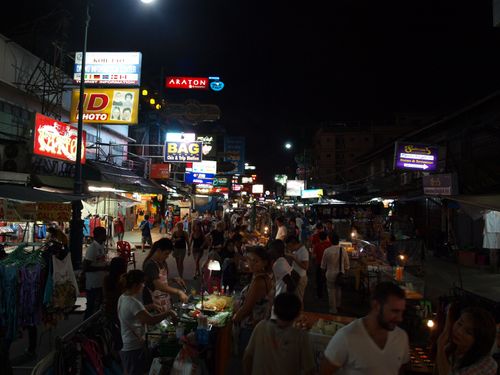
Bangkok’s backpacker carnival: curbside bars, live bands and DJs from 3pm–2am (midnight Sun). Street eats are cheap — pad thai 70–100 THB, mango sticky rice 60–100 THB. Come for wild people-watching; duck into Rambuttri for a calmer beer.
Staying near Khao San Road? Compare Khao San Road hotels with Expedia booking links.
Flights to Khao San Road
Compare flight options on Expedia.
More Khao San Road Guides
- Bangkok Street Food Ingredients Guide: Chili, Herbs, Noodles, and Proteins You’ll See at Khao San Road Stalls
- Bangkok Street Food by Spice Level: Mild Dishes, Safe Picks, and How to Ask for Less Heat
- Bangkok Street Food for Heat-Safe Eating: The Best Low-Risk Dishes, Freshness Checks, and Stall Rules in Bangkok
- Bangkok Street Food for First-Time Visitors: A Practical Guide to Ordering, Hygiene, and Must-Try Classics