
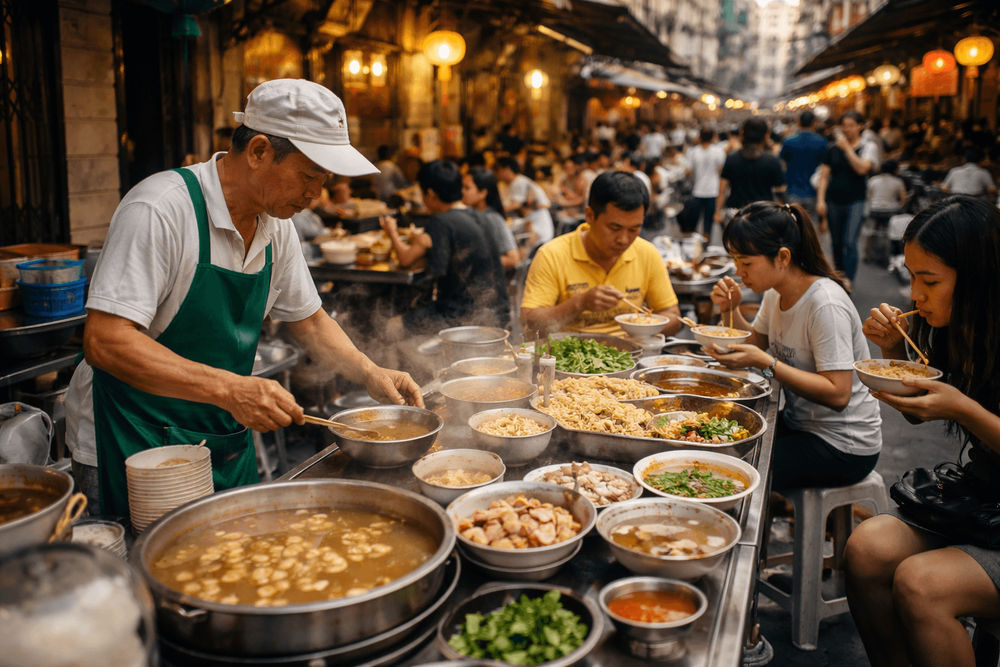
Bangkok Street Food for Soups and Noodle Lovers: Best Bowls to Try Around the Old City
Steam, spice, and slurp: our guide to the best Bangkok noodle street food around the Old City—what to order, where to find it, and how to eat like a local.
We’re shoulder-to-shoulder on Phra Athit Road, steam curling from a battered pot the size of a khlong drain. A fan rattles overhead, a wok hisses somewhere behind us, and the air flips between the sweet rot of durian from a passing cart and the clean, peppery snap of a broth that means business. This is Bangkok noodle street food at its best: fast, cheap, gloriously slurpable fuel that tastes like the city—hot, loud, and alive.
Bangkok noodle street food: what to expect
Bangkok runs on noodles. In the Old City—Banglamphu, Phra Athit, and around Khao San Road—we can graze all day: breakfast bowls laced with garlic oil, lunch soups that coat our lips with umami, midnight cups eaten to the thump of bass from a Khao San bar. Stalls specialize; aunties and uncles have been pulling the same noodles for decades. The rhythm is simple: choose your noodle, choose your broth, choose your protein, then season at the table with the holy quartet—chili flakes, vinegar with chilies (prik nam som), sugar, and fish sauce.
Good stalls move fast. Lines appear and vanish like tuk-tuks at a red light. Prices start around 40–60 baht for a basic bowl near the Old City, 70–120 baht for seafood or loaded “pisat” specials. Expect plastic stools, metal chopsticks clacking, and that blast of 7-Eleven AC when we duck in for a drink between rounds.
If you want a deeper dive into picks near Khao San once you’ve got the basics, our noodle shortlist here will help: Bangkok Street Food for Soups and Noodles: Where to Find the Best Bowls Near Khao San.
The noodle canon: what to order
We’ll keep it tight—here’s the greatest hits playbook so you can order like a regular by day two.
Boat noodles (kuai tiao ruea)
Small but swaggering bowls born on the canals. The broth is dark and rich, scented with star anise and cinnamon, thickened traditionally with pig’s blood (don’t panic—it gives body, not funk). Usually pork or beef with crunchy cracklings, herbs, and morning glory. In the Old City you’ll find standard-sized bowls (40–60 baht). At the classic canal-side clusters by Victory Monument, the “tiny bowls” run cheaper and you’ll stack them like trophies.
Flavor profile: deep, sweet-salty, slightly metallic richness. Order “naam tok” for that signature dark broth, “sen lek” (medium rice noodles) or “ba mee” (egg noodles). Spice at the table.
Tom yum noodles
The crowd-pleaser. Bright, tangy, nutty, a dance of lime, chili, sugar, and crushed peanuts. Choose your noodle; add pork balls, minced pork, squid, or shrimp if you’re feeling fancy. Some stalls scatter crispy wonton skins for crunch. Expect 60–100 baht depending on upgrades.
Flavor profile: sour-spicy-sweet, fragrant, crunchy.
Ba mee moo daeng / wonton noodles
Egg noodles tossed with a light soy/garlic oil, topped with red BBQ pork (moo daeng), maybe pork crackling, and jook-stall-clear broth on the side. Classic late-night fuel along Soi Rambuttri when the guitars come out and we’re not ready for bed. 50–80 baht.
Flavor profile: savory and gently sweet, springy noodles, clean broth.
Yen ta fo
You’ll know it by the pink broth—the color comes from fermented red tofu sauce. Don’t let the bubblegum hue fool you; it’s a complex, seafood-leaning bowl with fish balls, morning glory, tofu, and sometimes crispy squid. 60–90 baht around the Old City.
Flavor profile: funky-tangy-sweet with a chili backbeat. A sleeper hit.
Guay jab (rolled rice noodles)
Peppery, clear broth with curled-up rice noodle sheets, hard-boiled egg, tofu, and pork bits (belly, offal, or just cracklings if you prefer). Perfect on a rainy night when the klongs are huffing and we want something that hugs back. 50–80 baht.
Flavor profile: black pepper warmth, clean and aromatic.
Rad na (gravy noodles) and pad see ew (stir-fried)
Not soup, but required eating. Rad na is wide rice noodles smothered in glossy gravy with Chinese broccoli and your protein of choice. Pad see ew is its smoky cousin, stir-fried with dark soy until the noodles pick up wok hei—the charry kiss you can smell from half a soi away. 60–90 baht.
Flavor profile: rad na is silky-savory; pad see ew is sweet-salty with char.
Kuai tiao gai (chicken noodles)
A lighter bowl: clear or soy-dark broth, shredded chicken, coriander, and fried garlic. Comfort food when we’ve overindulged. 40–70 baht.
Flavor profile: clean, garlicky, soothing.
Sukhothai noodles
Rice noodles with a lightly sweet pork broth, green beans, lime, ground pork, and peanuts—a southern-central mashup that eats like tom yum’s less brash cousin. 50–80 baht.
Flavor profile: bright, balanced, textural.
Khao soi (Bangkok-style)
Chiang Mai’s golden child, happily adopted by Bangkok. Curried coconut broth, soft egg noodles, a tangle of crispy noodles on top, pickled mustard greens, shallots, lime. Around the Old City it tends to be richer and a bit sweeter. 80–120 baht.
Flavor profile: creamy curry, fragrant, gently spicy.
If you’re plotting your noodle route by mood—craving grilled meat to go with your bowl, or chasing purely seafood soups—dip into this cravings-led guide: Bangkok Street Food for Specific Cravings: Best Places for Noodles, Grilled Meat, Seafood, and Curries.
Where to hunt near the Old City
We’re aiming for maximum sanuk with minimal commuting. Here’s where the bowls hit hardest within striking distance of Khao San and the Old City.
Khao San Road and Soi Rambuttri
By day, smaller carts around Soi Rambuttri sling ba mee and light chicken soups; by night the scene flips—wonton noodles and pad see ew appear when the neon hums and the backpacker guitars find their groove. It’s not the cheapest strip in town but it’s reliable, late, and a two-minute stumble from wherever we’ve parked our bags. Expect 60–100 baht depending on the night-tax.
Phra Athit Road and Phra Sumen
Under the trees along Phra Athit, you’ll find mellow shophouse stalls doing tom yum with real lime bite and bowls of guay jab with enough black pepper to clear jet lag. Head toward Phra Sumen Fort for little side alleys (sois) that wake up around lunch and roll into the evening.
Banglamphu Market and Soi Samsen
Morning is magic here. Around Samsen 2 and the market lanes, aunties load clear soups with pork balls and fried garlic that perfumes the whole block. Get there 8–11 am before the heat turns the air syrupy. Prices hover at 40–70 baht.
Nang Loeng Market
A 15–20 minute walk east from Democracy Monument, Nang Loeng is old-school Bangkok: creaky wooden shophouses, aunties who remember when farang first arrived. Come for peppery boat-noodle-adjacent bowls and smooth rad na. Best before 2 pm; many stalls wind down early.
Chinatown (Yaowarat)
Okay, it’s a short taxi or river-boat hop away, but night in Yaowarat is soup heaven—yen ta fo with a line that snakes past gold shops, rich tom yum seafood, and slipper-smooth fish ball soups. Go after 6 pm when the neon signs flicker and the wok smoke smells like history. Expect 70–120 baht.
Victory Monument (for boat noodles)
Not the Old City, but worth a single mission. If we’re starting near Phra Athit, we grab the Chao Phraya Express to Saphan Taksin, then hop the BTS to Victory Monument—or just taxi straight if traffic gods are kind. Along the canal shophouses you’ll find the fabled tiny bowls; stack four or five and we’re in business. Bowls can start around 15–30 baht each in the classic row, but regular-size bowls elsewhere will be more.
Want a sense of what those prices look like across the city? This cheat sheet helps: Bangkok Street Food by Budget: What to Eat for 50, 100, and 200 Baht.
How to order like a local
Approach the cart, smile, and make eye contact with the noodle commander. A quick “sawadee krub/ka” helps. Then:
- Pick your noodle
- Sen yai: wide rice noodles
- Sen lek: medium rice noodles
- Sen mee: thin rice vermicelli
- Ba mee: egg noodles (yellow)
- Wun sen: glass noodles (mung bean)
- Pick soup style
- Naam: with broth
- Haeng: dry (broth on the side)
- Tom yum: tangy-spicy broth
- Naam tok: dark, rich broth (boat noodle vibe)
- Pick protein and extras
- Moo (pork), gai (chicken), neua (beef), pla (fish)
- Look chin (meat/fish balls), wontons, moo krob (crispy pork), kai luak (soft-boiled egg)
- “Pisat” means extra-loaded special
- Dial your spice and sweetness
- “Phet nit noi” = a little spicy
- “Mai phet” = not spicy
- “Mai waan” = not sweet (handy for tom yum)
- Season at the table Taste first. Then add: chili flakes for heat, sugar to round sharp edges, fish sauce for funky salt, and vinegar with chilies for brightness. Crushed peanuts show up with tom yum; crispy wonton skins are fair game anywhere.
Pay at the end. If there’s no bill, just point at your bowls and the auntie will sum it up faster than our phone calculator. Keep small bills and coins—stall math works best with 20s and 10s.
If you’re totally new to stall-hopping and want the basics—spotting a good cart from a tourist trap, timing, and what it’ll all cost—this primer is golden: Bangkok Street Food Guide for First-Timers: What to Order, How to Spot the Best Stalls, and What It Costs.
Safety, hygiene, and timing
Bangkok noodle street food is generally safe, especially soup bowls where everything is boiling hot. A few common-sense moves:
- Follow the queue. A line means turnover, and turnover means fresh.
- Scan the wash station. Clean basins and stacked bowls are a good sign. Cloudy, stagnant rinse water is a pass.
- Watch the condiments. Lids on, spoons clean. If the vinegar looks murky, skip it.
- Ice water is often safe, but if you’re unsure, order bottled. We top up from 7-Eleven and keep rolling.
- Heat is real. Midday in April will wilt a coconut. Aim for 11:00–13:00 for lunch, 18:00–22:00 for dinner. Morning markets (Nang Loeng, Banglamphu) are lovely before 10:30.
- Allergies and dietary needs: “Allergic” is “phaeng” but clarity helps—“mai sai nam pla” (no fish sauce), “mai sai kratiem” (no garlic), “gin jay” (vegetarian Buddhist style—no meat, egg, fish sauce, or garlic/onion). Note many broths are pork or chicken based even if you skip meat.
- Money and small bags: Keep wallets zipped and sling your bag in your lap on busy corners. Bangkok’s safe, but noodles taste better when you’re not fretting.
Getting there and around
- Chao Phraya Express Boat: The orange-flag boat is our favorite cheat code. Hop on anywhere south and cruise to Phra Arthit Pier (N13) for the Old City. Fares are low, the river breeze is merciful, and you step off within a five-minute walk of Phra Athit Road and a dozen bowls.
- Tuk-tuks and taxis: For short hops—Khao San to Nang Loeng or to Yaowarat at night—negotiate clearly with tuk-tuks (agree on price before you hop in). Metered taxis are often cheaper; insist on the meter with a smile.
- BTS/MRT: There’s no station in the Old City, but we often pair river boat + BTS for longer runs (e.g., Saphan Taksin to Victory Monument). It beats traffic when the sky looks like a melted wok lid.
Know before you slurp
- Bring tissues or napkins; many stalls use roll-paper on the table.
- Hand gel helps after cash handling.
- Small bills make you a stall favorite.
- If the rain hits, duck under an awning or into a 7-Eleven. Stalls rebound fast.
- If you need a reset between bowls, snack smart—grilled pork skewers (moo ping) or a wedge of pineapple. If you’re plotting an all-night noodle crawl, this night-market overview keeps the options wide open: Bangkok Street Food Night Market Guide: Best Stalls, Hours, and What to Order.
Where we flop between feasts
We usually base ourselves within a few minutes’ walk of Soi Rambuttri or Phra Athit. It’s quieter than Khao San, close to the river breeze, and dangerously near late-night wonton noodles. If you’re farther afield, anywhere along the river with easy access to the express boats keeps your noodle commute blissfully short.
Bangkok: A Cultural History (Cityscapes)
All right. We’ve got small bills in the pocket, a phrase or two of Thai in the chamber, and a mental map that smells like fried garlic. First stop tonight: a tom yum that stings our lips on Phra Athit. After that, we let the steam and the queues pull us where they will.
Related Hotels & Places
Khao San Road
Attractions
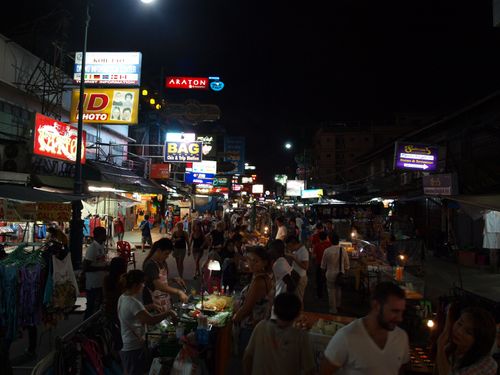
Bangkok’s backpacker carnival: curbside bars, live bands and DJs from 3pm–2am (midnight Sun). Street eats are cheap — pad thai 70–100 THB, mango sticky rice 60–100 THB. Come for wild people-watching; duck into Rambuttri for a calmer beer.
Chinatown Bangkok (Yaowarat)
Attractions
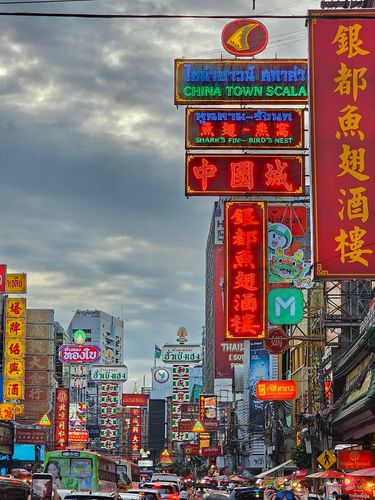
Neon, woks, and queues: Yaowarat is Bangkok’s street‑food strip. Start at Wat Mangkon MRT, graze T&K Seafood and Nai Ek’s peppery guay jub, snag toasted buns, and finish with mango sago at Sweet Time. Best 6pm–late; ~10‑minute taxi from Khao San.
7-Eleven
Shops
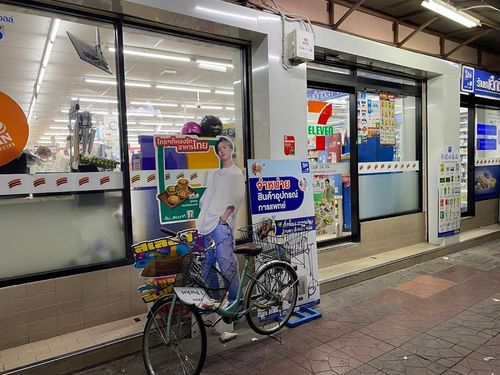
Khao San’s 24/7 reset button: ice‑cold A/C, ham‑cheese toasties, All Café iced lattes, water for 7–14 THB, and late‑night supplies from snacks to sunscreen—right by Rikka Inn.
Recommended Products
More Khao San Road Guides
- Bangkok Street Food for Soups and Noodles: Where to Find the Best Bowls Near Khao San Road
- Bangkok Street Food Soups and Noodle Stalls: Where to Find the Best Bowls Around Khao San Road
- Bangkok Street Food Soups and Noodle Stalls Near Khao San Road: What to Try After Dark
- Bangkok Street Food by Neighborhood: Where to Eat in Banglamphu, Old Town, Chinatown, and Riverside