
Best Boat Noodle Spots Near Khao San Road: Small Bowls, Big Flavor, and Where to Order Like a Local
Hunt the best boat noodles near Khao San—what they are, where to find them, how to order, and what to expect. Prices, routes, and local tips inside.
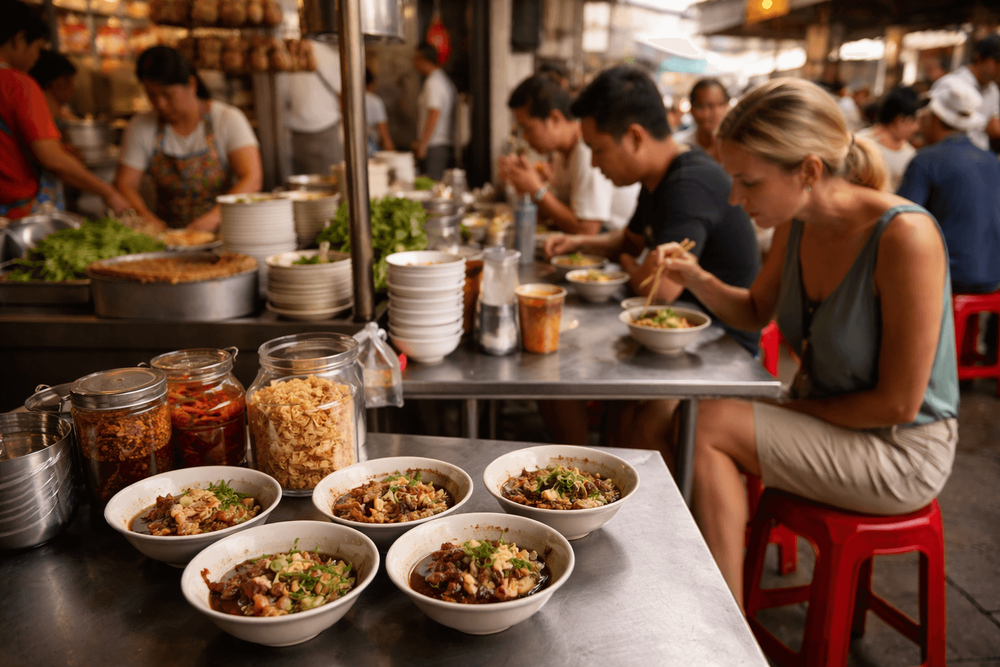
We slip off Phra Athit Road into the shade, the river breeze carrying a whisper of star anise and pepper. The wok sizzles, the vendor barks orders, and a pyramid of empty bowls taunts our hunger. This is the hunt for Bangkok boat noodles near Khao San Road: tiny bowls of deep, dark broth, a punch of spice, and just enough noodles to make you say “one more” until you’ve stacked a tower.
Data Freshness + Pricing:
- Prices are approximate and in THB.
- Last checked: June 2026
- Happy hour and promo details change frequently—confirm locally.
What Are Bangkok Boat Noodles?
Bangkok boat noodles (kuai tiao reua) are the city’s most addictive slurp—born on the khlongs (canals) when vendors sold soup straight from wooden boats. Bowls were tiny so they wouldn’t spill on choppy water, and the broth was fortified with aromatics and sometimes a bit of pig or cow’s blood (called nam tok) for body and a glossy, almost chocolate hue. Today most shops are on land, but the spirit remains: concentrated flavor, quick service, and stackable bowls that turn lunch into a sport.
Boat noodles are classic Thai street food: affordable, fast, and endlessly customizable. We love them for the layered broth—sweet, salty, spicy, and a whisper bitter from herbs—plus the sanuk (fun) of ordering rounds until the staff tallies your stack.
- Good to know: If you’re squeamish about blood, just say “mai sai leuat” (no blood) and you’ll get a clear, non-blood broth with the same punchy spices.
Anatomy of a Bowl: Broths, Noodles, Toppings
The beauty of boat noodles is in the details. Here’s how to order like we do.
Broth styles
- Nam tok (rich and dark): Pork or beef stock scented with star anise, cinnamon, white pepper, and toasted coriander seed, enriched with a splash of fresh blood. Deep, meaty, slightly sweet, with a silky finish.
- Clear broth (nam sai): All the aromatics without the blood. Lighter in color, still fragrant and satisfying.
- Tom yam style (optional at some shops): A bright, spicy-sour version built on the base broth with extra chili, lime, and crushed peanuts.
Noodle types
- Sen mee: Angel-hair thin rice noodles—great for soaking up rich broth.
- Sen lek: Medium rice noodles—our default for balance.
- Sen yai: Wide rice noodles—slippery and soft.
- Ba mee: Springy egg noodles—best with pork.
- Woon sen: Glass noodles—light and bouncy.
Proteins & toppings
- Pork (moo) or beef (neua): Slices, meatballs, or both.
- Offal (kruang nai): Liver, tendon, tripe—ask for or decline. “Mai ao kruang nai” = no offal.
- Morning glory and bean sprouts: Flash-blanched crunch.
- Crispy pork skin (kab moo): Adds texture and salt. Order on the side.
- Fried wonton skins: Crackly topping at some shops.
- Herbs and aromatics: Garlic oil, scallions, and white pepper to finish.
Flavor profile
Expect a symphony: savory from fish sauce, a molassesy warmth from palm sugar, perfume from star anise and cinnamon, heat from chili. On the table you’ll find the Thai condiment quartet (khruang prung):
- Chili flakes for heat
- Vinegar with chilies for tang
- Fish sauce for salt
- Sugar to balance
We take a sip first, then tune with a dash of vinegar and a pinch of chili. Don’t be shy—this is DIY seasoning culture.
Where to Find Great Boat Noodles Near Khao San (and Beyond)
Banglamphu and the Old City still feel like the heart of backpacker Bangkok, and we can slurp happily within a 15-minute walk. If you’re up for a quick tuk-tuk or a city adventure on the BTS, the canalside haunts further afield are worth the pilgrimage.
Close to Khao San & Phra Athit
- Samsen Road (Soi 2–4) and along Krung Kasem Canal: A handful of old-school shophouses do boat noodles from late morning until the pot runs dry. Small bowls are approx. 20–35 THB, larger “special” bowls 60–90 THB. Look for pyramids of bowls and the word ก๋วยเตี๋ยวเรือ on the sign.
- Thewet Market area: Walk or boat up to Thewet Pier and wander the lanes behind the market. You’ll find pork-forward shops with morning glory-laden bowls and crackly pork rinds sold in bags (approx. 15–25 THB per bag).
- Near Phra Sumen Fort and Soi Rambuttri: Tucked among coffee shops and guesthouses, a couple of day-time stalls turn out quick rounds. Useful when hunger hits but you don’t want to stray far from Khao San’s thump-thump of bass.
Victory Monument Canal Cluster
The most famous concentration of boat noodle shops is around Victory Monument—along the small canal off Ratchawithi Road. You won’t be on a boat, but you will see bowl stacks scraping the ceiling. Come before or after the office lunch rush; mornings to late afternoon are best.
- Pricing: Small bowls approx. 15–25 THB each; a good session is 3–5 bowls per person. “Special” size bowls land around 60–80 THB.
- Vibe: Quick-turnover, fluorescent lighting, fans whirring, aunties tallying your empty bowls with a flourish of chalk.
Wang Lang Market (Across the River from Tha Phra Athit)
Hop the cross-river ferry to Wang Lang Pier (next to Siriraj Hospital) and dive into one of Bangkok’s most edible markets. In lanes off the main drag you’ll spot boat noodle shops leaning porky, with tom yam options.
- Hours: Late morning to early evening. Go hungry.
- Pricing: Small bowls approx. 25–35 THB; larger bowls 60–90 THB.
Along Khlong Saen Saep: Bobae and Lan Luang
Trace the khlong from Golden Mount (Wat Saket) toward Bobae Market and Lan Luang Road and you’ll find no-frills shops ladling beefy, anise-rich broths. Great if you’re temple-hopping Old Town and want a local lunch within a short walk of the canals.
Rangsit Khlong (For the Purists)
If you want a pilgrimage, head to the Rangsit canals where the tradition runs deep. It’s outside central Bangkok, but the bowls are still tiny and the broth sings.
- Getting there: Take the SRT Red Line to Rangsit Station, then a short taxi or motorbike ride to the canal-side rows of noodle shops.
- Pricing: Often the lowest—small bowls approx. 15–20 THB; sides 10–20 THB.
For more context on neighborhoods and how to plug this into a bigger Bangkok plan, skim our city primer: Bangkok.
What to Expect: Portions, Price, Heat, and the Stack
- Portion size: Each bowl is a few mouthfuls—by design. Think snack-sized. Locals order 3–6 bowls; farang brag with double digits. We’re happy around 4, plus crispy pork skin.
- Prices: Expect approx. 15–25 THB for small bowls in local areas, 20–35 THB near Khao San, and 60–90 THB for “special” sizes. Sides (meatballs, cracklings, wonton skins) are usually 10–25 THB. Iced drinks—chrysanthemum, lime soda, longan—run approx. 15–30 THB.
- Heat: Default bowls skew balanced-spicy. Taste first, then season. If you’re spice-sensitive, ask for “mai phet” (not spicy) and add slowly.
- Speed: Bowls land in minutes. More bowls appear when you wave or shout your next order—don’t wait to be asked.
- Payment: Cash is king; some spots take PromptPay. Rarely cards.
- Hygiene: Bowls are boiled clean; chopsticks often come in a canister. There’s usually a stack of napkins, but it’s Bangkok—carry tissues.
Curious what else you can eat for the same money? Our budget cheatsheet maps delicious options at 50, 100, and 200 THB: Bangkok Street Food by Budget: What to Eat for 50, 100, and 200 Baht.
How to Order Like a Local
Follow this script and you’ll sound seasoned on your second bowl.
- Pick your protein
- Moo (pork) or neua (beef). If you want a mix, say “luk chin + suaai” for meatballs plus sliced meat.
- Choose your noodle
- Sen lek is our go-to. Want thinner? Sen mee. Eggy bounce? Ba mee. Wide and silky? Sen yai.
- Choose broth style
- Nam tok (rich, with blood) or nam sai (clear). If avoiding blood, say “mai sai leuat.” If you don’t want offal, add “mai ao kruang nai.”
- Tune spice and extras
- “Mai phet” = not spicy. “Phet nit noi” = a little spicy. Add crispy pork skin (kab moo) on the side; ask for “kab moo noi” (a small bag) if you’re sampling.
- Stack and settle up
- Keep empty bowls in your stack. The staff will count and chalk it on your bill at the end. It’s part scoreboard, part souvenir.
We often pair boat noodles with something cold and sweet—iced longan tea or a plastic cup of nam manao (limeade) sweating in the Bangkok heat. On a temple-day loop, slurp a couple bowls before you catch the ferry—our river route guide helps you time everything: Bangkok Temple Hopping by Boat: How to Visit Wat Arun, Wat Pho, and the Old Town from Khao San Road.
Tips for First-Timers
- Follow the crowd: Busier shops mean fresher broth and faster turnover. If there’s steam, a clatter of bowls, and locals shooting orders, you’re golden.
- Read the signs: Look for ก๋วยเตี๋ยวเรือ (kuai tiao reua). Beef shops often display “เนื้อ,” pork shops “หมู.”
- Timing: Go late morning (10:30–12:00) before the rush or mid-afternoon (14:00–16:00) before pots empty. Many stalls close when the broth is gone.
- Blood, explained: The nam tok splash enriches the broth and is fully cooked in hot soup. If it’s not your thing, clear broths can be just as satisfying.
- Spice control: Always taste first. A dash of vinegar lifts, sugar balances bitterness, and chili flakes bring bite. Season a little at a time.
- Cash and small bills: Bowls are cheap; staff appreciate 20s and 50s. Keep coins for ferries or the khlong boat.
- Offal optional: Unless you love liver, specify “mai ao kruang nai.”
- Allergies and dietary notes: Broths typically include fish sauce and may include MSG. Halal boat noodles exist in pockets but are not the norm near Khao San—ask before ordering.
- Boat noodles vs. other Thai noodles: Tom yum noodles lean brighter and sour; yen ta fo comes pink with fermented bean curd; Sukhothai noodles are sweet-herbal with green beans; duck noodles are, well, ducky. Boat noodles are the dark, spiced, canalside classic.
If you’re planning your eating day around openings and closings, this time-of-day guide helps you stitch meals to your schedule: Bangkok Street Food by Time of Day: Breakfast, Lunch, Dinner and Late-Night Eats.
Getting There from Khao San Road
- Walkable slurps (10–20 minutes): Head up Samsen Road toward Krung Kasem Canal, or wander to Thewet Market. The river breeze helps, but bring water; Bangkok’s heat is no joke.
- River route to Wang Lang: From Phra Athit Pier, take the cross-river ferry to Wang Lang (approx. 5–10 THB, cash). Markets sprawl right off the pier.
- Victory Monument cluster: Easiest is Grab or a metered taxi (approx. 80–140 THB depending on traffic; 15–25 minutes off-peak). Budget move: motorbike taxi from Phanfa or Democracy Monument (agree on approx. 50–100 THB before hopping on). If you want public transit, ride the Saen Saep canal boat from Phanfa Leelard Pier toward Pratunam, then a short taxi or bus to Victory Monument.
- Rangsit canals: Take the SRT Red Line from Krung Thep Aphiwat (Bang Sue Grand) to Rangsit, then a brief taxi or motorbike hop to the canal shops.
Where We Crash Between Bowls
Around Khao San and Soi Rambuttri, we usually base ourselves within walking distance of Phra Athit Pier so we can hop boats, duck into 7-Eleven when the humidity wins, and wander for noodles whenever the craving hits. If a pool is a priority, look for mid-range hotels sprinkled along Phra Athit and Chakrabongse roads—prices stay sane, and sunset rooftop dips make the day’s heat a distant memory. Budget guesthouses down the quieter sois off Rambuttri are handy when we plan to noodle-crawl from lunchtime into the cool of evening.
A Sample Order (Steal This Script)
- “Nam tok moo, sen lek, phet nit noi” — Pork, medium rice noodles, a little spicy. Start with two bowls.
- Add: “Kab moo noi” — a small bag of crispy pork skin.
- Follow with: “Neua, sen mee, mai phet” — Beef, thin rice noodles, not spicy.
- Drinks: “Nam manao sai nam keng” — limeade with ice.
Round two is inevitable. Stack, smile, and signal for one more.
Final Slurp
Bangkok boat noodles are the kind of dish that turns a sweaty afternoon into a memory. We’ll meet you by the khlong—order two bowls to start, and if you’re anything like us, you’ll be building a tower before the first chili hits.
Related Hotels & Places
More Khao San Road Guides
- Bangkok Street Food for Soups and Noodles: Where to Find the Best Bowls Near Khao San Road
- Bangkok Street Food Guide to Iconic Dishes: Where to Find Pad Thai, Boat Noodles, and Mango Sticky Rice Near Khao San Road
- Bangkok Street Food Soups and Noodle Stalls: Where to Find the Best Bowls Around Khao San Road
- Best Savory Street Food Near Khao San Road: Crispy Pork, Noodles, and Local Night Markets