
Best Hotels Near Yaowarat (Chinatown) for Foodies: Night Markets, Late Check-Ins, and Walkable Access to Chinatown Eats
Sleep steps from sizzling woks. Our insider’s guide to staying in Yaowarat for epic street food, late check-ins, and easy MRT access — without the tourist traps.
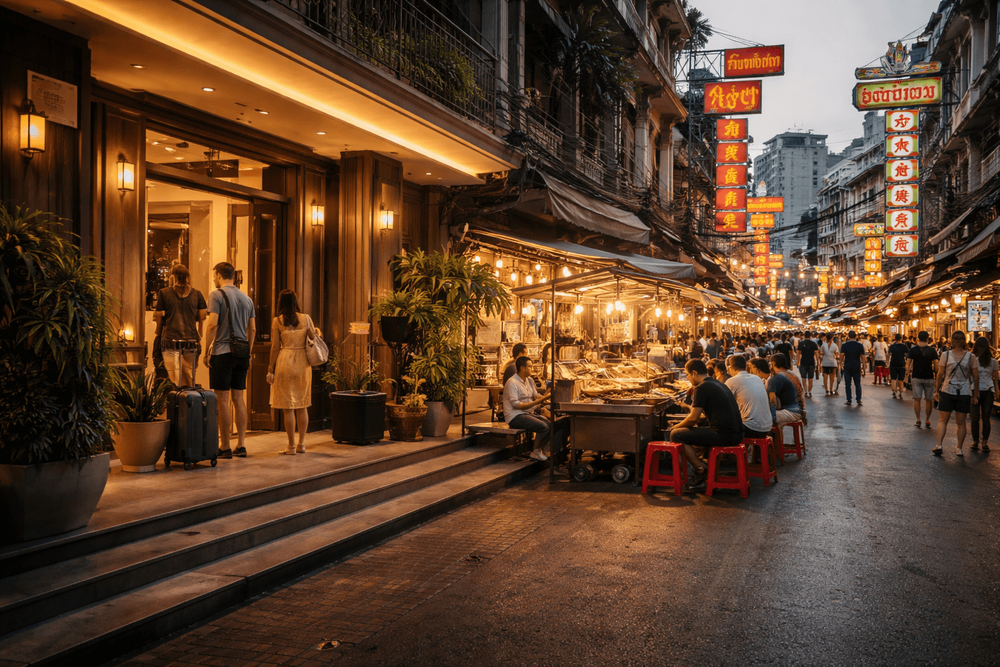
We step off Yaowarat Road into a cloud of garlic and smoke, neon characters buzzing overhead, woks banging like cymbals. A vendor fans charcoal under skewers of moo ping while a silver ladle splashes broth over peppery kuay jub. If you’re hunting for yaowarat hotels for foodies, this is why we stay right here — so dinner can be a five-minute wander, and supper is just across the soi when we inevitably get hungry again at 1 AM.
Why stay in Yaowarat if you love to eat?
Chinatown is Bangkok’s all-night cafeteria. From the golden arch at Odeon Circle down Yaowarat Road toward Charoen Krung, the streets bloom after sunset: dim sum steamers hissing, seafood piled like treasure, dessert shops ladling bualoy into sweet coconut milk. Stay nearby and we can graze at sanuk pace — a crab fried rice here, a charcoal toast there, and a final bowl of boat noodles before we call it a night.
MRT Wat Mangkon drops us a block or two from the action, Hua Lamphong station sits a longer stroll away, and taxis prowl along Charoen Krung when our feet tap out. Late-night dining is the default here; many stalls run from around 6 PM to midnight or later on weekends. Mornings bring soy milk and youtiao, roast-duck rice, and Chinatown’s beloved black coffee served in glass tumblers that sweat in the heat faster than we do.
Our favorite Yaowarat hotels for foodies
We’ve tried crash pads, boutiques, and big-shoulder towers. For food-focused travel, these three stays balance walkability, comfort after a feast, and easy MRT/taxi access.
For social, modern vibes right by the eats: ASAI Bangkok Chinatown
When we know it’s going to be a multi-stop snack crawl, we usually crash at ASAI Bangkok Chinatown. It’s a contemporary, compact stay tucked within striking distance of Yaowarat’s busiest stretch and a short walk to MRT Wat Mangkon. Rooms are smart and cool — the kind of AC blast you feel the moment the door clicks — with just enough space to stretch after devouring a plate of pepper-crusted pork.
- Foodie perks: Staff who actually eat around here and happily point us to the best hoy tod (oyster omelette) or where to find that mango sticky rice cart that sells out by 9 PM. A lobby hangout to regroup between rounds. Quick coffee options for early dim sum raids.
- Nearby bites: Kuay jub (peppery rolled noodles) that slaps you awake, roast duck over rice on Charoen Krung, and weekend-only dessert stalls down side sois that locals line up for. If we need a cleansing cup, chrysanthemum tea from a sidewalk dispenser is our go-to.
- Practical notes: We tend to book here when we want MRT access without the noise of being directly on Yaowarat. Expect a 5–10 minute walk to the thickest night-market glow.
- Who it suits: Snack hunters and minimalist comfort-seekers who’ll be out most nights and want a good sleep between feasts.
For old-world romance on Yaowarat Road: Shanghai Mansion Bangkok
When we’re in a mood for moody lighting and cheongsam-drama aesthetics, we point ourselves to Shanghai Mansion Bangkok. It sits right on Yaowarat Road — step outside and you’re in the thrum, durian perfume mixing with wok smoke and the thump of bass drifting over from Soi Nana (the Chinatown one, not the farang nightlife strip over on Sukhumvit).
- Foodie perks: Roll out of bed and you’re basically at the night market. Breakfast feels generous enough to hold us till lunchtime dumplings. Staff are used to late check-ins; on food crawls, we often return near midnight without fuss.
- Nearby bites: T&K-style seafood chaos, charcoal-grilled giant river prawns, egg noodles with crab, and those buttery Yaowarat toast bricks dripping with condensed milk. Walk 10–15 minutes to Talat Noi for coffee by the khlong and murals between bites.
- Practical notes: Being on the main road means neon, noise, and energy. Bring earplugs if you’re sensitive — it’s part of the Chinatown symphony.
- Who it suits: Couples and friends who want atmosphere baked into the building and maximum proximity to the action.
For a dip between chili hits: Hotel Royal Bangkok
After a particularly spicy night — think bird’s-eye chilis that make our eyebrows sweat — we like having a rooftop pool to slide into. Hotel Royal Bangkok delivers that cool-down plus instant access to Yaowarat’s food lanes.
- Foodie perks: Easy late-night returns, quick elevator-to-street transitions for “one more bowl” runs, and a pool that makes midday heat survivable.
- Nearby bites: Skewer alleys off Plaeng Nam, bowls of duck noodles that taste like Sunday lunch at grandma’s, and dessert stands with shaved ice and palm seeds to reset the palate.
- Practical notes: Expect steady foot traffic in and out — Chinatown is a living, breathing beast. Rooms have the modern comforts we want after hours on plastic stools.
- Who it suits: Comfort-first diners who crave a swim and a painless base for taxis, tuk-tuks, and MRT hops.
If you’re still comparing options or traveling with particular needs (kids, serious night-owl tendencies, or mobility questions), we’ve gathered extra picks and filters here: Best Hotels Near Yaowarat (Chinatown) for Food Lovers, Night Markets, and Easy MRT Access.
What food-focused travelers should look for in a Yaowarat stay
We love rooftop bars and plush pillows as much as the next person, but for Chinatown our checklist is specific:
- Walkability to Yaowarat Road and Soi Nana (Chinatown): The difference between a 3-minute and 15-minute walk is the difference between “let’s go for one more skewered squid” and collapsing in bed.
- MRT access: Wat Mangkon is the sweet spot; Hua Lamphong works too. Both beat hunting taxis on rainy nights.
- Late check-in and flexible breakfast: Flights to Bangkok love to arrive at odd hours. Bonus if breakfast runs late — dim sum mornings can turn into late starts.
- Soundproofing or quiet-side rooms: The neon is romance, the traffic soundtrack is reality. Ask for rooms facing away from Yaowarat when you book.
- Staff food intel: We want front-desk folks who point us to that hidden sesame-ball fryer in a back soi, not just the big seafood joints.
- Room comfort after large meals: Think strong AC, decent blackout curtains, and a proper shower to rinse off wok smoke and city grit.
Couples looking for a boutique feel and stylish nightcaps should also see: Best Boutique Hotels Near Yaowarat (Chinatown) for Couples, Foodies, and Easy MRT Access.
Eat like a local around your hotel
We map our evenings like a progressive dinner. Here’s how we graze.
- Dim sum mornings: Seek bamboo towers stacked with siu mai and har gow down side lanes off Charoen Krung. Order too much; that’s the point.
- Roast duck and crispy pork: Look for the hanging roasts in the window; a plate with rice, a drizzle of sweet gravy, and pickled ginger is a perfect afternoon buffer.
- Kuay jub (rolled rice noodles): The peppery broth can make your eyes water in the best way. Grab a side of crispy pork belly to dunk.
- Oyster omelette (hoy tod): Some vendors fry it soft and gooey, others crisp like a pancake. Either way, hit it with chili sauce and don’t wear white.
- Seafood mayhem: The “big green-shirt” vs “big red-shirt” rivalry on Yaowarat is part theater, part feast. Prices are higher than humble stalls, but it’s a rite of passage.
- Toast bricks and dessert: Those charcoal-toasted slabs slathered in butter and condensed milk are pure late-night joy. For a cooler finish, look for shaved ice bowls with longans, basil seeds, and grass jelly.
- Drinks, Chinatown-style: Soi Nana (Chinatown) has hip bars tucked into shophouses; expect a creative cocktail or an herbal tonic, depending on your mood. If it’s sweltering, an iced chrysanthemum tea from a street cart works wonders.
Pro tip: Many famous stalls rest one day a week (often Monday or Tuesday) or rotate hours seasonally. If your heart is set on a specific dish, build in a backup.
Practical stuff foodies actually care about
- Walking distances: “Chinatown area” is big. If food is the priority, aim for within 300–700 meters of Yaowarat Road between Odeon Circle and the Royal Jubilee Gate. Anything farther is fine, but late-night returns feel longer when it’s humid and you’re in a food coma.
- Noise levels: The closer you sleep to the main drag, the more you’ll hear. Ask for high floors or courtyard-facing rooms. Earplugs cost 20–40 baht at 7‑Eleven and can be trip-savers.
- Budget ranges: Hostels and guesthouses from about 300–700 baht per person; modern midrange hotels from 1,500–3,500 baht; stylish boutiques and riverside options from 3,500–6,000+ baht. Prices swing with season and weekends.
- Ideal stay length for a culinary trip: Two nights lets us hit the greatest hits. Three to four nights means detours to Talat Noi, Sampeng Lane, and a river-hop to Tha Tien for more eats.
- When to go: Thursdays through Sundays have the fullest street lineup. Rains happen; a folding umbrella keeps you nimble between carts.
- Payment: Stalls are cash-first, though more accept QR. Keep small bills; 100- and 20-baht notes are your friends.
Getting there and around
- MRT: Wat Mangkon (Blue Line) puts you close to the action; Hua Lamphong is one stop away and connects to the main rail terminus area. Trains run from early morning to around midnight.
- Chao Phraya Express boat: Ratchawong Pier is handy for daytime hops to Old Town and riverside neighborhoods. It’s a sanuk way to cool down after lunch.
- Taxi and Grab: Taxis start at 35 baht. Insist on the meter; if they refuse, another cab will come. Grab is reliable, especially late.
- Tuk-tuks: Fun, breezy, and easy to overpay. Agree on a price before you hop in and skip any “special gem shop” detours.
- Airport runs: Expect 45–75 minutes to Suvarnabhumi or Don Mueang depending on traffic. Red-eye arrivals? Book a hotel with 24-hour reception and message them if you’ll be late.
Quick picks: Which foodie are you?
- Budget snack hunter: Choose a simple stay within a 10-minute walk of MRT Wat Mangkon and spend the savings on skewers and soups. You’ll be out late and up early.
- Comfort-seeking diner: We lean toward Hotel Royal Bangkok when we want an easy pool dip and quick elevator-to-Yaowarat access.
- Boutique-loving couple: Shanghai Mansion Bangkok nails the atmosphere-and-location combo for stroll-out-and-eat evenings.
- Minimalist modernist: ASAI Bangkok Chinatown keeps us close to the MRT and the night market without overcomplicating the room.
- Bring-the-crew planner: Look for larger rooms or connected options near Charoen Krung to keep night returns smoother and quieter.
Know before you book
- Heat is real: We love the city’s sauna energy until we don’t. Plan a sit-down soup stop or iced drink every 30–45 minutes if you’re hitting stalls back-to-back.
- Scams are boring: Skip “tailor today, temple tomorrow” pitches and “10-baht city tours.” Chinatown is about eating — no one should be dragging you to a showroom.
- Dress and shoes: Closed-toe shoes save you from mystery puddles and dropped chili. Light clothes, small daypack, patience at crossings.
- Lines move fast: If a stall looks long but disciplined, join it; if it looks chaotic and stagnant, we pivot two doors down. There’s always another great bite.
- Respect the wok: Vendors run micro-kitchens on the street. Give them space, order with a smile (sawadee krub/ka goes a long way), and bus your table if there’s a bin.
We’ll be out there with you, chasing the glow from Odeon Circle to the last sweet bowl on Soi Plaeng Nam, waving down a tuk-tuk when our legs start to noodle. When the neon hums and the pepper hits, that’s when Bangkok tastes like Bangkok. See you under the red signs — we’ll save you a stool.
Related Hotels & Places
ASAI Bangkok Chinatown
Hotels
A 3-star hotel in Bangkok.
Shanghai Mansion Bangkok
Hotels
A 4-star hotel in Bangkok.
Hotel Royal Bangkok
Hotels
A 4-star hotel in Bangkok.
Khao San Road
Attractions
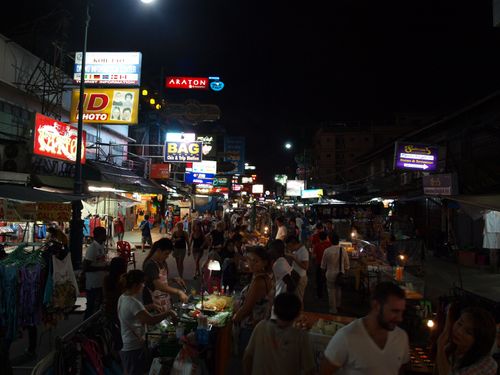
Bangkok’s backpacker carnival: curbside bars, live bands and DJs from 3pm–2am (midnight Sun). Street eats are cheap — pad thai 70–100 THB, mango sticky rice 60–100 THB. Come for wild people-watching; duck into Rambuttri for a calmer beer.
More Khao San Road Guides
- Best Hotels Near Yaowarat for Foodies: Street Food Access, Late Check-In, and Quiet Sleep
- Best Hotels Near Yaowarat (Chinatown) for Food Lovers, Night Markets, and Easy MRT Access
- Best Hotels Near Yaowarat for Foodies: Walkable Stays for Late-Night Street Eats, MRT Access, and Easy Old Town Day Trips
- Best Hotels Near Yaowarat (Chinatown) for Families, Groups, and Longer Stays