
Best Hotels Near Yaowarat for Foodies: Street Food Access, Late Check-In, and Quiet Sleep
Where to stay in Bangkok’s Chinatown for late-night eats, MRT access, and solid sleep. Our go-to Yaowarat hotels for foodies—plus how to dodge the queues.
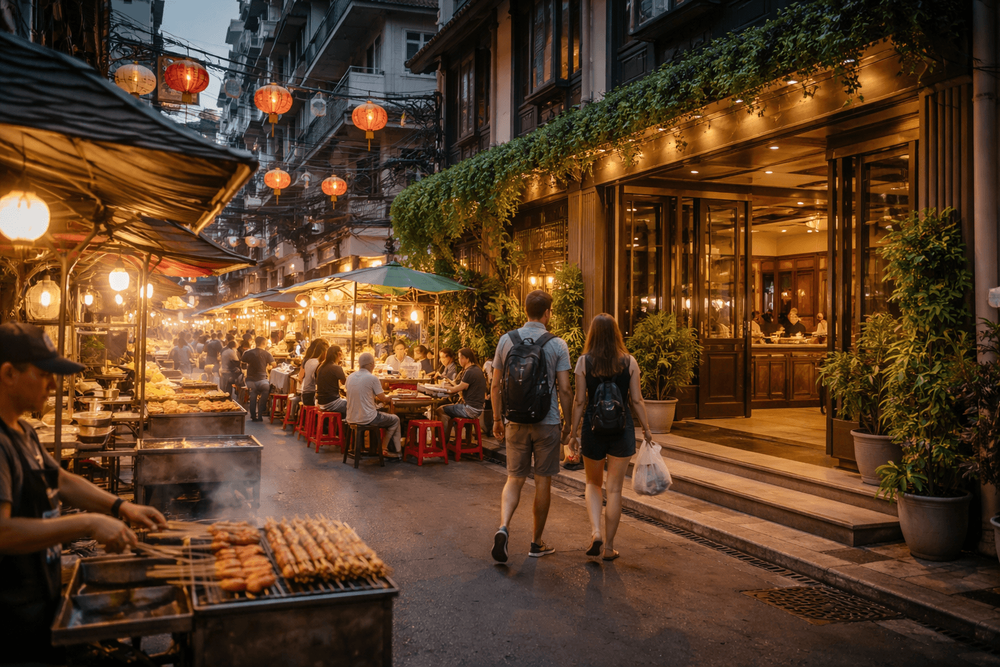
We hit Yaowarat Road just as the neon sputters to life, the wok smoke rising in sweet, garlicky curls and the call of “sawadee” bouncing between hawkers. A queue coils around a cart ladling peppery guay jub, a kid in flip-flops fans a grill of skewers, and a tuk-tuk idles like a chrome beetle. This is where Bangkok eats after dark—and where yaowarat hotels foodies obsess over get the balance right: steps from the street food, but quiet enough to actually sleep. We’ve done the sweaty lap and the late check-in so you don’t have to.
The Best Yaowarat Hotels for Foodies (and Quiet Sleep)
We want three things in Yaowarat hotels foodies chase: late-night food at your doorstep, an easy MRT hop to the rest of the city, and rooms that muffle the 2 AM symphony of sizzling woks and motorcycle horns.
ASAI Bangkok Chinatown — We usually crash at ASAI Bangkok Chinatown when we want modern rooms, a social lobby for a pre-street-food drink, and a two-minute wander to Wat Mangkon MRT. Small rooms, big vibe, and you can roll back at midnight with a bag of pa thong go and not feel judged.
Hotel Royal Bangkok — If you want to be smack on Yaowarat Road without paying rooftop-bar “farang price,” Hotel Royal Bangkok is a reliable mid-range base. We love grabbing a night swim on the roof after a seafood blowout at T&K. Pro tip: ask for a high-floor room facing away from Yaowarat if you’re a light sleeper.
- Shanghai Mansion Bangkok — When we’re feeling romantic and moody, we slip into Shanghai Mansion Bangkok. The shophouse bones, lantern glow, and old-Shanghai swagger make sneaking back with mango sticky rice feel downright cinematic. Walk out the door and you’re on the strip.
Want more choices tailored to street food lovers and MRT access? We keep a running list here: Best Hotels Near Yaowarat Chinatown Heritage Center for Food Lovers, Night Markets, and Easy MRT Access.
Eat Here First: The Foodie Map in Your Head
Bangkok’s Chinatown is a feast best tackled with a game plan and a loose waistband. These are the pockets we orbit when the appetite hits.
Street Legends and Michelin Bibs
Guay Jub (peppery rolled rice noodles): The line that snakes down Yaowarat for Nai Ek Roll Noodle isn’t for nothing—pork, offal if you want it, and a broth that smacks you awake. Aim off-peak (before 6 pm or after 10 pm) to dodge the tour groups.
Hoi Thod (oyster omelet): Nai Mong Hoi Thod in a tiny lane off Plaeng Nam dishes crisp-edged, gooey-centered oysters or mussels that taste like the Gulf and a wok had a love child.
Roast meats & rice: Those lacquered slabs of char siu and crisp pork belly hanging in shophouse windows? Follow the shine. Plates are 60–120 baht and perfect for a quick refuel between stalls.
Seafood Alley, Flames and Finger Bowls
This is where things get theatrical. T&K Seafood and Lek & Rut spill plastic stools onto the street, where blue flames lick woks and servers toss clams like confetti. Prices are market-driven, but a feast for two—grilled prawns, morning glory, crab fried rice—usually lands around 800–1,200 baht. Expect a wait after 7 pm, especially Friday–Sunday. Put your name down, grab a sugarcane juice, and embrace the sanuk.
Dessert Lane: Sugar Meets Smoke
Pa Tong Go (fried dough sticks): Golden, airy crullers dunked in pandan custard. They disappear fast—get a bag to go and thank us later.
Bua Loy Nam Khing (black sesame dumplings in ginger broth): The ginger heat cuts through seafood richness like a boss.
Mango sticky rice, durian bowls, and those thick-cut “Yaowarat toasts” dripping with condensed milk keep the night rolling. You’ll smell the durian before you see it—sweet rot, an acquired perfume we’ve learned to love.
Soi Nana (Chinatown), Tea Rooms, and Nightcaps
Not that Nana—this is Soi Nana in Chinatown, a narrow lane where hip bars, tea rooms, and tiny galleries hide behind vintage shutters. Start at a tea room with oolong, then slide into a gin den for a proper nightcap. It’s an easy 8–12 minute stroll from Yaowarat Road, and the bass thump is more heartbeat than hammer.
What Food-Lovers Should Look For in a Yaowarat Stay
Being near the noodles is only half the battle. Here’s what we actually check when scoping yaowarat hotels foodies will love.
Walkability vs. Sleepability
On Yaowarat Road: You can roll out of bed into a bowl of boat noodles, but noise is real. Ask for higher floors or rooms at the back. Bring earplugs if you’re precious about sleep.
Talat Noi/Talad Noi: A few sois closer to the river and you swap blaring horns for klong breezes and morning roosters. It’s a 10–15 minute walk to the main drag, but quiet comes easy.
Near Wat Mangkon MRT: Great compromise—quiet side streets, one-minute train access, five-minute walk to the action.
Breakfast That Isn’t an Omelet
We love a local start: soy milk and youtiao, congee with pork, or a Chinese doughnut dipped in pandan. Look for hotels that either offer local options or sit within a block of shophouses that do. Failing that, 7-Eleven’s AC blast and steamed buns save lives after a late one.
Rooftops Without the Markup
A pool or rooftop bar is more than a flex—it’s your escape hatch from the heat and crowds. We’ll take a sunset dip, dry off in the breeze, then hit seafood alley at peak appetite. Fancy views are nice; fair prices are nicer.
MRT, River Boats, and Tuk-Tuks
MRT Wat Mangkon and Hua Lamphong put most of Bangkok within 20–30 minutes. Fares run 16–45 baht; trains run roughly 6 am to midnight.
Ratchawong Pier is your river-gale alternative. Hop a Chao Phraya Express boat north to Tha Tien for Wat Pho or south to Sathorn for BTS connections. It’s cheap (16–30 baht) and scenic.
Tuk-tuks are fine for short hops (agree on 80–150 baht) but meter taxis or Grab are calmer when you’re carrying bags of soup and mango.
Late Check-In and Luggage Storage
Most hotels around here get that Chinatown is a night market first, neighborhood second. 24-hour front desks are common; luggage storage is usually easy. Still, shoot your ETA in a quick message if you’re rolling in past midnight.
Practical Booking Tips for Yaowarat
We’ve learned through trial, error, and one ill-advised room over a karaoke bar.
The Best Areas for First-Timers
Yaowarat Road (center strip, Odeon Circle to Wat Traimit): Max food access, max noise, neon for days. Perfect if you want to snack-hop till 1 am.
Wat Mangkon MRT grid: Cross-streets like Charoen Krung 16–22 and the small sois off Plaeng Nam balance calm with five-minute eats.
Talat Noi riverside: Warehouses-turned-cafes, street art, quieter nights, stunning morning walks past shrines and mechanic shops.
Budget Ranges (Realistic, Nightly)
Hostels & simple guesthouses: 300–600 baht for dorms; 900–1,400 baht for privates with AC.
Solid mid-range: 1,600–2,800 baht gets you comfy beds, decent soundproofing, and walkable locations.
Boutique & upscale: 3,000–6,000 baht+ brings design details, bigger rooms, and the kind of lighting that makes your midnight mango sticky rice look like art.
Prices jump on weekends and holidays; Chinese New Year is its own beast (book weeks ahead).
Peak Food-Tour Hours and How to Dodge Them
Heaviest crowds: 6–10 pm, Friday through Sunday. Expect 30–60 minute waits at big-name stalls.
Our move: Early (5–6 pm) for family shophouses, late (after 10 pm) for street carts and seafood. Plenty stays open past midnight.
Split it: One “greatest hits” night, one “wander and wing it” night. The best bowl often finds you.
Safety, Scams, and Street Smarts
Menu boards with prices are your friend. If a stall “forgets” to show one, ask or move on.
Tuk-tuk “temple tours” are a Bangkok classic we avoid unless we’ve set a price first and kept the route tight.
Cash is still king for street eats; 1,000 baht notes can be hard to break—carry small bills.
Hydrate like it’s a sport. We rotate water, iced chrysanthemum tea, and fresh pomegranate juice like pros.
Getting There and Getting Around
From Suvarnabhumi (BKK): Airport Rail Link to Makkasan, MRT to Wat Mangkon, then a five-minute walk—or Grab straight to your hotel (350–500 baht off-peak).
From Don Mueang (DMK): A1/A2 bus to Mo Chit, BTS to Asok, MRT to Wat Mangkon, then on foot; or Grab (280–420 baht off-peak).
Within Chinatown: We mostly walk. Side-step puddles, mind the motorbikes, and treat every soi like a potential snack.
If you want a deeper dive on the neighborhood’s vibe, history, and must-eats, bookmark our quick guide to Yaowarat (Chinatown) and carve out a morning for Talat Noi.
Why Yaowarat Is the Best Base for a Bangkok Food Trip
Stay here and you’re a boat ride from Wat Pho’s reclining Buddha, a tuk-tuk dash from the Golden Mount, and a late-night taxi hop from the thump of bass on Khao San. But more importantly, you’re living inside Bangkok’s after-dark pantry. Morning congee, afternoon roast duck, sunset tea, midnight oysters—it’s all here.
We plan our days the Chinatown way:
Daylight: Prowl Sampheng Lane for fabrics and knickknacks, peek into hidden shrines, and wander Talat Noi’s photogenic alleys.
Sunset: Catch the orange smear over the river, then drift to Soi Nana for a tea-led palate cleanse.
Night: Hit the main drag for a progressive feast: guay jub, seafood, durian, toast, and one last bowl of pig’s blood soup if the line looks right. The last move? A cool shower and blessed AC back at the hotel.
If your idea of a perfect Bangkok trip is measured in bowls, plates, and sticky fingers, yaowarat hotels foodies seek out put you exactly where you need to be: between a wok and a soft place. We’ll save you a stool.
Related Hotels & Places
ASAI Bangkok Chinatown
Hotels
A 3-star hotel in Bangkok.
Hotel Royal Bangkok
Hotels
A 4-star hotel in Bangkok.
Shanghai Mansion Bangkok
Hotels
A 4-star hotel in Bangkok.
Nai Ek Roll Noodle
Restaurants
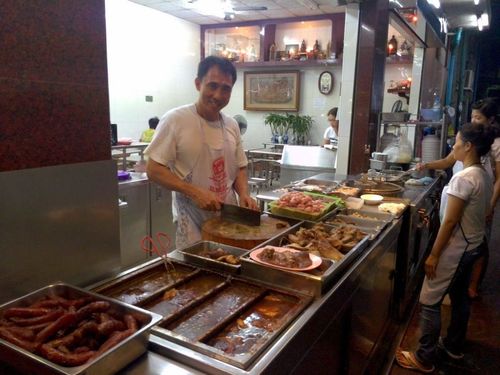
Chinatown’s go-to for peppery guay jub: rolled rice noodles in a white‑pepper broth topped with shatter‑crisp moo krob. Open 8am–midnight; expect dinner lines. Also great: crispy pork with rice and morning glory. Cheap, fast, very local.
Yaowarat Chinatown Heritage Center
Attractions
Inside Wat Traimit by Chinatown Gate, this tidy museum charts Yaowarat’s Chinese roots with bilingual displays, period photos and short films. Open Tue–Sun 8:30am–4:30pm; closed Mon. Pair it with the Golden Buddha upstairs.
More Khao San Road Guides
- Best Hotels Near Yaowarat for Foodies: Walkable Stays for Late-Night Street Eats, MRT Access, and Easy Old Town Day Trips
- Best Hotels Near Yaowarat (Chinatown) for Easy Street Food, MRT Access, and Old-Bangkok Exploring
- Best Hotels Near Yaowarat (Chinatown) for Families, Groups, and Longer Stays
- Best Hotels Near Yaowarat for Families: Quiet Rooms, Bigger Layouts, and Easy Old Town Access