
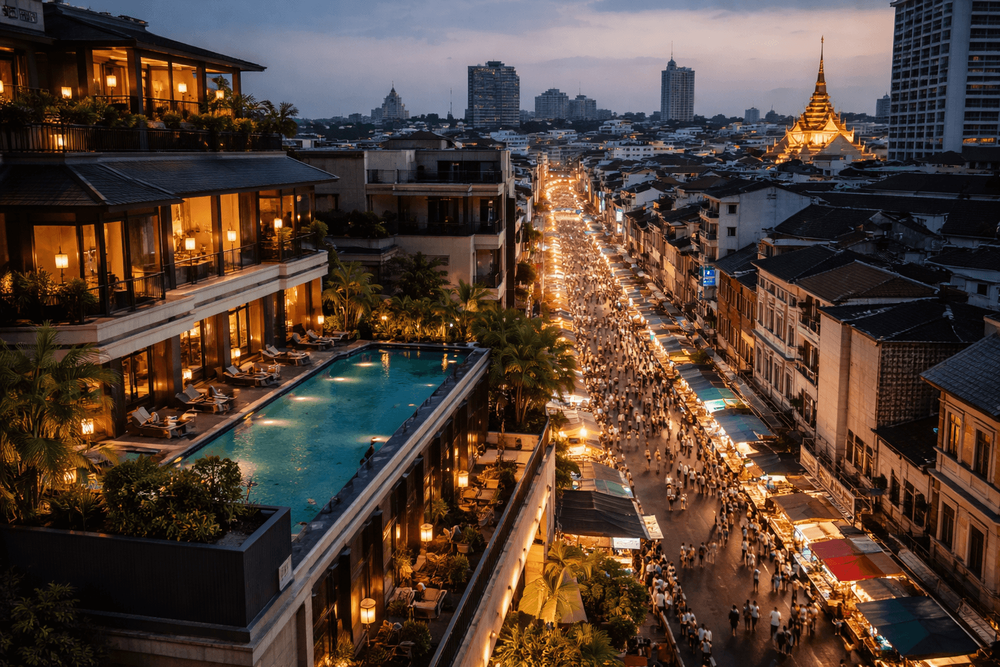
Best Hotels Near Yaowarat (Chinatown) for Food Lovers, Night Markets, and Easy MRT Access
Where to stay around Chinatown, Bangkok: the best hotels near Yaowarat for food lovers, easy MRT access, and Old Town sights—plus how to pick the right block.
We step out of MRT Wat Mangkon into the spice-thick air of Yaowarat and the street hits us all at once: the crackle of oil from a wok, red lanterns trembling in the night breeze, the sweet rot of durian drifting from a cart, the thump-thump of bass leaking out of a narrow bar on Soi Nana. This is why we hunt the best hotels near Yaowarat—so we can toss our bags on the bed and be eating peppery boat noodles five minutes later.
If this is your first time in Bangkok’s Chinatown, or your tenth, staying here means late-night eats, old-town temples at sunrise, and a painless hop onto the MRT or river ferry when we’re ready to roam. Below, we break down where to stay, what to look for, and how to pick the right block for your style (and your ears).
Why the best hotels near Yaowarat make Bangkok effortless
Yaowarat is Bangkok’s original night market catwalk, and a killer base for food-first travelers. Here’s the upside when we anchor ourselves in or around Yaowarat (Chinatown):
- Food out your front door: Yaowarat Road, Soi Texas, and Soi Padungdao turn into a moveable feast from dusk till late. You’ll eat your way through roast duck, dim sum, bird’s nest soups, and Thai-Chinese desserts without a single taxi.
- MRT access: MRT Wat Mangkon and Sam Yot stations put the Blue Line at our feet—17–42 baht per ride, icy-cold AC, zero tuk-tuk haggling.
- River shortcuts: Ratchawong Pier (N5) and Saphan Phut Pier (Memorial Bridge) slide us up and down the Chao Phraya on boats that cost 16–20 baht and skip the traffic.
- Old Bangkok landmarks: Walk (or short tuk-tuk) to Wat Traimit’s Golden Buddha, Talat Noi’s mural-lined sois, Pak Khlong Talat flower market, and across the river to Rattanakosin’s heavy hitters—Wat Pho and the Grand Palace—before the tour buses wake up.
Yes, the heat can slap and the crowds can stack six people deep on weekend nights. That’s part of the sanuk—fun—of it. We work around it: early temple runs, midday naps under arctic hotel AC, and then back out for curry puffs and oysters at sunset.
Micro-neighborhoods: Pick your corner of Chinatown
Each slice of Yaowarat has a different pulse. Choose the right few blocks and your trip gets instantly easier.
1) Yaowarat Road core (Odeon Circle to Soi Texas)
- Vibe: Neon, foot-traffic rivers, woks screaming at midnight. Peak energy.
- Who it’s for: Night-owl eaters who want to roll from bed to bao in 120 seconds.
- Pros: Street food everywhere, tuk-tuks on demand, nonstop people-watching.
- Cons: Noise. Bring earplugs unless your hotel has real soundproofing.
2) Wat Mangkon / Soi Plang Nam backstreets
- Vibe: One block off the chaos; family shops, noodle smells, temple bells.
- Who it’s for: Food lovers who prefer sleep to bass.
- Pros: MRT Wat Mangkon, quieter nights, better value.
- Cons: Some skinny sois mean limited taxis; walk to main roads is part of the fun.
3) Talat Noi & lower Charoen Krung
- Vibe: Old shophouses, street art, coffee and cocktail bars tucked into alleys.
- Who it’s for: Design hunters and flâneurs who like slow mornings and river breezes.
- Pros: Ratchawong Pier, photogenic walks, easier hop to Sathorn/Silom.
- Cons: Slightly farther from the loudest part of Yaowarat—10–15 minutes’ walk.
4) Sampheng Lane & Phahurat (Little India) edge
- Vibe: Fabric markets, snack stalls, gold shops; busy by day, calmer by night.
- Who it’s for: Shoppers and street-snackers who don’t need 24/7 neon.
- Pros: Sam Yot MRT nearby, tons of cheap eats.
- Cons: Daytime crowd crush; watch your step and your bag.
5) Hua Lamphong fringe
- Vibe: Transition zone between Chinatown and the old rail hub.
- Who it’s for: MRT diehards and early-train romantics.
- Pros: Direct MRT link, broader room choices and bigger floor plans.
- Cons: A longer walk to the heaviest Yaowarat action.
6) Rattanakosin side (Grand Palace/Khao San access)
- Vibe: Old City grandeur, river temples, backpacker buzz on Phra Athit and Khaosan.
- Who it’s for: Sightseers who want dawn temple time and a quick ferry or tuk-tuk to Chinatown at night.
- Pros: Historic sights on your doorstep; Chinatown is one river hop away.
- Cons: Not technically Chinatown—great if you split days between temples and Thai-Chinese feasts.
Best hotels near Yaowarat by travel style and budget
We don’t do cookie-cutter promos; we match blocks to what you actually want from Bangkok. Here’s how we’d pick, and where we’ve crashed ourselves.
Food-obsessed night owls (mid-range to boutique)
- Stay: Right on Yaowarat Road between Odeon Circle and Soi Texas, or one soi back near Soi Padungdao. The best hotels near Yaowarat for eaters promise proper soundproofing and blackout curtains.
- What to look for: Double glazing, 24-hour front desk (midnight check-ins happen), and breakfast you’ll skip because congee on the curb costs 40–60 baht and tastes better.
- Expect to pay: Mid-range boutique rooms in this core start around 1,800–3,500 baht, spike higher on weekends.
Culture-first, quiet nights (mid-range)
- Stay: Talat Noi or the Wat Mangkon backstreets. You’ll trade a 10-minute stroll to the neon for mornings that smell like incense, not frying garlic.
- What to look for: Bigger rooms in converted shophouses, strong AC, and windows that actually open for cool season.
- Expect to pay: 1,500–3,000 baht depending on size and design.
Families and early sleepers (mid-range to affordable)
- Stay: Hua Lamphong fringe or Sam Yot side for MRT access and saner sidewalks. Elevators matter with strollers; so does a lobby that can call legit taxis.
- What to look for: 24/7 reception, lift access, connecting rooms or triples, and a clear “no-street-bar-below” reality check.
- Expect to pay: 1,200–2,500 baht for functional comfort.
River lovers (boutique to splurge)
- Stay: Lower Charoen Krung near Ratchawong Pier. You’ll swap neon for boats and sunset breezes and stroll to Chinatown for dinner.
- What to look for: River orientation, rooftop nooks, and breakfast that starts early if you’re catching the first ferry north.
- Expect to pay: 2,500 baht and up depending on view and design.
Old City base with Chinatown nights (value)
- Stay: Across the river near the Grand Palace if your days are temple-heavy and your nights are for Yaowarat. We’ve used the area as our launchpad when we want dawn at Wat Pho and dumplings by dark. When we want this balance, we sometimes bed down at the old-school Royal Rattanakosin Hotel - Near Grand Palace & Khaosan Road and hop the Chao Phraya Express or a quick tuk-tuk over to Chinatown. It’s not in Yaowarat proper, but it keeps temple time easy and food adventures close.
If you want a tight, name-by-name shortlist focused right inside Chinatown, we’ve got a deeper dive here: Where to Eat Street Food in Yaowarat: Bangkok’s Chinatown Night Market Guide.
What to look for in a Chinatown hotel
- Real soundproofing: If the listing shouts “central Yaowarat” but whispers about “lively neighborhood,” pack earplugs. Double-glazed windows are gold.
- AC with muscle: Bangkok doesn’t play nice in April. Rooms that cool fast save afternoons.
- Room size you can move in: Chinatown’s shophouse conversions can be charming—and tiny. Check square meters if you travel with big bags.
- Wi-Fi that actually works: Look for reviews mentioning speeds if you’ll be working between bowls of noodles.
- Elevators and stairs: Many budget places are walk-ups. If your knees complain, confirm there’s a lift.
- Family-friendly layouts: Triples, connecting rooms, and cribs aren’t a given. Message ahead—Thai hospitality is warm, but small places have limits.
- Windows and light: Some budget rooms in dense sois have no exterior window. Fine for vampires; not for everyone.
- Breakfast reality: We love a lobby spread, but honestly, we often ditch it for a 30–60 baht bowl on the street.
- Laundry: A lifesaver after a sweaty day. Onsite machines or a next-door lavandaria can save your clothes (and your cabin bag).
- Transport triangle: Aim for an easy walk to either MRT Wat Mangkon or Sam Yot, or to Ratchawong Pier; this is where Chinatown beats most neighborhoods on connectivity.
Nearby experiences by area
Where you stay shapes your days—and nights.
From the Yaowarat core
- Eat: Oyster omelets, peppery kuay jap noodles, and mango sticky rice under neon. Bring small bills—many stalls are cash-only.
- See: The Chinatown Gate at Odeon Circle for a quick photo, then slip into Wat Traimit to meet the Golden Buddha.
- Sip: Slide down Soi Nana (Chinatown’s, not the BTS one) for tiny cocktail bars wedged into century-old shophouses.
From Wat Mangkon / backstreets
- Eat: Breakfast congee, steamed buns, and kopi in family-run cafes where the ceiling fans creak at 6 a.m.
- See: Wat Mangkon Kamalawat during morning prayers; the incense haze is hypnotic.
- Do: Hop on MRT to Sam Yot and walk to the Giant Swing or Rommaninat Park.
From Talat Noi & Charoen Krung
- Wander: Sink into Talat Noi’s khlong-side lanes, graffiti walls, and old engine shops; every turn is a photo.
- Boat: Catch the orange-flag boat from Ratchawong Pier to Tha Tien for Wat Pho or to Sathorn for a BTS link.
- Snack: Roast chestnuts, Thai iced tea, and Chinese pastries from hole-in-the-wall vendors.
From Hua Lamphong fringe
- Day-trip: Easy MRT rides to Chatuchak Weekend Market or Hua Lamphong’s railway museum.
- Temple-hop: Short taxi to Wat Suthat and the Giant Swing, then swing back for Chinatown dinner.
From the Rattanakosin side
- Sunrise: Glide past the palace walls in a tuk-tuk before dawn, wander Wat Pho as the monks chant, then ferry to Chinatown for breakfast bao.
- Night: Phra Athit Road’s bars for a low-key nightcap after your Chinatown feast.
Getting around (and getting fed) without losing your cool
- MRT: Wat Mangkon and Sam Yot are your anchors—fares run 17–42 baht. Trains start around 6 a.m. and run past midnight on weekends.
- River ferries: Orange-flag boats cost about 16–20 baht. Ratchawong (N5) for Chinatown; Tha Tien for Wat Pho; Tha Chang for the Grand Palace.
- Tuk-tuks: Haggle first—60–150 baht gets you most short hops in Old Bangkok. If a driver insists on a “gem shop,” say mai ow, kop khun (no thanks, thanks) and walk.
- Taxis and rideshare: Grab works well; meter taxis are plentiful on main roads like Charoen Krung and Yaowarat.
- Heat strategy: Lunch siesta is not just for farang. Duck into 7-Eleven for an AC blast and a 14-baht water; hit temples early and markets after dark.
- Food game plan: Build your night by lanes, not dishes. We map a loop—Odeon Circle to Soi Texas to Soi Nana—and graze. For stall-by-stall hits, we keep this open: Where to Eat Street Food in Yaowarat: Bangkok’s Chinatown Night Market Guide.
Booking tips for choosing the right Chinatown base
- Match your noise tolerance: If you sleep light, book one street back from Yaowarat or aim for Wat Mangkon/Talat Noi. Core Yaowarat is thrilling—and loud.
- Prioritize transport: If you’re temple-hopping by day, being close to Ratchawong Pier or Sam Yot MRT saves heat and time.
- Watch festival dates: Chinese New Year and the Vegetarian Festival send prices and crowds up. Book weeks ahead or base one block further out.
- Read the fine print: Some shophouse boutiques have no elevator; some “window rooms” face an interior shaft. Ask.
- Check cancellation windows: Bangkok weather and sanuk plans change—flexible rates can be worth the extra baht.
- Think in walking minutes: A “near Yaowarat” listing can still be 15 minutes away. That’s fine if your lane is quiet and your AC is heroic.
- Budget stretch: If you’re balancing cost with access across the city, our roundup of wallet-friendly stays is here: Bangkok Street Food by Region: Best Dishes in Chinatown, Old Town, Silom, and Sukhumvit.
Quick FAQs we get on the soi
- Is Yaowarat safe at night? Busy, well-lit, and patrolled—petty scams aside, yes. Keep your bag zipped and your common sense on.
- Can we get breakfast early? Chinatown wakes with the temples. Congee, soy milk, and dough sticks start appearing from 6 a.m.
- MRT or boat to the Grand Palace? Boat is prettier and breeze-cooled; MRT + short tuk-tuk is easiest in midday heat.
- Where should we stay for quiet? Talat Noi or one soi behind Yaowarat; pick a room with solid reviews on noise.
Where we’d stay tonight (and why)
If we’re here to eat until our fingers shine with oyster sauce, we’re grabbing a well-soundproofed room right off Yaowarat Road. If it’s a temple-heavy trip with Chinatown nights tacked on, we’ll sleep Old City-side—often at Royal Rattanakosin Hotel - Near Grand Palace & Khaosan Road—and ferry over once the lanterns flick on. For a concentrated hit-list of names inside Chinatown proper, lean on our curated picks: Bangkok Street Food Night Market Guide: Best Stalls, Hours, and What to Order.
Either way, we’ll see you under the red gate at Odeon Circle just before dark. First stop: peppery kuay jap at the corner stall; second stop: anything sizzling loud enough to drown out the tuk-tuks. Sawadee to the best nights in Bangkok.
Related Hotels & Places
More Khao San Road Guides
- Best Hotels Near Yaowarat (Chinatown) for Night Market Food Hops and MRT Access
- Where to Eat Street Food in Yaowarat: Bangkok’s Chinatown Night Market Guide
- Best Hotels Near Yaowarat (Chinatown) for Foodies: Night Markets, Late Check-Ins, and Walkable Access to Chinatown Eats
- Best Hotels Near Yaowarat (Chinatown) for Easy Street Food, MRT Access, and Old-Bangkok Exploring