
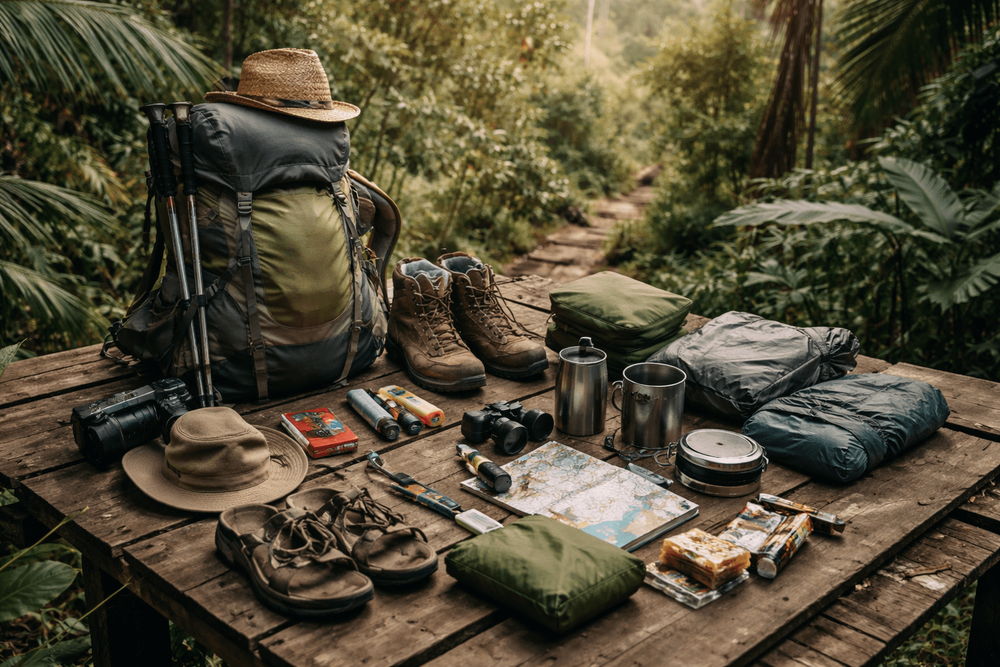
What to Pack for Thailand for Trekking and Jungle Backpacking
Pack light, beat the monsoon, and outsmart leeches. Our Thailand trekking packing list covers clothes, gear, health, and region‑specific tips for jungle hikes.
We’re lacing our trail shoes in the blue hour before dawn, the tuk-tuk idling on a Chiang Mai Night Bazaar soi, the driver sipping sweet coffee while a street cart hisses with moo ping. One last blast of 7-Eleven AC, one parting sawadee, and we’re off toward the hills. If you’re scanning a Thailand trekking packing list while the monsoon drums on your guesthouse roof, you’re in the right place. We’ve sweated through jungle climbs, forded khlong-fed streams, and learned which gear actually earns its weight when the trail turns to chocolate pudding.
Thailand Trekking Packing List: Essential Clothing and Footwear
Breathable layers that handle heat and sweat
- 2–3 quick‑dry hiking tees or long‑sleeve sun shirts: Synthetic or merino blends that won’t cling when the humidity spikes.
- 1 ultralight long‑sleeve layer: A thin UPF shirt is clutch for sun, brush, and mozzies.
- 1 light mid‑layer: A 150–200g merino or thin fleece for cool season mornings in the north (think Doi Inthanon or Chiang Dao Hostel ridges).
- 1 pair breathable hiking pants: Stretchy, fast‑dry, not too slim. Convertible pants can be handy for hot climbs and leechy undergrowth.
- 1 pair shorts or trail running shorts: For non‑leechy trails or camp use.
- 1 sarong or scarf: Shade, sweat rag, modesty at temples pre/post trek, makeshift towel.
Sanuk matters: you want clothes that don’t chafe when you’re soaked, and you will be soaked—by sweat, rain, or both.
Rain protection that actually works here
- Ultralight rain jacket (10k mm or better): Breathable enough to hike in, but it’s really for wind and sudden downpours.
- Cheap rain poncho: The 30–60 baht 7‑Eleven special creates a chimney over your pack in a deluge. Ugly, effective.
- Pack cover or, better, a dry bag liner: See the dry bag section below; rely on internal waterproofing over flimsy covers.
Socks and leech defense
- 3 pairs hiking socks: Merino or wool‑blend ankle or crew. Rotate to keep blisters at bay.
- Thin liner socks: Cut friction on long, wet days.
- Leech socks (monsoon/jungle): Worn over pants and inside shoes. Pick them up in Chiang Mai trekking shops or markets for 100–200 baht.
Trail shoes vs boots
- Trail runners: Our go‑to. Lightweight, grippy outsole, drain and dry fast. Perfect for muddy, rooty Thai trails.
- Light hiking boots: If you need ankle confidence on slick clay descents or carry a heavier pack. Prioritize breathability and wet‑grip soles.
- Hardcore leather boots: Leave them at home. They’re ovens.
Camp sandals or water shoes
- Simple strap sandals (e.g., sport sandals) for river crossings, village homestays, and letting feet breathe. They also make shower time less… adventurous.
Must‑Have Gear and Accessories
- 20–30L daypack with a ventilated back panel: Big enough for 2–3 liters of water, rain layers, snacks, and first aid. For overnights without porters, bump to 30–40L.
- Hydration system: 2–3L bladder or two 1L bottles. We often carry one bottle for electrolytes and a bladder for water.
- Water treatment: Not always essential with guided treks and homestays, but a compact filter bottle or Sawyer‑style inline filter is reassuring for back‑of‑beyond sources.
- Headlamp with spare batteries: Trails get dark fast under the canopy; homestay villages often go quiet and dim early.
- Quick‑dry pack towel: Sweat mop by day, shower towel by night.
- Power bank (10,000–20,000 mAh) and short cables: GPS tracks, photos, offline maps, and the occasional bassy bar on Khao San Road will chew your battery.
- Insect repellent: 20–30% DEET or 20% picaridin. Reapply in the late afternoon when the jungle comes alive.
- Sunscreen SPF 50, sweat‑resistant: Even shaded trails pop into open ridgelines.
- Dry bags: 5–10L for electronics and wallet; 20L liner for clothes. You’ll thank yourself during one of those sideways monsoon squalls.
- Trekking poles (collapsible): Game‑changer on clay descents, river crossings, and the endless steps up to waterfalls.
- Zip‑top bags and a trash bag: Keep small items dry; pack out your own waste.
- Small repair kit: Duct tape, safety pins, a couple cable ties, needle and dental floss for emergency stitching.
- Whistle and tiny mirror: Lightweight “hope we never need them” safety kit.
- Phone with offline maps: Download areas in advance; signal fades quickly in valleys.
For how this kit plays with your plane‑day “personal item,” check our Thailand day bag essentials guide: Thailand Packing List for Backpackers: Day Bag Essentials for Flights, Temples, and Tours.
Health and Safety for the Trail
First‑aid and blister care
- Bandages and sterile gauze
- Antiseptic wipes and a small bottle of povidone‑iodine
- Blister kit: Hydrocolloid pads (Compeed‑style), Leukotape or kinesio tape, and a tiny dab of lube for hot spots
- Tweezers and small scissors
Jungle cuts get funky fast. Clean, cover, and let the tropics do their thing—safely.
Medications and hygiene
- Oral rehydration salts (ORS): 7‑Eleven sells sachets cheap; we carry 2–3 per day on hot treks.
- Anti‑diarrheals and mild laxatives: Hedge both bets.
- Antihistamines (cetirizine/loratadine) and pain relief (ibuprofen/paracetamol)
- Motion sickness tablets if you’re winding to Mae Hong Son or bouncing to Khao Sok
- Personal prescriptions: Bring enough for your trip; rural pharmacies can be hit‑or‑miss
- Hand sanitizer and a tiny biodegradable soap
- Toilet paper in a zip bag; a second zip for used paper if a proper bin isn’t available
- Menstrual supplies or cup; consider a light period‑proof brief for long days
Sun, mosquitoes, and leeches
- Sun hat with brim or a cap plus a bandana
- Light buff for dust, sun, and temple modesty
- Insect repellent as above; treat socks and pants with permethrin at home if you can
- Leech strategy: Long pants, leech socks in monsoon, and don’t panic—salt or a quick slide of a thumbnail detaches them. A little eerie, not dangerous.
If you’re planning lots of canyoning, climbing, or whitewater on the same trip, cross‑check with our adventure add‑ons here: Thailand Backpacking Packing List for Adventure Activities.
Pack for the Place: Climate and Region‑Specific Tips
Monsoon season (roughly May–October)
- Expect daily showers, especially afternoons. Prioritize dry bags, quick‑dry fabrics, and extra socks.
- Trails turn slick. Poles help; shoes with sticky rubber help more.
- Leeches are most active. Pick up leech socks locally; you don’t need to pack them from home.
Jungle treks (Khao Sok, Umphang, Kaeng Krachan, Kanchanaburi)
- Humidity is full sauna. Two shirts per day is not overkill on longer hauls; rotate to prevent rashes.
- River crossings are normal; sandals or fast‑draining shoes pay off.
- Nights can still be warm. A sleeping bag liner is plenty; full sleeping bags are overkill.
- Dry bags are life. Phone, passport, and cash get their own.
Mountain areas (Chiang Mai, Chiang Dao, Mae Hong Son, Doi Inthanon)
- Cool season (Nov–Feb) dawn temps can drop to 10–15°C at elevation. Pack that light fleece and a beanie.
- Midday still bakes. We hike in a sun shirt and stash the mid‑layer.
- Trails range from piney singletrack to clay chutes under teak—shoe traction matters more than ankle armor.
Overnight treks and village homestays
- Sleeping bag liner (silk or microfiber) and an inflatable pillow: Homestays usually provide blankets and a mattress on the floor; liners add cleanliness and comfort.
- Earplugs and eye mask: Roosters clock in before sunrise. Guaranteed.
- Headlamp becomes crucial in villages with minimal lighting.
- Mosquito net: Most homestays provide them. Ask your guide beforehand; a featherweight net is nice insurance if you’re going unguided.
- Charging: Power can be limited. That power bank you packed? Gold.
Practical Packing Tips to Stay Light and Ready
- Buy local, carry less: Leech socks (100–200 baht), cheap ponchos (30–60 baht), dry bags (100–300 baht for small sizes) are easy pickups in Chiang Mai markets, around MBK in Bangkok, and at outdoor shops near the moat in the Old City.
- Shoes matter most: If you’ve got big feet (US 12+/EU 46+), bring your own trail shoes; sizes sell out fast locally.
- Don’t overpack clothes: Humidity slows drying, but two or three hike outfits plus a chill set are enough. Hand‑wash with a splash of shampoo and hang by a fan.
- Electronics vs rain: Double‑bag phone and passport (zip‑top inside a dry bag). Humidity sneaks past everything.
- Valuables: Keep a small flat dry pouch on you for passport, cash, and a card. Never in the top pocket of your pack in a storm.
- Permits and park fees: Thai national parks generally charge 200–400 baht per foreign adult per day, plus small vehicle fees. Cash only at rural gates.
- Guides and porters: A reputable guide in Chiang Mai or Khao Sok runs roughly 1,000–1,800 baht for a day hike; overnights with meals/homestays 2,000–3,500 baht. Porters, when available, tip 300–500 baht/day.
- Stoves and fuel: Skip backpacking stoves unless you’re doing unsupported routes; fuel can be tricky to source and banned on flights. Guided treks handle cooking.
- Drones: Many parks prohibit them or require advance permits; check rules before carrying extra weight.
- Money and SIM: Small bills for drinks and park kiosks; an eSIM or local SIM (150–300 baht) for maps and calls.
- Stage smart: We like basing near Rambuttri or Phra Athit Road when passing through Bangkok—quiet enough to sleep, close enough to Khao San for last‑minute odds and ends—and then hopping a dawn bus north. In Chiang Mai, staying inside the moat means easy walks to gear shops before you hit the hills.
If you’re stringing treks between islands, cities, and mountains, we’ve got a reusable‑gear, do‑laundry‑once‑a‑week strategy here: Thailand Packing List for Backpackers on a Long‑Term Trip: Reusable Gear, Laundry Setup, and Durable Basics. For a broad pre‑flight check, this one helps tighten the screws: Backpacker Packing List for Thailand.
Know Before You Go
- Season timing: Cool season (Nov–Feb) is prime in the north; monsoon (May–Oct) is lush but muddy with high leech counts. The south’s Andaman side gets heavier rain May–Oct; the Gulf can be wet Nov–Jan.
- Transport to trailheads: Red songthaews in Chiang Mai reach popular trailheads cheaply; in Kanchanaburi and Khao Sok, guesthouses can arrange pickups. Factor 30–90 minutes of bumpy roads.
- Leave No Trace: Pack out all waste. If nature calls, walk 70m from water, dig a small cathole, and pack out paper if there’s no bin.
- Respect in villages: Dress modestly in homestays; a light long sleeve and pants are perfect. Learn a couple Thai hellos and thank‑yous; it goes further than any multi‑tool.
- City reset: After the jungle, nothing beats a cold Chang and a pad thai plate sizzling on Rambuttri. We usually crash somewhere with a pool to unknot the calves—no need to overthink it; Bangkok’s got stays at every budget within a short tuk‑tuk hop of Khao San.
Quick Checklist: Your Core Thailand Trekking Kit
- Breathable hike tops (2–3) and pants (1–2), optional shorts
- Light mid‑layer and sun shirt
- Ultralight rain jacket + cheap poncho
- Hiking socks (3) + liner socks; leech socks in monsoon
- Trail runners or light boots + camp sandals
- 20–30L daypack; 30–40L for light overnights
- 2–3L hydration + electrolytes
- Headlamp + spare batteries
- Quick‑dry towel
- Power bank + cables
- Insect repellent + sunscreen SPF 50
- Dry bags (5–10L and 20L liner)
- Trekking poles (collapsible)
- First‑aid + blister kit, essential meds, sanitizer
- Toilet paper in zip bag, menstrual supplies
- Phone with offline maps, whistle, repair tape
- Cash for park fees and snacks, ID/passport copy
We’ll see you on the trail—probably the still‑steep Monk’s Trail above Chiang Mai, steam rising off the jungle after a sun‑shower, the city shimmering below. Pack light, pack smart, and save room for the surprise: a waterfall you hear before you see, a homestay dinner you’ll talk about for years, and that first cold drink back on Phra Athit when your legs finally forgive you.
Related Hotels & Places
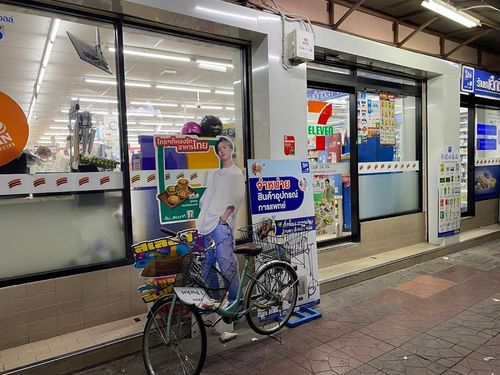
7-Eleven
Shops
Khao San’s 24/7 reset button: ice‑cold A/C, ham‑cheese toasties, All Café iced lattes, water for 7–14 THB, and late‑night supplies from snacks to sunscreen—right by Rikka Inn.
Chiang Mai Night Bazaar
Markets
Chiang Dao Hostel
Hotels
Rambuttri
Markets
Khao San’s calmer cousin: a tree‑shaded lane of VW van cocktail bars, open‑air foot massages, pad thai grills, and easygoing live bands. Best from sunset to 11pm; beers 80–120 THB, cocktails 150–220 THB. One block from the chaos, all the charm.
Khao San Road
Attractions
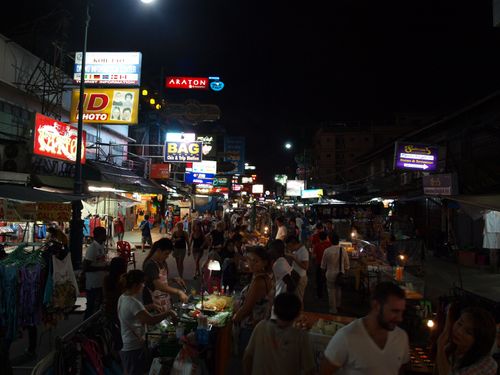
Bangkok’s backpacker carnival: curbside bars, live bands and DJs from 3pm–2am (midnight Sun). Street eats are cheap — pad thai 70–100 THB, mango sticky rice 60–100 THB. Come for wild people-watching; duck into Rambuttri for a calmer beer.
Recommended Products
More Khao San Road Guides
- Backpacker Packing List for Thailand’s Chiang Mai Trekking Trips: Trails, Insects, and Overnight Hut Basics
- What to Pack for Thailand for Day Hikes and Jungle Treks: Trail Shoes, Hydration, and Bug Protection
- What to Pack for Thailand for Adventure Activities: Hiking, Zip Lines, and Outdoor Day Trips
- Backpacker Packing List for Thailand’s Northern Loop: Cool-Night Layers, Trekking Gear, and Small-Town Basics