
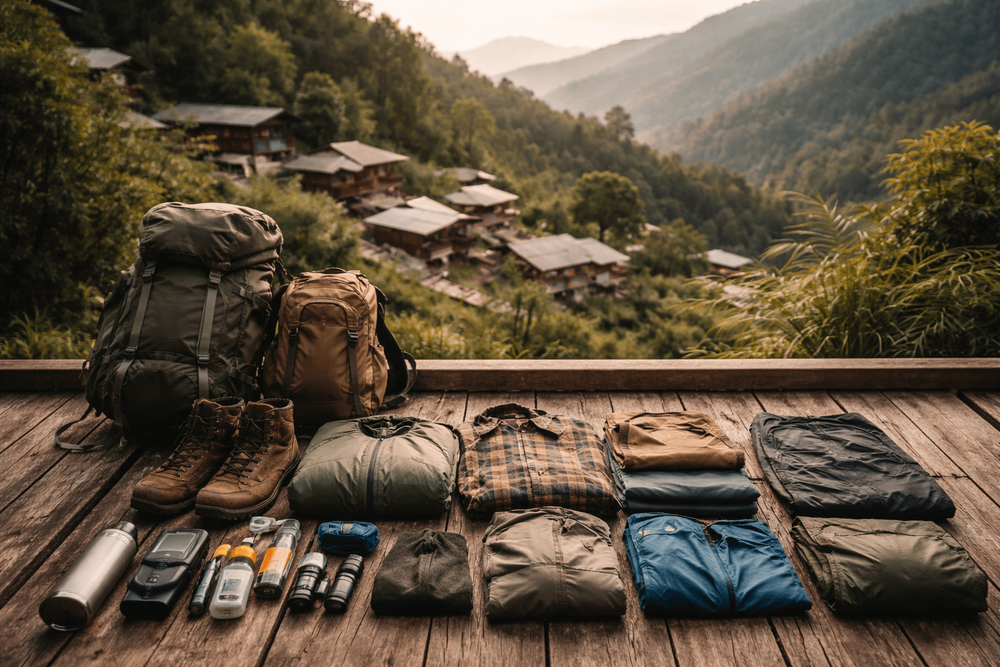
What to Pack for Thailand for Northern Mountain Trips: Cool Nights, Trekking Comfort, and Layering
Pack smart for Chiang Mai, Pai, and northern peaks: layers, rain shells, trail shoes, health and safety kit, and practical extras for cool nights and wet trails.
We’re breathing clouds on Doi Inthanon at dawn, coffee steaming in our hands, fingers stiff in the chill while the forest wakes up in a ripple of birdsong. Down in Chiang Mai the motorbikes are already humming along the moat, but up here, a fleece and a beanie beat any tank top. This is why we made a Thailand mountain packing list—because northern peaks and highland villages don’t play by Bangkok rules, and those cool nights can ambush the unprepared farang who thought two T‑shirts and flip-flops would do.
Thailand Mountain Packing List: The Essentials
Northern Thailand’s mountains—Doi Suthep at sunset, Chiang Dao’s limestone spine, misty Mae Hong Son, and the sea-of-clouds mornings in Phu Chi Fa—swing between warm sun at noon and jacket weather at dawn. We pack for layers, quick-dry comfort, and surprise showers that roll in like a tuk-tuk with a busted muffler: sudden, noisy, gone in 20 minutes.
Clothing and footwear that actually work up north
- Base layers you’ll live in: two quick-dry tees and one long-sleeve (merino or light synthetic). They dry fast on a guesthouse balcony and don’t cling when you’re sweaty on a stair run up Wat Phra That Doi Suthep.
- Midlayer warmth: a thin fleece or light puffer (the packable kind disappears into your daypack). On Doi Inthanon and Doi Ang Khang in Dec–Jan, we add a beanie and light gloves—yep, Thailand cold is real above 2,000 meters.
- Rain protection: a proper shell jacket with a hood is worth its grams. When the sky opens on the Kew Mae Pan trail, a 7‑Eleven poncho (30–50 baht) is a lifesaver for your legs and daypack, but a shell keeps you hiking instead of flapping.
- Bottoms: one pair of quick-dry hiking pants (zip-offs if you must), one pair of breathable shorts for town days, and something modest for temple visits in mountain villages—light pants or a long skirt/sarong works.
- Socks and underwear: 3–4 pairs of moisture-wicking socks (merino blends resist the stink), quick-dry underwear, and a buff or scarf for wind, dust, and those sunrise shivers.
- Shoes: trail runners beat heavy boots on most northern trails—grippy for Pai Canyon scrambles and comfy on Doi Suthep steps. We throw in sport sandals with tread for waterfalls (Mok Fa, Mae Sa) and flimsy flip-flops for showers.
- Leech plan (rainy season): in dense jungle like parts of Chiang Dao, leeches happen. We spray socks with permethrin at home or use a dab of DEET around our cuffs. Salt works in a pinch.
- Laundry sanity: quick-dry fabrics make handwashing easy. In Chiang Mai Old City or Nimman, laundry services run 30–50 baht/kg, cheaper than checking an extra bag.
Gear and Daypack Basics for Trekking and Village Stays
The right pack and how to keep it dry
- Daypack sweet spot: 20–30L with a decent hip belt and a rain cover. We line it with a trash compactor bag or a lightweight dry bag if it’s monsoon season.
- Organization: a couple of packing cubes and ziplocks mean we’re not fishing for headlamps in a khlong of damp socks.
Water, power, and finding our way
- Hydration: carry 2L capacity minimum—bottles or a bladder. We add a filter bottle or Sawyer-style filter so we can top up at homestays without sending another plastic bottle to the landfill.
- Navigation: download offline maps (Google and Maps.me). Reception can vanish in valleys faster than a bowl of boat noodles in Banglamphu. A 10,000–20,000 mAh power bank keeps the blue dot alive.
- Light: a headlamp for pre-dawn viewpoints, homestay outhouses, and the inevitable blackout. Spare batteries if it’s not rechargeable.
Trail comfort that saves knees and tempers
- Trekking poles help on Chiang Dao’s steeps and the endless steps at Wat Phra That Doi Suthep. Your knees will thank you when you’re bargaining for mango sticky rice on Phra Athit Road later.
- Compact umbrella: sounds daft until you’re stuck under a tin roof in Mae Hong Son’s Walking Street market with steam rising off the pavement.
- Camera protection: a dry bag or rain sleeve; silica gel packs if you’re hopping between AC blasts and humid trails.
- Microfiber towel: for sweaty faces, waterfall dips, and cold homestay mornings.
- Sleep extras for homestays: earplugs (roosters are early risers), a lightweight sleep sack if you’re particular. Most village stays provide blankets; it’s the pillowcases and drafts that vary.
- Small multitool in checked luggage only. We mostly use the scissors for tape and blister pads.
Toiletries that make sense outside the city
- Biodegradable soap/shampoo bar, a tiny first-aid/repair pouch, toothpaste, floss (great for emergency repairs), and a few tissue packs—rural bathrooms can be BYO.
If you’re new to traveling light in Thailand, our broader city-to-islands guide pairs nicely with this mountain-focused list: Thailand Packing List for Backpackers Visiting Cities, Islands, and Mountains.
Health, Safety, and Comfort: Don’t Skip This
Sun, bugs, and skin that forgives you
- Sunscreen SPF 50 and SPF lip balm: mountain UV sneaks in under the clouds.
- Repellent: 20–30% DEET or picaridin, plus permethrin treatment on socks and hems if you’re here May–Oct. We keep a tiny tube of hydrocortisone or a soothing balm for bites.
- First-aid: blister plasters (Compeed), athletic tape, antiseptic wipes, bandages, ibuprofen/acetaminophen, antihistamines for bites, and oral rehydration salts (cheap at 7‑Eleven). Pack any personal meds with prescriptions.
- Leeches: don’t panic. Pull them off gently or use salt; clean the bite and move on. Sanuk returns quickly.
Air quality, motion, and scooters
- Smoke season (roughly Feb–Apr) can bring PM2.5 spikes. We carry N95 masks and plan strenuous hikes for mornings.
- Motion sickness: the 762 curves to Pai are famous. Dimenhydrinate from any pharmacy, or acupressure bands if meds aren’t your thing.
- Scooters: if you’re riding the Mae Hong Son loop, bring a light jacket for wind-chill, proper gloves, and a buff for dust. Your international driving permit isn’t just a suggestion.
Safety notes that locals wish you knew
- Stray dogs: avoid eye contact, don’t run, and give a wide berth. A firm “mai!” (no) usually works. A small whistle can startle, but we mostly change our route.
- Water and food: stick to peeled fruit and cooked foods in remote areas; carry ORS and trust your repellent more than your bravado.
For deeper day-bag packing and temple kit tips, we keep this checklist handy: Thailand Packing List for Backpackers: Day Bag Essentials for Flights, Temples, and Tours.
Northern Thailand Nuance: Viewpoints, Villages, and Rainy Season
Chiang Mai and Doi Suthep-Pui
Layer for late-afternoon hikes up the Monk’s Trail to Wat Pha Lat—sweaty ascent, cool breezes near the shrine. At the Doi Suthep summit chedi, evenings can be breezy; carry a light jacket and modest cover (knees/shoulders) for temple etiquette.
Doi Inthanon and Kew Mae Pan
Thailand’s roof goes properly cold at dawn in cool season—single digits Celsius are normal in Dec–Jan. We bring a puffer, beanie, and gloves. Kew Mae Pan and Ang Ka trails often require an official guide and have set hours; bring cash for park entry (foreigner rates apply; typically 200 baht+ per person, plus vehicle fees). Mornings are the move for sea-of-clouds photos and fewer crowds.
Chiang Dao and Cave Country
Chiang Dao’s peak hikes demand warm layers for wind and early starts, plus poles for the steeps. The caves are damp: headlamp, grippy shoes, and a light jacket make the tour nicer. In rainy season, expect slick limestone and occasional leeches.
Pai and Mae Hong Son
Pack light for the minivan and keep motion meds handy. For Pai Canyon, trail runners and a small daypack beat sandals and a latte—edges are crumbly and sunsets addictive. Hot springs call for a compact towel and modest swimwear. Nights can be chilly Nov–Feb, especially outside town.
Doi Ang Khang, Phu Chi Fa, and Frost-Chasing
Gauzy dawns, frost on the grass, and tea-steam under your nose. Bring your warmest layers of the trip here—hat, fleece or puffer, gloves. A small thermos for tea or 3‑in‑1 coffee turns sunrise from teeth-chattering to smug.
Rainy season reality (May–Oct)
Expect sudden downpours, fog-drama vistas, and leeches in dense forest. We switch to quick-dry everything, pack the shell every day, and add a pack cover. Sport sandals handle puddled trails near waterfalls, but we keep closed shoes for longer hikes. Lightning moves fast—bail from ridgelines if thunder rolls.
Village etiquette
Dress modestly, ask before photos, remove shoes before entering a home. A tiny shared snack (fruit, biscuits) is a nice gesture for hosts. Learn a “sawadee krub/ka” and keep it easy.
Practical Travel Extras: Transport, Plugs, Cash, and Organization
Getting around without a headache
- Minivans from Chiang Mai to Pai run most of the day; expect around 3–4 hours and roughly 180–220 baht. Book a seat toward the front if you get queasy.
- To Chiang Dao, local buses and songthaews from Chang Phuak Bus Station are straightforward; budget small cash and patience.
- Doi Inthanon is best with a hired driver, rental car, or a tour; scooters can struggle with cold, rain, and altitude. National parks typically open from around 6:00; sunrise missions may need your own wheels.
Power and charging
Thailand runs 220V with two flat or two round pins common. We carry a lightweight universal adapter, a 3‑ or 4‑port USB charger, spare cables, and a power bank. Outlets in homestays can be scarce—share the juice.
Money and documents
ATMs are everywhere in towns but not always in villages. We carry enough small bills for park fees, guides, and homestay meals. Keep passport, license, and insurance copies in a ziplock; photos on your phone too. If you’ll rent scooters, bring your international driving permit.
Comfort odds and ends we actually use
- Earplugs and a sleep mask (thin walls, early roosters, roadside karaoke)
- Neck gaiter/buff for dust and chill
- Reusable water bottle; we refill where possible
- Snacks: nuts, dried fruit, instant noodles for late arrivals
- Packable grocery tote for market runs
- A tiny roll of duct tape wrapped around a pen for gear repairs
If you’re brand-new to backpacking Thailand and want to trim weight without losing comfort, this primer helps: Thailand Packing List for First-Time Backpackers: What to Bring and What to Leave Behind.
Sample Northern Thailand Mountain Packing List
- 2 quick-dry T‑shirts, 1 long-sleeve (merino/synthetic)
- 1 light fleece or thin puffer, 1 rain shell
- Quick-dry pants, shorts, modest temple pants/skirt
- Trail runners, sport sandals, flip-flops
- 3–4 pairs hiking socks, quick-dry underwear, buff/scarf, beanie, light gloves (cool season)
- 20–30L daypack with rain cover + liner/dry bag
- Water capacity 2L+, filter bottle
- Headlamp + spare batteries, power bank, multi-USB charger
- Trekking poles (optional but nice)
- Microfiber towel, biodegradable toiletries, tissue packs
- Sunscreen SPF 50, SPF lip balm, insect repellent (DEET/picaridin), bite relief
- First-aid kit: blister care, tape, bandages, pain/anti-allergy meds, ORS
- N95 mask (smoke season), motion sickness meds (Pai run)
- Ziplocks/packing cubes, small trash bag, duct tape
- Cash (small bills), passport/license copies, insurance details
Know Before You Go
- Weather swings fast. Plan outfits around layers and quick-dry fabrics so you’re not stuck in damp cotton when clouds roll in over Doi Suthep.
- National park fees: foreigners typically pay separate entry (bring cash); some trails require local guides—roll with it, the stories are worth the baht.
- Gear rentals: Chiang Mai trekking shops often rent jackets, sleeping bags, and poles. Try around the Old City and night market areas; ask for prices and inspect zippers.
- Respect the road: if you’re riding the Mae Hong Son loop, don’t rush the 1,800+ curves. Start early, layer up, stop often. Hot coffee, hot brakes.
- Village nights are cold and quiet—except for dogs and roosters. Earplugs, a warm layer, and a spare pair of socks make all the difference.
We’ll be the ones with a thermos and a smirk, watching clouds spill over Phu Chi Fa like slow-motion surf. Pack the layers, grab the headlamp, and meet us at the trailhead before the sky goes gold.
Recommended Products
More Khao San Road Guides
- What to Pack for Thailand for Northern Temple Towns: Cool Mornings, Modest Clothing, and Mountain Day Trips
- Backpacker Packing List for Thailand’s Northern Hills: Cool Mornings, Trekking, and Temple Stops
- Backpacker Packing List for Thailand’s Northern Hill Trips: Cool-Morning Layers, Trekking Basics, and Village Comfort
- What to Pack for Thailand for Winter in the North: Cooler Nights, Sleep Layers, and Early-Morning Comfort