
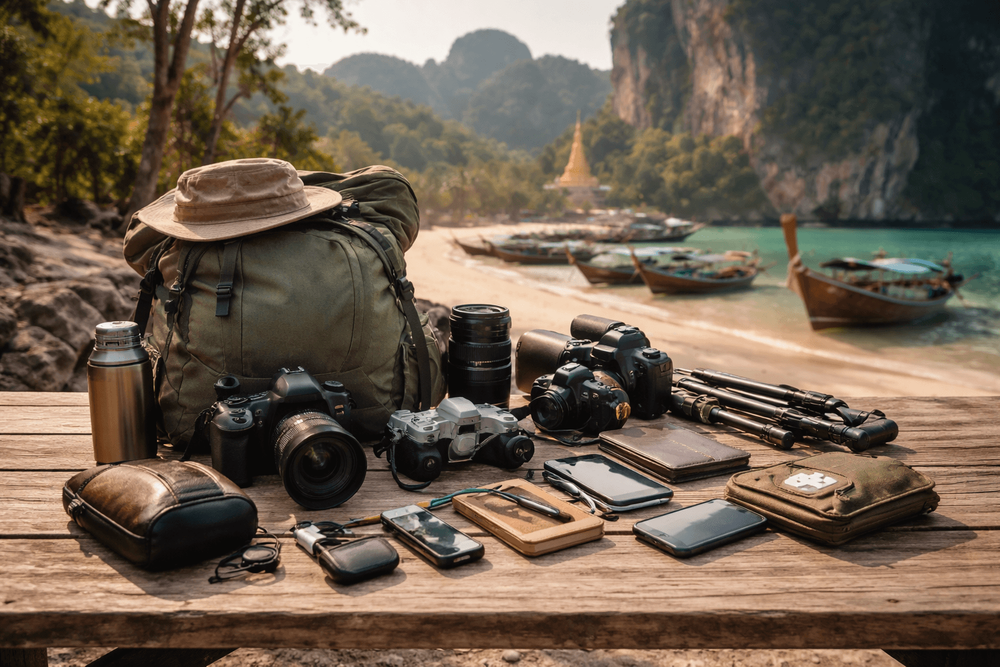
Thailand Packing List for Backpackers Carrying Cameras and Travel Gear
A real-world Thailand camera packing list: essential gear, lenses, protection, power, and backup tips—built for Bangkok heat, island spray, and long travel days.
We step out of the ice-blast of a 7-Eleven on Soi Rambuttri and straight into a wall of Bangkok heat. The wok sizzles, the tuk-tuks growl at the light, and a vendor stacks pyramid towers of mango sticky rice under a neon hum. This is where our shutter finger starts twitching. Before we chase the evening glow along Phra Athit Road, here’s the Thailand camera packing list we actually live by—built for humidity, sudden downpours, island spray, and those long, happy days when sanuk (fun) keeps us out until the thump of bass rolls down Khao San Road.
Our Thailand Camera Packing List: The Essentials
We keep it lean, durable, and ready for chaos. This Thailand camera packing list covers the must-bring items you’ll use daily.
- Main camera body: Mirrorless or DSLR with good high-ISO performance. Weather-sealed if possible.
- Lenses (pick 1–3 max): A fast prime (35mm or 50mm), a walkaround zoom (24–70mm or 24–105mm), and an ultrawide (14–24mm or 16–35mm) for temples and tight sois.
- Batteries: 3–4 total. Heat drains them; nightlife shoots do too.
- Dual battery charger + USB-C cable: Many guesthouses have just one outlet free; a dual charger saves time.
- Memory cards: 2–4 high-speed UHS-I or UHS-II SD cards (64–256 GB each) plus a tiny waterproof card case.
- Protective carry: Padded camera cube inside a daypack, or a compact sling with lockable zips.
- Rain plan: Packable rain cover for camera and bag; at least one 10–20L dry bag for boats and Songkran.
- Cleaning kit: Rocket blower, lens pen, microfiber cloths in zip locks.
- Filters: Circular polarizer (CPL) for midday glare and island blues; a simple UV filter to take the scratches.
- Action cam or compact: For snorkeling, motorbike runs, and “leave the big camera at home” nights.
- Smartphone with manual camera app: Backup shooter + quick share. A silicone case helps with sweaty hands.
- Strap upgrade: Comfortable cross-body strap or wrist leash; ditch the loud farang branded neck strap.
- Small tripod: A mini table-top or clamp. Full tripods can be a pain in crowds and sometimes restricted.
Pro tip: We stash a silica gel sachet in the camera cube. When we hop between AC and street steam, it helps tame condensation. More gear-specific protection? We’ve got a deep-dive here: What to Pack for Thailand for Camera and Gadget Protection.
Thailand-specific challenges: heat, humidity, rain, dust, beach
Thailand is paradise for lenses and punishment for electronics. Here’s how we adapt.
Humidity and condensation
- Bag it before AC: When leaving a freezing mall into hot air, keep the camera zipped for 10–15 minutes so it warms gradually.
- Dry packs: Scatter a few silica packets in your camera cube and card case. Cheap at pharmacies and hardware shops (20–50 baht each).
Heat
- Shady reloads: Swap batteries/cards under awnings or in BTS stations.
- Blackout caution: Some bodies overheat filming 4K in midday sun; shoot clips, not marathons, and step into AC breaks.
Rain (and Songkran)
- Monsoon bursts can flip a sky from postcard to apocalypse in five minutes. A packable rain shell for you and a rain cover for the bag are non-negotiable.
- Songkran (mid-April) is a city-wide water fight. If we shoot, it’s with an action cam in a waterproof housing and a floaty grip. Keep your main camera sealed in a dry bag unless you like living dangerously.
Dust and grit
- Markets like Khao San Road Night Market kick up a fine grit; beach wind does worse. Use a UV filter as a scratch sacrificial layer and blow sand off before wiping.
Beach and islands
- Salt mist is sneaky. After boat rides out to Koh Lanta, Koh Tao, or Railay Beach Cafe, wipe gear with a lightly damp microfiber (fresh water) then dry cloth.
- Dry bag rides at your feet on longtail boats. Keep zips up; the spray angle finds openings.
Northern smoke season
- If you’re Chiang Mai-bound in Feb–Apr, consider a simple mask for you and a routine sensor check/clean. Haze can be moody for sunsets but tough on lungs.
Lenses and accessories for the shots you’ll actually take
We build our lens kit around where we’re shooting and how we move. Here’s the reality on Thai ground.
Street and markets (Bangkok old town, Yaowarat, Talat Noi)
- Lens: 35mm or 40mm prime (f/1.8 or faster) for people and food carts. A 24–70mm for flexibility.
- Why: Tight sois, neon signs, and busy sidewalks reward small, fast glass.
- Extras: Wrist strap for crowd flow, lens hood to fend off stray elbows.
Temples and architecture (Wat Arun Ratchawararam Ratchawaramahawihan at sunrise, Wat Phra Chetuphon Wimon Mangkhalaram Rajwaramahawihan, The Giant Swing)
- Lens: Ultralight ultrawide (16–35mm or 14–24mm). A 24–70mm covers courtyards and details.
- Filter: CPL for tiled roofs and gilded chedi glare.
- Support: A mini tripod helps for blue-hour temple exteriors. Tripods may be restricted inside sacred areas; always read the sign and ask. Photography is prohibited inside the Emerald Buddha temple itself.
Nightlife (Khao San, Soi Cowboy, RCA)
- Lens: Fast prime (35/1.4–1.8 or 50/1.4–1.8). Zooms can be bulky in crowds.
- Settings: High ISO, wide open, and a touch of negative exposure comp to keep neon rich.
- Courtesy: Skip the flash in bars and be mindful of faces. Ask with a smile—“chai mai?” goes a long way.
Islands and water (Koh Tao reefs, Erawan waterfalls)
- Action cam with a waterproof case and anti-fog inserts. A floaty grip saves tears.
- CPL for water surface glare; ND 6–10 stops for silky waterfalls if you’re keen on long exposures.
- Microfiber rotation: Keep one cloth just for salt spray days.
Wildlife and green escapes (Khao Yai, Bang Pu, mangroves)
- Lens: 70–300mm or 100–400mm zoom. You’ll want reach for macaques, hornbills, and distant monitor lizards.
- Weight trade: If you’re not dedicated wildlife shooting, a 70–300mm is the sweet spot for backpackers.
Bonus bits we actually use
- Spare body cap and rear lens caps: Dust insurance.
- Cold-shoe mounted mini LED: Great for close food shots without nuking the vibe.
- Lightweight reflector (foldable A4): For portraits in soft temple shade.
Power, storage, and connectivity on the road
Shooting hard across Bangkok, Ayutthaya, and the islands means power discipline.
Electricity and adapters
- Thailand runs 220V/50Hz. Most outlets accept flat (Type A) and round (Type C) pins; many accommodations also use the local Type O. A compact universal adapter with surge protection is our move.
- USB-C PD charger: One 65W GaN brick can charge laptop, camera batteries (USB-C chargers), phone, and power bank. Fewer wall warts, fewer headaches.
Power banks and airline rules
- Keep power banks in carry-on, not checked bags. Under ~100 Wh is typically fine without airline approval; 100–160 Wh may require it—always check your carrier.
- Capacity: 10,000–20,000 mAh handles sunrise-to-rooftop days, plus a BTS ride of doom.
Memory workflow (so you don’t lose the shot twice)
- 3–2–1-ish: Two copies on the road is baseline—original card plus one backup to SSD or cloud.
- Portable SSD (1–2 TB): Shock-resistant, USB-C, lives in a different pocket than your camera.
- Card strategy: Rotate cards by day or location; label with painter’s tape. Full cards go in a waterproof case.
- Cloud when you can: Thai SIM data is cheap and fast in cities. We offload favorites to Drive/Photos overnight on hotel Wi-Fi or via phone hotspot.
- No-laptop backup: A phone + USB-C SD reader + SSD works surprisingly well for JPEGs and 4K clips.
If you’re blending content creation with work calls, you’ll vibe with our nomad-friendly tweaks here: Thailand Packing List for Digital Nomad Backpackers.
SIM, Wi-Fi, and tethering
- Grab an AIS/True/DTAC tourist SIM at the airport or any 7-Eleven. Week-long plans with generous data are common and affordable.
- Cafes and co-working spaces around Ari, Sathorn, and Thonglor are router heaven. In the old town, we tether if the guesthouse Wi-Fi sputters.
Lightweight, secure, and budget-friendly choices
We carry for comfort first; images come easier when our shoulders aren’t screaming.
Keep it light
- One body, two lenses: A fast prime + a mid zoom covers 90% of Thailand travel photography.
- Camera cube in a normal daypack: Looks less steal-me than a dedicated camera bag with giant logos.
- Clip or leash: A capture clip on your strap or belt makes temple stairs and boat hops hands-free.
Security without paranoia
- Lockable zips and a tiny cable lock for hostel lockers.
- Rain cover doubles as “invisible mode” for flashy gear.
- Cross-body carry in busy spots like Chatuchak and Yaowarat; we keep the bag in front on packed boats.
- Street sense: Scams happen, but violent theft is rare in tourist areas. We stay aware, smile often, and don’t dangle gear off the tuk-tuk.
For more protective tricks, we broke down padding, cases, and moisture control here: What to Pack for Thailand for Camera and Gadget Protection.
Where to buy or fix in Bangkok (when something breaks)
- MBK Center (National Stadium BTS): Stacks of camera shops and accessories; good for straps, filters, second batteries.
- Fortune Town (Rama 9 MRT): IT mall with camera corners; handy for drives and adapters.
- Big Camera / Zoom Camera chains: New gear and cleanings; check multiple branches for stock.
- Prices: A basic rain cover might be 200–400 baht; silica packs under 50 baht; 128 GB U3 SD cards often in the mid-hundreds of baht. Always compare.
Insurance and serials
- Photograph serial numbers and keep receipts in cloud storage.
- If the worst happens, file a police report for insurance claims. Major stations around tourist zones are used to it and usually efficient.
The streamlined checklist (copy, screenshot, go)
Use this as your final sweep before wheels-up.
Core kit
- Camera body (weather-sealed if possible)
- Lenses: fast prime; mid zoom; ultrawide (optional); telephoto (optional)
- 3–4 batteries; dual charger; USB-C cable
- 2–4 SD cards (64–256 GB); waterproof card case
- Camera cube or sling with lockable zips
- Strap (cross-body or wrist)
Protection and cleaning
- Packable rain cover for bag + camera
- 10–20L dry bag
- Rocket blower; lens pen; 2–3 microfiber cloths (one dedicated to salt days)
- Silica gel packets; zip-top bags
- UV filter; CPL; ND (optional)
Power, backup, connectivity
- Universal adapter with surge protection
- 65W USB-C GaN charger
- Power bank (10–20k mAh), carry-on only
- Portable SSD (1–2 TB) + short USB-C cable
- USB-C SD/microSD card reader
- Local SIM or eSIM; hotspot-ready phone
Extras
- Mini LED panel; tiny tripod or clamp
- Action cam + waterproof case + floaty
- Lightweight reflector (foldable)
- Small cable lock for lockers
For what rides in your day bag alongside the camera—temple wear, sun gear, and grab-and-go essentials—bookmark this: Thailand Packing List for Backpackers: Day Bag Essentials for Flights, Temples, and Tours.
Know before you go: rules, respect, and red tape
- Temples: Dress modestly (shoulders and knees covered). Tripods can be restricted; read signs and follow staff direction. Never photograph inside areas where it’s forbidden (like the Emerald Buddha hall).
- People shots: Ask when close; a smile and “khâ/kráp, dai mai?” goes further than a perfect lens.
- Drones: Thailand regulates camera drones. Registration and insurance may be required before flying; always check current CAAT and NBTC rules, and avoid flying near temples, crowds, or royal sites.
- National parks: Some restrict drones and tripods; fees for cameras beyond a phone can exist at certain attractions—carry small cash.
- Urban common sense: Keep gear tucked when moving on tuk-tuks or motorcycle taxis, and don’t block sidewalks with setups in rush hour.
Where we base ourselves with gear
When we’re hauling a full kit, we like two styles of base camp:
- Old Town quiet: A guesthouse near Phra Athit Road or along the khlongs behind Soi Rambuttri gives us easy dawn walks to the river, Wat Chana Songkhram Ratchaworamahawihan, and the Golden Mount—plus mellow nights to back up files.
- Riverside or Chinatown: Close to the Chao Phraya Express boat for breezy rides, with photogenic chaos in Talat Noi and Yaowarat after dark. Lockers, late-night food, and a staff who won’t blink at a cable-dripping charging station are our priorities.
Traveling carry-on only? We’ve got a minimalist spin for short trips here: Thailand Packing List for Backpackers on a Short Trip: 3 to 7 Day Carry-On Checklist.
Sea to Summit Lightweight Dry Sack
Final nudge
Let’s zip the dry bag, pocket a spare card, and ride the Chao Phraya up to Tha Tien for first light on Wat Arun. When the longtail’s wake slaps the pier and the city yawns awake, we’ll be glad we packed smart—and even happier we kept it light enough to chase whatever Bangkok throws at us next.
Related Hotels & Places
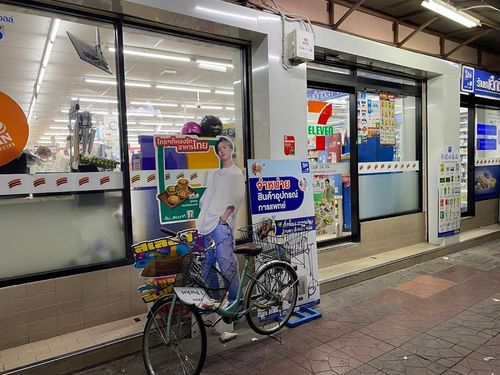
7-Eleven
Shops
Khao San’s 24/7 reset button: ice‑cold A/C, ham‑cheese toasties, All Café iced lattes, water for 7–14 THB, and late‑night supplies from snacks to sunscreen—right by Rikka Inn.
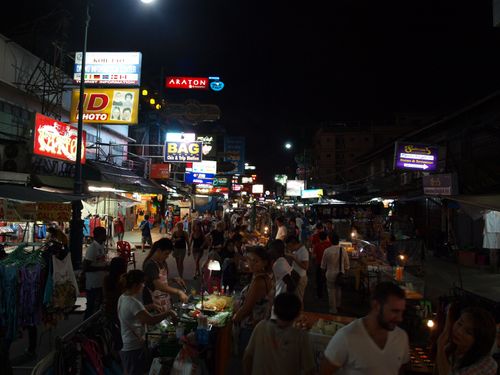
Khao San Road
Attractions
Bangkok’s backpacker carnival: curbside bars, live bands and DJs from 3pm–2am (midnight Sun). Street eats are cheap — pad thai 70–100 THB, mango sticky rice 60–100 THB. Come for wild people-watching; duck into Rambuttri for a calmer beer.
Khao San Road Night Market
Markets
Khao San’s nightly street market fires up from 3pm and peaks 7pm–midnight: pad thai and roti carts, fruit shakes, bargain tees and “elephant pants,” foot massages, tattoos, and those infamous cocktail buckets—all packed into one neon‑loud strip.
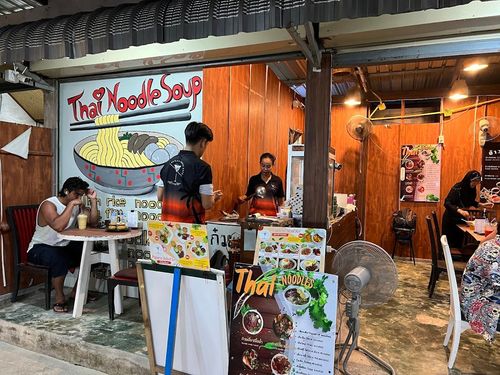
Railay Beach Cafe
Restaurants
Beachfront tacos and sundowners on Railay West. Nab a front table for golden‑hour views; order the tacos, som tam with crispy seafood, icy fruit shakes, and happy‑hour margaritas. Casual crowd straight off the long‑tails; stay for sunset.
Wat Arun Ratchawararam Ratchawaramahawihan
Temples
Wat Phra Chetuphon Wimon Mangkhalaram Rajwaramahawihan
Temples
The Giant Swing
Attractions
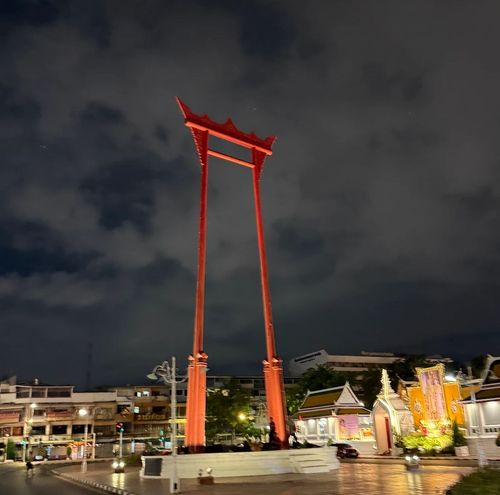
Bangkok’s scarlet Giant Swing towers outside Wat Suthat—free to visit, open all day, and best at sunset. Pair it with the temple across the street, then graze Dinso Road’s street food. A quick tuk‑tuk or 20‑minute walk from Khao San.
Wat Chana Songkhram Ratchaworamahawihan
Temples
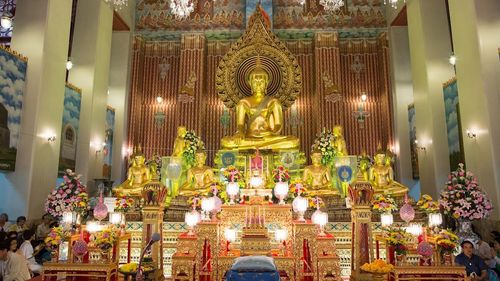
18th‑century royal temple steps from Khao San. Slip into quiet courtyards and an opulent viharn with a gilded Buddha. Opens 7:30am daily (Mon to 6:30pm). Enter on Chakrabongse Rd by Phra Athit; dress modestly.
Recommended Products
More Khao San Road Guides
- Thailand Packing List for Backpackers Carrying Camera Gear: Protection, Power, and Day-Bag Organization
- Thailand Packing List for Backpackers on a Short Trip: 3 to 7 Day Carry-On Checklist
- Thailand Packing List for Small-Daypack Travel: What to Carry on Daily Sightseeing Trips
- Backpacker Packing List for Thailand for Daily Carry and Daypack Setup