
How to Order Bangkok Street Food Like a Local: Stall Signals, Queue Etiquette, and Customization Tips
Nail how to order Bangkok street food: key Thai phrases, queue etiquette, prices, spice control, and the best areas near Khao San to eat like a local.
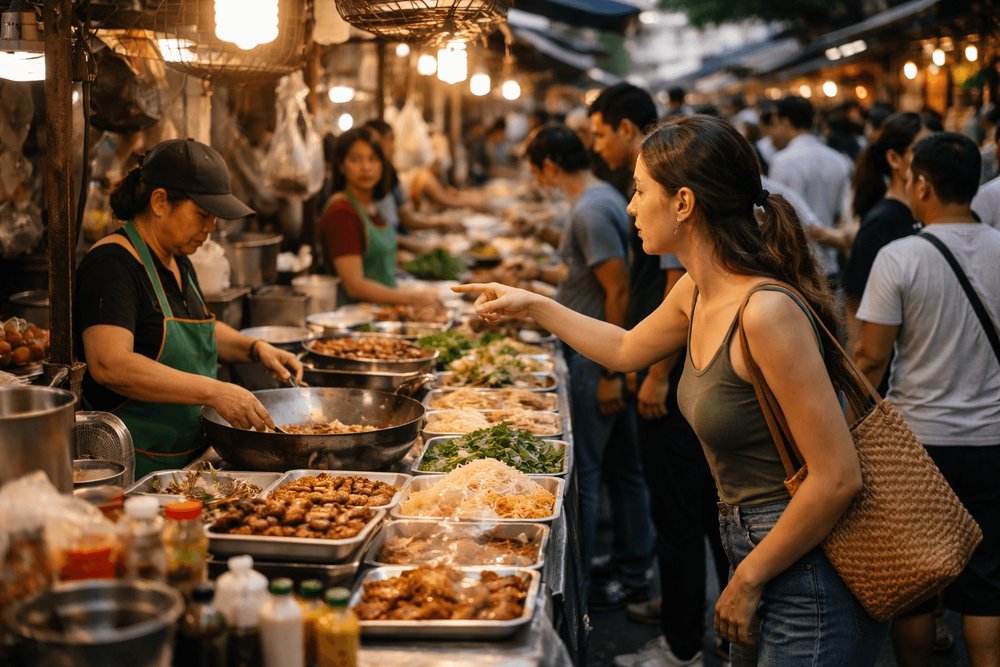
We’re shoulder to shoulder on Rambuttri, dodging backpack straps and grill smoke, when the moo ping guy fans his coals and that sweet-salty perfume hits us right in the willpower. This is the moment we order Bangkok street food like we mean it—eyes on the skewers, small bills in hand, a quick sawadee and a nod that says we know the dance. If you’ve wondered how to order Bangkok street food without looking like a lost farang, pull up a red plastic stool. We’ve got the phrases, the stall signals, and the spicy little secrets.
Best Bangkok street foods to order (and what you’re actually getting)
Bangkok isn’t one cuisine; it’s a thump of bass from a Khao San Road bar meets the hiss of a wok, the sweet rot of durian by a khlong, the crackle of chicken skin in oil that’s been seasoned by a thousand afternoon rushes. Let’s line up some greatest hits—and how to order them like a pro.
- Pad kra pao (holy basil stir-fry): The go-to. Say “pad kra pao moo” (pork) or “gai” (chicken), then add “khai dao” (fried egg) if you want that runny topper. Expect 60–90 baht on most sois.
- Khao man gai (Hainanese chicken rice): Poached chicken, fragrant rice, gingery sauce. Point, hold up fingers for portion number, and say “kin tee nii” (eat here) or “glap baan” (to go). Around 50–80 baht.
- Moo ping + khao niao: Charred pork skewers with sticky rice. Order by the stick—“moo ping saam mai” gets you three skewers. 12–20 baht per stick; sticky rice 10–15.
- Kuai tiao ruea (boat noodles): Rich, soy-and-spice broth in palm-sized bowls. Order “sen lek” (thin rice noodles) or “sen mee” (very thin) with “moo” (pork) or “neua” (beef). Bowls are small—plan on 3–5. 20–30 baht per bowl.
- Khao kha moo (braised pork leg on rice): Fatty, glossy comfort. “Khao kha moo pised” gets you a bigger portion. 60–90 baht.
- Som tam (papaya salad): Northeastern firecracker. For mild heat say “mai phet” (not spicy) or “phet nit noi” (a little spicy). Som tam Thai (with peanuts) is the friendliest intro. 50–80 baht.
- Hoy tod (crispy oyster omelette): Greasy in the best way. Point and say “hoy tod krap/ka.” 80–140 baht.
- Guay jub (rolled rice noodles): Peppery soup with pork belly and offal if you’re brave. Say “mai ao lai” to skip innards. 60–90 baht.
- Jok (rice porridge): Breakfast hug in a bowl. “Jok moo sai kai” gets you pork with an egg. 35–60 baht.
- Gai tod (fried chicken): Look for piles of golden drumsticks. “Gai tod song chud” asks for two pieces. Add sticky rice. 25–40 baht per piece.
- Khanom buang (Thai crispy pancakes): Meringue crunch with sweet or savory fillings. Point to your pick. 10–25 baht each.
- Roti (banana pancake): Late-night Khao San classic. “Roti gluay” for banana, “sai chocolate” to gild the lily. 40–70 baht.
If you want to go deeper on stall styles—carts, skewers, soups, and grab-and-go—bookmark our handy breakdown in How to Order Street Food in Bangkok (/articles/bangkok-street-food-stalls-by-type).
How to Order Bangkok Street Food: Phrases, Signals, and Sanuk
You don’t need perfect Thai to eat like a neighborhood regular. Rhythm and respect are 90% of it. Here’s the playbook.
Read the stall
- Queue logic: There’s rarely a formal line. Stand behind whoever looks “up next” and keep your body language in the flow of the wok. If there’s a ticket or number system, you’ll see paper slips or a whiteboard.
- Table first or order first? Noodle shops often seat you first; grill and stir-fry carts usually want your order before you claim a table. If in doubt, smile and ask, “sung gorn, nang gorn?” (order first, sit first?)
- Condiment code: The four friends—chili flakes (prik pon), vinegar with chilies (nam som), fish sauce (nam pla), and sugar (nam tan)—are there for you. Season after your first slurp, not before.
Say what you want (and how you want it)
Keep it simple, add the politeness particle at the end (krap for men, ka for women), and you’re golden.
- Aow … krap/ka = I’ll take …
- Kin tee nii / glap baan = Eat here / to go
- Mai phet / phet nit noi = Not spicy / a little spicy
- Phet mak = Very spicy (you’ve been warned)
- Mai sai … = Don’t add … (e.g., “mai sai phak chi”—no coriander; “mai sai prik”—no chili)
- Sai … = Add … (e.g., “sai khai dao”—add fried egg)
- Mai ao pong chu rot = No MSG, please
- Phom/chan phae … = I’m allergic to … (e.g., “phom phae thuea”—I’m allergic to peanuts; “phom phae kung”—shrimp)
For noodles, you’ll be asked about the noodle type. The cheat sheet:
- Sen yai = wide rice noodles
- Sen lek = thin rice noodles
- Sen mee = very thin rice noodles
- Ba mee = egg noodles
Hold up fingers for quantity, point for toppings, and seal the deal with a smile. If the stall is loud and the wok is roaring, hand gestures and pointing at the menu photos do a lot of heavy lifting.
Payment choreography
- Cash is king: Most carts are cash-only. Have 20s, 50s, and 100s ready. Don’t flash a 1,000 for 40 baht noodles.
- QR PromptPay: Increasingly common at fixed stalls. The auntie will point to a QR sign if they take it. Pay, then show your confirmation.
- When to pay: Grills usually pay on the spot; noodle shops often pay after you eat. Watch what others do.
If it’s your first lap around the block, we’ve packed more ordering cues and red flags into our Bangkok Street Food Etiquette: How to Order, Pay, Sit, and Eat Like a Local (/articles/bangkok-street-food-guide-first-timers).
What to expect at street food stalls: prices, portions, spice, and the small stuff
Prices and portions
- Curries over rice (khao gaeng): 1 topping 40–60 baht; 2 toppings 60–80; fried egg +10–15.
- Stir-fries on rice: 60–90 baht depending on protein.
- Noodle soups: 50–80 baht, boat noodles 20–30 per small bowl.
- Grilled skewers: 12–25 baht per stick; sticky rice 10–15.
- Desserts and snacks: 10–40 baht per piece; mango sticky rice 60–120.
- Drinks: Iced tea/coffee 30–50; fresh fruit shakes 40–70; water 10–20.
Curious how far your coins stretch? We broke down full meals at 50, 100, and 200 baht in How to Eat Bangkok Street Food Like a Local (/articles/bangkok-street-food-by-budget-50-100-200-baht).
Heat and seasoning
Default spice leans medium-hot for som tam and Isaan grills, mild for khao man gai and most noodle shops. Bangkok stalls expect you to self-tune with the condiment caddies, so taste first.
Seating, service, and speed
- Tables turn fast. Share if asked, stack your bowls when done, and give a quick “aroi mak” (very delicious) on your way out. Good karma.
- Expect plastic stools, chipped enamel plates, a fan spraying warm air, and the occasional blast of AC salvation when we duck into 7-Eleven between bites.
- Peak waits are 10–20 minutes. If you’re starving, look for stalls with rapid-fire wok action and a line of office workers—turnover is your friend.
Payment and receipts
Haggling is not a thing at food stalls. Prices are posted or rattled off. If it sounds high, ask again with “thao rai krap/ka?” and a friendly face. You’ll rarely get a printed receipt; just mental math and a crease of small bills.
Safe and smart eating: hygiene, allergies, and timing
Bangkok’s heat is real. Let’s keep it sanuk without the stomach drama.
- Watch turnover: Food that’s cooked to order in front of you is lower risk. Big trays of curry are fine—just pick the ones still steaming.
- Hot beats cold: In the noon sun, skip long-sitting salads or pre-cut fruit that looks dry at the edges. If you’re ice-cautious, go for bottled drinks.
- Clean hands, clean spoons: Bring tissues or wet wipes. Most tables have napkins, but they go fast in a heat wave.
- Allergies: Learn the key words (thuea = peanuts, kung = shrimp, pla = fish, kai = egg, nam pla = fish sauce, hoi = shellfish). Say “phom/chan phae …” clearly. If you’re serious-jay (vegan Buddhist style), look for the yellow sign with red Thai letters for jay.
- MSG sensitivity: Say “mai ao pong chu rot.” Many stalls will oblige, though flavor may tilt.
- Peak eating times = safer: 7–9 am, 12–1:30 pm, 6–9 pm. Fast turnover means fresher food.
For deeper risk-minimizing tactics—from freshness tells to stall hygiene rules—bookmark How to Order Bangkok Street Food Like a Local (/articles/bangkok-street-food-safe-to-eat-heat-safe-guide).
Recommended areas near Khao San Road (and beyond) for trying local dishes
We start around Banglamphu because it’s our backyard.
Around Khao San, Soi Rambuttri, and Phra Athit
- Soi Rambuttri: Early evenings bring moo ping smoke and pad kra pao clangs. Roti carts pop up after dark. Prices are a touch higher than the suburbs, but the variety is wild.
- Tani Road and Chakrabongse Road: Solid khao man gai, late-night congee, and satay sticks that come with peanut sauce you’ll want to drink.
- Phra Athit Road: Student energy from Thammasat, cheaper bowls, and some of the city’s most reliable kuai tiao at lunch. Grab a table under the trees and watch the Chao Phraya do its thing.
Getting there: If you’re not already staying in Banglamphu, hop the Chao Phraya Express orange-flag boat to Phra Arthit Pier (around 16 baht), then wander two blocks inland. Tuk-tuks prowl at night—agree on the fare before you hop in.
Insider sleep tip: We usually crash in this neighborhood; a simple guesthouse with a pool near Rambuttri pays for itself the first time you cannonball after a 38°C day.
Wang Lang Market (across the river)
Ferry from Phra Arthit Pier to Wang Lang (4–6 baht), and you’re through the looking glass: grilled pork collars glistening, piles of crispy pork rinds, aunties sculpting som tam like it’s performance art. Go hungry and go before 2 pm.
Chinatown (Yaowarat)
When the neon flickers on, Yaowarat turns into a rolling dining room. We chase hoy tod, guay jub, and Chinese-Thai desserts we can’t pronounce but always finish. Best reached via MRT Wat Mangkon. Expect queues, photogenic flames, and prices a notch up from neighborhood stalls.
Victory Monument
Come for the boat noodles, stay for the snack crawl. The canalside shophouses here sling tiny bowls by the dozen. BTS Victory Monument drops you right in it—order three bowls per person and calibrate from there.
Ratchawat and Nang Loeng
Old-Bangkok flavor: charcoal-roasted duck, curry over rice that tastes like someone’s grandma is guarding the pot, and desserts in antique tins. Take a quick taxi from Old Town; go before lunch sells out.
Silom Soi 20 morning market
If you’re waking early to beat the heat, Silom Soi 20 is a breakfast dream: jok with soft eggs, bags of curry, skewers pre-commute. BTS Sala Daeng or MRT Silom puts you in range. Eat, then wander Lumphini Park while the dragons (giant monitor lizards) sunbathe.
Sukhumvit side streets
Sukhumvit’s glossy now, but in the right sois you’ll still find late bowls and smoky grills: look around Ekkamai, Phrom Phong backstreets, and near On Nut markets for local-priced dinners.
Queue etiquette: how not to be “that” farang
- Find the “end” and commit: Hover behind the last person who’s obviously waiting—money in hand, eyes on the wok.
- Order quickly when it’s your turn: Know your dish and heat level. If you need time, wave others ahead with a smile.
- Don’t table-camp before ordering at carts: Seats are currency; order first, sit second.
- Bus your bowls: Stack plates, tuck chopsticks, wipe spills. It’s not just polite; it wins you grins.
- Photo mercy: One snap, two max. Don’t block the queue for a “content moment.” The wok waits for no one.
Customization tips that actually work
- Egg on top upgrades almost anything: “Sai khai dao” on pad kra pao, fried rice, khao moo daeng—yes, yes, and absolutely yes.
- Meat swaps are normal: Moo/gai/pla/kung are standard toggles. Tofu? Say “tao-hu.”
- Veg-forward? Ask for “mangsawirat” (vegetarian) or “jay” (vegan Buddhist style). Many stir-fries can go meatless if you ask early.
- Texture control: For noodles, “leun” (soft) vs “kiem” (firm) varies by stall; easier path is to change noodle type (sen yai for slurp, ba mee for bite).
- Sweetness check: Drinks default sweet. Say “wan nit noi” (a little sweet) or “mai wan” (not sweet).
Know before you go: little logistics, big payoff
- Hydrate like a local: 7-Eleven is our temple of cold air and 12-baht water. Duck in, reset, and hit round two.
- Dress light, carry lighter: A small sling bag for cash, tissues, hand gel, and a reusable water bottle or cup if you’re skipping single-use.
- Respect the rush: Office lunch hour is a controlled frenzy. Decide fast, eat faster, let the aunties cook.
- Rain plan: Plastic stools and monsoon don’t mix. Have a nearby shophouse or covered market in mind.
Getting around to graze
- Chao Phraya Express Boat (orange flag): Cheap river spine for Old Town, Rattanakosin, and Wang Lang—great breeze, zero traffic.
- MRT Blue Line: Hop to Chinatown (Wat Mangkon), Sam Yot (Old Town edge), and Chatuchak/Or Tor Kor for market feasts.
- BTS: Victory Monument for boat noodles, Sala Daeng for Silom eats, Phrom Phong/Thong Lo for late Sukhumvit snacks.
- Tuk-tuks: Fun, loud, and occasionally optimistic on fares. Always agree on price first. Short hops between Khao San, Rambuttri, and Phra Athit make sense.
When to roam (and what to hunt)
- Morning (6–10 am): Jok, patongo (Thai donuts), khao man gai, iced coffee that could wake a temple. Best in residential sois and wet markets (Silom Soi 20, Wang Lang).
- Lunch (11:30 am–1:30 pm): Khao gaeng, noodles, stir-fries flying off woks. Follow the office shirts.
- Night (6 pm–late): Grills, roti, Chinatown theatrics, Khao San’s greatest hits. Order like a local, then go again—second dinner is a Bangkok birthright.
If you want a portable cheat sheet on stall types and quick wins for transit days, our How to Order Street Food in Bangkok: Thai Phrases, Stall Etiquette, and Easy Customizations is a handy companion—but start with the playbook above.
Final bites: our standing order
Here’s our default Rambuttri drill: three moo ping hot off the coals (phet nit noi), a bag of sticky rice, then a fast pad kra pao moo sai khai dao from the cart with the loudest sizzle. If we still have room, a guay jub nightcap on Phra Athit, pepper steaming our glasses while the river breeze does its magic. Meet us there, bills folded and appetite ready—we’ll show you the un-touristy stool that somehow always has two seats left.
Helpful extras: Dive deeper on ordering cues and stall spotting with How to Eat Bangkok Street Food Like a Local (/articles/bangkok-street-food-first-time-visitors-what-to-order-best-stalls-fair-prices). And if you like to sort your cravings by dish, we’ve got a cheat sheet at Bangkok Street Food Etiquette: How to Order, Pay, Sit, and Eat Like a Local (/articles/bangkok-street-food-cravings).
Where to stay
Stays we list in Silom, Sukhumvit, and Khao San Road. Each place page includes the Agoda booking link.


Related places
Khao San Road
Attractions
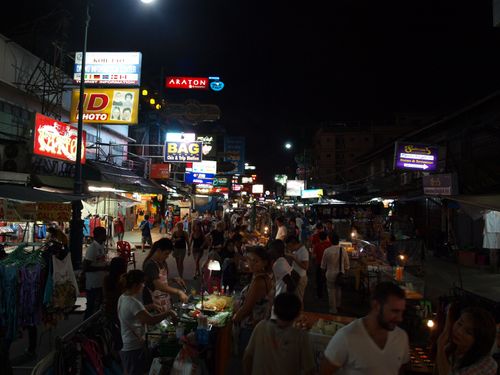
Bangkok’s backpacker carnival: curbside bars, live bands and DJs from 3pm–2am (midnight Sun). Street eats are cheap — pad thai 70–100 THB, mango sticky rice 60–100 THB. Come for wild people-watching; duck into Rambuttri for a calmer beer.
Rambuttri
Markets
Khao San’s calmer cousin: a tree‑shaded lane of VW van cocktail bars, open‑air foot massages, pad thai grills, and easygoing live bands. Best from sunset to 11pm; beers 80–120 THB, cocktails 150–220 THB. One block from the chaos, all the charm.
7-Eleven
Shops
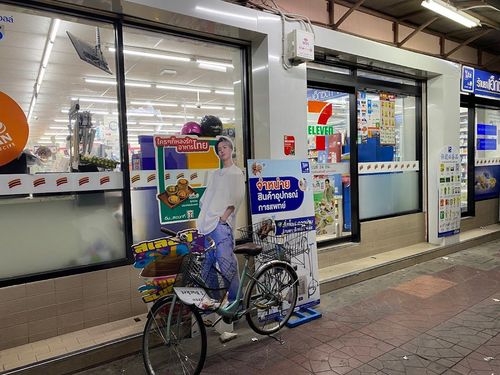
Khao San’s 24/7 reset button: ice‑cold A/C, ham‑cheese toasties, All Café iced lattes, water for 7–14 THB, and late‑night supplies from snacks to sunscreen—right by Rikka Inn.
Staying near Silom? Compare Silom hotels with Expedia booking links.
Flights to Silom
Compare flight options on Expedia.
More Khao San Road Guides
- How to Order Street Food in Bangkok: Thai Menu Words, Queue Etiquette, and Stall-Side Customs
- Bangkok Street Food Etiquette: How to Order, Pay, Sit, and Eat Like a Local
- How to Order Street Food in Bangkok: Thai Phrases, Stall Etiquette, and Easy Customizations
- How to Order Bangkok Street Food Like a Local: Thai Phrases, Toppings, and Stall Etiquette