
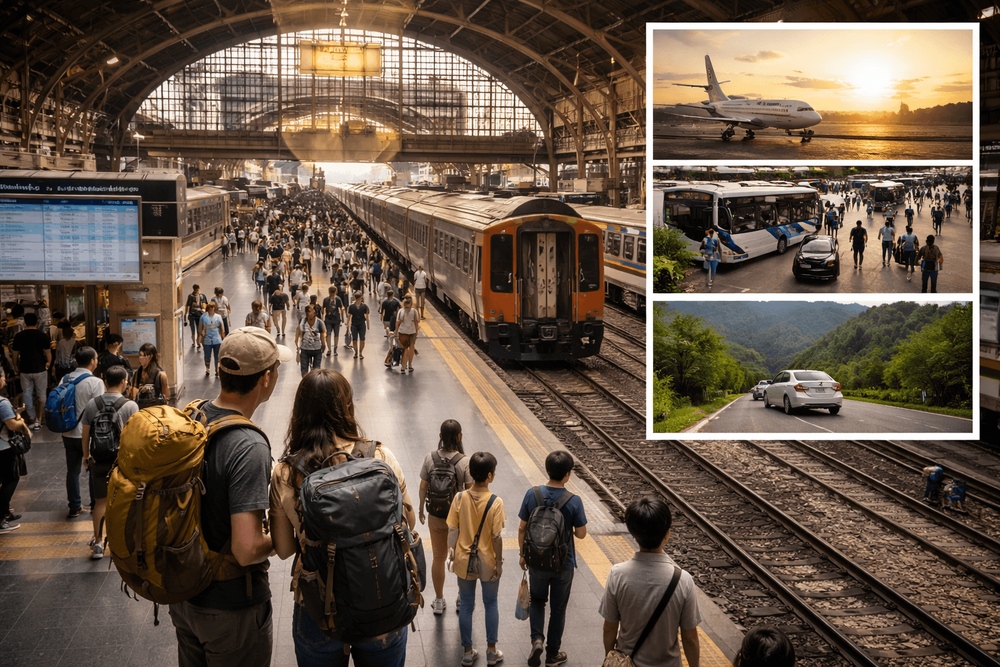
How Long Is the Trip from Bangkok to Chiang Mai? Travel Times by Train, Bus, Flight, and Private Car
Realistic Bangkok to Chiang Mai travel times by flight, train, bus, and car—plus transfer tips, costs, and when each option is fastest or cheapest.
We’re standing under the big departure board at Krung Thep Aphiwat Central Terminal, iced coffee sweating in our hand, watching a sleeper train blink “On Time.” The question we get asked every week—what’s the real Bangkok to Chiang Mai travel time?—doesn’t have one answer. It depends on the ride you pick, the time you leave, the traffic, the AC gods at Don Mueang, and whether your tuk-tuk gets cheeky on Phra Athit Road.
Data Freshness + Pricing:
- Prices are approximate and in THB.
- Last checked: June 2026.
- Happy hour and promo details change frequently—confirm locally.
Bangkok to Chiang Mai Travel Time by Flight, Train, Bus, and Car
Here’s what we actually experience on the ground, with realistic door-to-door ranges. We’ll assume you’re staying around Khao San Road/Soi Rambuttri or somewhere central like Siam; adjust a bit if you’re farther out.
Flight (BKK or DMK → CNX)
- Time in the air: about 1h10–1h25.
- Airport transfers in Bangkok:
- Suvarnabhumi (BKK): 40–70 minutes from Old Town by taxi (longer in rush hour), or 20–30 minutes on the Airport Rail Link from Phaya Thai once you get to the BTS. From Khao San, factor 20–30 minutes to reach Phaya Thai (taxi or canal boat to Ratchathewi, then BTS one stop).
- Don Mueang (DMK): 35–70 minutes by taxi depending on traffic, or around 20–30 minutes on the SRT Red Line from Krung Thep Aphiwat to Don Mueang station (plus time to reach the Red Line).
- Airport time: domestic check-in and security can be breezy or a slog. We allow 90–120 minutes before departure if checking a bag; 60–90 minutes with carry-on only.
- Arrival in Chiang Mai (CNX): 10–20 minutes by taxi/Grab to the Old City; about 15–25 minutes to Nimmanhaemin.
- Realistic door-to-door: 3.0–5.0 hours.
- Price (approx.): budget carriers often 800–1,800 THB base fare (add 300–600 THB for a checked bag), full-service usually 1,800–3,500 THB.
- When it shines: you want the fastest total time and can handle airport steps.
Train (Krung Thep Aphiwat → Chiang Mai)
- Daytime expresses: typically 9–11.5 hours.
- Overnight sleepers: generally 10–13 hours; you board in the evening, wake up rolling into the mountains with a styrofoam coffee and temple spires appearing through the windows.
- Station transfers:
- To Krung Thep Aphiwat: 25–45 minutes by taxi from Khao San if traffic isn’t misbehaving; or take the MRT Blue Line (Sam Yot → Bang Sue) in about 30–45 minutes.
- From Chiang Mai Station to the Old City: 10–15 minutes by taxi/Grab or songthaew (red truck). To Nimman: 15–25 minutes.
- Boarding time: plan to be at the platform 20–30 minutes early (more if you need to print tickets or find your car).
- Realistic door-to-door: day trains 10.5–13 hours; overnight sleepers 11.5–14 hours—but much of that is in your bunk, which can be the whole point.
- Price (approx.): 2nd-class AC sleeper berth 900–1,200 THB; 1st-class sleeper 1,500–2,100 THB; 2nd-class seat 500–750 THB; 3rd-class hard seat 200–400 THB.
- When it shines: you value the journey, want a lie-flat sleep, and don’t mind arriving mid-morning with noodle soup on your mind.
Bus (Mo Chit 2 → Chiang Mai Arcade or Old City drop-offs)
- Schedules: day and overnight options. Overnight buses are common; some Khao San-area agencies run direct picks-ups.
- Nominal time: 9–11 hours. In real life: 10–13 hours is more honest, thanks to traffic and service stops.
- Terminal transfers:
- To Mo Chit 2 (Chatuchak): 25–45 minutes by taxi from central areas; BTS/MRT to Mo Chit/Chatuchak then short taxi works too.
- From Chiang Mai Arcade Bus Terminal to the Old City: 10–20 minutes by taxi/songthaew.
- Check-in time: arrive 30–45 minutes before departure.
- Realistic door-to-door: 11–14 hours.
- Price (approx.): Standard bus 400–700 THB; VIP 24-seat/32-seat 600–900 THB. Pay for VIP if you value legroom and a quieter cabin.
- When it shines: you’re budget-focused, want a late-night departure, and can sleep anywhere.
Private Car (self-drive or driver)
- Route: Highway 1/AH2 via Nakhon Sawan, Kamphaeng Phet, Lampang. Flat plains to rolling hills, with roadside stalls doing grilled chicken and sticky rice you’ll smell before you see.
- Non-stop drive time: 8–10 hours with light traffic. Add breaks and daytime congestion: 9–12 hours.
- Rush hour surge: leaving Bangkok 4–8 PM can add 1–2 hours. Rainy season downpours may slow sections.
- Realistic door-to-door: 9–12 hours, plus however many 7-Eleven ice-cream bar stops you make.
- Price (approx.): Driver + car 5,500–8,500 THB one-way depending on vehicle and season. Rental car 900–1,500 THB/day plus fuel for ~700 km (about 1,800–2,300 THB) and minimal tolls once you’re north of Ayutthaya.
- When it shines: you want max flexibility for places like Sukhothai or Lampang and can share costs.
For a broader breakdown of routes and what each experience feels like, we’ve put together a separate deep dive: Bangkok to Chiang Mai: The Best Ways to Travel (/articles/bangkok-to-chiang-mai-the-best-ways-to-travel-2026-06-06).
What Actually Changes Your Total Time
Travel time isn’t just wheels-up-to-wheels-down or scheduled minutes on a timetable. In Bangkok and Chiang Mai, the edges of the trip add up.
The starting line: where you’re staying
- Old Town/Khao San/Soi Rambuttri: not directly on BTS/MRT, so expect a taxi, tuk-tuk, or a fun-but-splashy khlong boat to Ratchathewi, then BTS/MRT combos. Add 20–40 minutes for that first hop.
- Sukhumvit/Siam/Sathorn: great for ARL/MRT/BTS access; transfers can be faster during rush hour than taxis.
Airport choice matters
- DMK vs BKK: If you’re north of the river, DMK can be faster; south/east, BKK often wins. The SRT Red Line into Don Mueang is a game-changer if you can reach Krung Thep Aphiwat easily.
Time of day and traffic
- Bangkok rush hours (7–9:30 AM and 4–8 PM) can swell taxi times by 30–60 minutes. Songkran (mid-April) and New Year get wild; give yourself margin or you’ll be sprinting through a terminal in flip-flops.
Check-in, security, and platform shuffle
- Flights: domestic bag drop lines at LCC counters can snake, especially weekends. Hitting security with liquids in your bag? That’s 10 more minutes.
- Trains: platforms at Krung Thep Aphiwat are big; finding the right car and stowing your bag takes a beat, especially if you stop for snacks.
- Buses: Mo Chit’s maze-of-counters vibe means finding the right gate can eat 10–15 minutes.
Service stops and station distance in Chiang Mai
- Arcade Bus Terminal sits northeast of the Old City; add 10–20 minutes for the last leg.
- Chiang Mai Station is a hair closer; the Old City is a straight shot.
- CNX airport is practically in town—one of the gifts of Chiang Mai—so wheels-down to guesthouse can be under 30 minutes.
Weather and seasonal quirks
- Heavy rain slows traffic and can ripple through flight schedules.
- Burning season (roughly Feb–Apr) doesn’t add time, but it can make that overnight bus feel stuffier; we grab an extra bottle of water before boarding.
Speed vs. Sanuk: Picking the Right Ride
Here’s how the main options stack up on speed, convenience, comfort, and cost. If you want a full decision tree, we’ve also compared train vs bus vs flight head-to-head here: Bangkok to Chiang Mai by Train vs Bus vs Flight: Which Trip Is Best for Your Budget and Schedule? (/articles/bangkok-to-chiang-mai-travel-options-guide)
Flight
- Fastest overall (3–5 hours door-to-door) when transfers behave.
- Best for tight itineraries and anyone who wilts in the heat.
- Downsides: airport faff, luggage add-ons, and the joyless sprint to Gate 46.
Train
- Overnight sleeper = time-efficient and oddly romantic; you “spend” the night in transit and wake near the mountains.
- Day trains give scenery and sanuk without turbulence.
- Downsides: longer clock time; popular sleepers sell out.
Bus
- Cheapest comfy seat when promos aren’t hitting for flights.
- Night buses are plentiful and can be very decent in VIP classes.
- Downsides: variable quality, more road wobble, and arrival times can drift.
Private Car
- Ultimate flexibility: detour to Sukhothai Historical Park, sip coffee in Lampang’s old teak streets, or crush the drive in one go.
- Good value for groups (3–4 people).
- Downsides: driver fatigue if self-driving; traffic reality if you mistime your exit from Bangkok.
If you’re balancing time vs. experience, we’ve mapped costs and planning nuances in more detail here: Bangkok to Chiang Mai: The Best Ways to Travel (/articles/bangkok-to-chiang-mai-the-best-ways-to-travel-2026-05-29).
Planning Tips That Save an Hour (or Three)
Booking timelines
- Flights: for domestic hops, book 2–6 weeks out for steady prices; snag sales earlier when you see them. Holiday weeks (Songkran, New Year, long weekends) spike fast.
- Trains: sleepers are popular. Book as early as you can—especially 2nd-class lower berths. Stations, official apps, and reputable agents all work.
- Buses: plenty of seats most days, but VIP classes and holiday departures can sell out; grab tickets 1–3 days ahead if you’re picky about times.
- Cars: if hiring a driver, confirm at least a few days prior; for rentals, book earlier in peak season.
Best departure times
- Flights: mid-morning or mid-afternoon avoids the first-wave airport crush and post-work traffic. Early flights beat Bangkok’s PM jam but may mean a 5 AM taxi.
- Trains: overnight departures around 6–8 PM are golden—you board after a bowl of boat noodles near Victory Monument, sleep, and roll into Chiang Mai in time for khao soi.
- Buses: late-evening VIP buses (8–10 PM) hit Chiang Mai near dawn, useful if your room’s ready early or you’re happy to stash bags and find coffee inside the moat.
- Cars: leave before 6:30 AM or after 8:30 PM to skip the worst outbound traffic.
How much buffer to allow
- Flights: add 30–60 minutes buffer on top of your ideal plan in case of taxi delays or long queues. Domestic: arrive 90–120 minutes early with checked bags.
- Trains: arrive 20–30 minutes early; add another 15 if you’re collecting tickets.
- Buses: be at Mo Chit 2 at least 30–45 minutes before; factor 15 minutes to find the right gate.
Luggage and comfort hacks
- Flights: pay for bags online—counter add-ons can be pricier. Bring a light sweater; Thai AC pulls no punches.
- Trains: lower berths are wider and darker; bring earplugs and a light scarf for the AC breeze. Toilets are basic but workable; grab snacks at the station (grilled pork skewers near the platforms smell like victory).
- Buses: VIP 24-seat > VIP 32-seat > standard. A neck pillow turns an OK night into a decent one.
- Cars: plan fuel/7-Eleven/stretch breaks every 2–3 hours; swap drivers if self-driving.
Ticket and transfer logistics
- Khao San to BKK ARL trick: hop a taxi or Grab to Phaya Thai (20–30 minutes if traffic isn’t melting), then ARL to Suvarnabhumi in 26–30 minutes.
- Khao San to DMK rail trick: taxi or MRT to Krung Thep Aphiwat, then SRT Red Line to Don Mueang (about 20–30 minutes). No need to gamble on Vibhavadi traffic.
- Chiang Mai late arrivals: songthaews circulate outside the station/Arcade/airport well into the night; Grab works reliably. Keep small bills handy.
Quick Takeaways
- Fastest overall: Flight (BKK/DMK → CNX). Realistic 3.0–5.0 hours door-to-door.
- Cheapest: Standard bus or 3rd-class train seat (approx. 200–700 THB). Expect 11–14 hours.
- Best time-efficiency + experience: Overnight train 2nd-class AC sleeper (approx. 900–1,200 THB), 11.5–14 hours but you sleep most of it.
- Best for groups/flexibility: Private car/driver, 9–12 hours door-to-door, great if split 3–4 ways.
Know Before You Go
- Khao San reality: you’re off the rail grid. Build in 20–40 minutes to hit a BTS/MRT/ARL node, or just grab a taxi and watch the city slide by—temples flashing gold, som tam carts hissing, and that familiar blast of 7-Eleven AC when you dive in for a water top-up.
- Holidays: Songkran week (mid-April), New Year, and long weekends stretch every timeline. Book early and pad your schedule.
- Night arrivals: Chiang Mai is compact and friendly to late-night travelers. Even after midnight, we’ve never been stranded outside the moat; worst case, a quick Grab does the trick.
- Safety and scams: stick to official counters at Mo Chit, railway stations, and airports. If a tuk-tuk on Soi Rambuttri swears the bus is “finished” but he knows a friend—smile, wai, and keep walking.
If you want to dive deeper into routes and prices beyond just the clock, we compare the trade-offs here: Bangkok to Chiang Mai: The Best Ways to Travel (/articles/bangkok-to-chiang-mai-the-best-ways-to-travel-2026-04-17).
We’ll see you up north—bags dropped inside the moat, iced coffee sweating on a wooden table, and a bowl of khao soi steaming in front of us. Whether we flew in 3 hours flat or rocked up on the sleeper with pillow-crease cheeks, the mountain air hits the same sweet way.
Related Hotels & Places
More Khao San Road Guides
- Bangkok to Chiang Mai by Train: Sleeper Classes, Timings, and Booking Tips
- Bangkok to Chiang Mai by Train vs Bus: Which Option Is Better for Your Trip?
- Bangkok to Chiang Mai: The Best Ways to Travel by Train, Bus, Flight, or Private Transfer
- How to Book Bangkok to Chiang Mai Tickets: Timetables, Platforms, and Last-Minute Availability