What to Eat Between Wat Pho, Grand Palace, and Golden Mount: Best Cheap Temple-Day Meals from Khao San Road
From Khao San to Wat Pho, the Grand Palace, and the Golden Mount—how we eat temple-side in Bangkok: cheap bowls, sweet snacks, fair treats, and respectful tips.
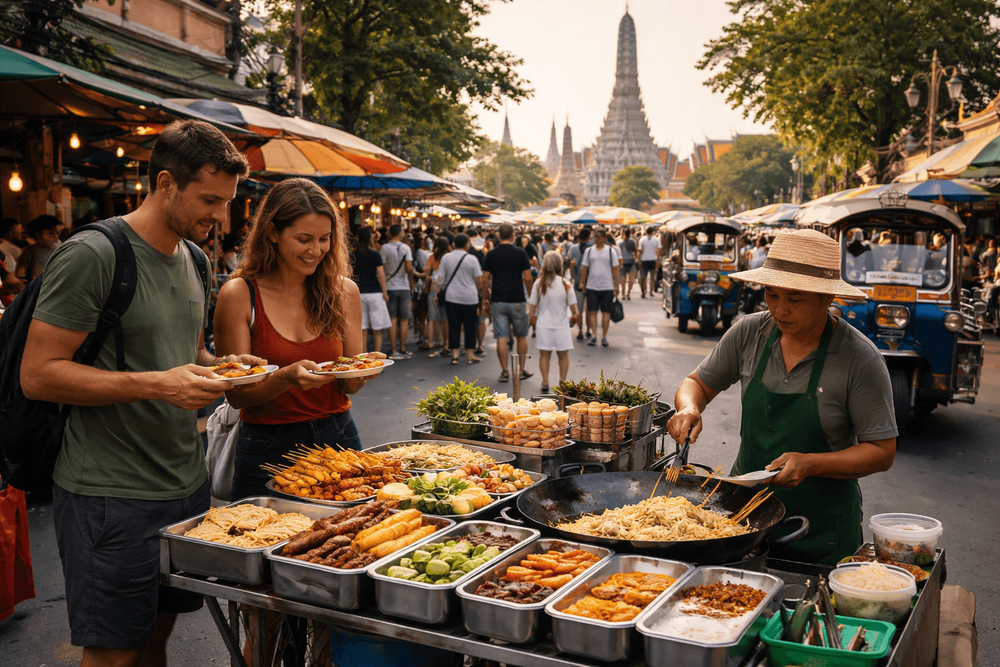
We slip out of Soi Rambuttri just as monks in saffron glide past Banglamphu market with alms bowls, the air a mix of incense, frying garlic, and the sweet rot of durian from a passing cart. This is where bangkok temple day food really lives—in the lanes around Wat Phra Chetuphon Wimon Mangkhalaram Rajwaramahawihan, along the river by The Grand Palace, and up the slope to the Golden Mount—humble bowls, sweets on banana leaves, and curry rice that fuels both merit-making and sightseeing.
Bangkok Temple Food: What it really means
Temple food in Bangkok isn’t nun-quiet macrobiotic fare. It’s everyday neighborhood eating threaded through temple life. In the mornings, families line up to give alms—bags of rice, fruit, even cooked curries—to monks. Vendors near wats (temples) set up early to feed both worshippers and workers: jok (rice porridge), soy milk, curry rice buffets (khao gaeng) with trays of bubbling green curry and turmeric-scented fried fish, and piles of grilled pork skewers for 15–20 baht a stick.
You’ll also spot vegetarian “jay” options, especially around Chinese-influenced neighborhoods: look for the yellow flag with red Thai/Chinese script. During the Vegetarian Festival (late Sep/Oct), whole streets go meat-free; but even off-season, a basic jay plate—rice with two veggie dishes—runs about 45–70 baht. And at fairs tied to holy days, temple grounds transform into snack paradises: kanom buang (crispy crepes), coconut puddings, grilled squid, neon-pink iced drinks, and every deep-fried thing your inner farang and your better angels will argue over.
We’re basing this guide from Khao San Road because that’s where most of us start. From here, we can do a tight loop: Wat Pho by river, the Grand Palace edges, the Giant Swing, and up to Wat Saket (Golden Mount). Along the way we’ll eat what locals eat, skip the traps, and keep it respectful and sanuk (fun).
Wat Pho and Tha Tien: Pier-side breakfasts and curry rice
We head down Phra Athit Road to Phra Arthit Pier, hop the Chao Phraya Express (orange flag; about 16–20 baht), and ride the wind down to Tha Tien (N8). As you step off, the smell flips from river to wok—garlic hitting hot oil, pepper broth steaming from noodle pots, skewers caramelizing over charcoal.
- Early bite: Jok moo (pork rice porridge) with a jammy egg will set you back 40–60 baht. If you’re more of a sweet-starter, grab fresh kanom krok—bite-sized coconut custard cups—10–20 baht for a few.
- Mid-morning fuel: Khao gaeng shophouses behind the pier display a rainbow of trays. Point to what looks good: green curry with fish balls, stir-fried morning glory, red curry pumpkin. Two dishes over rice, 50–70 baht; three if we’re ambitious, 70–90.
- River snacks: Sellers hawk grilled squid, fish balls (look chin ping), and cold nam manao (lime juice) for the heat—20–40 baht for snacks, 25–40 baht for drinks.
Wat Pho opens early, so we eat first or after a wander past the Reclining Buddha. When we want more specific stall picks on this stretch, we’ll cross-reference ideas from this handy piece on easy lunch stops near the palace zone: Bangkok Street Food After the Museum: Easy Lunch Stops Near the Grand Palace and Wat Pho.
Quick etiquette near Wat Pho
- Don’t photograph monks eating. A quiet “sawadee” with a small wai (hands together) is always welcome.
- Shoulders and knees covered inside the temple; shoes off at shrines. Save the tank top for later on Soi Rambuttri.
Grand Palace & Sanam Luang: Eat like a local, avoid the traps
The Grand Palace draws crowds and hustlers like sugar draws ants. We love the glittering spires, but we don’t love the 200-baht coconuts and “special tuk-tuk tour” scam. Here’s our move: exit toward Sanam Luang (the big royal field). Walk a block or two from the palace gates to find real prices. Around the Amulet Market (Tha Prachan) and along Maharat Road, little shophouses hum with office workers at lunch.
- Khao moo daeng (red pork over rice) with crisp pork belly is a reliable 50–70 baht.
- Som tam (papaya salad) with sticky rice and grilled chicken is easy to share; salads run 40–60 baht, chicken 60–100 for a quarter.
- Pad thai here should be 60–90 baht. If someone quotes 180 baht on a sidewalk, smile and keep walking.
If we’ve still got palace energy but not palace patience, we duck to the river piers for breeze and snacks, or slip east toward Ratchadamnoen and the Democracy Monument zone for more options.
For more temple-adjacent bites on this loop, we refer folks to this temple-and-river-focused roundup: Best Bangkok Street Food Near Temples and River Stops: Easy Eats Between Sightseeing Breaks.
Scam radar and budget sanity
- The line “Grand Palace closed, come gem shop” is classic tuk-tuk theater. The palace isn’t closed. Politely decline.
- Ask prices before ordering; if the menu has Thai and English, the baht cost should match.
- Water is cheap at 7-Eleven (10–15 baht). No shame cooling off with that blast of AC.
Wat Suthat, Giant Swing, and Dinso Road: Classic shophouses and sweets
We cut southeast from Sanam Luang to Wat Suthat and the Giant Swing (Sao Chingcha). The neighborhood is old-school Bangkok—wooden stools, enamel bowls, ceiling fans that slap hot air just enough.
- Guay jub nam sai (peppery rolled rice noodles with crispy pork) jolts awake; expect 50–70 baht.
- Hoi tod (crispy mussel or oyster omelette) is a wok performance—egg hitting steel, bean sprouts wilting at the edges. 70–120 baht depending on seafood.
- Kanom buang (Thai crispy crepes) come sweet (coconut cream and golden threads) or salty (shredded shrimp). 10–20 baht per piece.
- For a cool-down: lod chong (pandan noodles in coconut milk with shaved ice) or grass jelly in syrup—25–40 baht.
Dinso Road nearby hides coffee shops and old dessert spots. We grab a Thai iced tea (cha yen) for 25–40 baht and sit under a fan, sweaty and happy.
Golden Mount (Wat Saket) and Ban Bat: Snacks, fairs, and views
From the Giant Swing it’s a short stroll to Loha Prasat (Metal Castle) and then to Wat Saket. The alleys toward Ban Bat (the monk bowl–making community) are some of our favorites—quiet, humming with craft, with the occasional sizzle from a wok.
- Everyday eats: Look for tiny curry rice counters and noodle carts on Boriphat Road and the sois running toward Maha Chai. Boat noodles pop up around here too—dark, herbal broth with a smack of spice. Bowls are small by design; we order two. 30–50 baht each.
- Golden hour snacks: As the sun drops, stalls push out grilled chicken, moo ping, fried bananas, and bags of cut pineapple (20–30 baht). A mango sticky rice treat will be 80–150 baht depending on size and the season.
During Loi Krathong (usually Nov), Wat Saket’s temple fair is a whirl of candles, games, and unapologetically fun junk food. This is peak bangkok temple food energy: kanom krok bubbling in cast-iron pans, sizzling sausages on skewers, pancakes getting slick with condensed milk, and neon drinks clinking with ice. Fairs can be crowded, loud, and wonderful—part ceremony, part county fair, all Bangkok.
Vegetarians, vegans, and halal near the temple loop
- Spotting jay: The yellow flag is your best friend. Most jay shops keep vats of tofu curries, stir-fried vegetables, and braised gluten. Point-and-choose like khao gaeng; rice plus two dishes runs 45–70 baht. Ask for “mai sai nam pla” if you want no fish sauce.
- Vegan-friendly sweets: Kanom krok, mango sticky rice (ask to hold the salty coconut cream topping if needed), and fresh fruit shakes are easy wins.
- Halal plates: Around Banglamphu and near Sanam Luang, look for halal signage for biryani (khao mok gai), satay, and soups. Prices track with the rest—50–90 baht for mains.
If you need a deeper dive on dietary needs across Bangkok, bookmark this: Bangkok Street Food for Dietary Restrictions: Vegetarian, Vegan, Halal, and Gluten-Free Options.
Must-try temple-area dishes (and what to pay)
- Boat noodles (kuay teow reua): Tiny bowls, rich broth, herbs. 30–50 baht a bowl—stack them.
- Curry rice (khao gaeng): Rice with 2–3 trays of curry/stir-fry. 50–90 baht.
- Hoi tod: Crispy mussel omelette, chili sauce, bean sprouts. 70–120 baht.
- Guay jub nam sai: Rolled noodles in pepper broth with crispy pork. 50–70 baht.
- Som tam set: Papaya salad, sticky rice, grilled chicken. 40–60 for salad, 60–100 for chicken.
- Pad thai: Eggy, smoky, often with shrimp. 60–90 baht on honest menus.
- Mango sticky rice: Seasonal joy. 80–150 baht.
- Kanom krok and kanom buang: Coconut cups and crispy crepes. 10–20 baht each.
- Grilled skewers: Moo ping, chicken thighs, squid. 15–30 baht a stick.
- Thai iced drinks: Cha yen (iced tea), oliang (iced coffee), lime juice. 25–40 baht.
How to do a respectful, budget-friendly temple-food day
- Dress code and temple etiquette: Cover shoulders and knees. Remove shoes at shrines. Don’t point your feet toward Buddha images. Keep your voice low. Photos are fine in most outer areas—ask if unsure. Skip photos of monks receiving alms or anyone in active prayer.
- Opening hours: Many temples run roughly 8:00–18:00, with the Grand Palace often closing earlier (around 15:30). Wat Saket opens earlier and can run into the evening during fairs. Always check current hours before you go.
- Timing your meals: Breakfast (6:30–9:00) is prime for porridge and soy milk; lunch stalls hum 11:00–14:00; many close in the heat and reopen late afternoon.
- Reading the room: If the pots are low and the line is local, jump in. If the tout is aggressive and the menu has tourist prices, keep walking one more soi.
- Ordering like we belong: Smile, point, say “khao”—rice—then “song yang” (two kinds) or “sam yang” (three kinds). For spice, “mai phet” (not spicy) or “phet nid noi” (a little). Pay after you eat at many shophouses; street carts usually pay first.
- Money and water: Bring small bills (20s and 50s). Refill your bottle at temple bathrooms or buy 10–15 baht water at 7-Eleven.
For route ideas that mesh shrines and snacks, we’ve mapped out more combos here: Bangkok Temple Lunch Break Guide: Where to Eat Between Wat Pho, the Grand Palace, and Golden Mount.
Getting there and around from Khao San
- On foot: Khao San to the Grand Palace/Sanam Luang is a 15–20 minute walk depending on the heat. Phra Athit to Phra Arthit Pier is 5–10 minutes.
- River boat: Orange-flag Chao Phraya Express is our go-to. Phra Arthit Pier to Tha Tien (Wat Pho) is quick and cheap (about 16–20 baht). From there you can walk to the Grand Palace area or hop one stop to Tha Chang.
- Canal boat: To reach Wat Saket fast, ride the Khlong Saen Saep boat to Panfa Leelard Pier (about 10–20 baht) and walk 10 minutes.
- Tuk-tuk and taxis: Fun for short hops. Agree on tuk-tuk prices up front (60–120 baht for short inner-city legs). For taxis, insist on the meter or use a rideshare app.
- Buses: Old-town buses run Ratchadamnoen and Maha Chai, but if you’re not bus-fluent, the river and canal boats keep it simple.
Experiencing bangkok temple food as culture, not just lunch
- Merit-making moments: If you see locals buying pre-packed offerings (flowers, candles, rice), step aside and watch. Vendors often sell small marigold garlands near temple gates—30–50 baht. If we participate, we do it quietly and follow locals’ lead.
- Temple fairs and seasons: Peak fair vibes light up around Loi Krathong (Nov) and assorted temple anniversaries. Expect music, raffles, prayer tents, and 100+ snack stalls. Bring cash, arrive before the crush (17:00–18:00), and ride a boat to skip traffic.
- Photograph with care: Food stalls love a bit of fame, but ask before sticking your lens into a bubbling pot. A nod and “chai mai, khrap/ka?” (okay?) goes a long way.
- Waste and water: Pack a tote and say no to extra plastic. Vendors will happily fill your reusable cup for iced drinks.
- Support small: If a stall fed you well, tip a few coins in the change bowl or just tell them “aroy mak!” (very delicious). That smile is absolute currency.
Sample day plan we actually do
- 08:00 – Jok and soy milk around Banglamphu; walk to Phra Arthit Pier.
- 09:00 – Boat to Tha Tien; Wat Pho visit; post-temple curry rice.
- 11:30 – Stroll up toward Sanam Luang; fruit and iced tea, then a plate of khao moo daeng near the Amulet Market.
- 13:30 – Giant Swing/Wat Suthat; guay jub and a nosh of kanom buang on Dinso Road.
- 16:30 – Cut to Wat Saket; climb before sunset; snack on grilled things. If there’s a fair, we stay for the chaos and crepes.
If you want even more ideas around these exact stops (and a few alternates), this roundup sticks to the landmark axis: Bangkok Street Food at Tourist Landmarks: What to Eat Near the Grand Palace, Wat Pho, and Along the River.
We’ll keep doing this loop as long as Bangkok keeps sizzling. Meet us by the Golden Mount stairs at dusk—first bag of kanom krok is on us.
Related Hotels & Places
Khao San Road
Attractions
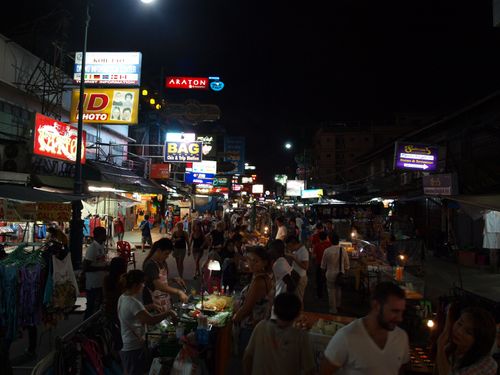
Bangkok’s backpacker carnival: curbside bars, live bands and DJs from 3pm–2am (midnight Sun). Street eats are cheap — pad thai 70–100 THB, mango sticky rice 60–100 THB. Come for wild people-watching; duck into Rambuttri for a calmer beer.
Wat Phra Chetuphon Wimon Mangkhalaram Rajwaramahawihan
Temples
The Grand Palace
Attractions
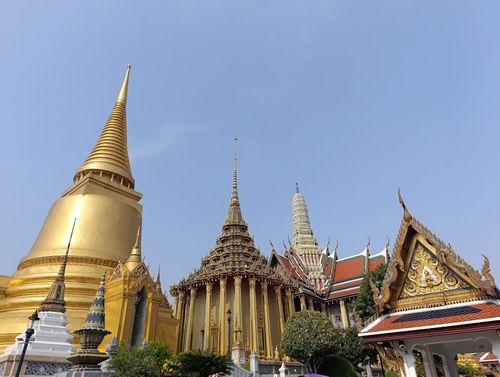
Bangkok’s royal showpiece a short hop from Khao San: glittering Wat Phra Kaew, Ramakien murals, and gold-on-gold rooftops. Go 8:30am to dodge the heat, dress modestly, and boat to Tha Chang for the prettiest arrival.
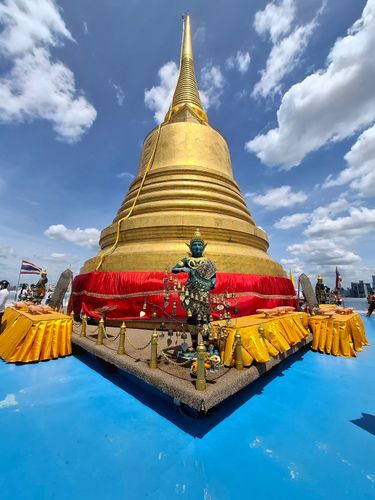
Wat Saket Ratchawora Mahawihan
Temples
More Khao San Road Guides
- A Food-and-Temple Day from Khao San Road: Where to Eat Between Wat Pho, the Grand Palace, and Golden Mount
- Where to Eat Between Wat Pho, the Grand Palace, and Golden Mount on a Khao San Road Temple Day
- What to Eat Near Wat Pho, the Grand Palace, and Golden Mount After a Temple Day from Khao San Road
- What to Eat Between Wat Pho, the Grand Palace, and Golden Mount: A Khao San Road Temple Run Food Break Guide