Bangkok Street Food Prices Guide: What Common Dishes Cost Near Khao San Road
Real Bangkok street food prices near Khao San—dishes, drinks, budgets, and tricks to avoid the tourist tax while eating like a local.
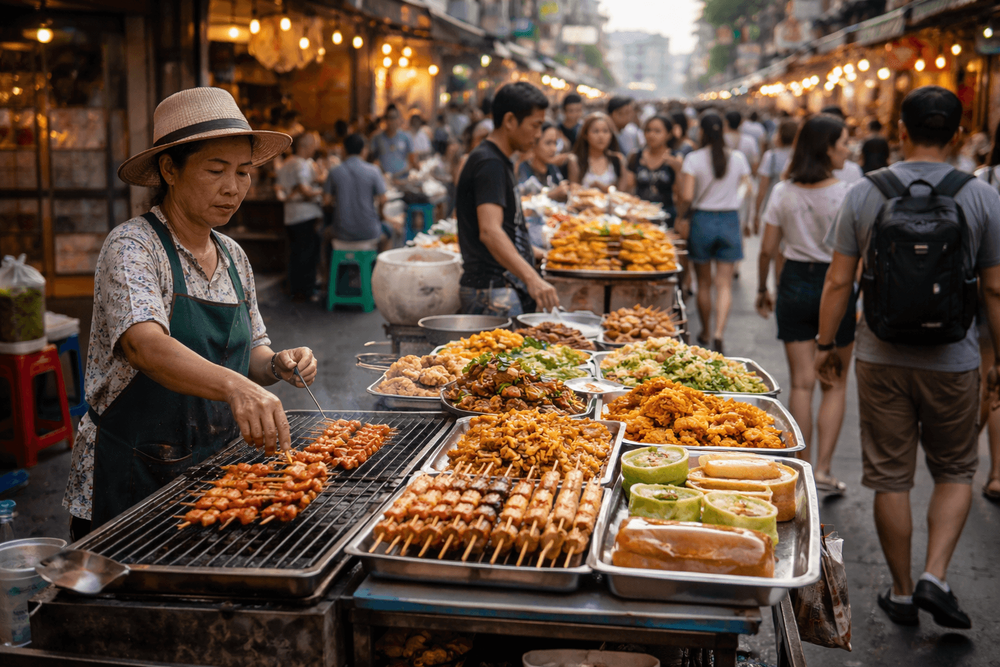
We drift down Soi Rambuttri, neon bouncing off rain-slicked cobbles, the wok hiss coming in hot like a snare drum. A pad thai cart snaps bean sprouts into the steam, moo ping crackles over charcoal, and someone hands us a plastic bag of cha yen so sweet it could stand up on its own. This is where Bangkok street food prices really matter: a few coins one way and we’re eating like kings; a few coins the other and we’re just paying the Khao San tax. Let’s talk numbers, smells, sanuk, and how to keep our baht working as hard as the auntie manning the wok.
Bangkok Street Food Prices: Typical Costs Around Khao San
You can eat well within a few blocks of Khao San Road and Phra Athit Road without getting fleeced. Here’s what we actually pay on the streets and at shophouses around Banglamphu (prices in THB; portions are single-serving unless noted). We’ll flag if Khao San–adjacent pricing tends to run higher.
Noodle & rice classics
- Pad Thai: 50–80 at street carts on Soi Rambuttri; 80–120 on Khao San proper (prawns usually push it higher)
- Pad See Ew / Pad Kee Mao: 50–70 on nearby sois; 70–100 on tourist-heavy blocks
- Khao Man Gai (Hainanese chicken rice): 50–70; large or extra chicken +10–20
- Khao Moo Daeng (red pork rice) / Khao Kha Moo (braised pork leg rice): 50–70; add egg +5–10
- Fried Rice (khao pad): 50–70 chicken/pork; 70–90 shrimp/crab
- Boat Noodles (kuay tiao reua): 20–30 per small bowl; we usually crush 2–4 bowls
- Tom Yum Noodle Soup: 60–90 depending on toppings
Grilled, fried, and one-bite heroes
- Moo Ping (grilled pork skewers): 10–20 each; sticky rice +10
- Gai Yang (grilled chicken): 60–100 per quarter; whole birds at markets priced by weight
- Fried Chicken (gai tod): 20–40 per piece
- Sausages (sai krok Isan / muu yor): 15–25 per stick
- Fish Balls & Squid Balls (luk chin): 20–40 per cup on Phra Athit Road nights
- Oyster Omelette (hoy tod): 80–150 depending on oysters and pan size
Spicy papaya and salad bowls
- Som Tam Thai: 50–70 on Rambuttri side streets; 70–90 near Khao San
- Larb / Nam Tok (minced meat salads): 60–90; sticky rice +10
Sweets & desserts
- Roti (banana, egg, condensed milk): 35–60; Nutella versions cost more
- Mango Sticky Rice: 70–120 depending on mango season and portion size
- Thai Coconut Ice Cream (served with nuts/sticky rice): 25–40
Drinks you’ll actually buy
- Bottled Water (7-Eleven): 10–14
- Thai Iced Tea / Coffee (cha yen / oliang): 25–40 street price; 40–60 in tourist-heavy stalls
- Fresh Orange Juice (the bright orange bottle): 40–60
- Fresh Coconut: 40–60 in markets; 60–80 on Khao San strip
- Fruit Shakes: 40–60
- Beer from 7-Eleven (small Leo/Chang/Singha): 40–60; bars add a markup and ice buckets
Late-night munchies near Khao San
- Pad Kra Pao (basil stir-fry over rice, with fried egg): 60–90; egg +10
- Jok (rice porridge) or Khao Tom (rice soup): 40–70
- Grilled Squid or Prawns by weight: typically 100–200+ depending on size
If we’re sticking to the lanes that branch off Soi Rambuttri, Phra Athit, and the edges of Chakrabongse Road, we’re usually in the lower part of these ranges. The closer we hug the neon heartbeat of Khao San itself, the more we’re paying for noise, convenience, and Instagram.
What Drives Bangkok Street Food Prices
Bangkok street food prices shift with a few predictable levers. Once we clock them, we stop overpaying.
1) Location, location, soi-cation
- Tourist zones (Khao San Road, the riverfront right by Phra Athit Pier): expect a 10–30% markup.
- Local neighborhoods (Sam Sen, Thewet Market, Din Daeng, Ari’s side streets): cheaper, with bigger portions.
- Night markets with hype: prices climb with foot traffic and live music. Sanuk has a surcharge.
2) Protein and portion size
- Prawns, crab, squid, and oysters spike the bill. Pork and chicken are the budget workhorses.
- “Pi-set” (special/large) tacks on 10–20. Extra egg? Another 5–10. Easy to justify; it adds up fast.
3) Stall type and overhead
- Pushcarts and curbside woks stay cheapest.
- Shophouses with AC, sit-down menus, and waitstaff charge more (fair enough—someone’s paying that electric bill).
- Malls and curated food courts slap on presentation and rent premiums.
4) Time of day and demand
- Breakfast stalls around Banglamphu Market are a steal before 9 AM.
- Post-bar, post-midnight on Khao San, we’re paying a “you’re hungry and it’s open” tax.
5) Ingredients and seasonality
- Mango sticky rice hits the wallet harder if mangoes are off-season.
- Imported snacks and novelty items carry farang pricing.
6) Add-ons and extras you might miss
- Takeaway bags, extra sauces, and plastic containers are usually free but can incur 1–5 baht here and there.
- Ice buckets at bars are priced; street ice water at some shophouses might be 2–5 baht per glass. Ask first.
How to Spot Fair Prices and Avoid Overpaying
We don’t mind paying a little more if the food slaps. We do mind getting hustled. Here’s our street radar.
Look for posted prices in Thai and English
A laminated menu or hand-written sign is a good sign. If there’s no price anywhere and it feels cagey, we ask before ordering: “Rai-kaa tao-rai?” (How much?) A normal pad thai from a cart near Soi Rambuttri should be 50–80. If someone quotes 150 for a basic portion, we smile, say “mai pen rai,” and keep walking.
Watch where locals queue
If aunties, office workers, and school kids are stacked two deep, the price is right and the food’s fresh. We’d rather wait 10 minutes at a cart with a line than pay a premium for empty chairs.
Understand weight-based seafood pricing
Grilled prawns and squid often use per-100g pricing. Confirm the unit, watch the scale, and ask for the total before they hit the grill.
Anchor your expectations
- Moo ping under 15 is a steal; 20 is fine on crowded blocks.
- Fruit shakes hover around 40–60; if it’s 90 in a plastic cup, we expect real fruit, not syrup.
- Cha yen above 50 on the street better be a bucket-sized situation.
Skip the “tourist special” upsells
If a stall pushes combo deals with mystery surcharges, we politely opt for a la carte. We also confirm if egg or extra meat costs more before saying “chai, add dai” (yes, can add).
For a deeper dive into ordering and street smarts, we lean on the local wisdom in these reads:
- How to choose clean, fresh stalls: Bangkok Street Food Safety Guide
- How to order, pay, and eat like a local: Bangkok Street Food Etiquette: How to Order, Pay, Sit, and Eat Like a Local
- What to eat by neighborhood and vibe: Bangkok Street Food: Best Dishes, Where to Eat & Traveler Tips
Budget Expectations: What a Day Really Costs
Let’s build a realistic food budget for a day around Khao San and Banglamphu. No starvation math, no luxury fluff.
The grazer (light eater, lots of tastes): 150–250 THB/day
- Breakfast: jok with pork + soft-boiled egg (50–60)
- Midday: fruit shake (40–50)
- Afternoon nibble: 2 moo ping + sticky rice (40–50)
- Night sweet: roti (35–50) If we sip water from 7-Eleven and skip beer, this holds.
The backpacker with an appetite: 250–450 THB/day
- Breakfast: khao man gai (50–70)
- Lunch: pad see ew + iced tea (80–110)
- Snack: som tam + sticky rice to share (60–80)
- Dinner: khao kha moo + fried egg (60–90), mango sticky rice for dessert (70–100) Beer adds 40–60 per can from 7-Eleven; bars mark up heavily.
The “try everything” duo (two people, night market feast): 500–900 THB/night
- 4–6 skewers (80–120)
- Oyster omelette or hoy tod (100–150)
- Two noodle bowls (120–180 total)
- Som tam + grilled chicken quarter (120–180)
- Two drinks (80–120)
- Mango sticky rice (70–120) Sharing lets us sample more without nuking the budget. Want seafood platters or big prawns? Expect to blast past 1,000.
Vegetarian-friendly day: 220–380 THB/day
- Breakfast: soy milk + patongo (30–40)
- Lunch: pad thai jay (veg) or fried rice with tofu (50–70)
- Snack: fruit cup or corn in a cup (20–30)
- Dinner: som tam Thai mai sai pla ra (no fermented fish) + rice (60–90), roti with banana (35–50)
We keep our daily food budget near Khao San at 300–500 baht per person for “eat well, try a lot” days. Cheaper is possible; it just takes more wandering off the main drag.
Paying, Ordering, and Comparing Stalls
Prices are one thing; paying smoothly is another. We move like locals with a few habits.
Cash is king (but QR is common)
- Most carts are cash-only. Keep 20s, 10s, and coins; handing over a 1,000 for 40-baht moo ping is a vibe killer.
- Many shophouses accept Thai QR (PromptPay). If we don’t have a Thai account, we stick to cash.
- ATMs around Khao San add withdrawal fees; we plan ahead to avoid multiple hits.
Order like we mean it
- “Khor… (dish)… noi krub/ka” (Please may I have…)
- “Mai pet” (not spicy), “pet nit noi” (a little spicy), “pet mak” (very spicy)
- “Mai sai” (don’t add) e.g., “mai sai prik” (no chili), “mai sai pong pla” (no fish powder)
- “Kai dao duai mai?” (Fried egg too?)—if yes, expect +5–10 baht
Read the cart
- A wok that never stops, fresh trays of herbs, piles of bean sprouts and basil turning over fast—these are green flags.
- Reused oil that smells tired, limp greens, or fish sitting warm in the sun—we skip politely.
Sit or bag?
- “Kao-sue” (to go) vs eat-in prices are usually the same, but takeaway containers can add a token fee.
- If a stall has communal seating, order from that stall, not its neighbor—hawkers get territorial for good reason.
Compare like a local
- Two neighboring pad thai carts with identical prices? We watch which one locals hit, peek at portion sizes, and order where the heat is high and turnover is constant.
For night-market strategy, we map our appetite with this handy overview: Bangkok Street Food Night Market Guide: Best Stalls, Hours, and What to Order
Where Prices Bend: Tourist Zones vs. Local Lanes
We love Khao San’s chaos, but we duck out for better deals.
Within a 10-minute wander
- Phra Athit Road: Student crowd, chill bars, cheaper noodles. Tom yum bowls around 60–80.
- Soi Samsen 2–6: Family shophouses, honest pricing, late-night congee.
- Banglamphu Market (daytime): Fresh snacks, soy milk, patongo, and fruits at local rates.
A river hop away
- Take the Chao Phraya Express boat to Thewet or Wang Lang piers for markets that price to locals first. Moo ping smells like heaven, and our wallet breathes easier.
Know Before You Go: Getting to Khao San Cheaply
- River route: From Silom/Sathorn, ride the Chao Phraya Express Boat to Phra Athit Pier (N13). It’s scenic, breezy, and drops us a short walk from Soi Rambuttri.
- MRT option: Ride to Sam Yot or Sanam Chai, then a short taxi, tuk-tuk, or a 15–25 minute walk through the Old Town grid.
- Buses: Several lines snake past Democracy Monument and Banglamphu; we hop whatever’s headed that way and pay small change on board.
- Taxis: Insist on the meter. If traffic on Ratchadamnoen looks biblical, the river boat wins.
Quick Price Cheatsheet (So We Don’t Freeze at the Cart)
- Normal street noodle or rice dish: 50–80
- Skewers: 10–20 each
- Fruit shake: 40–60
- Thai iced tea: 25–40
- Mango sticky rice: 70–120
- Night-market seafood: priced by weight—confirm first
Work these numbers into our gut and we can spot a fair deal at a glance. That’s how Bangkok street food prices stop being a question and start being a superpower.
Final Bite
Tonight, let’s warm up with moo ping by the smoke-stained cart near Phra Sumen Fort, tack left for a 60-baht bowl of boat noodles that tastes like star anise and river breeze, and finish with mango sticky rice under the fairy lights on Soi Rambuttri. Prices may bob with the crowds, but the game doesn’t change: follow the sizzle, trust the lines, ask the price with a smile—and we’ll always eat well for less.
Related Hotels & Places
Khao San Road
Attractions
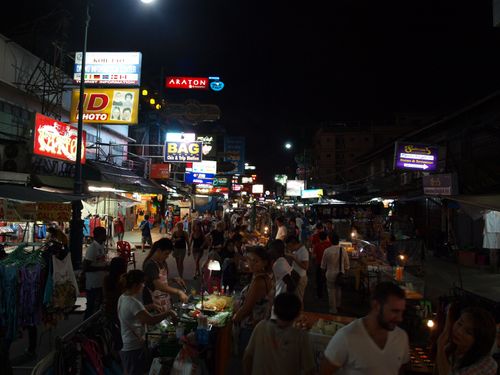
Bangkok’s backpacker carnival: curbside bars, live bands and DJs from 3pm–2am (midnight Sun). Street eats are cheap — pad thai 70–100 THB, mango sticky rice 60–100 THB. Come for wild people-watching; duck into Rambuttri for a calmer beer.
Phra Sumen Fort
Attractions
1783 riverfront fort on Phra Athit with white battlements, park breezes, and killer sunset views over Rama VIII Bridge. Free entry; best from 5–7pm before the gates close at 9pm.
More Khao San Road Guides
- Bangkok Street Food for Budget Travelers: Filling Meals Under 100 Baht Near Khao San Road and Beyond
- Bangkok Street Food for Cheap Meals: How to Eat Well on a Budget Around Khao San Road
- Bangkok Street Food for Travelers on a Budget Near Khao San Road: Cheap Dishes That Fill You Up
- Bangkok Street Food Guide to Iconic Dishes: Where to Find Pad Thai, Boat Noodles, and Mango Sticky Rice Near Khao San Road