
Bangkok Street Food by Cooking Style: Grilled, Fried, Steamed, and Soup Stalls to Try Near Khao San Road
Eat Khao San like a local: a guide to Bangkok street food cooking styles—grilled, fried, steamed, and soups—with what to order, prices, and where to find it.
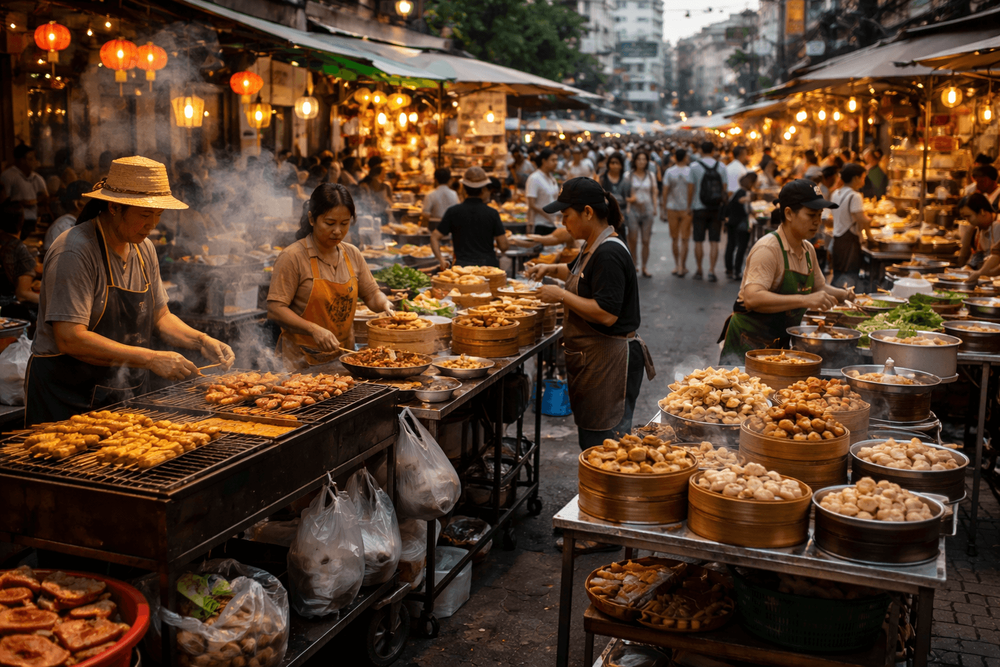
The grill smoke hits us first—sweet pork fat hissing as a fan-wielding auntie coaxes the coals, a tuk-tuk coughs past, and a wok on Soi Rambuttri night stalls throws a comet-tail of flame into the night. This is where Bangkok street food cooking styles come alive: charcoal, woks, steamers, broth pots, and bubbling fryers, all working the same few meters of sidewalk near Khao San Road. We’re here to eat by method, not just by dish—because once you know how it’s cooked, you’ll know what’s fresh, what’s fast, and what’s worth your baht.
If it’s your first rodeo around Khao San, don’t sweat it—we’ll spot the good stalls together, sidestep the duds, and keep a cold drink handy for the heat and the chili.
Bangkok Street Food Cooking Styles 101
Here are the main cooking styles you’ll see around Khao San Road, Soi Rambuttri, Phra Athit Road, and the lanes feeding down to the Chao Phraya. We’ll break down how to recognize each, what to order, and where to sniff them out.
1) Wok-Frying and Stir-Frying (ผัด): Flash Heat, Big Aroma
- The move: A steel wok over high heat, a slick of oil, garlic in first—cue the sizzle—then meat, veg, and sauce. Fast, loud, smoky.
- Flame factor: Watch for the brief fire-kiss when the cook tilts the wok toward the burner. That little flare is flavor.
- What to order:
- Pad kra pao (holy basil stir-fry) over rice with a fried egg. Pork or chicken, 50–70 baht. You’ll hear the garlic hit before you see it.
- Pad thai at carts with a flat wok and pre-soaked noodles. Good ones will cook one or two portions at a time—not a mountain of noodles left steaming.
- Pad see ew (wide rice noodles with soy) if you want smoky, chewy comfort.
- Where to find it near Khao San: Evenings along Soi Rambuttri’s temple side, and along Tanao Road toward Sao Chingcha. Look for queues of locals in office wear around dinner.
2) Grilling (ปิ้ง/ย่าง): Charcoal Perfume, Midnight Snacks
- The move: Skewers lined up like soldiers over glowing coals. A fan keeps the heat steady; a brush paints on nam jim (dipping sauce) or sweet glaze.
- What to order:
- Moo ping (grilled pork skewers), 10–15 baht each, with sticky rice in a bag. Breakfast to late night.
- Gai yang (grilled chicken), from quarter birds to wings. Look for crackling skin and juices that still run clear.
- Pla pao (salt-crusted grilled fish) stuffed with lemongrass—best shared, 150–220 baht.
- Where to find it near Khao San: Corners of Chakrabongse Road and the Rambuttri loop; also pop-ups along Phra Athit Road after sunset.
3) Boiling, Simmering, and Soup Pots: Broth Depth, Noodle Therapy
- The move: Big pots steaming like khlongs on a cool morning. Broth built from bones and spices, topped with blanched noodles and herbs.
- What to order:
- Boat noodles (ก๋วยเตี๋ยวเรือ): intensely spiced, small bowls—so we order two… or four. 15–25 baht per bowl near old-town stalls.
- Tom yum noodles: bright, sour-spicy with crushed peanuts.
- Khao tom or jok (rice soup, congee) for a softer landing after a long night.
- Where to find it near Khao San: Daytime on Tanao Road for classic noodle carts; later on, carts cluster near the police station end of Khao San. For a calm bowl, wander toward Phra Sumen Fort on Phra Athit and follow the steam.
4) Steaming (นึ่ง): Gentle Heat, Soft Textures
- The move: Bamboo baskets stacked into towers; stainless steamers blowing ghostly clouds.
- What to order:
- Salapao (steamed buns) with barbecue pork or custard, 15–25 baht.
- Kanom tuay (little coconut milk puddings) set in tiny ceramic cups—sweet, salty, soft.
- Fish or shellfish steamed with lime and garlic (ปลานึ่งมะนาว) at seafood stalls—zippy and fragrant.
- Where to find it near Khao San: Morning vendors along Chakrabongse Road sell buns with Thai iced coffee; dessert cups appear in the early evening on Soi Rambuttri.
5) Deep-Frying (ทอด): Crunch City
- The move: Wire baskets, bubbling oil, and a constant chop-chop as the vendor snips fried bits into bite-size.
- What to order:
- Fried chicken (gai tod) with sticky rice; listen for the crisp crack as they cleaver it.
- Fried bananas (กล้วยทอด) or taro fritters, 30–40 baht a bag.
- Spring rolls and thung thong (golden money bags) at mixed appetizer carts.
- Where to find it near Khao San: Look for the golden pile of chicken along the Rambuttri roundabout; banana fritters usually park on the Chakrabongse end around late afternoon.
6) Curries and Slow Pots (แกง): Ladle-and-Go Powerhouses
- The move: Pre-made trays kept hot, flavors deep from hours of simmering. This is about time, not flames.
- What to order:
- Green curry (gaeng keow wan), massaman, panaeng—pick by aroma and color. Ask for “khao geng”—rice with curry—50–70 baht.
- Stir-fried curries made to order (pad prik king) when the wok and trays share the same stall.
- Where to find it near Khao San: Morning markets off Tanao Road and on small sois behind the temple on Rambuttri; lunch-only for many of these.
7) Pounding and Tossing (Som Tam’s Kingdom): Not Heat, But Heat
- The move: Mortar and pestle (som tam) smashing garlic, chilies, palm sugar, lime, and fish sauce, tossed with shredded papaya or mango.
- What to order:
- Som tam Thai (milder, with peanuts) or som tam Lao (funkier, saltier). 40–60 baht.
- Add grilled chicken and sticky rice for the holy trinity.
- Where to find it near Khao San: Mobile carts along Phra Athit and the lanes running to the river from Rambuttri, especially early evening.
Signature Dishes by Style (And How to Judge a Great One)
We’re not here to memorize menus—we’re here to spot the signals. Here’s how we size up each style in a few seconds.
Wok-Fried Classics
- Pad kra pao: You should smell garlic first, basil last. If the basil goes in too early and blackens, it’ll taste dull.
- Pad see ew: Look for char-kissed noodles, not pale and soggy. If the cook is flipping a single portion, you’re golden.
Grilled Street Legends
- Moo ping: Slightly sticky glaze, still juicy. If they’re reheating a mountain of pre-cooked skewers, we walk on.
- Pla pao: Salt crust intact, flesh flakes off with a fork, steam billowing when opened.
Soup Game
- Boat noodles: Small bowls mean faster turnover—good. Broth should be dark, punchy, with a whiff of cinnamon and star anise.
- Tom yum: Clear or creamy, both fine; we check if they blanch noodles to order.
Deep-Fried Munchies
- Chicken: Fresh batches hit the rack often; old chicken gets dull and leathery.
- Bananas: Lightly golden, not brown; oil should smell clean.
Steamed & Sweet
- Salapao: Puffy, with a bit of bounce when pressed. If they’re collapsed or wrinkled, they’ve been sitting too long.
- Kanom tuay: The top layer should wobble. Wobble equals joy.
For dish-by-dish deep dives and what it’ll cost, bookmark our starter playbook: Bangkok Street Food for First-Time Visitors: A Practical Guide to Ordering, Hygiene, and Must-Try Classics.
Fire, Smoke, and Timing: Why Live Cooking Tastes Different
Street food isn’t just recipes—it’s choreography. Watch the vendors controlling heat like DJs riding a bassline on Khao San.
- Heat control: Gas vs charcoal vs induction. Old-school charcoal adds that whisper of smoke to moo ping; gas woks give lightning-fast control for pad kra pao.
- Sauce logic: Fish sauce, oyster sauce, soy, sugar, and chilies balance each other. Great vendors taste as they go; they’re not robots.
- Herbs and aromatics: Thai basil, makrut lime leaf, lemongrass, galangal. The moment they hit hot oil, the aroma makes your eyes go wide.
- Prep matters: Pre-blanched noodles or par-cooked chicken isn’t cheating—it speeds service at peak hours. The trick is finishing hot, to order.
If you care about clean stalls without killing the thrill, we’ve got you: Bangkok Street Food Hygiene Guide: How to Spot Clean Stalls and Eat Safely Without Killing the Experience.
Old-School Carts vs. Modern Pop-Ups Around Khao San
Bangkok evolves every month, and Khao San rides that wave. Here’s what we notice.
Old-school vendors:
- Heat source: Charcoal braziers, hand fans, battered woks blackened with seasoning.
- Service style: One cook, one queue, no Instagram sign—just a line of office workers.
- Pros: Depth of flavor from seasoned equipment, prices at the lower end (40–70 baht), and speed from muscle memory.
- Cons: Limited seating, sell-out risk by 8–9 pm, menus rarely in English.
Modern pop-ups:
- Heat source: Clean gas ranges or induction, slick setups, often a menu board in English.
- Service style: Picture menus, sometimes fusion spins (truffle som tam? we’ve seen it).
- Pros: Clear pricing, comfortable stools, vegetarian/halal awareness more common.
- Cons: Slight markups (add 10–30 baht), and sometimes cooking in batches for the crowd.
Neither is “better.” We chase the line, the smells, and the turnover. If the wok screams and the queue moves, we eat.
Practical Tips: Spotting Fresh, Ordering Smart, Staying Sane
Here’s our cheat sheet when we’re hungry, hot, and two minutes from hangry.
- Follow the line, not the lights. A modest cart on Phra Athit with a ten-person queue beats a neon sign every time.
- Listen for live cooking. Garlic hitting hot oil, skewers hissing, broth ladles clinking—music to our ears.
- Watch the hands. Are they cooking portions individually? Are herbs tossed in at the end? Are they double-dipping spoons? We walk if hygiene looks off.
- Turnover is king. Fresh oil, fresh skewers, small-batch noodles.
- Price sanity check: Most plates run 50–80 baht. Seafood and whole fish climb to 150–250. Want to map your appetite to your wallet? Read Bangkok Street Food by Budget: What to Eat for 50, 100, and 200 Baht.
- Start with forgiving styles. If you’re new to street heat, begin with grilled skewers, then wok-fried pad kra pao. Graduate to boat noodles and som tam once your spice tolerance wakes up.
- Etiquette saves face. Order, pay, and sit like a local with this primer: Bangkok Street Food Etiquette: How to Order, Pay, Sit, and Eat Like a Local.
Where to Hunt Each Style Near Khao San (By Time of Day)
- Early morning (6–10 am):
- Steamed buns and coffee on Chakrabongse Road.
- Moo ping skewers with sticky rice on the Rambuttri loop.
- Lunch (11 am–2 pm):
- Curry trays on Tanao Road—ladle over rice, then crash in a shady soi for a breather.
- Boat noodles in shophouses leading toward Sao Chingcha.
- Golden hour (5–7 pm):
- Som tam carts roll out on Phra Athit; grilled chicken hits the coals.
- Wok-fry stalls ramp up on Soi Rambuttri; order pad kra pao before the backpacker rush peaks.
- Late night (9 pm–2 am):
- Fried chicken mountains, pad thai theatrics, banana roti flippers along Khao San proper. Loud, messy, fun—sanuk in stereo.
We usually crash at a simple guesthouse on Soi Rambuttri when we want to roll from bed straight to moo ping and iced coffee. If you’re chasing a quieter night and a riverside breeze, look toward Phra Athit and the lanes near Phra Sumen Fort; for a pool and stronger AC, midrange hotels along Chakrabongse and Tanao are a short stumble from the late-night snacks without sleeping on top of a subwoofer.
Getting There (Without Melting)
- River route: From BTS Saphan Taksin, hop the Chao Phraya Express Boat (orange flag) to Phra Arthit Pier. Sawadee to the fort, then it’s a 10-minute walk to Soi Rambuttri and Khao San. Breezy, cheap, scenic.
- Bus: Old-school but effective—routes like the 15 and 47 cut through Rattanakosin. Bring small change and patience.
- Taxi/Grab: Direct, AC bliss. Traffic around Khao San snarls after 5 pm; get dropped on Phra Athit or Tanao and walk.
- Tuk-tuk: Fun for short hops; agree on the fare first. If the driver suggests a “special gem shop,” smile, say “mai ao, khop khun,” and hop out.
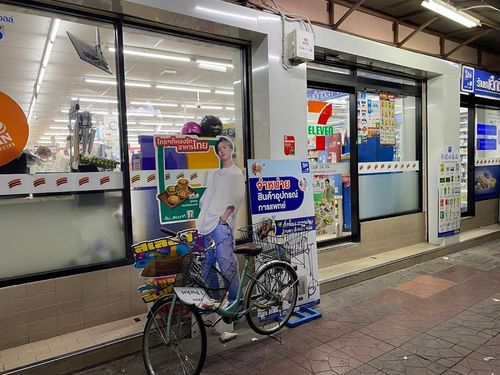
Hydration hack: Duck into 7-Eleven for a blast of AC and a 10–15 baht water. Your future self will thank you.
How to Mix and Match a Perfect Khao San Street-Food Crawl
- Start smoky: One or two moo ping skewers and sticky rice.
- Wok hit: Pad kra pao with a fried egg. If you’re sharing, pad see ew for contrast.
- Slurp stop: A small bowl of boat noodles—maybe two if the queue is flying.
- Crunch: Split a bag of fried bananas on the walk.
- Cool down: Kanom tuay or mango sticky rice if you spy a ripe cart.
If you’ve got specific cravings (seafood? noodles? curry?), we’ve mapped styles to dishes here: Bangkok Street Food for Specific Cravings: Best Places for Noodles, Grilled Meat, Seafood, and Curries.
What the Heat Teaches Us (And Why We Keep Coming Back)
After a night around Khao San, our clothes smell like smoke, lime, and a little fish sauce. Our lips buzz from chilies, our ears hum from bass thumping out of a bar halfway down the soi, and our pockets are lighter by maybe 200–300 baht—but our stomachs are very, very happy. Learning Bangkok street food cooking styles lets us read the sidewalk like a menu: if we can hear the wok, see the coals, and feel the steam, we know what to order before we’re even in line.
Next time we’re out, let’s chase that perfect pad kra pao on Rambuttri, then wander to Phra Athit for a riverside grill and watch the ferries slide past. Same streets, new flames—there’s always another great bite just a few steps away.
Related Hotels & Places
Khao San Road
Attractions
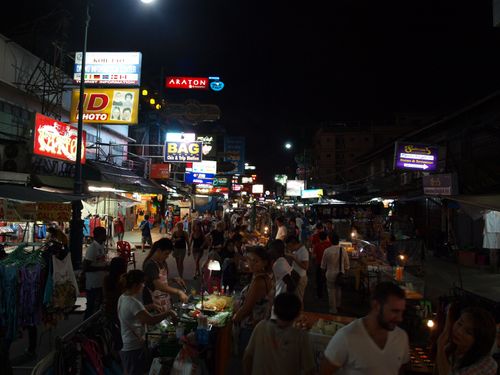
Bangkok’s backpacker carnival: curbside bars, live bands and DJs from 3pm–2am (midnight Sun). Street eats are cheap — pad thai 70–100 THB, mango sticky rice 60–100 THB. Come for wild people-watching; duck into Rambuttri for a calmer beer.
7-Eleven
Shops
Khao San’s 24/7 reset button: ice‑cold A/C, ham‑cheese toasties, All Café iced lattes, water for 7–14 THB, and late‑night supplies from snacks to sunscreen—right by Rikka Inn.
The Westin Grande Sukhumvit, Bangkok
Hotels
A 5-star hotel in Bangkok.
More Khao San Road Guides
- Bangkok Street Food Night Guide: Best Evening Stalls, Markets & Late Eats Near Khao San Road
- Bangkok Street Food by Dish: Must-Try Classics Near Khao San Road and the Old Town
- Best Bangkok Night Market Food Stalls to Try from Khao San Road
- Best Thai Dishes to Try at Bangkok Street Food Stalls: A Khao San Road Ordering Guide