
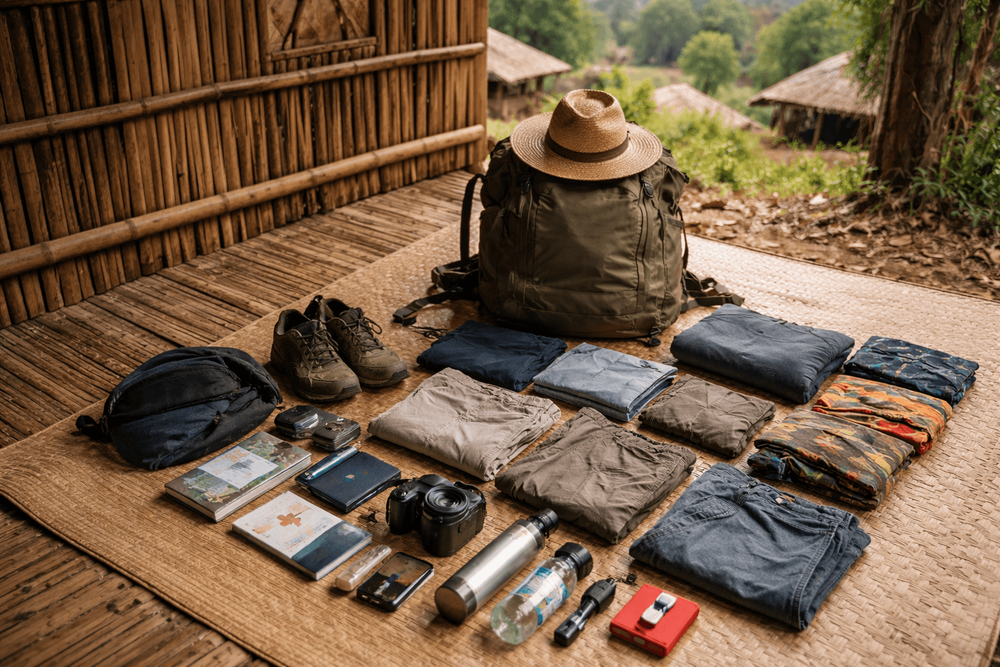
Backpacker Packing List for Thailand: Rural Village and Homestay Travel Essentials
Pack smart for Thailand’s rural villages and homestays: modest clothes, rain gear, a mini clinic, and bus-ride basics. Field-tested by folks who’ve been there.
The bus bay at Mo Chit hums before sunrise—styrofoam bowls of jok steaming, aunties ladling coffee sweet as a candy shop, drivers chain-smoking under flickering fluorescents. We shoulder our packs, squeeze past sacks of cabbage bound for Isaan, and run a final mental check of our Thailand rural travel packing list. Out there, past the 7-Elevens and BTS lines, you can’t count on a pharmacy on every corner. Pack smart now, and the next muddy lane, homestay veranda, or rice field shortcut becomes pure sanuk instead of a scramble.
Your Thailand rural travel packing list: the essentials
Let’s build a lean, field-tested kit that fits in a 40L backpack and behaves on dirt roads, songthaews, and bamboo floors. We’ll keep it modest for village norms, tough for farm tracks, and cool for the Bangkok heat that never quite lets go.
Essential clothing and footwear for climate, terrain, and norms
- Quick-dry tops (2–3): Lightweight, breathable tees or polos. Synthetic or merino keeps sweat drama low; cotton clings like a bad decision on a humid day.
- Long-sleeve sun shirt (1): Button-up or UPF hoodie saves you from tropical sun and mozzies without a meltdown.
- Bottoms (2): One pair of lightweight trekking pants (zip-offs are handy) and one pair of quick-dry travel shorts for downtime. In villages, shorts should hit the knee.
- Modesty layer: A thin scarf/sarong (pha khao ma or pha sin style) covers shoulders or knees for temples, ceremonies, or dinner with grandma. Costs 100–180 baht from stalls off Soi Rambuttri.
- Sleepwear: Light shorts/leggings and a T-shirt that doubles as emergency clean top.
- Underwear (3–4) and socks (3 pairs): Quick-dry. You’ll wash-and-wear overnight.
- Footwear:
- Trail runners or sturdy walking shoes with grip for clay lanes and forest paths.
- Rubber flip-flops (20–60 baht in any market) for showers and homestay verandas.
- Hat with brim: The midday sun on a paddy field is merciless.
- Packable rain layer: A thin rain jacket that won’t turn you into a sauna, or a decent poncho. The 7-Eleven ones (30–60 baht) work in a pinch; bring a sturdier one if you expect monsoon-level downpours.
Laundry is life: village taps, a bit of detergent (10–20 baht sachets), and a travel clothesline will keep you fresh. Expect line-drying to take longer in humid valleys—wash early, catch the breeze.
Weather-specific gear for heat, rain, mud, and mosquitoes
Rural Thailand is a mash-up of microclimates. One minute you’re baking on a dusty soi; the next you’re ankle-deep in a khlong-side rice field, clouds unloading everything they’ve got.
- Sun defense: Reef-safe sunscreen (SPF 30–50), lip balm with SPF, and sunglasses with real UV protection. Sunscreen runs 200–450 baht depending on brand.
- Rain plan: Pack a compact umbrella (handy shade, too). For bags, a rain cover or a cheap dry bag (100–250 baht) keeps your spare clothes from turning into soup.
- Mud mode: Lightweight gaiters or mid-calf socks help on slippery red clay in the north and northeast. If you’ll be off-trail, toss in leech socks; they’re niche, but when you need them, you really need them.
- Mosquitoes: DEET or picaridin repellent (80–150 baht), plus a light long-sleeve for dusk. In some homestays, a bed net is provided; confirm in advance. A small coil or plug-in vaporizer can be a bedroom hero.
- Temperature swings: In Mae Hong Son or Nan’s hills, dawn can be surprisingly crisp. A thin fleece or puffer and a beanie weigh little and earn their spot when you’re sipping coffee in the mist at 6 AM.
Pro move: Keep a small “grab pouch” with rain shell, hat, and repellent on top of your pack. When a tuk-tuk dumps us at a ferry crossing and the sky turns, we’re covered before the first fat drops land.
Health, safety, and hygiene for places with few shops
Out in the countryside, the pharmacy might be a 40-minute ride away—if it’s open. We bring a mini clinic and keep it organized in a zip pouch.
- First-aid basics: Adhesive bandages, gauze, tape, antiseptic wipes or povidone-iodine, blister plasters, and tweezers.
- Meds: Pain/fever reliever, antihistamines, anti-diarrheal (loperamide), oral rehydration salts (8–20 baht per sachet), motion sickness tablets for curvy mountain roads, and any prescriptions in original packaging with copies of scripts.
- Water safety: A compact filter bottle or chlorine dioxide tabs. Bottled water is widely sold (7–13 baht), but a filter earns its keep when shops run dry after a holiday or storm.
- Hygiene kit: Biodegradable soap, small shampoo, hand sanitizer, a fast-dry travel towel, nail clippers, and tissues (public squat toilets don’t always provide paper). Tampons aren’t always on shelves outside big towns; pack what you need.
- Sun/heat relief: Electrolytes, a foldable fan, and a cooling towel. Heat exhaustion sneaks up when you’re smiling through a homestay farm tour.
- Bugs and bites: Hydrocortisone cream or tiger balm for the itch. If you scratch (you will), clean it quickly—tropical bacteria love an open invite.
- Documentation: Passport photocopies, digital backups, and travel insurance details saved offline.
- Headlamp: Phone torches are fine—until they aren’t. A headlamp (100–250 baht) frees your hands on dark village lanes and power-cut evenings.
We’ve seen farang tough it out with nothing but flip-flops and bravado. They still end up asking for our ORS on day two. Toss in a couple extra sachets; sharing makes friends fast.
Practical travel accessories for the road, farms, and homestays
Buses, pickups, rice fields, verandas—rural days swing wide. This is the kit that makes the swings smooth.
- Power and comms: A 10,000–20,000 mAh power bank (300–700 baht), dual-port charger, and a Thai plug adapter (Type C/F to Type A sockets appear often). SIM cards at kiosks near Khao San or Mo Chit run 150–300 baht for starter packs; AIS and True move have the best rural coverage in our experience.
- Offline nav: Download Google Maps areas and a Thai phrase app before you roll. Paper copies of key addresses in Thai script help when your driver auntie squints at your screen in the sun.
- Locks and bags: A small padlock for hostel-style lockers in provincial towns, zip pouches to segment gear, and a 5–10L dry bag for boat crossings or sudden downpours.
- Comfort on long rides: Neck scarf or sarong doubles as blanket when bus AC blasts like the BTS. Earplugs and an eye mask for night services. Snacks (dried mango, peanuts, sticky rice packets) because roadside stops can be random.
- Field day kit: Thin work gloves for farm visits, a compact multitool (only in checked luggage), and a lightweight tote for markets.
- Gifts for hosts: Small, light, and thoughtful—tea from your country, postcards, or kid-safe stickers. Skip booze unless you know it’s appropriate.
- Hydration cadence: A 1L bottle you actually like carrying. Refill machines in towns cost 1–2 baht per liter; otherwise 7-Eleven sells big bottles cheap.
- Respect-ready temple wear: Your sarong plus a spare modest top live in the daypack. We’ve walked past surprise ceremonies on Phra Athit Road in Bangkok and in tiny Nan hamlets—being ready means you can step in with a smile.
Pack light, move fast
Everything you bring should multi-task. That sarong is a temple wrap, bus blanket, picnic mat, sunshade, and emergency towel. Trail runners cover hikes and market runs. The only item that should do just one job is your toothbrush.
Local etiquette, packing smarts, and lightweight travel tips
Villages run on relationships. A little cultural finesse weighs nothing and carries you everywhere.
- Dress with heart: Cover shoulders and knees at temples and community events. Swimwear is for water, not the walk back through the village.
- Shoes off, always: Doorway shoe piles mean “leave them.” Your flip-flops earn their keep here.
- Sit low: On mats, tucking your feet behind you shows respect. Pointing feet at elders or the Buddha is a no.
- Hands and hello: A friendly “sawadee” plus a wai (palms together, slight bow) goes further than perfect Thai.
- Photos: Ask before snapping portraits—especially kids and elders. Share the shot after; it’s a great moment-maker.
- Cash is king: Carry small notes (20s, 50s, 100s). Big bills can be hard to break at one-stall markets. ATMs thin out fast once you leave the district town.
- Left-luggage hack: If you’re staging from Banglamphu near Khao San and Soi Rambuttri, leave city gear in a reputable storage spot; many charge around 20–50 baht per day. You’ll thank yourself on the switchbacks to Pai.
- Trash and trails: Bring a zip bag for your rubbish and pack it out. Rural bins aren’t always a thing.
- Dogs: Village soi dogs can be territorial. Walk calm, avoid staring, and carry a pocketful of pebbles to gently toss if one gets too close. A firm “mai!” (no) helps.
We keep everything village-friendly and low-profile. You’re a guest—arrive prepared, leave light footprints, and you’ll get invitations to morning markets and backyard sticky rice lessons.
Know before you go: transport, resupply, and timing
- Staging from Bangkok: Stock up around {{place:Khao San Road:text}} and Phra Athit Road—outdoor shops, pharmacies, and 7-Elevens cluster here. If you need bigger gear, Ekkamai and Victory Monument areas have more specialist stores, and Chatuchak Weekend Market can kit you out on the cheap.
- Bus terminals: Mo Chit (north/northeast), Ekkamai (east), and Sai Tai Mai (south) are your jumping-off points. Give yourself time; big terminals are cities unto themselves.
- Resupply reality: District towns often have a pharmacy (raan khai ya) and a fresh market opening at dawn. Tiny villages might have only a mom-and-pop shop with snacks and soap. Plan meds and specific toiletries ahead.
- Festival flux: Songkran and Loi Krathong can upend bus schedules and shop hours. Keep one flex day if your route hinges on a single daily bus.
- Power cuts and patchy signal: Expect occasional blackouts. That headlamp and power bank aren’t luxuries out here. AIS/True usually cover main valleys; move a ridge over and you might be offline—download first, brag later.
Category deep-dives: tailor the list to your route
Rural Thailand isn’t one-size-fits-all. A week of village stays in the south’s rubber country isn’t the same as trekking through Hmong villages above Chiang Rai.
Northern hills and cool mornings
- Add a warm mid-layer, beanie, and light gloves.
- Trail runners with better tread, or lightweight hiking shoes.
- Consider leech socks in wet forests after rains.
If your plan leans north, we’ve put together a focused checklist here: Backpacker Packing List for Thailand’s Northern Hill Trips: Cool-Morning Layers, Trekking Basics, and Village Comfort.
Isaan fields and long, hot days
- Extra sun shirt and electrolyte sachets.
- Dust mask or buff for dry-season field rides in the back of a pickup.
- Sturdy hat; shade is scarce between paddies.
Southern coasts and island interiors
- Dry bag is essential for longtail hops.
- Reef-safe sunscreen and a long-sleeve swim shirt for mangrove and lagoon days.
- Light insect layer for sunset lull between the rubber trees.
How we pack it: a simple system that works
- The core daypack:
- 1L water bottle, hat, rain shell, repellent, sunscreen, tissues, headlamp, small first-aid, snacks, sarong, and a light long-sleeve.
- The big carry:
- Clothes in packing cubes, footwear, hygiene kit, gifts for hosts, and extra meds.
- The “red zone” pouch:
- Passport copy, insurance info, cash split in two places, and a backup card. This lives on you during bus station chaos.
At rest stops, we grab grilled chicken on a stick and sticky rice, refill bottles, and keep the big bag closed. The daypack is our lifeline when the driver decides the “bus stop” is a curve on a sun-baked road.
What not to pack (and what to pick up later)
- Skip heavy boots unless you’re on a dedicated multi-day trek in the rainy season. Trail runners dry faster and treat your shins better on Thai bus steps.
- Giant towels, thick jeans, and bulky hoodies—leave them in Bangkok storage.
- Full-size shampoo and lotions: buy at district towns if needed; decant the rest.
- Massive first-aid kits: right-size it; pack what you’ll actually use for a week away.
If you’re doing truly remote routes with few resupply points, we’ve got a more self-sufficient angle here: Backpacker Packing List for Thailand’s Remote Area Trips: Modest Clothing, Backup Supplies, and Self-Sufficiency Essentials.
Budget notes: staying prepared without overspending
- Poncho: 30–60 baht at 7-Eleven or markets.
- Sarong: 100–180 baht on Soi Rambuttri stalls.
- Insect repellent: 80–150 baht (DEET or picaridin).
- Sunscreen: 200–450 baht depending on brand/size.
- Power bank (10,000 mAh): 300–700 baht for no-name brands, more for premium.
- ORS: 8–20 baht per sachet.
- Laundry: 40–60 baht per kilo in small-town shops, hand-wash is free if you’ve got soap and time.
Stretch your baht by buying only what rural life truly needs. That’s less to carry and less to lose.
Want to go lighter? Mix-and-match with these specialized lists
- Going broad across cities and countryside? Start with our main Backpacker Packing List for Thailand and adapt it with the village notes here.
- Sticking mostly to small towns and homestays? This pared-down take focuses on modest, practical essentials: What to Pack for Thailand for Rural Villages and Small-Town Stops: Modest, Practical Backpacker Essentials.
Where we sleep between bus days and village nights
In provincial towns we keep it simple—guesthouses near the market or bus station so we can catch dawn songthaews without a crosstown shuffle. Fan rooms start around 300–500 baht; air-con bumps it up, and a clean shared bathroom is perfectly fine for a night. In homestays, we accept the rhythm: mats on bamboo floors, roosters as alarm clocks, and the best bowl of morning khao tom you’ll eat all month. Pack earplugs and your easy smile.

We’ll leave the city lights on Phra Athit and chase the chorus of frogs down a side lane by moonlight. With this kit on our backs and curiosity in our pockets, the next village gate won’t feel like a border—it’ll feel like a welcome mat.
Related Hotels & Places
Khao San Road
Attractions
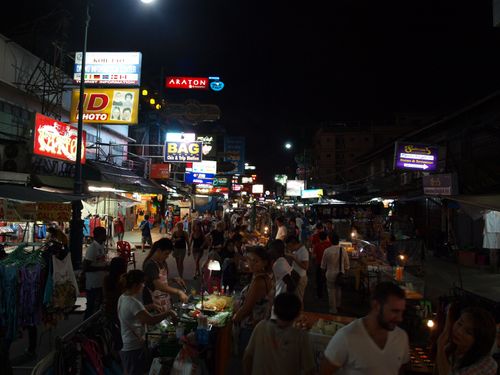
Bangkok’s backpacker carnival: curbside bars, live bands and DJs from 3pm–2am (midnight Sun). Street eats are cheap — pad thai 70–100 THB, mango sticky rice 60–100 THB. Come for wild people-watching; duck into Rambuttri for a calmer beer.
7-Eleven
Shops
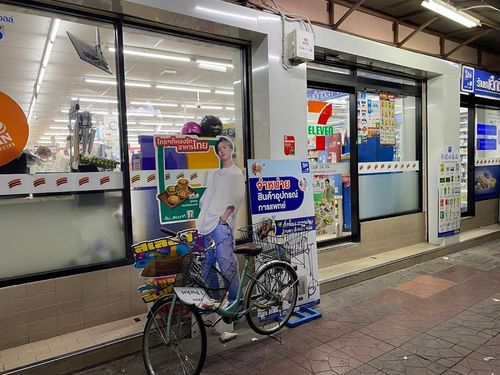
Khao San’s 24/7 reset button: ice‑cold A/C, ham‑cheese toasties, All Café iced lattes, water for 7–14 THB, and late‑night supplies from snacks to sunscreen—right by Rikka Inn.
Recommended Products
More Khao San Road Guides
- What to Pack for Thailand for Backpackers Visiting Rural Homestays and Village Stays
- Backpacker Packing List for Thailand’s Countryside: Small-Town Stays, Dirt Roads, and Rural Comforts
- What to Pack for Thailand for Rural Villages and Small-Town Stops: Modest, Practical Backpacker Essentials
- Backpacker Packing List for Thailand’s Remote Towns: Essentials for Small Places and Fewer Stores