
Best Hotels Near Yaowarat for MRT Access: Stay Close to Wat Mangkon and the Blue Line
The smart way to do Chinatown. Our guide to Yaowarat hotels MRT access near Wat Mangkon and Hua Lamphong — eat big, ride the Blue Line, skip the traffic.
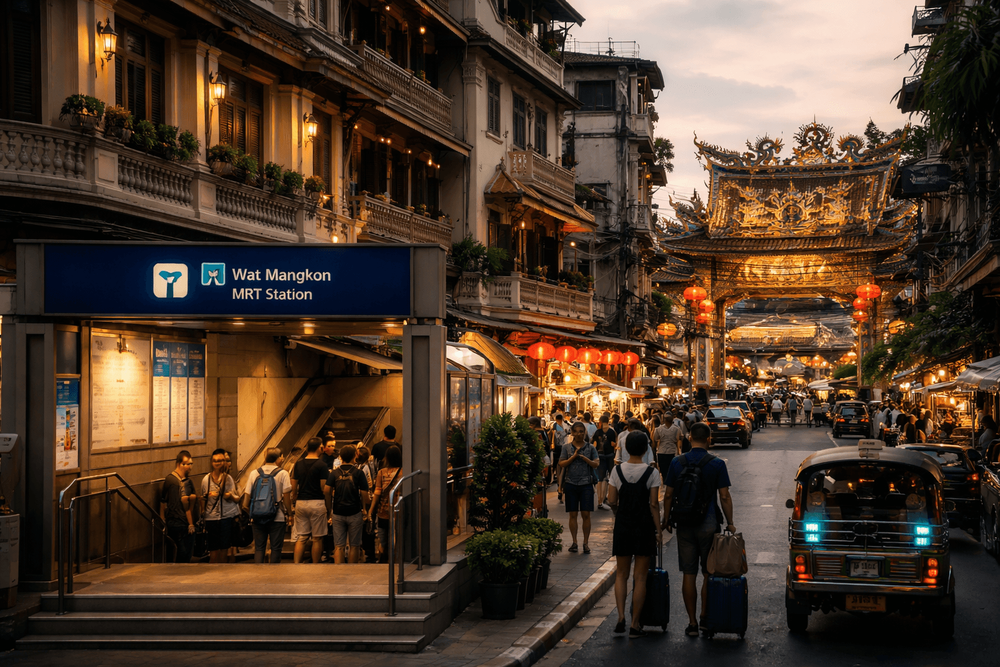
We pop up from MRT Wat Mangkon into a rush of gold and red — incense curling from Wat Mangkon Kamalawat, woks hissing on Yaowarat Road, a dragon lantern swaying overhead. This is why we chase Yaowarat hotels MRT access: step off the Blue Line and you’re in the thick of Bangkok’s most delicious chaos without the taxi tango.
Yaowarat hotels MRT access: why it matters
If you’re here to eat, wander, and squeeze maximum sanuk from a short stay, being near the MRT changes everything. The Blue Line is your no-fuss artery: clean, blessedly cool, and immune to Chinatown traffic. From Wat Mangkon or Hua Lamphong, we can ride to Sukhumvit’s malls and bars, Silom’s night markets, Chatuchak’s weekend sprawl, and the Airport Rail Link at Phetchaburi/Makkasan — all for pocket change compared to a tuk-tuk haggle.
A bonus most farang overlook: the MRT stations in this pocket let us bounce between Old Bangkok’s temples, the river piers, and the new-school cafés of Talat Noi without roasting on Yaowarat’s sidewalks. When the heat pounds and the durian carts start to sweet-rot, we duck underground, snag a 20–40 baht ride, and pop back up somewhere with AC and iced cha yen.
The most practical MRT stations for staying in Yaowarat
Wat Mangkon (Blue Line)
- Best for: being inside Chinatown proper, night street food, Soi Nana (the Chinatown Nana, not Sukhumvit), Talat Noi murals.
- Vibe: you exit into lanterns, herbs, and gold shops within a few minutes’ walk of Yaowarat Road. The station is purpose-built for Chinatown wanderers.
- Connections: From here, quick rides connect to Silom (si lom) for Sala Daeng/BTS, Sukhumvit (asok BST via Sukhumvit station), and Phetchaburi (walkway to Airport Rail Link Makkasan). Chatuchak Park is a straight shot for the weekend market.
Hua Lamphong (Blue Line)
- Best for: cheap rooms just outside Chinatown, early trains, Talat Noi’s river-edge lanes, and a calmer base with easy Yaowarat access.
- Vibe: more space, less crush. Walk 10–15 minutes or a short tuk-tuk to Yaowarat Road. Great if you want Blue Line access without sleeping above the wok sizzle.
- Connections: Same Blue Line reach as Wat Mangkon, plus easy rail transfers if you’re hopping north or to Ayutthaya another day.
Sam Yot (Blue Line)
- Best for: temple days in the Old Town. Not technically “in” Chinatown, but a quick hop places you by Phra Athit Road, the Golden Mount, and ferry links — handy if you split time between Yaowarat eats and Rattanakosin sights.
- Vibe: quieter streets by day, easy access to khlong-side neighborhoods. You’ll still want Wat Mangkon or Hua Lamphong for a true Chinatown stay.
Our favorite Yaowarat stays with easy MRT access
We’ve slept around Chinatown more times than we can count. These three picks balance location, value, and the kind of details that make a sweaty food crawl feel like a holiday.
For design lovers who want to roll out of bed into the markets
- We usually base ourselves at ASAI in Chinatown when we plan a full-on street food blitz. Rooms are compact and honest, but the location is lethal — a few minutes on foot to Yaowarat Road and an easy stroll to MRT Wat Mangkon. When we’re meeting friends for late bowls of duck noodles, this is home base. Check it out: ASAI Bangkok Chinatown.
For classic Chinatown vibes right on Yaowarat Road
- If you want to live over the neon dragons, we like to crash at this ornate spot set directly on the strip. You’ll hear the thump of bass drift up from the bars and catch the sizzle from the night hawkers — exactly the point. It’s a 7–10 minute walk to MRT Wat Mangkon, so you get the best of both worlds: lantern views at night, Blue Line by morning. Our go-to on the strip: Shanghai Mansion Bangkok.
For rail nerds and value hunters who like a buffer from the chaos
- When we’re catching an early train or we want slightly bigger sidewalks and gentler nights, we aim just east of Chinatown and plant ourselves by the station. It’s steps from MRT Hua Lamphong, a quick hop to Wat Mangkon, and perfect for Talat Noi rambles to the river. Solid transport-first choice: The Quarter Hualamphong by UHG.
If you want a broader sweep of options — from boutique gems to family-ready rooms — we also keep a running neighborhood guide here: Yaowarat (Chinatown), and a transit-friendly picks list here: Best Hotels Near Yaowarat (Chinatown) for Easy Street Food, MRT Access, and Old-Bangkok Exploring.
Who should book a Yaowarat hotel near the MRT?
Food-focused visitors
- You’re here to eat: oyster omelets, peppery boat noodles, mango sticky rice at midnight. Being near Wat Mangkon means we can snack from late afternoon until the grills die, then escape underground when the heat bites.
First-time Bangkok travelers
- Chinatown is Old Bangkok, loud and unfiltered. With MRT access, we can bounce to Sukhumvit’s skytrain in 10–20 minutes, day-trip to Chatuchak, then glide back to lantern-lit lanes for dinner without ever negotiating a fare.
Short-stay guests and red-eye arrivals
- Land late, sleep near the Blue Line, grab a coffee, and in two stops be changing money at Silom or shopping at Terminal 21 (via Sukhumvit/Asok). If we’re squeezing 36 hours in Bangkok, this is our move.
Families
- Sidewalks can be narrow and crowded, but a stroller-friendly base near Hua Lamphong or the calmer end of Yaowarat plus MRT access keeps things manageable. Trains are cool, clean, and predictable — priceless with kids.
Night owls and bar-hoppers
- Start on Soi Nana (Chinatown) for cocktails, drift to Talat Noi’s riverside nooks, then ride to Silom or Asok for a second round. MRT rides are cheap, frequent, and safer than late-night taxis.
Advantages and tradeoffs of prioritizing MRT access in Yaowarat
Big advantages
- Convenience beats traffic: Chinatown traffic can freeze. The MRT slices under it — we’re door-to-door faster and sweat less.
- Easy transfers: The Blue Line links to BTS at Asok (MRT Sukhumvit ↔ BTS Asok) and Silom (MRT Si Lom ↔ BTS Sala Daeng), and to the Airport Rail Link via Phetchaburi ↔ Makkasan walkway.
- Range without rideshare: Want temples by day and craft cocktails by night? No need to hail anything.
- Heat management: That blast of MRT AC saves us. Pop up for 7-Eleven ice water, back down to cruise across town.
Real talk tradeoffs
- Noise and neon: Sleep right on Yaowarat Road and you’ll hear it — scooters, ladles clanking, bass from a bar. If you’re light-sensitive, pick a place just off the strip or ask for a room away from the road.
- Smaller rooms: Many central properties go compact. If you want space, look just east by Hua Lamphong.
- Crowds: Wat Mangkon station can get jammed at peak food hours and weekends. It’s part of the fun, but plan five extra minutes.
- Limited river access: The MRT doesn’t run along the Chao Phraya. For boats, we walk or tuk-tuk to Ratchawong Pier, then hop the Chao Phraya Express boat.
Booking tips for MRT-accessible Yaowarat stays
What we look for
- Walk time to the station: Under 10 minutes to Wat Mangkon or Hua Lamphong feels golden in the heat.
- Window situation: Some Chinatown rooms are windowless. Great for sleep, strange for mornings. We always check.
- Elevator and luggage: Old shophouse conversions can be charming — and stair-heavy. If we’re hauling a suitcase, we verify there’s a lift.
- Aircon and water pressure: Non-negotiables. Reviews tell the truth.
Room rate reality check
- Standard doubles near Wat Mangkon hover roughly 1,200–2,800 baht on normal nights, trending higher on weekends and holidays. Design-forward or boutique options can run 3,000–5,000 baht+. Just outside the core by Hua Lamphong, expect more value: 900–1,800 baht deals pop up often.
- Family rooms and connecting options are less common in the tightest part of Chinatown; we’ve had better luck near Hua Lamphong or in larger river-facing properties a short ride away.
Landmarks and micro-neighborhoods to aim for
- Wat Mangkon Kamalawat: for pure Chinatown atmosphere and night food runs.
- Soi Nana (Chinatown): compact cocktail stretch and late-night bites — not to be confused with Sukhumvit’s Nana.
- Talat Noi: arty backstreets, riverside warehouses, car-part shops, and café crawls; good access from either station.
- Odeon Circle (Chinatown Gate): photogenic landmark and an easy orientation point when giving a taxi your soi.
- Ratchawong Pier: handy for the Chao Phraya Express boats to Tha Tien (Wat Pho), Tha Chang (Grand Palace), or north to Phra Athit Road.
How the Blue Line connects your trip
We plan days around painless transfers:
- Sukhumvit/Asok: MRT Sukhumvit connects to BTS Asok. That’s Terminal 21, EmQuartier via one more BTS stop, and a million lunch options.
- Silom/Sala Daeng: MRT Si Lom to BTS Sala Daeng gets us to Lumpini Park mornings and Patpong Night Market later.
- Phetchaburi/Makkasan: The walkway between MRT Phetchaburi and the Airport Rail Link Makkasan station gives a train-to-train path for airport runs or hotel check-ins.
- Chatuchak Park/Mo Chit: Weekend market days are easy — Blue Line straight there, then BTS if we’re pushing farther north.
- Tao Poon: switch to the Purple Line if we’re feeling adventurous toward Nonthaburi.
MRT fares are friendly — most of our trips run under 42 baht per person, with stored value cards shaving off time at gates. Single-journey tokens work fine for short stays.
Getting there by rail, skipping the taxi shuffle
From Suvarnabhumi (BKK)
- Ride the Airport Rail Link to Makkasan, follow signs for the walkway to MRT Phetchaburi, then take the Blue Line to Hua Lamphong or Wat Mangkon. It’s an easy, all-rail route that keeps us out of the tollway.
From Don Mueang (DMK)
- Quickest for most: bus or shuttle to BTS Mo Chit, cross to MRT Chatuchak Park, then Blue Line to our stop. If we’re traveling light and it’s off-peak, a taxi can be fine — just insist on the meter.
Around the neighborhood
- By foot: Yaowarat is best walked. We snake through sois, follow our noses to peppery soups, then wiggle back to the MRT when the heat kicks up.
- By boat: For temple days, we like the Chao Phraya Express from Ratchawong Pier. It’s breezy, cheap, and more fun than gridlocked roads.
Sample day using a Yaowarat MRT base
- Morning: Coffee in Talat Noi, then Blue Line to Si Lom and a stroll through Lumpini Park. Back underground for an air-conned hop to Sukhumvit for lunch.
- Afternoon: Rest in the room (or the blessed blast of AC at 7-Eleven), then we ride back to Wat Mangkon just before dusk.
- Night: Snack crawl down Yaowarat Road — peppered crab, torch-blistered meringue desserts — then cocktails on Soi Nana. When our shirt sticks and the bass thumps, we slide back to the Blue Line and home in minutes.
Where we’d book tonight
If the goal is to eat like kings and ride like locals, we’d lock in a room walking distance to Wat Mangkon. For design and unbeatable Chinatown proximity, we lean ASAI Bangkok Chinatown. If we want old-school lantern views from the bed, Shanghai Mansion Bangkok scratches the itch. Catching an early train or craving a calmer night? We’d plant ourselves by The Quarter Hualamphong by UHG and let the Blue Line do the heavy lifting tomorrow.
We’ll see you under the red lanterns — meet us by the MRT gates, and bring an appetite.
Related Hotels & Places
More Khao San Road Guides
- Best Hotels Near Yaowarat (Chinatown) for Food Lovers, Night Markets, and Easy MRT Access
- Best Hotels Near Yaowarat (Chinatown) for Easy Street Food, MRT Access, and Old-Bangkok Exploring
- Best Boutique Hotels Near Yaowarat (Chinatown) for Couples, Foodies, and Easy MRT Access
- Best Family-Friendly Hotels Near Yaowarat (Chinatown) with Bigger Rooms and Easy Old Bangkok Access