
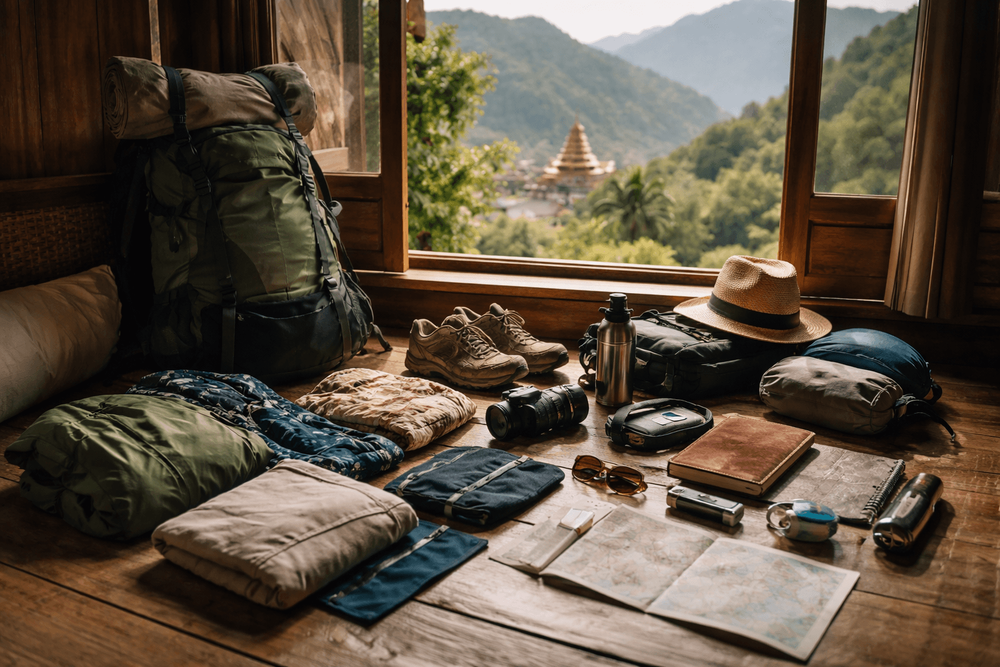
What to Pack for Thailand for Backpackers Visiting Northern Thailand: City, Mountain, and Overnight Bus Essentials
Backpacker-tested Northern Thailand packing list: layers for cool mountains, temple-ready outfits, rain gear, and overnight bus essentials without overpacking.
We step off the overnight bus at Chiang Mai Arcade just before dawn, the air crisp enough to make our Bangkok sweatshirts feel justified for once. A monk in saffron robes ghosts past on a bicycle, a tuk-tuk idles with a soft putter, and 7-Eleven’s blast of AC beckons like a lighthouse. If you’re chasing temples, waterfalls, and winding mountain roads, this Northern Thailand packing list will keep your bag lean and your trip sanuk.
Know Before You Pack: Northern Realities
Northern Thailand is the land of contrasts. Chiang Mai’s Old City afternoons hit 32–36°C in hot season, then drop to 15–20°C after dark in cool season. Up in the mountains around Doi Inthanon, Mae Chaem, Pai Canyon, or Phu Chi Fa, dawn can nip at 8–12°C in December–January. Rainy season (roughly June–October) delivers warm showers that turn trails into slip ‘n slides. Add the “burning season” haze in March–April, plus temple dress codes, and your Northern Thailand packing list needs smart layers, quick-dry fabrics, and a few road-warrior comforts for long buses and trains.
- Money-saving note: Laundry is cheap and everywhere — expect 40–60 baht per kilo for wash-and-fold in Chiang Mai. Pack light and launder often.
- Transport reality: Night buses crank the AC. Bring a layer you’ll actually wear later up north — not a throwaway hoodie.
Northern Thailand Packing List: Clothing by Season
Cool Season (roughly Nov–Feb): Warm Days, Chilly Nights, Mountain Mornings
- Lightweight fleece or insulated mid-layer: Think 200g fleece or a thin synthetic puffy; it stuffs into a daypack for sunrise viewpoints.
- Long pants you can walk in: Quick-dry trekking pants beat jeans. You’ll appreciate them on scooters and temple days.
- Temple-ready tops: Shoulders and knees covered. A light cotton or linen button-up works for both modesty and sun.
- Base layers (optional but nice at altitude): A thin long-sleeve or merino tee for Doi Inthanon sunrises or a night in a hill village.
- Socks you actually like: Warm-ish for mountains; ankle socks for city wandering.
- Closed shoes: Lightweight trainers or trail runners handle city, stairs, and dirt paths. Sandals alone can be chilly at 1200m.
- Scarf or sarong: Modesty at temples, warmth on buses, picnic blanket at Nong Buak Hard Park.
Hot Season (roughly Mar–May): Shade Is Your Best Friend
- Breathable tees or tanks: Quick-dry or cotton — pack 3–4 and rotate with laundry shops.
- Loose long-sleeve “sun shirt”: Beachy fabric that keeps the rays off when scootering Pai to Pang Mapha.
- Shorts you can sit cross-legged in: Keep them mid-thigh or longer for cultural comfort.
- Light skirt or pants for temples: Knee coverage required; easy slip-on pieces make life easier.
- Sandals with grip: Wet market tiles are sneaky. Go for a strap, not flimsy flip-flops.
- Sun armor: Crushable hat, polarized sunnies, and high-SPF sunscreen.
Rainy Season (roughly Jun–Oct): Warm, Wet, Green
- Packable poncho (30–60 baht at 7-Eleven) or a light rain jacket: Poncho covers your daypack on a scooter, jacket breathes better for hikes.
- Quick-dry everything: Shorts, tees, underwear. Cotton gets sulky when damp.
- Fast-dry towel: Microfiber wins for hostel showers and waterfall dips.
- Spare sandals or water shoes: Huay Kaew or Bua Thong waterfalls get slick; a grippy sole is your best friend.
All-Season Temple Kit
- Cover-up strategy: A sarong plus a light tee solves dress codes fast at Wat Phra Singh Woramahawihan, Wat Chedi Luang, and Chiang Rai’s Blue Temple.
- Slip-on footwear: You’ll remove shoes a lot. Sandals with a heel strap = quick off, no lost flip-flops.
Must-Have Gear for City Rambles, Treks, Waterfalls, and Long Rides
Daypack and Organizers
- 18–25L daypack: Enough for a fleece, water, snacks, and a rain layer on the Mae Sa waterfall trail.
- Packing cubes or stuff sacks: Keep clean/damp/dusty separate. Red clay and market smells are real.
- Dry bag (5–10L): 150–300 baht at Warorot Market. Saves phones and passports during sudden showers and Songthaew splashback.
Water, Power, and Light
- Reusable bottle (750ml–1L): Fill at hostels or water stations; Northern tap water isn’t potable. Electrolyte packets help on hot days.
- Power bank (10,000–20,000 mAh): Train outlets are moody; Google Maps up to Doi Suthep eats battery.
- Headlamp: Gold in hill villages and hostel dorms — beats the phone torch when you’re fumbling for chargers at 2 AM.
City and Scooter Essentials
- Lightweight jacket or windbreaker: Night bus AC and mountain wind on the Pai road (Route 1095) are legit.
- Buff or mask: Great for dust on the scooter and handy in smoky March–April.
- International driver’s permit: Saves headaches at checkpoints on 1095 and around Samoeng Loop.
Trekking, Temples, and Waterfalls
- Footwear: Trail runners or sturdy trainers; throw in sandals for river crossings.
- Trekking poles (collapsible, optional): Knees will thank you on steep clay descents in rainy season.
- Microfiber towel: Doubles as temple cover, waterfall mat, bus pillow.
- Compact first-aid: Blister plasters, bandages, antiseptic wipes, ibuprofen.
Sleep and Long-Haul Comfort
- Eye mask + earplugs: The thump of bass from a Khao San bar is cute until your 6 AM train to Chiang Mai.
- Thin sleep liner (optional): Cozy in guesthouses or hill tribe homestays where nights cool off.
- Neck pillow (compressible): Saves your spine on Mo Chit–Chiang Mai buses.
Buy Local vs. Bring From Home
- Easy to buy in Thailand: Rain ponchos (30–60 baht), umbrellas (100–150 baht), dry bags (150–300 baht), sarongs (100–200 baht), insect coils (20–30 baht).
- Bring from home: Quality sunscreen (often pricier with whitening agents locally), comfortable walking shoes, specific meds, and a well-fitting daypack.
If you need a broader country-wide checklist before you hone in on the north, we’ve broken that down here: Backpacker Packing List for Thailand.
Health, Safety, and Practical Musts
- Insect repellent: DEET 15–25% or picaridin for dusk by the khlongs and rural stays. Mosquitoes love ankles.
- Sunscreen SPF 50+: Reapply — mountain sun sneaks up at altitude and on scooters.
- Med kit: ORS (oral rehydration salts), loperamide for emergencies, antihistamine for bites, painkillers, a few rehydration sachets, and any prescriptions in original packaging.
- Hand sanitizer + tissues: Many rural bathrooms are BYO paper.
- Lightweight umbrella: Doubles as portable shade in hot season.
- Waterproof phone pouch (100–200 baht): For waterfalls and surprise downpours.
- N95/FFP2 mask (seasonal): Burning season haze can sting the throat; pack at least one.
- Travel insurance docs: Screenshots saved offline. You don’t pack insurance — until you wish you had.
- Power adapter: Thailand runs 220V, 50Hz. Outlets often accept flat or round two-pin; a slim universal adapter with surge protection plays nice everywhere.
- SIM and data: Tourist SIMs are easy at Chiang Mai Airport or MAYA Lifestyle Shopping Center — bring an eSIM or unlock your phone at home.
For deep-dive layering and road tips up in the highlands, we also put together this focused checklist: Backpacker Packing List for Thailand’s Northern Highlands: Cool Mornings, Mountain Roads, and Layering Basics.
Packing for Trip Styles: Chiang Mai, Chiang Rai, Pai, and Hill Villages
Chiang Mai City Days
We’ll temple-hop (Wat Phra Singh to Wat Suan Dok), snack through Nimmanhaemin coffee bars, and finish on Phra Athit Road’s northern cousin — Chiang Mai’s riverside bars by the Ping. Pack:
- Modest wear for temples (sarong + light tee). Some temples loan cover-ups, but not all.
- Comfy sandals and one closed shoe.
- Daypack, water, power bank.
- Light rain layer even in dry months; mountain storms roll in fast.
Chiang Rai Wanderings
White Temple (Wat Rong Khun), Blue Temple, Black House — lots of sun on white tiles and open courtyards. Add:
- Polarized sunglasses and a brimmed hat.
- Extra water and sunscreen.
- Quick-dry pants or skirt in case afternoon showers hit before the bus back to the Night Bazaar.
Pai and the 762 Curves
Route 1095’s curves demand small bags. Scooter days mean long sleeves for sun, and cool nights need a fleece.
- Windbreaker or fleece for canyon sunsets.
- Buff/mask for dust.
- Dry bag for sudden rain squalls on the scooter.
Hill Tribe Homestays and Treks (Mae Taeng, Mae Wang, Mae Hong Son)
Respect and comfort go hand in hand.
- Modesty matters: Shoulders and knees covered in villages. Leave the short-shorts in the bag.
- Headlamp and spare battery: Paths are unlit.
- Sleep liner and warm socks: Nights can be chilly on bamboo floors.
- Small gifts aren’t required; if you want to support, buy local handicrafts in the village rather than bringing items from outside.
- Biodegradable soap/shampoo if washing in streams.
If your route swings between Bangkok’s heat and the mountain cool, cross-check our broader notes here too: Thailand Packing List for Backpackers in Northern Thailand: Mountains, Cooler Nights, and Long-Distance Travel.
Common Packing Mistakes (and How We Keep It Light)
- Overpacking jeans: They’re heavy, slow to dry, and miserable in rain. One pair max, or none.
- Too many shoes: One sneaker/trail runner + one sandal. That’s it. Your back will thank you on the walk from Chiang Mai train station.
- Ignoring temple rules: Pack one dedicated modest outfit. Saves you from renting itchy cover-ups.
- Forgetting a real warm layer: Night buses and mountain sunrises punish the unprepared.
- Skipping rain protection in “dry” months: The weather didn’t read your itinerary.
- Giant hard-shell suitcase: Songthaews and guesthouse stairs hate them. A 40–50L backpack is easiest for the 762 curves to Pai.
- Not prepping for laundry: With 40–60 baht/kg wash-and-fold, you only need 5–7 days of clothes.
- Buying the cheapest knockoff gear: A 60-baht poncho is fine; a 120-baht “waterproof” daypack isn’t. Trust seams and zips for treks.
Our Keep-It-Light System
- The “3x top, 2x bottom” rule: Three shirts, two shorts/pants, plus a temple set and sleepwear.
- One multi-use warm layer: A fleece that rides buses, hikes mountains, and moonlights as a pillow.
- Two bags: Main pack + daypack. Dry bag lives inside the daypack.
- Toiletries under 250ml total: You’ll re-up at 7-Eleven anyway.
- Paper copies backed up to the cloud: Passport photo page, visas, insurance.
Sample 40–50L Backpack Loadout
- Tops: 2 quick-dry tees, 1 long-sleeve sun shirt, 1 merino or breathable long-sleeve for cool nights.
- Bottoms: 1 trekking pant, 1 quick-dry short, 1 temple-appropriate pant/skirt.
- Layers: 1 lightweight fleece or thin puffy, 1 buff/scarf.
- Footwear: 1 trail runner/sneaker, 1 sandal with grip.
- Rain: 1 poncho or light jacket + compact umbrella.
- Accessories: Microfiber towel, hat, sunglasses, dry bag, packing cubes.
- Tech: Power bank, universal adapter, cables, headlamp.
- Health: Med kit, repellent, sunscreen, tissues, sanitizer, electrolytes, mask (seasonal).
- Paperwork: Passport, copies, SIM/eSIM details, driver’s permit if renting a scooter.
Prices, Where to Buy, and Street-Savvy Tips
- Markets: Warorot Market (Kad Luang) in Chiang Mai is gear central — dry bags, sarongs, cheap umbrellas. Expect 150–300 baht for a small dry bag, 100–200 baht for sarongs.
- Convenience: 7-Eleven for ponchos (30–60 baht), tissues (10–20 baht), electrolytes (12–20 baht), and that lifesaving iced Americano before a 6 AM minibus.
- Outdoor shops: Chiang Mai’s old city and Nimman have a few legit trekking stores if you need better socks or a real rain shell.
- SIMs: Airport counters are painless; city malls can be cheaper. Keep your passport handy for registration.
- Money: ATMs charge a foreign fee (often 220–250 baht). Withdraw more, less often; stash a 500 baht note in your daypack’s secret pocket.
Final Word: Pack Like We Travel the North
We aim for a bag that rolls with the punches — sunrise chills at Doi Suthep, midday scorch at Wat Chedi Luang, a muddy turn on a Pai backroad, then a night bus home under Arctic AC. With this Northern Thailand packing list, you’ll glide from city soi to mountain ridge without feeling like a pack mule. We’ll see you at the waterfall — we’ll be the ones with dry socks and a smug little dry bag.
Related Hotels & Places
7-Eleven
Shops
Khao San’s 24/7 reset button: ice‑cold A/C, ham‑cheese toasties, All Café iced lattes, water for 7–14 THB, and late‑night supplies from snacks to sunscreen—right by Rikka Inn.
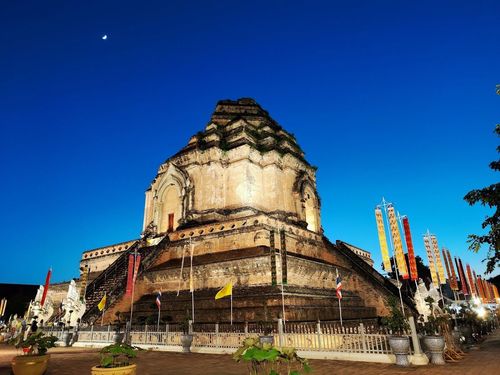
Wat Chedi Luang
Temples
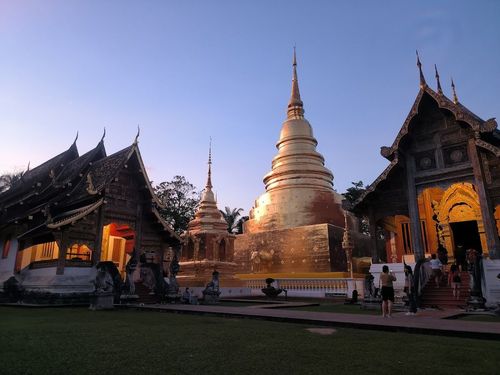
Wat Phra Singh Woramahawihan
Temples
Wat Suan Dok
Temples
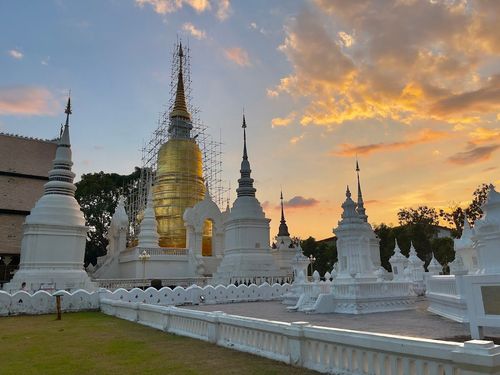
Golden chedi, white royal mausoleums, and sunset light made for photos. Quiet, working monastery with Monk Chat most Mon/Wed/Fri 5–7pm. Free entry; dress modestly. 10 minutes west of the Old City on Suthep Road.
MAYA Lifestyle Shopping Center
Shops
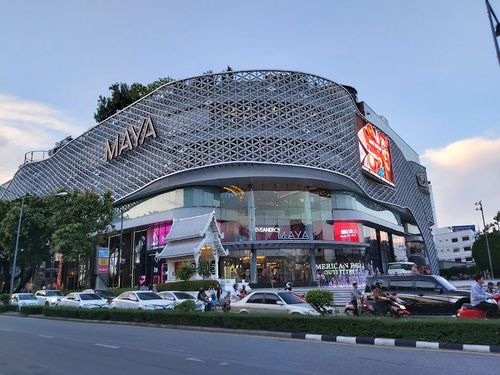
Nimman’s landmark mall for air‑con pit stops and sunset views. Indie Thai brands, cafés and a reliable food court, plus a multiplex cinema upstairs. Open daily 10am–10pm at the Huay Kaew x Nimmanhaemin junction.
More Khao San Road Guides
- What to Pack for Thailand Backpacking for Long Bus and Train Days: Comfort, Security, and Overnight Ride Essentials
- Backpacker Packing List for Thailand: Chiang Mai and Northern Mountain Trip Essentials for Cooler Nights and Trekking
- Thailand Packing List for Backpackers in Northern Thailand: Mountains, Cooler Nights, and Long-Distance Travel
- Backpacker Packing List for Thailand for Night Buses and Overnight Trains: Sleep, Security, and Small-Bag Essentials