
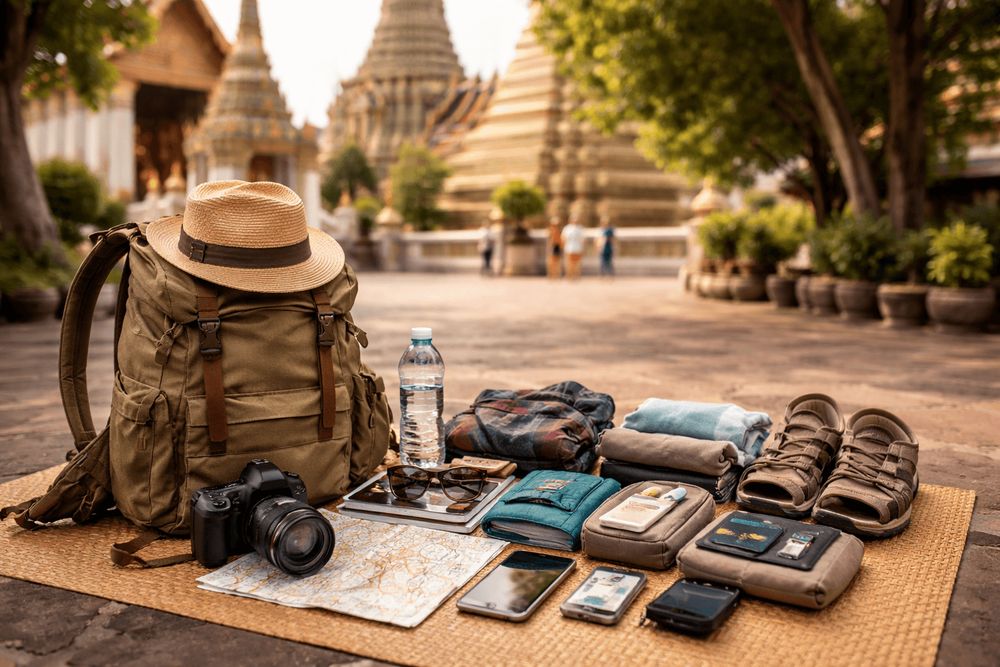
Backpacker Packing List for Thailand: What to Bring for Temple Days and Royal Attractions
Pack light, dress respectfully, and beat the Bangkok heat. Our Thailand temple day packing list covers modest outfits, day-bag essentials, and heat-proof hacks.
We’re standing on Soi Rambuttri just after dawn, iced coffee sweating in one hand, day bag in the other, tuk-tuks coughing awake like dragons in the heat. The plan: a full loop of wats and royal sites—Wat Phra Kaew’s reclining Buddha, the Grand Palace’s gilded dazzle, maybe over the river to Wat Arun for sunset. Bangkok doesn’t forgive a sloppy pack. We’ve built this Thailand temple day packing list so we glide through dress codes, shoe-removal zones, and the midday furnace without wilting—or offending anyone’s grandma.
Data Freshness + Pricing:
- Prices are approximate and in THB.
- Last checked: June 2026.
- Happy hour and promo details change frequently—confirm locally.
Your Thailand Temple Day Packing List (the essentials)
Modest clothing that still breathes
Thai temples (wat) and royal attractions expect respectful dress. Shoulders and knees covered—on everyone. No cleavage, crop tops, ripped shorts, or see-through bits. You don’t need to cover your head in Buddhist temples here—save headscarves for mosques—but do remove hats indoors and in ubosots (ordination halls).
Here’s what works in Bangkok humidity without looking like a farang who dressed in the dark:
- Lightweight, moisture-wicking tops with sleeves (short or long). Think airy linen or technical tees.
- Pants or skirts below the knee. Flowy culottes, linen trousers, or a midi skirt are our go-tos.
- A thin scarf or sarong—your emergency fix if a guard side-eyes your sleeves or hem.
- A spare lightweight tee in a zip bag; changing after Wat Pho’s massage is pure bliss.
Approx costs if you need to buy on the fly: breathable t-shirts 120–250 THB from market stalls, cotton sarongs 100–200 THB, linen-blend pants 250–500 THB. At the Grand Palace, on-site sarong rentals or shop buys can run higher (approx 200–400 THB), so pack your own.
For deeper dive on respectful outfits and why some sites are stricter than others, see our guide: Thailand Packing List for Temple Visits: What to Wear and Carry for Culturally Respectful Travel.
Footwear strategy: on, off, repeat
You’ll be slipping shoes off and on all day. Go for:
- Slip-on sneakers, airy loafers, or sport sandals you can kick on/off fast.
- Pack thin socks in your bag—temple tiles get sun-hot and sandy. Socks on, shoes off is totally normal.
- Avoid heels, broken flip-flops, and anything that blisters. Expect 10k–15k steps without trying.
If you need a backup pair, cheap canvas slip-ons run approx 150–300 THB at markets, and decent sandals 400–900 THB. Many indoor temple areas require covered toes or at least proper sandals; play it safe with neat, sturdy footwear.
Cover-ups that pass every doorway
- Sarong or large scarf (light, neutral). Works as shoulder cover, knee curtain, or emergency sun shield.
- Cardigan or ultralight UV shirt. AC in museums can be Arctic.
Sun armor and glare control
- Wide-brim hat or cap (remove indoors).
- Polarized sunglasses.
- High-SPF sunscreen (SPF 50+). Local brands start around 150–300 THB; imported tubes can be 350–700 THB.
Practical gear for a full day of temple-hopping
The right day bag
We like a compact, zippered cross-body or small daypack (10–18L) with an inside pocket for passport and cash. Rain-resistant helps. Keep it front-facing in crowds around Sanam Luang and the Grand Palace.
Want a tighter checklist of what actually earns space in your bag? Read: Thailand Packing List for Backpackers: Day Bag Essentials for Flights, Temples, and Tours.
Hydration and heat management
- Reusable bottle (750 ml–1L). Top up at your guesthouse or cafes.
- Electrolyte packets for the midday furnace (approx 10–20 THB per sachet in 7-Eleven).
- Sunscreen re-up every 2–3 hours.
- Lip balm with SPF.
Bottled water is easy: 7-Eleven small bottles 10–15 THB, big ones 20–25 THB. Fresh coconut near Tha Tien pier is approx 30–60 THB and doubles as a vibe reset.
Cash, cards, and tiny things that matter
- Cash: small notes and coins for ferries (5–10 THB), Chao Phraya Express Boat (approx 16–20 THB for the orange flag), and temple donations (20–100 THB). Grand Palace entry is approx 500 THB; Wat Pho approx 200 THB; Wat Arun approx 100 THB.
- ATM card (watch foreign fees) and a backup card stashed separately.
- Passport or a photocopy. Some royal sites may ask for ID with tickets.
- Pen for forms (occasionally useful) and a slim coin purse.
Power and connectivity
- Power bank (10,000 mAh).
- Short charging cable and wall plug.
- Local SIM with data or eSIM so Grab rides and maps don’t ghost you.
Quick fixes and mini comforts
- Tissues and wet wipes (temple toilets vary). Pocket packs are 10–20 THB.
- Hand sanitizer.
- Compact deodorant or wipes for mercy-freshening.
- Band-aids and a dab of blister paste.
- Tiny sewing kit or safety pin—sarongs have comic timing.
Comfort in heat, rain, and long walking days
Bangkok gives you everything at once: heat that hugs, sudden rain that slaps, and a breeze when you finally reach the river. Pack these to keep your cool.
- Compact umbrella or poncho. Street ponchos are approx 20–40 THB; sturdier ones 80–150 THB.
- Lightweight, quick-dry layers. Cotton soaks; synthetics survive.
- Foldable handheld fan (manual or battery). The handheld electric ones go for approx 120–250 THB; worth every satang when the sun is chewing your soul.
- Cooling towel you can wet at a sink and drape around your neck.
- Insect repellent for riverside and khlong edges (DEET or picaridin). Sprays cost 80–200 THB.
- Microfiber towel (small). Doubles as seat on hot steps.
- Spare socks in a zip bag. Slipping into fresh socks before Wat Arun stairs is a religious experience.
Food breaks matter: street pad thai around Maharat Road is approx 50–80 THB, grilled pork skewers 10–20 THB each, and iced Thai tea 25–40 THB. Fuel early, often, and happily.
Temple etiquette and security: what your pack should consider
Shoes off, respect on
- Expect to remove shoes before entering main halls. Look for the shoe racks; if in doubt, watch locals.
- Point your feet away from Buddha images when seated. Kneel or sit side-on.
- Hats off indoors; sunglasses off in front of monks and elders.
- Keep voices low; phone on silent; no calls in prayer halls.
- Photography rules vary. Some ubosots and murals are no-photo. Always ask or read the sign. Drones are a hard no.
Dress code checkpoints
- Security may eyeball hems and sleeves at the Grand Palace, Wat Phra Kaew, and certain royal museums. Your scarf/sarong is your quick fix.
- Avoid athletic shorts, spaghetti straps, and ripped denim. If your shirt is borderline sheer in backlight, throw on a light overshirt.
For more cultural do’s and don’ts—and exactly what to wear when—bookmark: What to Pack for Thailand Temple Visits and Cultural Sites.
Keep valuables boring
- Cross-body or front-worn daypack with zips. Crowds around the Grand Palace and Tha Tien can be thick.
- Don’t stash everything in one place. Split cash/cards between bag and hidden pocket.
- Common scam watch: “The Grand Palace is closed” line outside Sanam Luang. It’s almost never true; check the official gate. If a tuk-tuk offers a 40 THB city tour, expect gem shops and tailors. Smile, wai, and walk on.
Hostels and guesthouses usually provide lockers; bring a small padlock (approx 60–120 THB) so your bag naps safely while you chase chedis.
Seasonal and itinerary-specific tips
Hot season (Mar–May)
- Extra electrolytes and a second shirt.
- Ultralight long sleeves can beat sun better than bare skin.
- Plan shade breaks: museum rooms at the Grand Palace and cloisters around Wat Pho are heat sanctuaries.
Rainy season (May–Oct)
- Umbrella beats poncho if you’re taking photos; poncho wins on scooters or boats.
- Quick-dry shoes or sandals with grip. Marble steps get slick.
- Dry bag or zip bags for phone and passport. Sudden bursts around 2–4 pm are classic.
Cool season (Nov–Feb)
- Still warm by day, but bring a thin layer for night ferries on the Chao Phraya. AC buses and malls are Antarctic.
Bangkok vs. Chiang Mai vs. ruins runs
- Bangkok: Dress codes at royal sites are stricter; your sarong and sleeves matter most here.
- Chiang Mai: Old City wats are more relaxed but still modest; lots of shoe-off moments on wooden floors—pack those socks.
- Ayutthaya & Sukhothai: Sun exposure is brutal among the ruins. Add extra water, hat, sunscreen, and a cooling towel. Bike hire is common; secure bag straps.
- Isaan (Northeast): Rural temples can feel more conservative; avoid tight or flashy clothing. Offer a soft wai and a smile—sawadee kaa/krub goes far.
- Southern temples: Mix of Buddhist wats and mosques. For mosque visits, bring a scarf for women and wear full-length trousers/skirts; men, covered knees and shoulders.
Festival days change the game. Lines grow, dress gets more formal, and shoes multiply on racks. If you’re temple-hopping during Makha Bucha, Visakha Bucha, or Loy Krathong, pack extra patience and a tighter kit. Our festival checklist helps you prep respectfully: Backpacker Packing List for Thailand’s Buddhist Festivals and Ceremony Days: Respectful Clothing and Event Essentials.
Getting between temples without melting
- Chao Phraya Express Boat (orange flag): Fast, breezy, and cheap—approx 16–20 THB per ride. Hop on at Phra Arthit for Wat Pho/Wat Arun access via Tha Tien/Tha Chang.
- Cross-river ferries: approx 5–10 THB to ping between Wat Pho/Tien and Wat Arun.
- Tuk-tuks: Fun for short hops, but agree a price first. A 5–10 minute ride should be approx 80–150 THB depending on traffic and your bargaining smile.
- Metered taxis: Reliable with AC. Insist on the meter. Short inner-city hops usually land 60–120 THB.
- Grab/Gojek: Easy with a local SIM, handy in rain.
When the sun gets feral, we duck into 7-Eleven for that blast of AC, a 15 THB water, and a quick sanity regroup. Then back out for the next wat—sanuk resumes.
Know before you go: tiny tactics that save the day
- Start early. Hit Wat Pho at opening (usually 8:00 am) before the buses.
- Time the Grand Palace for mid-morning on weekdays if you can. Expect strict checks.
- Eat little and often. Heavy lunches make for sluggish afternoons.
- Pack trash back out. Bins aren’t always near prayer halls.
- Learn three phrases: sawadee (hello), khop khun (thank you), and kor thot (sorry/excuse me). Politeness opens doors.
Where we reset between temple days
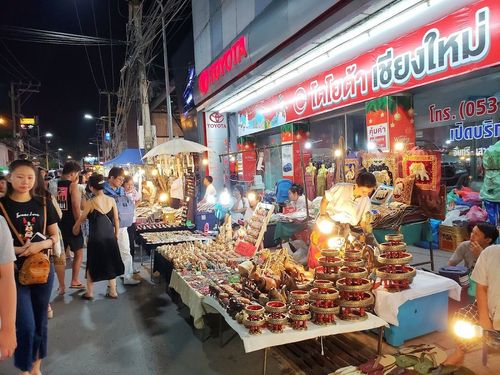
We like to base ourselves near Tha Phae Walking Street—quiet enough to sleep, close enough to stroll to the river. Midday, we retreat for a swim if our place has a pool, cold shower if it doesn’t, and a power nap under a ceiling fan before rallying for golden hour at Wat Arun. If you’re coming in peak heat, look for spots with decent shade, a balcony breeze, or at least a lobby that doesn’t smell like your damp socks.
If you’re still building your bigger kit for Thailand beyond temple days, our backpacker master list keeps weight low and fun high: Backpacker Packing List for Thailand.
Quick recap checklist (throw this in your notes)
- Modest top with sleeves + below-knee bottoms
- Sarong or large scarf
- Slip-on shoes + thin socks
- Hat, sunglasses, SPF 50+
- Refillable bottle + electrolytes
- Compact umbrella/poncho
- Cross-body day bag with zips
- Cash (small notes/coins), backup card, passport copy
- Power bank + cable
- Tissues, sanitizer, wipes, mini first-aid
- Insect repellent, cooling towel, spare tee

We’ll meet you by the river at sunset—orange flag boat skimming past, temple bells soft in the haze, and our bags light but dialed. Pack smart, move early, and the city opens like a lotus.
Related Hotels & Places
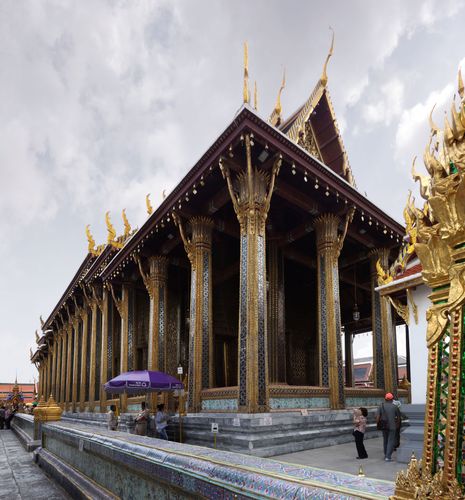
Wat Phra Kaew
Temples
Bangkok’s holiest temple inside the Grand Palace. Go early (8:30am–3:30pm). Buy the 500 THB ticket at Na Phra Lan Rd gate. Dress code enforced. Marvel at Ramakien murals and the tiny Emerald Buddha whose robes change with the seasons. 10–15 minutes’ walk from Khao San.
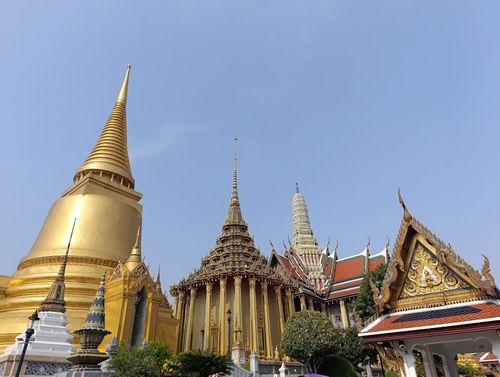
The Grand Palace
Attractions
Bangkok’s royal showpiece a short hop from Khao San: glittering Wat Phra Kaew, Ramakien murals, and gold-on-gold rooftops. Go 8:30am to dodge the heat, dress modestly, and boat to Tha Chang for the prettiest arrival.
Wat Arun Ratchawararam Ratchawaramahawihan
Temples
Wat Phra Chetuphon Wimon Mangkhalaram Rajwaramahawihan
Temples
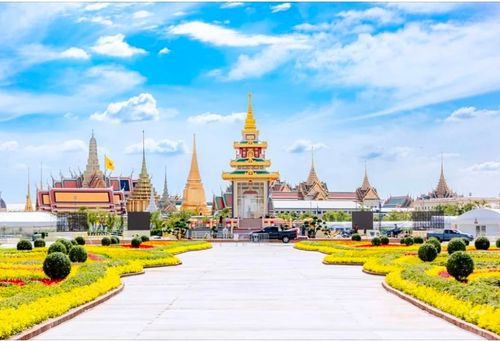
Sanam Luang
Attractions
Bangkok’s royal lawn facing the Grand Palace. Free to wander, ringed by tamarind trees, popular for kite flying (Feb–Apr) and lazy green‑space hangs. A 10‑minute walk from Khao San; come early for soft light and street snacks along Na Phra That Rd.
Tha Phae Walking Street
Shops
Recommended Products
More Khao San Road Guides
- Thailand Packing List for Backpackers Visiting Temples, Shrines, and Royal Sites
- Thailand Packing List for Backpackers Visiting Temples and Sacred Sites
- Backpacker Packing List for Thailand’s Temple-and-Transit Days: Easy-Remove Layers, Modest Basics, and Carry-On Organization
- Backpacker Packing List for Thailand’s Sunrise Temple and Early-Morning Travel Days: Modest Clothes, Light Layers, and Fast-Access Essentials