
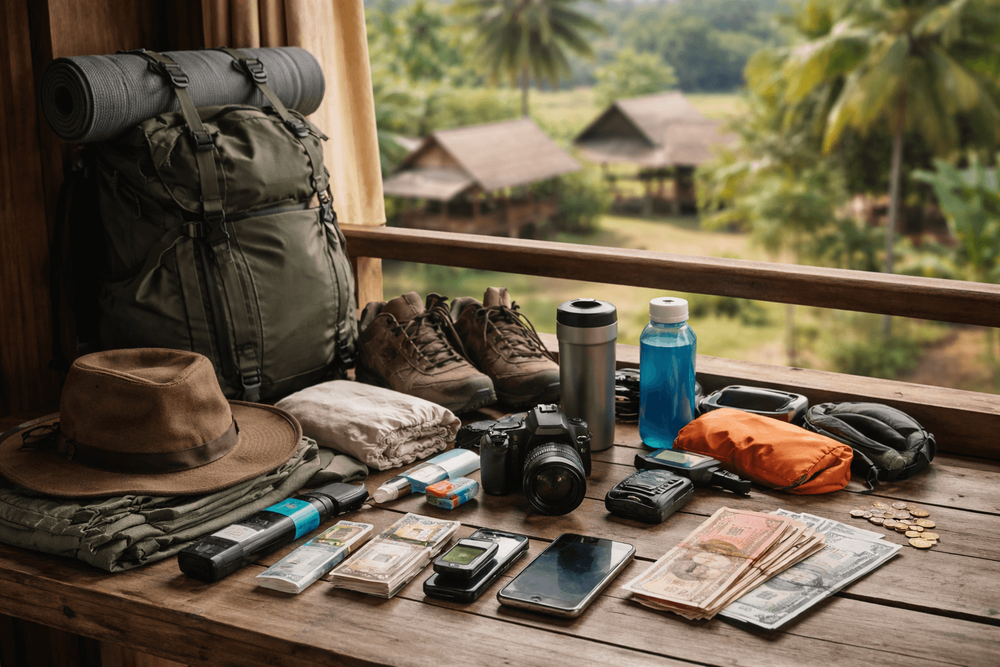
Backpacker Packing List for Thailand for Remote Areas and Small Towns: Cash, Power, and Hard-to-Buy Basics
Field-tested Thailand remote travel packing list: cash, power, modest dress, meds, and waterproof basics for small towns, islands, and long rides.
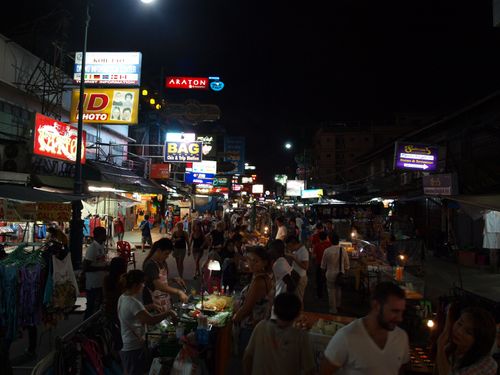
We’re standing on Phra Athit Road with the Chao Phraya glinting beyond the trees, the air thick with grilled pork smoke and the sweet rot of durian from a pushcart. Before we jump on a river boat and vanish into the khlongs and small towns where 7-Eleven thins out and ATMs go shy, let’s sort the Thailand remote travel packing list—the stuff we actually carry when the next pharmacy might be a two–songthaew ride away.
Data Freshness + Verification
- Prices are approximate (THB). Last checked: July 2026.
- For venue facts (name, hours, closures, boat/bus schedules), avoid absolutes; give typical ranges and add "confirm same-day locally."
- When citing any price, include neighborhood and, if known, source type (menu, recent visitor, operator site).
Concrete Planning Details
- Mini-itinerary/food crawl near Khao San Road/Phra Athit (walkable):
- Stop 1: Roti Mataba (Phra Athit Rd). Flaky roti with beef curry, 60–120 THB (menu, Phra Athit). 3–5 minutes from Phra Athit Pier by foot.
- Stop 2: Santi Chai Prakan Park under Phra Sumen Fort. Shade + river breeze. 2-minute walk from Roti Mataba. Good spot to repack and check gear.
- Stop 3: Thip Samai Pad Thai (Maha Chai Rd). 120–200 THB (menu, Samran Rat). 20–25 minutes on foot from Phra Sumen Fort, or 10-minute tuk-tuk (100–150 THB, typical driver quotes around Khao San; negotiate, confirm same-day).
- Stop 4: Kor Panich Mango Sticky Rice (Tanao Rd). 100–160 THB (menu, Dinso/Tanao). 10–12 minutes walk from Thip Samai or 5-minute tuk-tuk.
- Transit pointers:
- Chao Phraya Express Boat (Orange Flag) typically runs roughly 06:00–19:00; last boats vary by pier—confirm same-day at Phra Athit Pier (N13).
- Tuk-tuks around Khao San/Phra Athit are convenient for short hops; agree a price upfront (common asks 100–200 THB for 1–2 km; haggle politely).
Booking Suggestions
- If you’re rolling in late, we usually crash somewhere simple around Soi Rambuttri or Phra Athit where there’s 24-hour reception and decent AC—check availability a day ahead in peak season (Nov–Feb).
- Heading out to islands with early ferries? Book a spot on the first boat the night before at the pier office or via your guesthouse so you’re not sweating a sold-out sailing at dawn.
Thailand remote travel packing list: what we actually carry
Remote Thailand isn’t hostile—it’s just honest. Shops close early, downpours come hard, and electricity isn’t always on your schedule. This is the lean, field-tested kit we’ve hauled on buses, longtail boats, and pickup beds from Isaan rice fields to Andaman specks.
Pro tip: If you want a broader, city-to-beach checklist, see our general Backpacker Packing List for Thailand. For temple etiquette and smaller towns, cross-check with Thailand Packing List for Backpackers Visiting Temples and Remote Towns. Going ultra-light? Skim Backpacker Packing List for Thailand’s Minimalist Travel: One-Bag Gear for Light, Flexible Trips.
1) Essential clothing and gear for heat, rain, and modest dress
The tropics don’t care about your fashion agenda. Think breathable, sun-smart, and respectful in villages and temples.
Clothing (mix-and-match, quick-dry)
- 2–3 quick-dry tees or airy long-sleeves. We like one long-sleeve UV top for boats and bikes.
- 1–2 loose button-downs (linen/cotton) that go temple-to-dinner without looking like you slept on a train (even if you did).
- 1 pair lightweight pants or travel trousers; 1 pair breathable shorts (knee-length for modesty in rural areas).
- For women-presenting travelers: 1 long skirt/sarong for temples and villages. Sarongs earn smiles and solve dress codes instantly.
- Underwear you can sink-wash; 2–3 pairs quick-dry. Sports bra if you’re hopping on motorbikes over rough tracks.
- Packable rain layer: a thin poncho or shell. Street ponchos in Banglamphu run ~30–50 THB (7-Eleven shelf tag, Khao San area)—grab two, they rip.
- Light scarf/bandana or buff. Great for sun, dust, and temple shoulders.
Sun and sweat strategy
- Wide-brim hat or cap. Rural UV is no joke.
- Microfiber travel towel—doubles as seat cover on sweaty songthaews.
- Deodorant you like; remote shops have limited brands.
Modesty and respect cues
- Temples: shoulders and knees covered. Carry a sarong; it weighs nothing and saves a lot of “mai dai” (not allowed) at the door.
- Villages: skip the crop top; you’ll blend better and get warmer welcomes.
2) Health, safety, and first-aid when clinics are far
We’re big on prevention. If itches, fevers, or scrapes happen far from a clinic, you’ll be glad you packed a mini-pharmacy.
First-aid basics (small zip pouch)
- Plasters/bandages, sterile gauze, micropore tape.
- Antiseptic wipes or povidone-iodine (Betadine) swabs for cuts.
- Tweezers, small scissors; nail clippers.
- Oral rehydration salts (ORS) or electrolyte tabs. In Khao San pharmacies, 15–30 THB per sachet (recent visitor price; Banglamphu).
- Pain/fever meds (paracetamol/ibuprofen), antihistamines for bites, anti-diarrheals if you want a safety net.
- Motion-sickness pills for winding mountain roads and choppy longtails.
Insect protection
- DEET-based repellent or picaridin. Soffell spray is common—~60–90 THB (menu tag at Watsons, Ratchadamnoen). OFF! runs higher, 120–180 THB.
- After-bite cream (calamine or hydrocortisone) to keep the scratching sanuk to a minimum.
- Long sleeves/trousers at dusk; consider permethrin-treated clothing if you’re jungle-bound.
- Malaria is limited to some border forest zones—most Thai destinations are dengue zones instead. Talk to a travel clinic before you fly and confirm the latest guidance.
Sun and water safety
- Reef-safe SPF 50+ sunscreen. City prices 250–600 THB for 50–100 ml (Watsons menu, old town). Coastal shops often hike prices.
- Compact water filter bottle (Grayl/Sawyer style) or chlorine dioxide tabs. For remote taps and village tanks, this earns its space.
- Reusable bottle (750 ml–1 L). Many guesthouses top up from larger jugs; cut plastic and save baht.
Health documents and meds
- Any prescriptions in original packaging with generic names. A photo of the label in your phone, too.
- Vaccinations up to date per your clinic; carry your records photo.
3) Documents, money, and connectivity that don’t fail you
The best way to avoid farang tax is to be organized and offline-ready.
IDs and permits
- Passport plus 2 paper photocopies and a phone scan. Keep a copy separate from the real thing.
- International Driving Permit if you’ll ride a scooter; helmets on, always.
- Passport photos (2–4). Handy for park passes, SIMs, or permits in smaller offices.
Cash and cards
- Cash is king off the tourist trail. We carry 3,000–6,000 THB in small bills outside cities, split between money belt and daypack.
- ATMs often charge 220–250 THB per withdrawal (operator notice; various Bangkok ATMs). Pull larger amounts in the city to avoid repeated fees.
- Two debit/credit cards from different banks, stored separately.
SIMs, signal, and offline maps
- AIS/True/DTAC all work; AIS often best in rural Isaan, True strong along the Gulf, but coverage varies. Get a tourist SIM in Bangkok (150–300 THB, 7–14 days, 7-Eleven/official counter; check plan details same-day) before you head out.
- Download offline Google Maps and a Thai-English phrasebook. Pin your guesthouse, clinic, and bus station while you still have Wi-Fi.
- Keep key addresses written in Thai. Your guesthouse can help; a photo of the signboard saves tuk-tuk charades.
For a deep-dive checklist focused on backcountry self-sufficiency, skim our Backpacker Packing List for Thailand’s Remote Area Trips: Modest Clothing, Backup Supplies, and Self-Sufficiency Essentials.
4) Power, electronics, and luggage built for unreliable charging
You’ll meet sockets that wiggle, buses that don’t, and rain that arrives sideways.
Power and lighting
- Power bank 10,000–20,000 mAh. Enough for 2–3 phone charges when the village power is off mid-storm.
- Dual-port wall adapter with surge protection if possible; Thailand is 220V, 50Hz. Sockets accept Type A/C commonly.
- Headlamp with red mode. Perfect for island power cuts and pre-dawn ferries.
- Cable bag: spare USB-C/Lightning/micro-USB, short + long cords, and a tiny carabiner to keep the mess in line.
Rugged, water-smart carry
- Main pack 35–45 L—soft, not a roller. Your bag will ride in truck beds, boat floors, and bus aisles.
- Dry bag (10–15 L) for longtail transfers and squalls. We double-up important stuff in Ziplocs.
- Packable daypack (15–20 L) for waterfall hikes and market runs.
- Lightweight packing cubes; one becomes the laundry cube when everything smells like river.
- Phone in a waterproof sleeve; at minimum, a zip-top bag on boat days.
Useful electronics
- E-reader or slim paperback for long rides.
- Old-school analog pen + notebook. When battery dies, directions still live.
- Compact camera only if you’ll use it; otherwise, phones are enough weight.
5) Practical extras for islands, mountains, and rural roads
These are the unsexy heroes you notice most when they’re missing.
Footwear
- One pair breathable trainers or trail runners with grip (rain + red clay = skating rink).
- One pair sandals with heel strap (think temple steps and slick piers), not flimsy flip-flops.
- Thin socks that dry fast; rotate pairs on bus rails overnight.
Wet-world essentials
- Quick-dry shorts/swimwear that pass as normal shorts for island towns.
- Sarong: beach towel, temple wrap, curtain on bright nights, emergency sling.
- Compact umbrella (Banglamphu street stalls ~120–200 THB, recent visitor quotes). Poncho + umbrella is the power combo in monsoon.
Snacks and kitchen-lite
- Pocket snacks: peanuts, dried mango, sticky rice parcels from Banglamphu morning markets (20–40 THB each, vendor board). Long minibuses don’t always stop when you need them to.
- Collapsible mug + instant coffee/tea. Dawn ferries taste better caffeinated.
- A tiny spice sachet (chili flakes + salt). Life is better seasoned.
Emergencies and fixes
- Duct tape wrapped on a pen, safety pins, a few cable ties.
- Spare shoelace (also a clothesline with two carabiners).
- Whistle on your daypack.
- Moleskin/blister patches.
- Tiny sewing kit; fishermen in southern piers will nod approval.
Know before you go: remote Thailand realities
- Heat and humidity: We plan tasks before 11:00 and after 16:00. A sun shirt and salty snacks help you outrun the bonk.
- Transport patience: Songthaews leave “when full.” Build slack into your day and keep snacks + water handy.
- Scams and smiles: In villages the hustle softens, but never hand your phone to a random “helpful” fixer. Ask a shopkeeper or a uniformed official.
- Animals and nature: Stray dogs respond well to confident detours, not running. Leeches in wet forests? Dab salt, don’t yank.
- Trash-in, trash-out: Remote beaches don’t have bins every 20 meters; carry a small garbage bag in your daypack.
How we pack it all (example load-out)
- Wear: breathable shirt, travel pants, trainers, hat.
- Daypack: rain shell, 1L water, headlamp, ORS, sanitizer, sarong, snacks, phone + offline map, cash in a neck pouch, basic first-aid, sunscreen, repellent, compact umbrella.
- Main pack: 2 tops, 1 shorts, 1 long pants/skirt, underwear, towel, sandals, power bank + cables, dry bag rolled flat, document copies, pouch of meds, e-reader, lightweight lock.
What to skip (and what to buy there)
- Skip: heavy hiking boots (overkill unless you’re on multi-day treks), hair dryers, full-size toiletries, elaborate water bladders.
- Buy local: mosquito coils (cheap, everywhere in towns), spare ponchos, talcum powder (miracle for sweaty feet), and an extra sarong.
If you’re planning months on the road and laundry cycles, layer this guide with our Thailand Packing List for Backpackers on a Long-Term Trip: Reusable Gear, Laundry Setup, and Durable Basics to dial in durability.
Getting this kit from Khao San to the quiet corners
From Phra Athit Pier (N13), the Orange Flag boat runs roughly 06:00–19:00. To head south for train connections, we hop the boat to Sathorn (Central Pier) and jump on the BTS Skytrain at Saphan Taksin—cool air, fewer tuk-tuk negotiations. For northern buses, we tuk-tuk or metered taxi to Mo Chit Bus Terminal; mornings are smoother than late-night scrambles. Always confirm same-day schedules at the pier or terminal window, and keep 100–200 THB change for last-mile rides.
Schildkröt Travel Towel Microfibre
When we circle back to Bangkok, we like to land near Soi Rambuttri or Phra Athit—easy boats, mellow bars, and a quick reset before the next run into the mountains or islands. Pack light, carry the must-haves, and we’ll make the most of the dust, the rain, and those impossible, starry bus-stop nights.
Related Hotels & Places
Recommended Products
More Khao San Road Guides
- Backpacker Packing List for Thailand’s Remote Towns: Small-Town Basics, Cash, and Limited-Service Travel Gear
- Backpacker Packing List for Thailand’s Remote Towns: Essentials for Small Places and Fewer Stores
- Backpacker Packing List for Thailand’s Remote Area Trips: Modest Clothing, Backup Supplies, and Self-Sufficiency Essentials
- Backpacker Packing List for Thailand: Gadgets, Chargers, and Power Bank Essentials