
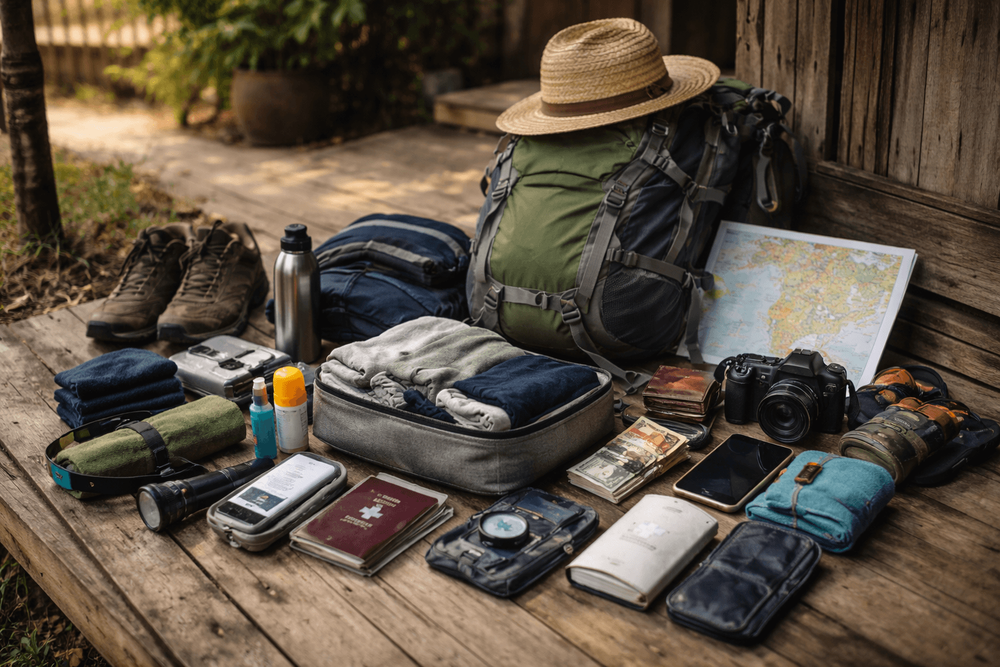
Backpacker Packing List for Thailand’s Remote Towns: Small-Town Basics, Cash, and Limited-Service Travel Gear
Our Thailand remote towns packing list: modest, breathable clothes, clinic-level health kit, power backups, cash smarts, and seasonal add-ons—light but self-reliant.
We step off a rattly bus into a sleepy market town at dusk—diesel in the air, skewers hissing on a street grill, dogs dozing under a songthaew bench. No mall, no big pharmacy, and the only English we hear is our own. This is why we love the small places—Nan backroads, Mae Sariang bends, Isan dust towns along Highway 212—but they demand a smarter bag. Here’s the Thailand remote towns packing list we actually use when the last ATM is 40 km back and the 7-Eleven shuts early.
Data Freshness + Pricing:
- Prices are approximate and in THB.
- Last checked: June 2026
- Happy hour and promo details change frequently—confirm locally.
Thailand Remote Towns Packing List: Essential Clothing & Gear
We dress for heat, sudden rain, village vibes, and temple visits where shoulders and knees matter. Think breathable, modest, and quick to wash in a bucket.
Fabrics and layers that breathe
- Quick-dry tees or light linen/cotton shirts (2–3): airy enough for a midday tuk-tuk blast yet decent for a community dinner.
- One long-sleeve sun shirt or thin overshirt: doubles as mosquito armor and temple cover.
- Lightweight trousers (1–2) and/or convertible pants: cooler than jeans, respectful in villages.
- Knee-length skirt or loose pants for women and anyone preferring a flowy fit.
- Sarong/pashmina: temple cover, bus blanket, beach towel, privacy screen in a mixed-dorm pinch (buy local for approx. 100–200 THB).
- Light fleece or thin jumper: mountain mornings in Nan or Mae Hong Son can nip, especially Dec–Feb.
Footwear we actually use
- Breathable walking shoes or trail runners: for broken sidewalks and red-dirt lanes.
- Rubber flip-flops: showers, guesthouse courtyards, and boat piers (buy local for approx. 60–150 THB).
- Optional sandals with straps if we’re trekking to waterfalls or clambering into long-tails.
Sun, rain, and sweat management
- Packable rain jacket or poncho (approx. 150–450 THB); we keep one in the daypack from March to October.
- Compact umbrella: shade at noon, shield at dusk downpours.
- Hat with brim and polarized sunglasses; rural buses love untinted windows.
- Microfiber towel (quick-dry, approx. 120–250 THB) if guesthouses are basic.
- Small talc or anti-chafe balm; humid sois and long walks are a team sport.
Laundry and hygiene in limited-service towns
- Sink stopper + travel clothesline + a few pegs (approx. 60–120 THB total); not every guesthouse runs laundry daily.
- Laundry soap sheets or a small tube of detergent.
- Menstrual supplies: pads are easy to find; tampons less so. If you use a cup, bring it.
- Solid toiletries (bar shampoo, solid deodorant) to dodge leaks on corrugated roads.
Bags and water protection
- 30–40L main pack you can toss into a songthaew without guilt.
- 10–20L daypack.
- Dry bag (5–10L, approx. 150–300 THB) for boat rides, sudden storms, and dusty truck beds.
- Zip pouches to separate clean from river-splashed.
If you’re temple-hopping alongside tiny towns, our deeper modesty-and-gear takes are in What to Pack for Thailand for Rural Villages and Small-Town Stops (/articles/thailand-temple-and-rural-packing-list).
Health, Safety, and Bus-Seat Comfort
Small clinics exist, but shelves can be sparse and English limited. We carry a slim, do-it-ourselves kit.
Core first-aid and meds
- Oral rehydration salts (ORS; approx. 10–15 THB/sachet) and electrolyte tabs.
- Anti-diarrheal and a gentle laxative—travel’s a prankster.
- Pain/fever reducer; antihistamines for bites and bus-born sniffles.
- Motion sickness tablets (approx. 10–30 THB) for alpine switchbacks and khlong ferries.
- A few plasters, blister pads, tiny roll of athletic tape, and antiseptic wipes.
- Small sterile dressings; rural scrapes happen.
Bite prevention and sun survival
- Repellent with DEET or picaridin (approx. 60–180 THB). Coils for verandas.
- After-bite or aloe gel.
- Reef-safe sunscreen (approx. 220–450 THB); pricier inland than in city supermarkets.
Comfort on long rides
- Inflatable neck pillow and eye mask; minivans love fluorescent tubes.
- Earplugs—roosters at 4 a.m. don’t care that you arrived at midnight.
- Lightweight scarf/sarong as bus blanket (AC can swing from broken to blizzard).
For vaccine and malaria questions, check with a travel clinician before wheels-up; border jungle zones can differ from main routes.
Power, Connectivity, and Travel Tech That Actually Works Off-Grid
When sockets are few and the only outlet is guarding a fan, we ration electrons like mango sticky rice at New Year.
- Universal adapter with surge protection (approx. 120–250 THB). Thailand runs 220V/50Hz; sockets often fit Type A/C, with Thai 3-prong variants.
- 10,000–20,000 mAh power bank (approx. 300–900 THB). We charge overnight and top-up on buses.
- Two charging cables per device—dusty roads eat connectors.
- Multi-USB wall plug so one outlet serves the whole crew.
- Headlamp or small torch for power cuts and unlit sois (approx. 80–200 THB). Phone lights drain batteries.
- Offline maps: download Google Maps areas and keep Maps.me as a backup. We save Thai-script addresses for the tuk-tuk uncle.
- Local SIM/eSIM with data from AIS/DTAC/True (starter packs approx. 150–300 THB; weekly to monthly data 200–350 THB). Top up at 7-Eleven when you see one—or the corner shop with the lotto stand.
- Lightweight Bluetooth keyboard if you’re journaling or sending long messages from a bungalow porch.
If you’re mixing village weeks with laptop time, we’ve put together a Thailand Packing List for Digital Nomad Backpackers (/articles/thailand-packing-list-for-digital-nomad-backpackers) to keep the kit lean.
Money, Documents, and Practical Supplies
In remote towns the ATM might be out of cash, the nearest bank is “tomorrow maybe,” and the night market smiles at cards like it’s a magic trick.
Cash strategy
- Carry more small bills than you think: 20s, 50s, and 100s. Market auntie won’t break a 1,000 for a 15 THB bao.
- Withdraw in larger chunks in cities to dodge per-withdrawal fees (often approx. 220–280 THB). Split cash into multiple hiding spots.
- Expect limited card acceptance except for bigger hotels or petrol stations.
ID, permits, and peace of mind
- Passport plus 2–4 photocopies and a few passport photos; handy for permits, SIMs, and rentals.
- Travel insurance details saved offline; clinic visits can be cheap (approx. 200–600 THB consult) but evacuations aren’t.
- International Driving Permit if you plan to rent a motorbike; always grab a helmet and your wits—gravel is not your friend.
Practical bits that save the day
- Reusable water bottle; add a compact filter or purifier if you’re really off-grid (bottle filters approx. 700–1,500 THB).
- Tiny cutlery kit or spork for bus-stop eats; a collapsible bowl turns a market stall into room service.
- Wet wipes and a pocket tissue pack; squat toilets rarely stock paper.
- Pocket Thai phrase list or offline translator; a smile and a sawadee go further than perfect tones.
- Duct tape wrapped around your water bottle and a few zip ties—field repairs for packs, sandals, and dignity.
- Pen and notepad; sketch a map when 4G ghosts you.
If you’re building a core kit from scratch, our Backpacker Packing List for Thailand (/articles/backpacker-packing-list-for-thailand-2026-05-08) lays out the city-to-village basics; this guide adds the no-ATM, no-English fine print.
Seasonal and Destination-Specific Add-Ons
Thailand is many trips stacked in one. Pack a few swaps based on where the bus points.
Mountains and mist (North/Northeast)
- Mae Hong Son loop, Nan’s ridgelines, Phu Chi Fa sunrises: nights can drop below 15°C in cool season. Add a beanie and thin base layer.
- Lightweight gloves for early-morning scooter rides.
- Trekking? Leech socks for monsoon jungle trails, plus a dry bag for everything.
Islands and waterfalls
- Rash guard and quick-dry shorts; coral scrapes are unforgiving.
- Dry bag you trust (test in a sink before boats).
- Reef-safe sunscreen and a small first-aid antiseptic for nicks.
Rural inland and Isan plains
- Dust scarf/buff for windblown red earth; sunglasses that don’t squeak.
- Extra hydration salts; heat here hums from dawn.
Festival proofing
- Songkran splash kit: phone dry pouch (approx. 80–200 THB), quick-dry clothes, and shoes that won’t sulk when soaked.
- Loy Krathong evenings: a warmer layer for riverside breezes.
If you like to travel light no matter the season, see our Thailand Packing List for Backpackers on a Pack-Light Budget (/articles/thailand-pack-light-packing-list) for rewear strategies and buy-local swaps.
Know Before You Go: Remote-Road Realities
- Transport cadence: Minivans/blue songthaews run when full; last departures can be mid-afternoon. Ask at the market or bus station, not just online.
- Prices: Provincial buses range approx. 120–420 THB for 2–6 hour hops; songthaew rides are often 10–40 THB around town, more for inter-village trips.
- Food clock: Towns nap early. If you arrive after 8 p.m., grab skewers, sticky rice, and a bag of nam prik from the evening market before stalls ghost.
- Electricity and water: Outages happen. Charge when you can; keep that headlamp handy.
- Language: Point-and-smile is a skill. Photos, Thai-script addresses, and numbers on a notepad win the day.
- Dogs and dawn chorus: Strays are usually chill but give space. Earplugs for the 4 a.m. rooster orchestra.
We tend to crash at simple, family-run guesthouses near the market—good for sunrise snacks and songthaew intel. If there’s a bungalow by the khlong or rice fields, even better for sunset sanuk.
For first-timers plotting a city-to-village arc, our Thailand Packing List for First-Time Backpackers (/articles/thailand-packing-list-for-first-time-backpackers) keeps the overwhelm down. Want an even tighter focus on tiny towns? We also break down remote-specific picks here: Backpacker Packing List for Thailand’s Remote Towns: Essentials for Small Places and Fewer Stores (/articles/thailand-remote-town-packing-list).
Final toss-up: what we leave behind
- Heavy jeans and bulky hoodies—they hog space and never fully dry.
- Expensive jewelry—flashy farang vibes don’t help in small markets.
- Giant toiletry bottles—refill small and buy-local when you can.
- Too many shoes—two pairs and flips are plenty.
Sea to Summit Lightweight Dry Sack
Pack lean, carry confidence, and leave room for what the road hands you—maybe a woven scarf from a Nan roadside loom or a smoky chili paste from an Isan grandma. We’ll see you on the songthaew bench, elbows tucked, power bank full, and cash broken into 20s, rolling toward the next quiet soi at golden hour.
Related Hotels & Places
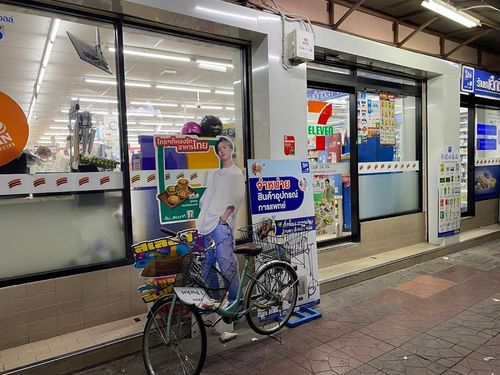
7-Eleven
Shops
Khao San’s 24/7 reset button: ice‑cold A/C, ham‑cheese toasties, All Café iced lattes, water for 7–14 THB, and late‑night supplies from snacks to sunscreen—right by Rikka Inn.
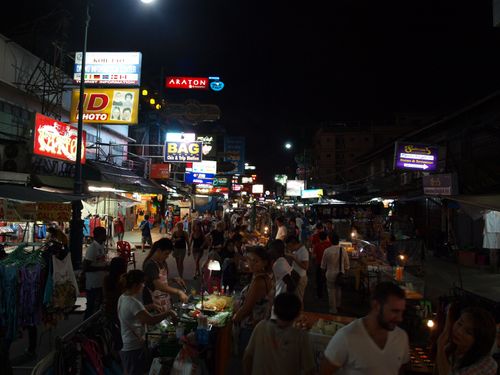
Khao San Road
Attractions
Bangkok’s backpacker carnival: curbside bars, live bands and DJs from 3pm–2am (midnight Sun). Street eats are cheap — pad thai 70–100 THB, mango sticky rice 60–100 THB. Come for wild people-watching; duck into Rambuttri for a calmer beer.
Recommended Products
More Khao San Road Guides
- Backpacker Packing List for Thailand’s Remote Towns: Essentials for Small Places and Fewer Stores
- Backpacker Packing List for Thailand’s Countryside: Small-Town Stays, Dirt Roads, and Rural Comforts
- Backpacker Packing List for Thailand for Remote Areas and Small Towns: Cash, Power, and Hard-to-Buy Basics
- Backpacker Packing List for Thailand’s Remote Area Trips: Modest Clothing, Backup Supplies, and Self-Sufficiency Essentials