
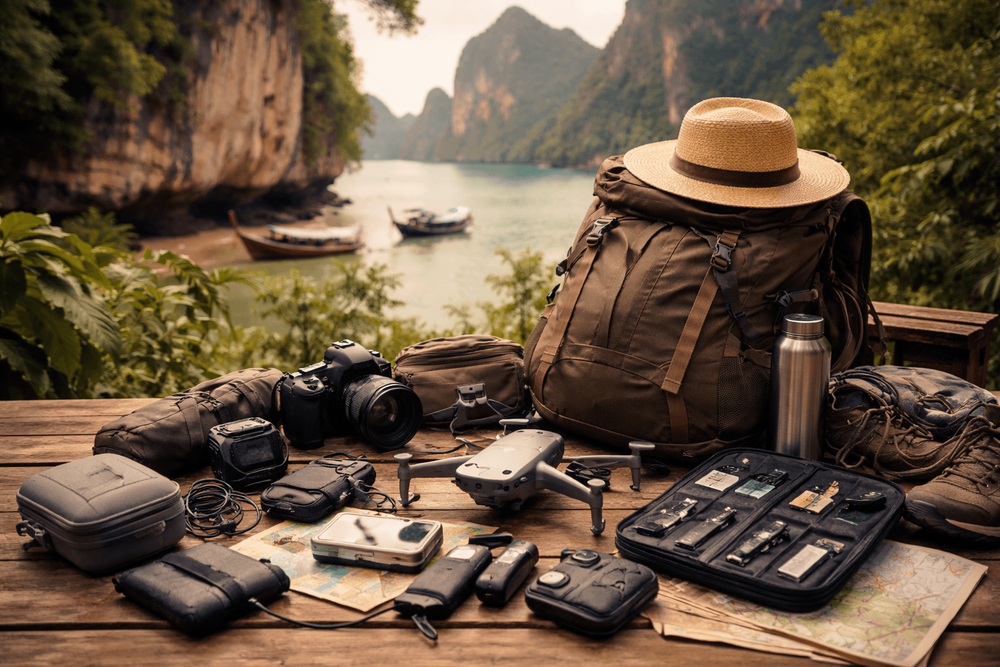
Thailand Packing List for Backpackers Carrying a Drone or Action Camera
Pack your drone for Thailand like a pro: batteries, filters, cases, compliance, and island-proof protection—so you fly legal, dry, and drama-free.
We shoulder our day packs and slip down Rambuttri just as the woks start hissing and the basil hits the oil. Tuk-tuks growl past, a bus sighs on Phra Athit Road, and we can already feel the drone itch—those sunrise sweeps over the Chao Phraya Tourist Boat ICONSIAM Pier, those turquoise laps over a Koh Tao cove. Before we even think about takeoff, though, we need a tight Thailand drone packing list that keeps us flying legal, dry, and drama-free.
Essential Thailand Drone Packing List
Let’s build your kit from prop tip to power plug. We’ll assume a foldable camera drone (DJI Mini/Air class or similar) and a pocket action cam tagging along for the wet-and-wild bits.
Drone body and gimbal protector
- Pack the drone with the gimbal guard on—always. Bangkok’s taxis and ferries don’t do “gentle,” and neither do potholes. A soft cloth around the nose adds extra cushion.
Remote controller + spare sticks
- Keep the controller up top in your day bag for quick airport security. Screw-on sticks love to disappear; bring a spare set in a tiny pill box or taped inside the case lid.
Batteries (and how many to carry)
- Three flight batteries hits the sweet spot for most Thailand days—one charging at the guesthouse, two in the field. Store each in a LiPo-safe pouch, 30–60% charge for transit. We carry them in our cabin bag; lithium stays out of checked luggage.
Propellers (spares matter)
- Toss two full spare sets in a zip bag. Sand on Railay Beach Cafe or a surprise palm frond clip will nick a blade. Better to swap and fly smooth than risk vibration.
Chargers and cables
- Bring the stock charger plus a fast USB-C PD wall brick (at least 45–65W) to top multiple bits overnight. A compact 4-port USB hub keeps the cable spaghetti under control. Don’t forget short USB-C and Lightning leads for the controller/phone.
Memory cards and fast backup
- Two to four U3/V30 microSD cards (128–256GB) let us rotate as we go. Add a palm-sized SSD (1–2TB) and a USB-C card reader so we can dump footage at the guesthouse while the fan whirs.
ND and polarizing filters
- ND8/16/32 for the islands and a CPL for jungle glare. Screwing them on in sweaty heat is a yoga move; keep a rubber jar gripper or nitrile glove square to help with stuck filters.
Protective case or cube
- A small hard case or padded camera cube that slides into a normal backpack works best on Thai transit—ferries, buses, songthaews. We avoid branded drone cases that scream “steal me.”
Landing pad and dust control
- A foldable landing pad (bright side up on sand) keeps grit out of the gimbal. A rocket blower and a pack of microfiber cloths (you’ll find cheap ones under 50 baht at 7-Eleven or street stalls) are clutch after salty air.
Rain and splash plan
- A thin dry bag (10–20L) lets us bail when a monsoon cell dumps with zero warning. We also carry a handful of zip-top bags and a lightweight rain cover for the whole pack.
Power bank and power strip
- A 20,000mAh USB-C PD power bank is perfect for field top-ups and phone nav. Keep it in carry-on. A tiny travel power strip (with surge protection) plays nice with Thai 220V sockets and sketchy hostel plug availability.
Action camera sidekick
- An action cam (GoPro/Osmo) plus a bite mount or short handle does the heavy lifting on boats, waterfalls, and Songkran shenanigans while the drone stays dry. Spare batteries and a silicone case help with sweaty fingers.
Tiny tool roll
- Mini screwdriver set, prop wrench, a few prop screws, lens pen, alcohol wipes, and a postage-scale sized tape roll. Electrical tape (20–30 baht at 7-Eleven) fixes frayed cable strain reliefs until we’re home.
Silica gel and anti-fog
- Toss desiccant packs in the case. Humidity swings from AC arctic to sidewalk sauna can fog lenses; anti-fog inserts help in dive housings and domes.
If you’re still building the broader travel kit around all this tech, we’ve got deeper dives on camera gear and cables in our Thailand-specific guides: check the camera-focused list at Thailand Packing List for Backpackers Carrying Cameras and Travel Gear (/articles/thailand-camera-packing-list-backpackers) and the work-and-wires essentials at Thailand Packing List for Backpackers Carrying Electronics and Work Gear (/articles/thailand-work-travel-packing-list).
Thailand-Specific Travel and Flying Considerations
Airlines and lithium battery rules
- Batteries ride in your cabin bag, terminals protected (we tape over them or use plastic covers). Most airlines follow IATA guidance: up to 100Wh each is typically fine; 100–160Wh may need airline approval; over that is usually a no-go for personal gear. Most drone packs are well under 100Wh, but check your exact model and your airline’s page before wheels up.
Import awareness
- We’ve never had issues bringing a personal drone through Suvarnabhumi or Don Mueang, but keep kit neat and easily declared if asked. A tidy case and paperwork at hand calm any curious officer.
Heat, humidity, and monsoon timing
- Dry season (roughly Nov–Feb) is friendliest for flying. The hot months (Mar–May) roast batteries; keep packs shaded, never on hot pavement, and let motors cool between flights. In the southwest monsoon (May–Oct), storms build fast; launch early mornings when winds are calmer and light is pretty.
Salt air, sand, and spray
- On ferries to Koh Phi Phi or Koh Samui, salt mist gets everywhere. We fly from shore, not boats, and stow the drone in a dry bag during crossings. Use the landing pad on beaches—Thai sand is talcum-fine and sneaky.
City RF interference and wind tunnels
- Around high-rises (Sukhumvit, Sathorn) we get GPS wobble and sudden gusts. Give yourself extra space, trim the flight plan, and don’t chase rooftop bars unless you’ve got explicit permission.
Dust, smoke, and seasonal haze
- Northern Thailand can see seasonal haze; ND filters help with exposure, but we throttle back if visibility drops. After dusty rides (think red roads near Pai), blow out the gimbal and motor vents before the next flight.
Noise, respect, and temple etiquette
- Drone buzz is not the soundtrack monks ask for. We don’t fly over temples, royal sites, or dense crowds—full stop. And when in doubt, a friendly “mai dai” from a local means “don’t.” Smile, wai, and walk away.
Documents and Compliance: What to Bring
Regulations evolve, and Thai authorities take safety and privacy seriously. Pack for clarity and compliance.
- Proof of purchase/ownership: digital receipts and a photo of the box label with serial number. Keep them in a cloud folder and offline on your phone.
- Drone and controller serial numbers: saved as text notes for quick copy/paste on forms.
- Insurance: carry your policy PDF and emergency contact numbers. Many policies that cover drones require third-party liability—worth having in your kit and your conscience.
- Registration and permissions, if applicable: Thailand may require registration with aviation and telecom authorities for camera drones and radio transmitters. Check the official Civil Aviation Authority of Thailand (CAAT) and NBTC pages ahead of time, and allow lead time for approvals. Print confirmations or screenshots and keep them in your day bag.
- Passport photos and copies: some offices still love paper. We keep two small photos in the case and passport scans on the phone.
- Contact info on the case: name, email, Thai number if you’re picking up a local SIM. A cheap label beats a lost drone.
Packing Strategies by Trip Type
City runs: Bangkok, Chiang Mai, and beyond
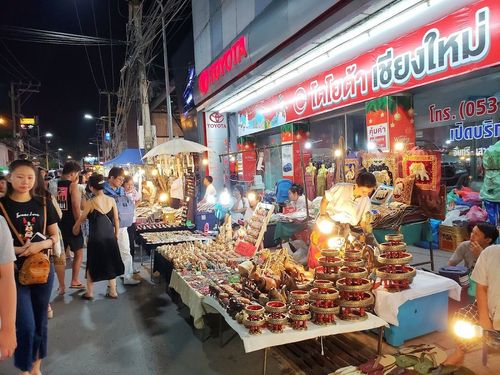
- We aim for dawn or golden hour sessions: Sanam Luang’s edges, across the river from Wat Arun Ratchawararam Ratchawaramahawihan, or along quieter stretches of the Chao Phraya near Tha Phae Walking Street. We don’t launch near the The Grand Palace, airports, or royal/military zones—too sensitive, too risky.
- Transport: the BTS/MRT don’t blink at a drone in your backpack. Tuk-tuks will if the case is huge—keep it compact.
- Workflow: charge everything overnight, stage batteries and cards by the door. Keep the controller and one battery in your day-bag’s top pocket for security checks.
- Day bag essentials: a small towel (for sweat and gear), microfibers, spare shirt, and that dry bag liner for sudden Bangkok downpours. If you’re building that city-day kit, our Thailand Packing List for Backpackers: Day Bag Essentials (/articles/thailand-day-bag-packing-list) keeps it tight.
Islands and beaches: Samui, Tao, Phangan, Krabi, and the Andaman
- Ferries and longtails: spray is a given. We keep the drone inside a 10–20L dry bag during crossings. Dry bags start from about 200 baht in markets around Khao San Road and on the islands.
- Launch choices: avoid crowded beaches and snorkel zones. Hike 5–10 minutes to a headland, launch from rock or mat, fly the cove instead of the crowd.
- Aftercare: wipe with a damp cloth, then a dry microfiber. Let motors air-dry before sealing the case so trapped salt mist doesn’t stew overnight.
Jungles, waterfalls, and karst
- In places like Khao Sok, GPS can drift under canopy and downdrafts roll off limestone cliffs. We keep line-of-sight religiously and stay well away from wildlife.
- Footing: a compact landing pad over roots and mud saves ankles and gimbals. Leech socks may be the least-sexy packing item—but you’ll thank them in July.
Moving days: flights, ferries, buses
- Pre-pack sequence: props off, gimbal locked, batteries at storage level in LiPo pouches, controller sticks removed and stowed. Cables coiled and rubber-banded.
- Checkpoints: we put all batteries and the controller in one zip cube so security can eyeball them fast. Smile, be patient—sanuk beats stress.
- Charging on the go: we top off on buses with the power bank, then do full charges at the guesthouse. Many Thai rooms have two outlets fighting for your love; a mini power strip is the unsung hero.
Where we crash between flights
- We pick guesthouses that don’t mind a bit of gear sprawl and have a sturdy desk fan—batteries like cool rooms. In Bangkok, we aim for spots near river piers or MRT to cut slog time with a full pack. On the islands, we favor bungalows a short walk from the beach but not on the sand—less moisture overnight, fewer ants in the gear.
- If you’re still deciding what else to bring to make those rooms work for you (adapters, cable lengths, laptop stands), peek at Thailand Packing List for Backpackers Carrying Electronics and Work Gear (/articles/thailand-work-travel-packing-list). For the whole clothing-to-toiletries picture, our latest Backpacker Packing List for Thailand (/articles/backpacker-packing-list-for-thailand-2026-06-06) rounds things out.
Common Mistakes to Avoid
- Flying without local awareness: launching near temples, royal grounds, or crowds will earn you glares at best. If a spot feels sensitive, it is.
- Forgetting battery etiquette: leaving LiPos cooking in the sun or fully charged for days. Shade them, cycle them, store at 30–60%.
- One-card syndrome: shooting all week on one card and praying. Rotate cards and back up nightly to SSD.
- Skipping firmware and app updates: do them on good Wi-Fi before field days, then fly in airplane mode to avoid surprise nags.
- Wet-pack regrets: sealing damp gear in the case. Let it breathe in AC first—Bangkok’s cold, dry hotel air is your dehumidifier.
- No ND, jittery footage: those bright island noons demand ND16 or ND32. Your future self will thank you when the edit flows.
- Controller phone meltdown: Thai heat plus direct sun can cook your phone and kill your feed. Shade it with a cap brim or a clip-on hood.
- Packing props in checked-only: if your hold bag walks, you’re grounded. Keep at least one full prop set in carry-on.
Quick Readiness Checklist
- Drone, gimbal guard, two spare prop sets
- Controller, two sets of sticks, short data cables
- Three flight batteries in LiPo pouches (carry-on)
- Charger, USB-C PD wall brick, mini power strip
- 2–4 microSD U3/V30 cards + 1–2TB SSD + card reader
- ND8/16/32 + CPL filters, rubber gripper
- Landing pad, rocket blower, microfiber cloths
- Dry bag (10–20L), zip-top bags, rain cover
- Tiny tool kit, alcohol wipes, electrical tape
- Desiccant packs, anti-fog inserts
- Proof of purchase, serial numbers, insurance docs, any registrations/permissions
- Label on case with your email/Thai number
Know Before You Fly in Thailand
We start early, respect the space, and let the light do the heavy lifting. If we can’t fly, we switch to the action cam and keep rolling—there’s always another pier, another headland, another dawn with the bass from a Khao San bar finally fading into birdsong over the khlongs. Pack lean, prep smart, and when that perfect morning lines up over the islands, we’ll be the ones lifting smooth, getting the shot, and tucking back in before the sun bites.
Related Hotels & Places
Rambuttri
Markets
Khao San’s calmer cousin: a tree‑shaded lane of VW van cocktail bars, open‑air foot massages, pad thai grills, and easygoing live bands. Best from sunset to 11pm; beers 80–120 THB, cocktails 150–220 THB. One block from the chaos, all the charm.
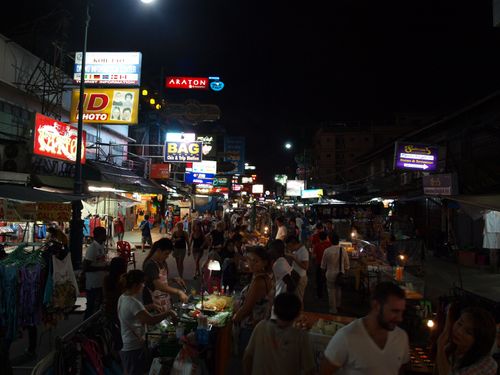
Khao San Road
Attractions
Bangkok’s backpacker carnival: curbside bars, live bands and DJs from 3pm–2am (midnight Sun). Street eats are cheap — pad thai 70–100 THB, mango sticky rice 60–100 THB. Come for wild people-watching; duck into Rambuttri for a calmer beer.
Railay Beach Cafe
Restaurants
Beachfront tacos and sundowners on Railay West. Nab a front table for golden‑hour views; order the tacos, som tam with crispy seafood, icy fruit shakes, and happy‑hour margaritas. Casual crowd straight off the long‑tails; stay for sunset.
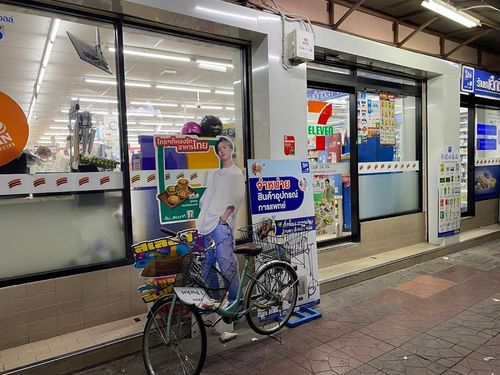
7-Eleven
Shops
Khao San’s 24/7 reset button: ice‑cold A/C, ham‑cheese toasties, All Café iced lattes, water for 7–14 THB, and late‑night supplies from snacks to sunscreen—right by Rikka Inn.
The Grand Palace
Attractions
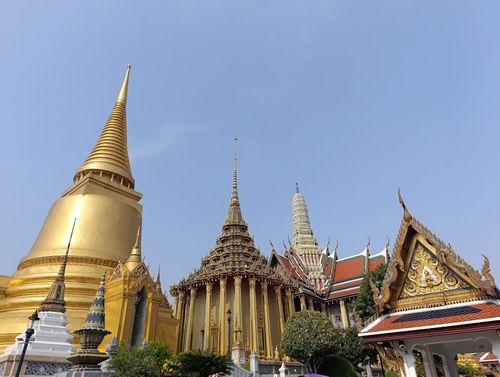
Bangkok’s royal showpiece a short hop from Khao San: glittering Wat Phra Kaew, Ramakien murals, and gold-on-gold rooftops. Go 8:30am to dodge the heat, dress modestly, and boat to Tha Chang for the prettiest arrival.
Wat Arun Ratchawararam Ratchawaramahawihan
Temples
Sanam Luang
Attractions
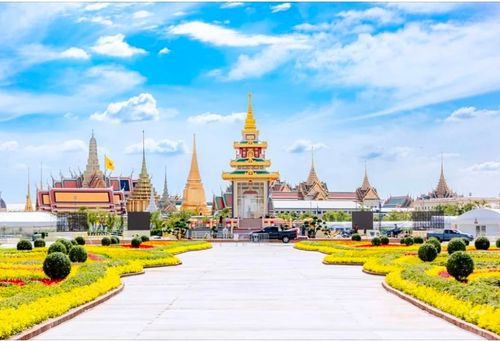
Bangkok’s royal lawn facing the Grand Palace. Free to wander, ringed by tamarind trees, popular for kite flying (Feb–Apr) and lazy green‑space hangs. A 10‑minute walk from Khao San; come early for soft light and street snacks along Na Phra That Rd.
Tha Phae Walking Street
Shops
Chao Phraya Tourist Boat ICONSIAM Pier
Services
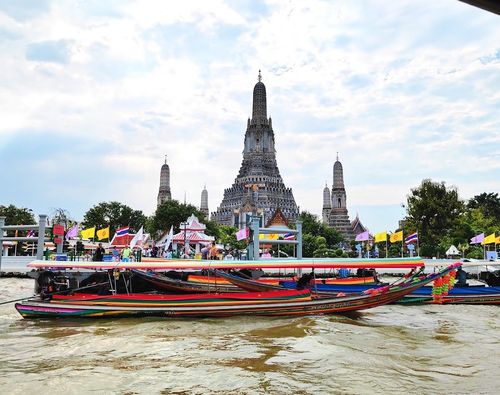
Hop on the blue‑flag tourist boat at ICONSIAM to cruise Wat Arun, Wat Pho, the Grand Palace and Chinatown. Day pass ~150 THB, boats every ~30 mins, last runs around 7:15pm. Easiest river launchpad via BTS Gold Line to Charoen Nakhon.
More Khao San Road Guides
- Thailand Packing List for Backpackers Carrying Camera Gear: Protection, Power, and Day-Bag Organization
- What to Pack for Thailand for Backpackers Carrying Camera Gear: Protection, Power, and Day-Bag Setup
- Backpacker Packing List for Thailand for Daily Carry and Daypack Setup
- Backpacker Packing List for Thailand for Gadget Light Travelers: Camera, Phone, and Memory Card Essentials