
Best Day Trips from Bangkok for Backpackers Who Want Cheap Trains, Local Buses, and Easy Overnights
Bangkok day trips for backpackers using cheap trains and local buses—our favorite DIY runs with prices, routes, and easy returns for spontaneous travel.
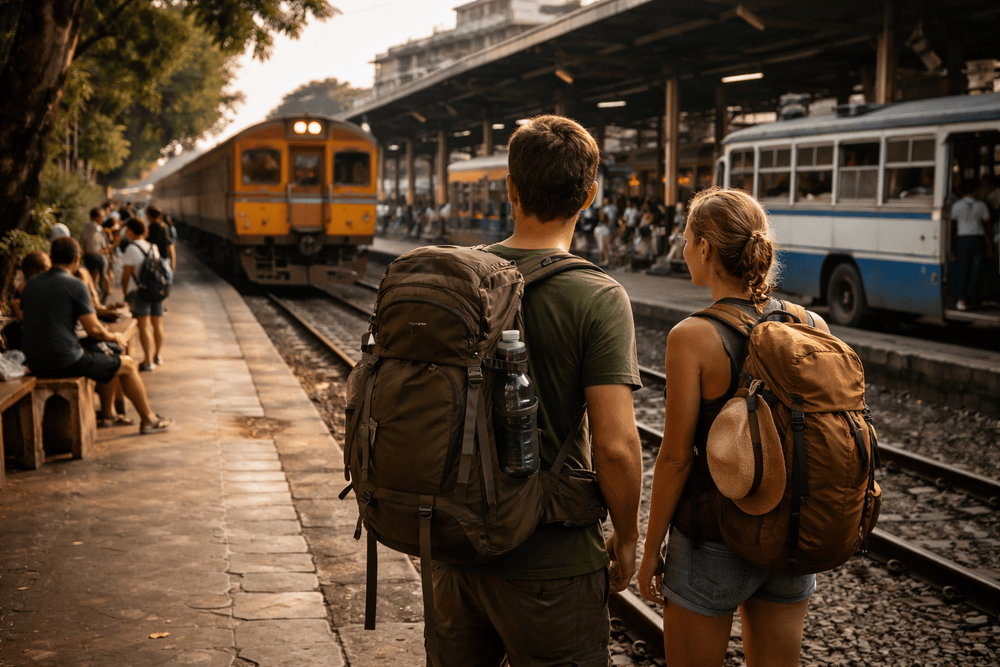
We’re standing under the yellow lights of Hua Lamphong’s old platforms at 7:10 AM with a bag of grilled pork skewers, sticky rice, and two sweating bottles of water from the 7-Eleven that just blasted us with holy AC. This is our kind of adventure: bangkok day trips backpackers trains buses style—cheap, cheerful, and full of sanuk. The conductors whistle, the fan cars rattle, and we’re off to ruins, rivers, markets that jump off the tracks, and a few green escapes when the city heat turns our brains to mango pudding.
If you want an even bigger buffet of ideas, we’ve got a longer roundup in Best Day Trips from Bangkok for Backpackers: 12 Easy Escapes by Train, Bus, and Minivan — this guide sticks to our transport-first, shoestring favorites you can do with a small daypack and a smile. Best Day Trips from Bangkok for Backpackers: 12 Easy Escapes by Train, Bus, and Minivan
Bangkok day trips for backpackers by trains and buses
These are the runs we do again and again because they’re straightforward, low-cost, and easy to bail back to Khao San Road for a late pad thai on Rambuttri.
1) Souvenir Market Ayutthaya: ruined cities, river loops, and 20-baht train tickets
- Getting there: Ordinary third-class trains roll from Bangkok’s main rail hubs to Ayutthaya Station. Expect around 1.5–2 hours depending on the service. Third-class fares typically hover around 20–40 baht. From the station, cross the river by ferry (5–10 baht) and rent a bicycle (50–100 baht/day) or hail a tuk-tuk.
- Why backpackers love it: DIY is easy. The island’s wats—Wat Mahathat’s Buddha head in tree roots, Wat Ratchaburana’s prang—are walkable or bikeable. Pick two or three major temples, add a market snack, and loop back by sunset.
- Low-cost tips: Grab a 50–70 baht bowl of boat noodles near the train station before you pedal. Many temples have modest entrance fees; some are free. A sunset Chao Phraya boat loop with other travelers splits nicely.
- Same-day return: Frequent trains back into the evening. If we’re fading, we jump an air-con minivan from the bus stop opposite Ayutthaya Park mall.
2) Kanchanaburi: the slow river, a rattling train, and WWII history
- Getting there: Two daily trains from Bangkok’s Thonburi Station trundle over rural klongs and palm scrub to Kanchanaburi in about 3 hours. Tickets are usually around 100 baht for ordinary carriages. Buses and minivans from the Southern Bus Terminal are also plentiful and similarly priced.
- Why backpackers love it: History with heart. Walk the Bridge on the River Kwai, visit the JEATH museum, then ditch the crowds for bamboo-shaded riverfronts where cold beer is still under 80 baht.
- Low-cost tips: Rent a bicycle for 50–100 baht to reach cemeteries and the quiet river bends. Eat at the morning market beside Kanchanaburi station—khao ka moo that melts like butter.
- Same-day return: Absolutely—trains and buses return late afternoon/early evening. If you fall in love with the river (it happens), overnight rooms stay budget-friendly.
3) Lopburi: the monkey kingdom and crumbling Khmer ruins
- Getting there: Ordinary trains to Lopburi take about 2.5–3 hours, typically 50–100 baht in third class. The old town and ruins unfurl just south of the station.
- Why backpackers love it: You step off the train straight into a living archaeological site. Prang Sam Yot (the monkey temple) is photogenic and chaotic—keep zippers closed and snacks hidden unless you want a macaque roommate.
- Low-cost tips: Most ruins are clustered; you can walk them. Grab moo ping and iced coffee near Narai Ratchaniwet Palace for under 60 baht combined.
- Same-day return: Easy. Plenty of trains back. Bring a light scarf to fend off temple dust and sun.
4) Nakhon Pathom: giant chedi, local markets, and an easy hour west
- Getting there: Hop a local train to Nakhon Pathom (often from Thonburi or via main SRT lines). About 60–80 minutes; fares around 20–30 baht. The moment you exit, Phra Pathom Chedi’s golden bell fills the skyline.
- Why backpackers love it: No fuss. Stroll the night market at the chedi’s base—grilled river prawns if you’re splurging, or 10-baht kanom krok for dessert on a stick.
- Low-cost tips: Circle the chedi grounds for free, then hunt down boat noodles in alleys east of the temple for 40–60 baht a bowl.
- Same-day return: Trains and buses run often. This is our “we only have half a day” escape when Bangkok’s humidity has us merging with our T-shirt.
5) Chachoengsao & Khlong Suan: pink Ganesha and a century-old market
- Getting there: Commuter trains from Bangkok roll to Chachoengsao Junction in 60–90 minutes, often 13–31 baht for third class. From the station, songthaews (shared pickups) run to Wat Saman Rattanaram (the giant pink Ganesha) and to Khlong Suan 100-Year-Old Market. Alternatively, local buses link both spots.
- Why backpackers love it: It’s quirky and hyper-local. Khlong Suan’s teak shophouses dish old-school sweets and iced Thai tea; Wat Saman goes big on color and offerings.
- Low-cost tips: Share songthaews (10–30 baht depending on distance) and snack your way through the market instead of sitting for a single meal.
- Same-day return: Very doable. Aim to be back at Chachoengsao station an hour early—songthaews get leisurely after 4 PM.
6) Mae Klong Railway Market via train + ferry + train: the classic backpacker chain-link
- Getting there: Ride the suburban train from Wongwian Yai to Mahachai (10–15 baht), hop the short ferry across the Tha Chin River (3–5 baht), then amble to Ban Laem Station for the onward train to Mae Klong (about 10–20 baht). The train literally inches through the market—awnings snap back like a magic trick.
- Why backpackers love it: It’s peak Thai ingenuity in motion and costs less than a fancy coffee. The journey is the vibe.
- Low-cost tips: Time your arrival for a mid-morning or early afternoon train pass-through; grab crab fried rice or hoy tod (oyster omelet) streetside for under 80 baht.
- Same-day return: Reverse the route or grab a local minivan from Mae Klong back to Bangkok’s bus terminals.
7) Ko Kret (Nonthaburi): pottery island in the Chao Phraya
- Getting there: Take the Chaophraya Express boat upriver to Pak Kret (around 20–30 baht depending on boat), or ride bus/local van to Pak Kret and cross by ferry to Ko Kret (2–5 baht).
- Why backpackers love it: No cars, just bikes and footpaths. Mon-style snacks, pottery workshops, and shady riverside beer spots where the breeze finally shows up.
- Low-cost tips: Rent a bicycle for 50–80 baht; sample khao chae (cool rice with fragrant side dishes) if it’s hot season.
- Same-day return: Boats and buses run late enough to make this a lazy-day winner.
8) Samut Prakan: Ancient City (Muang Boran), Erawan Museum, and a fort with views
- Getting there: BTS Sukhumvit Line to Kheha for Ancient City, then short taxi or songthaew. To Erawan Museum, BTS to Chang Erawan. Fares for BTS vary by distance—budget 40–60 baht each way from central stops. Local buses are even cheaper but slower.
- Why backpackers love it: Pick-your-own-adventure culture day. Ancient City is a sprawling outdoor museum of Thai architecture; Erawan is a massive three-headed elephant with lush interiors. Finish with sunset at Phra Samut Chedi or Pak Nam riverside.
- Low-cost tips: Pack snacks and water; museum tickets are the main spend here, but transit is dirt cheap.
- Same-day return: Easy—ride BTS back to wherever we’ve stashed our bags.
9) Bang Krachao: Bangkok’s “green lung” by boat, bike, and boardwalk
- Getting there: Bus or taxi to Khlong Toei Pier or Bang Na Pier; cross by long-tail (10–20 baht). Rent a bike near the pier for 80–150 baht/day. Navigate raised walkways past coconut palms and sleepy khlongs.
- Why backpackers love it: Oxygen and quiet within sight of Sathorn’s glass towers. It’s our cure for traffic hangovers.
- Low-cost tips: Hit Sri Nakhon Khuean Khan Park and Bang Nam Phueng Market on weekends—cheap fruit shakes and grilled chicken that perfumes the whole soi.
- Same-day return: When the heat turns epic, we glide back across the water and let a motorbike taxi zip us to the nearest BTS.
Looking for even more rail-centric options and nitty-gritty schedules? We put our favorite rail runs together here: Best Cheap Day Trips from Bangkok by Train for Backpackers. For bus-first escapes and where to catch the right van without donating to a tout, peep this: Best Day Trips from Bangkok for Backpackers by Bus: Cheap Escapes Beyond the Train Lines. And if you want a mix of train, ferry, and local bus in one satisfying loop, this one’s our hybrid pick: Best Day Trips from Bangkok for Backpackers Without a Bus Tour: Train, Ferry, and Local Bus Picks
Practical transport cheat sheet for each run
- Ayutthaya (train): 1.5–2 hrs, 20–40 baht third class, frequent returns; add 5–10 baht ferry, 50–100 baht bike.
- Kanchanaburi (train or bus): ~3 hrs, ~100 baht train; buses/minivans similarly priced, more frequent. Good for a late return or casual overnight.
- Lopburi (train): 2.5–3 hrs, 50–100 baht; walkable ruins from the station.
- Nakhon Pathom (train): ~1–1.5 hrs, 20–30 baht; the chedi and markets are steps away.
- Chachoengsao (train + songthaew): 1–1.5 hrs train (13–31 baht) + 10–30 baht songthaew legs.
- Mae Klong Railway Market (train + ferry + train): 10–15 + 3–5 + 10–20 baht legs; 2.5–3.5 hrs each way depending on transfers.
- Ko Kret (boat/bus): 20–30 baht boat + 2–5 baht ferry; bus/van to Pak Kret is pocket change.
- Samut Prakan (BTS + local): 40–60 baht BTS each way; local buses cheaper but slower; museum tickets are the main cost.
- Bang Krachao (boat + bike): 10–20 baht boat, 80–150 baht bike; transport time <1 hr from central Bangkok if traffic behaves.
Note: Fares and timings change; ordinary trains are the cheapest but not the fastest. Air-con options cost more, run less often, and sometimes skip smaller stops. We usually choose fan cars—windows open, breeze in, noodle smells included.
Why these work for backpackers
- Low barriers: No tour groups required. You can plan at breakfast and be on a platform by 9 AM.
- Predictable costs: Sub-100 baht tickets keep you on budget; snacky markets mean meals usually land under 100 baht.
- Easy retreats: With frequent returns, you’re never trapped. Miss a train? Grab a minivan. Too hot? Board the next fan car and nap.
- Flexible overnights: Places like Kanchanaburi and Ayutthaya have budget rooms everywhere. We’ve done spontaneous overnights with no booking by walking a couple sois off the main strip.
Tips for riding Bangkok trains and buses like a pro
- Tickets: For ordinary trains, buy at the station window—show the destination name on your phone if pronunciation gets wobbly. Keep small bills.
- Departure points: Trains may depart from the central terminal or older urban stations depending on the line and time of day—ask the information desk. For buses/minivans, head to the big terminals (Mo Chit for north/east, Ekkamai for east, Sai Tai for south/west) or their associated malls/van hubs.
- Comfort level: Third-class fan cars are seats, open windows, and the rhythm of Thailand. Bring water, tissues, and a light scarf for sun/dust. On buses, air-con can be arctic—pack a layer.
- Timing: Start early. Morning air is cooler, and you’ll outrun the afternoon thunderheads. Always leave a cushion for your return—songthaews thin out at dusk.
- Food and water: Stations and markets sell everything. We default to grilled pork skewers, gai yang, or a bag of cut pineapple when the heat wilts our appetite.
- Scams and touts: Smile, say “mai ao khrap/ka” (no thanks), and keep walking. Buy transport tickets from official windows or conductors, not the guy who materializes at your elbow.
- Luggage: Daypacks only. If you’re lugging your life, store the big bag at your guesthouse or a luggage service near the station.
- Etiquette: Offer seats to monks, elders, and kids. Dress modestly for temples—shoulders and knees covered is safest.
Easy overnights when the day trip turns into a vibe
Sometimes the sunset gets syrupy over the river and we decide to stay. In Kanchanaburi, it’s effortless to find a simple riverside bungalow by walking 5–10 minutes off the main road. In Ayutthaya, we pick a guesthouse near Wat Ratchaburana so we can bike the ruins at dawn with only dogs and morning vendors. Back in Bangkok between runs, we usually base ourselves around Soi Rambuttri or Phra Athit Road—cheap eats, cold Chang, and the Chao Phraya Express boat at our doorstep for a breezy ride to Saphan Taksin.
If you prefer early trains, sleeping near a rail hub the night before can be gold—less stress, more sleep, and fewer chances to get sidetracked by a friendly tuk-tuk driver.
Match your mood: comparisons by budget, time, and vibe
- Tightest budget: Mae Klong via train–ferry–train is the reigning champ; Ko Kret and Nakhon Pathom also keep costs delightfully low.
- Shortest travel time: Nakhon Pathom, Ko Kret, and Bang Krachao. Great when Bangkok’s heat index is misbehaving.
- Most culture per hour: Ayutthaya and Chachoengsao. One’s grand and ancient, the other is a quirky shrine-and-market combo.
- Best nature fix: Bang Krachao for green, Kanchanaburi for river chill.
- History heads: Kanchanaburi’s WWII sites and Lopburi’s Khmer-era ruins scratch very different itches—do both if you have two days.
- Food-driven: Mae Klong’s seafood, Chachoengsao’s old-market sweets, and Ayutthaya’s boat noodles. Pack a second stomach.
Know before you go
- Weather: April to May is a steam room; November to February is kinder. Carry electrolytes—7-Eleven has sachets by the register.
- Cash: Keep a roll of small bills and coins for boats, ferries, songthaews, and market snacks. Not every place takes QR or cards.
- Safety: Watch bags in crowds, particularly at big stations and markets. Bangkok is friendly, but petty theft happens.
- Language: A smile and a sawadee khrap/ka go far. Pointing at signs, Google Translate screenshots, and train numbers work wonders.
When the bass thumps down Khao San and the pad thai wok hisses at 2 AM, we’ll clink a final soda water and map out tomorrow’s ride. Whether it’s a 20-baht fan car to Ayutthaya or a cobbled-together ferry-and-train epic to Mae Klong, there’s always another line to ride and another market snack waiting at the next platform.
Related Hotels & Places
7-Eleven
Shops
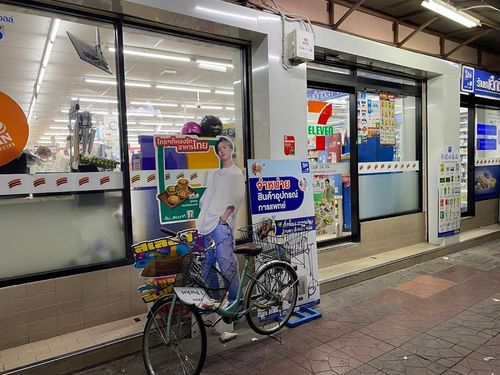
Khao San’s 24/7 reset button: ice‑cold A/C, ham‑cheese toasties, All Café iced lattes, water for 7–14 THB, and late‑night supplies from snacks to sunscreen—right by Rikka Inn.
Khao San Road
Attractions
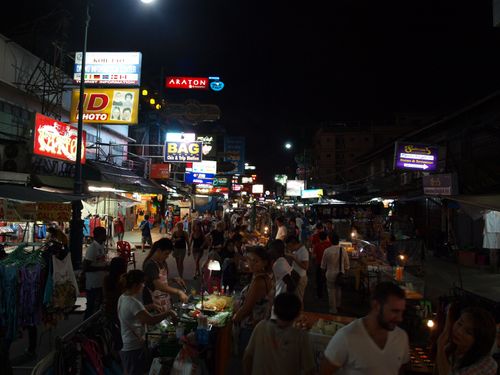
Bangkok’s backpacker carnival: curbside bars, live bands and DJs from 3pm–2am (midnight Sun). Street eats are cheap — pad thai 70–100 THB, mango sticky rice 60–100 THB. Come for wild people-watching; duck into Rambuttri for a calmer beer.
Rambuttri
Markets
Khao San’s calmer cousin: a tree‑shaded lane of VW van cocktail bars, open‑air foot massages, pad thai grills, and easygoing live bands. Best from sunset to 11pm; beers 80–120 THB, cocktails 150–220 THB. One block from the chaos, all the charm.
Wat Mahathat
Temples
Wat Ratchaburana
Attractions
ไขปริศนๅ พระเครื่อง Kanchanaburi.
Attractions
Souvenir Market Ayutthaya
Markets
More Khao San Road Guides
- Best Day Trips from Bangkok for Backpackers by Train: Easy, Cheap Escapes Without a Long Transfer
- Best Cheap Day Trips from Bangkok by Train for Backpackers
- Best Day Trips from Bangkok for Backpackers Who Prefer Easy Overnights-to-Day-Trip Routes by Train
- Best Day Trips from Bangkok for Backpackers by Public Transport: Train and Bus Escapes Beyond the Usual Tourist Trail