Bangkok to Chiang Mai by Bus at Night: Best Operators, Seat Types, and How to Sleep Through the Ride
Ride the Bangkok to Chiang Mai night bus like a pro: best operators, VIP seats, fares, times, and how to actually sleep through the ride.
The neon on Khao San Road is just flicking on, the woks on Soi Rambuttri are snapping with garlic and chilies, and we’re sliding past a tuk-tuk stalled in the glow of a 7-Eleven sign. It’s that witching hour when Bangkok exhales—and we’re bound for the Bangkok to Chiang Mai night bus. We’ll trade the thump of bass for the steady hum of the highway, doze through the central plains, and wake to mist snagging on northern hills.
If you’re choosing between late-night buses, night trains, and red-eye flights, we break the differences down in our broader overnight guide here: Bangkok to Chiang Mai Overnight Travel Guide: Sleepers, Night Buses, and Flight Timing. But right now, we’re zeroing in on the night bus itself—how to pick the right operator, which seats actually let you sleep, and how to make the ride sanuk instead of a slog.
Why take the Bangkok to Chiang Mai night bus?
- You don’t lose a day. We leave after dinner in Bangkok and roll into Chiang Mai around sunrise. Perfect for squeezing more temples, markets, and boat noodles into your itinerary.
- It’s cheaper than most flights and often cheaper than a sleeper train. Even the priciest VIP seats usually beat a plane plus baggage fees for the budget-minded farang.
- Frequencies are high. There are departures every evening from big operators—no need to be stuck with one rigid schedule.
- It’s direct. We head out from Bangkok’s Mo Chit/Chatuchak terminal and land at Chiang Mai’s Arcade Terminal—no airport transfers, no security lines, just bus-to-tuk-tuk in the cool morning air.
Downsides? The AC can be arctic, rest stops are fluorescent and jarringly bright at 2 AM, and the last stretch past Lampang can feel twisty if you’re motion-sensitive. But with the right seat and a few tricks, we sleep surprisingly well.
Bangkok to Chiang Mai night bus: what to expect
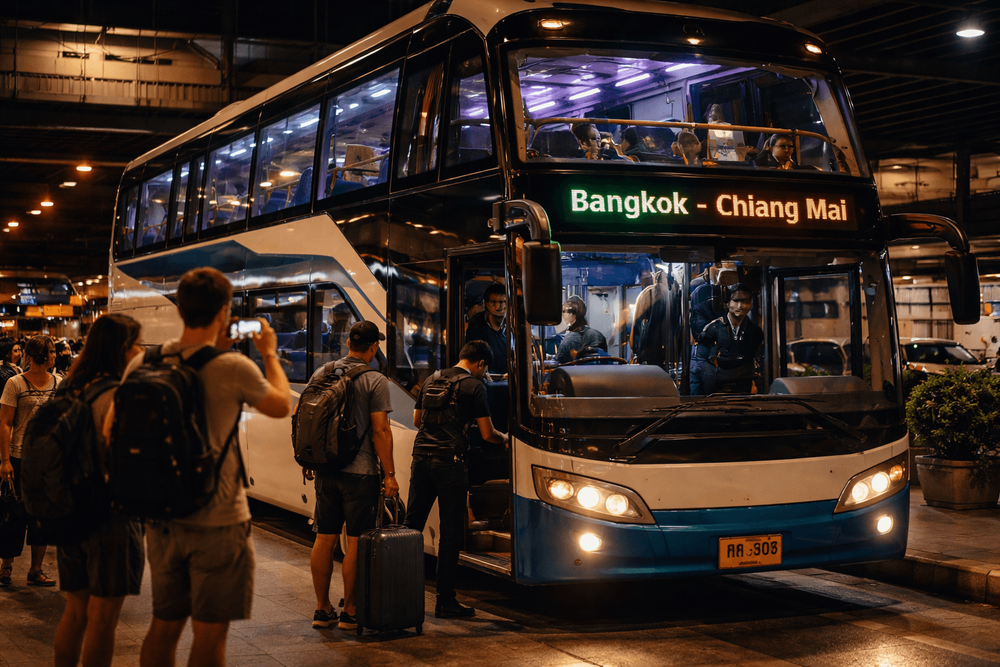
Typical travel time is 9–11 hours depending on traffic leaving Bangkok and how spry your driver is through Nakhon Sawan and Tak. Night departures bunch between 18:00 and 22:30, aiming to hit Chiang Mai’s Arcade Bus Terminal (Terminal 3) around 05:00–07:00. Most long-haul coaches are double-decker, with a lower and upper deck; seat pitch and recline vary by class.
Snack boxes and bottled water are still a thing on many lines, along with blankets and a friendly attendant. There’s almost always an onboard toilet; you’ll also stop once around midnight–02:00 at a highway plaza for a stretch, a lukewarm coffee, and a bathroom with too-bright lights.
Key operators, departure points, and seat classes
You’ll see a tangle of companies and classes on this route. Here’s how we sort them.
Transport Co. (บขส / “999”)
The government operator is the workhorse of the route. Departures roll out of Bangkok Bus Terminal (Chatuchak/Mo Chit 2). Expect multiple night buses daily, with classes ranging from standard air-con to First Class (32-seat) and VIP (24-seat) depending on the bus assigned.
- Pros: Broadest schedule, reliable maintenance, clear luggage handling.
- Cons: Experience varies by coach; seat padding can be hit-or-miss.
Nakhonchai Air
Polished service and punctuality are their calling cards. They operate from their own terminal near Mo Chit/Chatuchak area (a quick taxi from BTS Mo Chit or MRT Chatuchak Park). Their premium classes are comfortable, with a single seat column on one side in some configurations.
- Pros: Attentive staff, clean coaches, decent recline, fewer random stops.
- Cons: Fares sit at the higher end; limited last-minute seats in peak season.
Sombat Tour
A favorite among night-bus regulars. Coaches are tidy, blankets are fresh, and seat pitch is generous in premium classes. Departures are typically from their terminal in the Chatuchak area as well.
- Pros: Strong VIP offerings, smooth operations.
- Cons: Popular routes fill early for holidays and weekends.
Khao San Road “tourist buses”
There are agencies around Khao San/Soi Rambuttri and Phra Athit that put you on a night bus to Chiang Mai, often including a van transfer to the main coach. Convenience is the sell—no need to trek to Mo Chit with your pack.
- Pros: Easy pickup near the backpacker district.
- Cons: Service quality varies wildly; luggage handling can be casual; schedules less reliable than the big terminals. If you go this route, keep valuables with you in the cabin.
Where you leave and where you land
- Bangkok departures: Mostly Bangkok Bus Terminal (Chatuchak/Mo Chit 2). Some private operators use their own nearby depots; Khao San-area tickets may include a shuttle or van to link you with the main coach.
- Chiang Mai arrivals: Almost all night buses finish at Chiang Mai Arcade Bus Terminal (Terminal 3) on Kaeo Nawarat Road, a few kilometers east of the Old City. From Arcade, grab a red songthaew (shared truck) or taxi; early-morning fares to Tha Phae Gate or Nimman are typically 60–120 THB per person depending on your group size and bargaining sanuk.
Common ticket classes explained
- Standard air-con (2–2 seating): Basic recline, decent legroom, no frills. Cheapest.
- First Class/High Class (often 32 seats): Wider seat pitch than standard, better recline, snack box, blanket, onboard toilet.
- VIP 24/21 seats: The sleep jackpot. Fewer, wider seats (often 2–1 layout), deep recline (up to ~160°), more leg rest, sometimes seatback screens and a dedicated attendant. Costs more, worth it if you value sleep.
If you want a deeper dive into what VIP actually buys you, we’ve got a focused breakdown here: Bangkok to Chiang Mai Overnight Bus Guide: VIP Seats, Budget Fares, and the Best Companies.
Practical details: time, fares, luggage, booking, onboard life
Travel time and typical schedules
- Duration: 9–11 hours. Expect the lower end if you clear Bangkok quickly and skip long rest stops.
- Departures: Heaviest between 18:00–22:30 from Mo Chit/Chatuchak. Tourist-agency buses from Khao San may leave slightly later to catch the last wave out of the city.
- Arrival: 05:00–07:00 at Arcade, ideal for sunrise coffee and first bowl of khao soi while the Old City yawns awake.
Fares you can expect
Prices swing with class, operator, and season. As a working range:
- Standard air-con: roughly 450–650 THB
- First/High Class (around 32 seats): roughly 650–900 THB
- VIP 24/21-seat: roughly 850–1,200 THB
Holiday peaks (Songkran in April, New Year, Loy Krathong) can push the top end or sell out days in advance. If you snag a walk-up seat on a weekday, you’ll often land in the middle of these ranges.
Luggage rules (and what actually happens)
- Included allowance: Typically one large checked bag (~20 kg) plus a carry-on that fits overhead or at your feet. Extra or oversized bags may incur a small fee (think tens of baht per extra kilo), but enforcement varies.
- Tag it: At the big terminals, staff will tag your bag and hand you a stub—don’t lose it.
- Valuables: Keep passports, laptops, cameras, and cash on you. We don’t stash anything important in the underfloor hold, especially on Khao San-originating buses.
Booking tips that really help
- Book ahead for weekends and holidays. For normal weekdays, same-day or day-before is often fine—except VIP 24, which fills first.
- Compare classes, not just prices. A 200 THB bump for VIP can be the difference between sleep and a groggy day-one in Chiang Mai.
- Depart earlier if you hate suspense. Leaving around 19:00 helps dodge Bangkok’s late-night road works and boosts your odds of a smoother ride.
- Tickets: Use official counters at Mo Chit/Chatuchak or the operator’s own terminal, or vetted agents if you’re in the Khao San bubble. For an overview of companies and booking options, start here: How to Book Bangkok to Chiang Mai Transport: Tickets, Airlines, Bus Companies, and Train Classes.
Onboard: seats, snacks, and the AC tundra
- Seats: VIP seats recline deep with footrests; First Class gives you good pitch but less cradle. Back rows and seats above the wheels are bumpier; the lower deck front is the smoothest.
- AC: It’s cold. Bring a hoodie or light jacket, socks, and a scarf. Blankets are thin and AC vents don’t always shut tightly.
- Food and drink: You’ll get water and sometimes a snack box (sweet bread, juice, the occasional mystery cake). The rest stop has hot noodles, fried chicken, and 7-Eleven glow—carry small change (10–20 THB coins still reign).
- Tech: USB ports are increasingly common; Wi‑Fi comes and goes. Charge up before you roll out.
- Toilets: Functional but compact. We plan on the rest stop for anything beyond a quick visit.
Comfort, safety, and how to actually sleep
We’ve done this ride more times than we can count. Here’s what makes the difference between a meh night and a melt-into-your-seat sleep.
Pick the right seat
- Go VIP 24 (or any 2–1 layout) if sleep is the priority. The single column is gold for solo travelers.
- Choose the lower deck if you get motion sickness; upper-deck front windows are scenic by day, but sway more at speed.
- Avoid the back row. More engine hum, less recline, more bumps.
Pack a tiny sleep kit
- Eye mask and earplugs beat rest-stop glare and khlong‑deep snoring.
- Hoodie + socks combat the AC blast. The 7-Eleven at Mo Chit sells cheap socks if you forgot yours.
- Neck pillow if you’re in a non-VIP seat; VIP footrests reduce the need.
Eat light, hydrate smarter
- Grab a quick plate—pad krapao or boat noodles near Victory Monument—before boarding. Heavy curry plus highway sway is a gamble.
- Carry water but sip steadily. Too much too fast just means more aisle time.
Mind your valuables
- Keep passports, phone, wallet, and laptop in a small bag at your feet or under your knees.
- If an attendant offers to stow small bags, we politely decline and smile: “Mai pen rai.” Big bags can go underneath; take a photo of the tag.
Buckle up and ride easy
- Wear the seatbelt. Drivers can be brisk, especially on smooth night stretches through Nakhon Sawan.
- If you’re motion sensitive, sit low and center, and pack ginger chews or meclizine. The descent into Lampang’s hills is the only notably curvy bit.
What about safety overall?
Reputable operators maintain their fleets and rotate drivers. Night driving risks exist anywhere; minimizing them is about picking a name-brand company, buckling up, and avoiding shoestring mystery buses sold out of a random soi kiosk.
Getting to and from the terminals
Reaching Mo Chit/Chatuchak (Bangkok Bus Terminal)
- BTS/MRT + taxi: Ride BTS to Mo Chit or MRT to Chatuchak Park, then a 10–15 minute taxi or motorcycle taxi to the terminal. Allow 25–45 minutes total from Siam or Asok, longer in rush hour.
- From Khao San/Phra Athit: Metered taxi to Mo Chit is usually 120–180 THB late evening depending on traffic; add 50–70 THB if you catch it at peak time. Agree on the meter, smile, and go.
- From Suvarnabhumi (BKK): Airport Rail Link to Phaya Thai, switch to BTS to Mo Chit, then taxi. Door-to-door ~60–90 minutes at night.
- From Don Mueang (DMK): It’s actually closer—expect 20–35 minutes by taxi in the evening.
From Chiang Mai Arcade to your bed
- Red songthaews fan out from the terminal from dawn. Old City/Tha Phae is commonly 60–80 THB per person if you wait for a shared ride; direct private hires run higher.
- Nimmanhemin and Santitham are a touch more. If you’re arriving on a weekend, prices inch up with the morning rush.
- We often aim for a guesthouse near Tha Phae Gate or inside the Old City if we’re hitting temples and markets first; for pool days, we angle for Nimman or riverside. Drop bags, shower, then it’s straight to Warorot or a coffee on Wat Phra Singh’s side soi as the monks start their rounds.
Alternatives to the night bus
We love the night bus for value and time, but it’s not the only way north.
Night train (sleeper)
- Vibe: Old-school romance with a steady clatter and a dining car pad thai that tastes better than it should.
- Time: 11–13 hours depending on service; the new Chinese-built carriages are smoother and quieter.
- Sleep: 2nd-class AC sleepers are the sweet spot; 1st-class cabins win for privacy.
- Booking: Popular sleepers sell out early during holidays. If you’re leaning rail, see our dedicated guide: Bangkok to Chiang Mai by Night Train: Sleeper Classes, Booking Tips, and What to Expect.
Red-eye or late flight
- Time: 1 hour in the air, 3–5 hours door-to-door with check-in and transfers.
- Cost: Can be 800–2,000 THB on low-cost carriers with a light bag; more with extras and peak dates.
- Sleep: Minimal. But if you’re flush with points or snag a deal, it’s the fastest.
For an at-a-glance compare of bus vs train vs late flight at night, this piece is handy: Bangkok to Chiang Mai at Night: Sleeper Train vs Overnight Bus vs Red-Eye Flight.
Day bus
- Vibe: Sunlit paddy fields, snack stops you can actually taste, no sleep acrobatics.
- Time: 9–11 hours with daytime traffic.
- When it makes sense: If you want scenery and don’t mind losing a day. We’ve laid out the case here: Bangkok to Chiang Mai by Day Bus: When It Makes Sense and What the Ride Is Really Like.
Know before you go
- Peak seasons: Songkran (mid-April), New Year, and Loy Krathong see sell-outs. Book VIP early.
- Dress in layers: AC swings from cool to polar. Easy-on shoes help at rest stops.
- Snacks > meals: Nibble rather than feast. The highway plaza pad krapao at 02:00 is… fine.
- Google Translate and “sawadee krap/ka” go far. A smile plus “khop khun” (thank you) goes even farther.
- Arriving early? Some Chiang Mai cafés open by 06:00 near Tha Phae; stash your bags, sip something hot, and watch the city wake up.
We’ll always have a soft spot for the Bangkok to Chiang Mai night bus: dinner on Phra Athit, dawn at Arcade, and a full day ahead without burning a baht on a hotel night. Book the right seat, pack a hoodie, and we’ll see you rolling past the pines into the north while the city is still rubbing sleep from its eyes.
Related Hotels & Places
7-Eleven
Shops
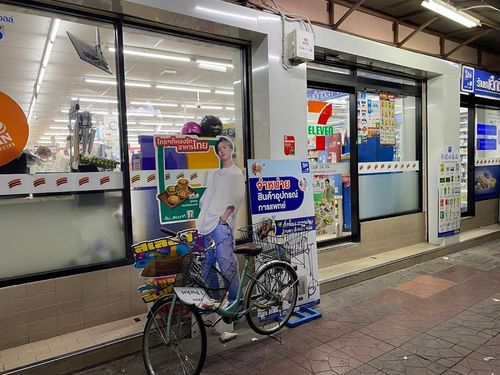
Khao San’s 24/7 reset button: ice‑cold A/C, ham‑cheese toasties, All Café iced lattes, water for 7–14 THB, and late‑night supplies from snacks to sunscreen—right by Rikka Inn.
Khao San Road
Attractions
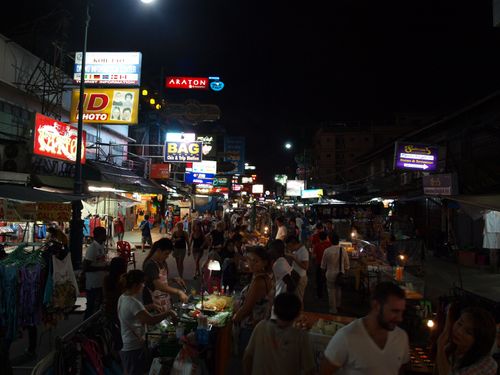
Bangkok’s backpacker carnival: curbside bars, live bands and DJs from 3pm–2am (midnight Sun). Street eats are cheap — pad thai 70–100 THB, mango sticky rice 60–100 THB. Come for wild people-watching; duck into Rambuttri for a calmer beer.
Sombat Tour
Services
More Khao San Road Guides
- Bangkok to Chiang Mai by Bus: Day vs Overnight Options, Comfort, and Booking Tips
- Bangkok to Chiang Mai by Bus: Overnight Routes, Comfort, Stops, and Best Booking Tips
- Bangkok to Chiang Mai Overnight Travel Guide: Sleepers, Night Buses, and Flight Timing
- Bangkok to Chiang Mai at Night: Sleeper Train vs Overnight Bus vs Red-Eye Flight