Bangkok to Chiang Mai by Day Bus: When It Makes Sense and What the Ride Is Really Like
Thinking of the Bangkok to Chiang Mai day bus? Here’s how to pick operators, seats, and stops—plus what the 9–11 hour daytime ride really feels like.
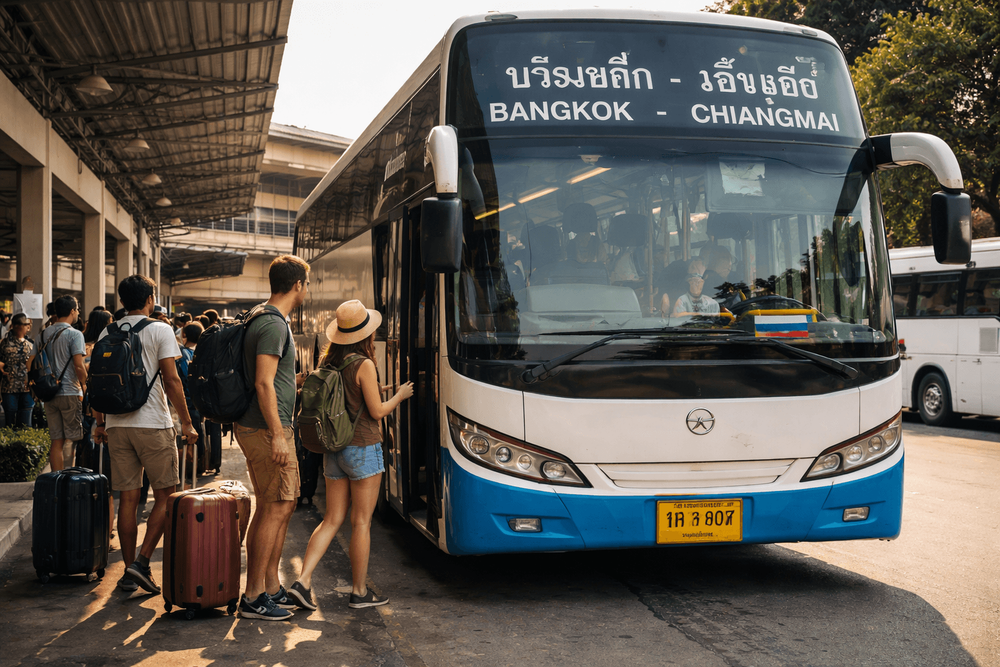
We’re shoulder to shoulder at Mo Chit as the morning heat starts to gather, cups of 7-Eleven coffee sweating in our hands, watching a gleaming coach hiss and settle into its bay. If you’ve been thinking about the Bangkok to Chiang Mai day bus, this is the moment it becomes real: a long, bright stretch of highway, rice fields flickering past, and the slow satisfaction of rolling into the north while the sun is still up.
Bangkok to Chiang Mai Day Bus Options
The Bangkok to Chiang Mai day bus isn’t one single service; it’s a patchwork of reputable operators, seat classes, and departure points. Here’s how to make sense of it without getting lost in a sea of timetables.
Common departure points in Bangkok
- Bangkok Bus Terminal (Chatuchak), widely called Mo Chit 2: The main hub for northern routes. This is where most government and private operators depart for Chiang Mai during the day.
- Nakhonchai Air Station (near Mo Chit area on Kamphaeng Phet 2 Road): A dedicated terminal for Nakhonchai Air’s premium services.
- Khao San Road area: Travel agencies can sell tickets and arrange a shuttle to Mo Chit, but the actual big-bus departure is usually from a main terminal. We avoid any ticket that promises a direct “Khao San pickup” to the north in a mystery bus—too many variables.
Typical operators
- The Transport Company (state-run, often called BKS or Bo Kho So): Reliable, many departures, standard to first-class options.
- Nakhonchai Air: Known for punctuality, assigned seating discipline, and comfortable premium classes.
- Sombat Tour and Bangkok Busline: Private companies with newer fleets on popular daytime slots.
Schedules change, and holiday timetables go wild, so double-check departure times a few days in advance. Day buses typically roll out between 7:00 and 11:00, with a smattering of early afternoon departures.
Standard vs premium services
- Standard/First Class (2+2 seating): Air-con, reclining seats, underfloor luggage, and usually an onboard toilet. Expect basic amenities; you’ll rely on rest stops for proper food.
- VIP/Gold/24–32-seat coaches: Fewer seats, more legroom, often USB ports, blankets, a snack-and-water set, and sometimes a simple meal coupon at a contracted rest area. Nakhonchai Air and some private lines excel here.
We like premium for daytime rides because the extra elbow room pays off across 10 hours, but a well-maintained standard coach is perfectly fine if you’re watching baht.
How Long It Takes and What Daytime Travel Feels Like
Call it 9 to 11 hours, depending on traffic leaving Bangkok, roadworks near Nakhon Sawan or Tak, driver swaps, and how long you linger at the rest stop. Morning departures tend to run smoother; the 7:00–9:00 window hits the central plains with cooler air and fewer bottlenecks.
The route follows Highway 1 (Phahonyothin Road) north, flattening out through Ayutthaya and Lopburi provinces, then rising slowly as we angle toward Tak and Lampang. By late afternoon the air gets thinner and the light picks up a honeyed tone. You’ll notice:
- Green paddies and sugarcane flashing by, punctuated by temple chedis that glint like gold coins in the sun.
- Roadside fruit stands and grilled-chicken smoke curling above blue plastic stools.
- The wide Ping River near Tak, then low mountains gathering as we push into Lampang.
Day buses are social in a way night buses aren’t. No hushed whispers or drawn curtains—just the soft buzz of Thai conversation, the rattle of a snack packet, and the occasional karaoke music video up front. AC can be arctic; we pack a light layer even when Bangkok feels like a wok.
Downsides? The sun. If you’re on the west-facing windows in the afternoon, it’s a slow roast. Also, you’ll arrive in Chiang Mai near rush hour if you leave late morning, which means a bit more time between Arcade Bus Terminal and your guesthouse.
Tickets, Prices, Seats, and Luggage: The Practicalities
What it costs
- Standard/First Class: roughly 450–650 THB
- VIP/Gold/24–32-seat: roughly 650–950 THB
Holiday surcharges and last-minute fares can nudge higher—Songkran (April) and New Year are the big crunches. Book at least 2–3 days ahead for those windows; otherwise, a day or two is usually fine for daytime runs.
How to book
- At the terminal: Counters at Mo Chit and Nakhonchai Air Station are straightforward, with seat maps on display. Bring your passport to match the booking name.
- Official operator websites or phone lines: Best for securing specific seats and verifying schedules.
- Travel agencies: Decent for convenience if you’re based around Khao San or Soi Rambuttri, but confirm exactly which operator you’re on and where the actual departure is.
If you’re still deciding between a day ride and sleeping on wheels, we’ve broken down the trade-offs here: Bangkok to Chiang Mai by Bus: Day vs Overnight Options, Comfort, and Booking Tips.
Seat classes and layout
- 2+2 First Class: The workhorse. Seats recline decently, footrests are standard, and overhead bins hold small bags.
- VIP 32: More legroom, better pitch, sometimes USB ports.
- VIP 24: The unicorns of space—big seats, deep recline, and fewer neighbors.
We aim for the left side in the morning (less glare) and switch sides for afternoon departures to dodge the sun.
Luggage rules
- Underfloor hold: Big backpacks and suitcases go here. Expect a tagged system; snap a quick photo of your bag before it disappears under the coach.
- Cabin: Keep valuables, electronics, meds, and documents with you. The overhead bins are fine for daypacks.
- Limits: Operators vary, but figure around 20 kg in the hold plus a carry-on. Oversize items (guitars, sports gear) may need extra fees—ask at the counter.
Onboard amenities to expect
- Air-con that actually works (arguably too well)
- Reading lights and reclining seats
- Toilet on most full-size coaches; still, rest-stop bathrooms are cleaner
- Occasional water/snack set; meal coupon only on some premium lines
If you care about the cushy details, we’ve also weighed whether paying up makes sense: Bangkok to Chiang Mai by VIP Bus: Is the Extra Comfort Worth It?.
Rest Stops, Food Breaks, and What You’ll See
Most day buses make at least one long stop (20–30 minutes) around Nakhon Sawan or Kamphaeng Phet, often at a highway plaza with multiple food courts, noodle stands, and a battalion of spotless bathrooms. Some premium tickets come with a paper coupon—hand it over for a simple rice dish, khao man gai, or a noodle bowl. Otherwise, it’s cash and go. Prices are fair for highway service: 50–80 THB for noodles, 20–30 THB for iced Thai tea, and a guilty 29-THB sausage at 7-Eleven if we’re honest.
Expect an earlier quick stop (5–10 minutes) for a driver swap or fuel, then the longer mid-journey break. Stretch properly here; your back will thank you in Lampang.
Daylight makes this route shine. On a clear day outside of burning season (roughly February to April in the north), you’ll see:
- Endless central plains, white herons stalking paddy fields
- Roadside wats capped with mirror mosaics that catch the sun and wink at passing buses
- Teak shop clusters around Lampang, horse-drawn carriages if you divert into town another day
In late afternoon, the hills fold into one another like green blankets. We hit Chiang Mai just as the evening market carts squeak onto the sidewalks.
Getting There and Away: Terminals, Transfers, and Timing
Bangkok departures
- Mo Chit (Bangkok Bus Terminal, Chatuchak): Easiest by BTS to Mo Chit or MRT to Chatuchak Park, then a short taxi or city bus ride to the terminal. Allow 30–45 minutes from the train to your gate in normal traffic; more if it’s raining.
- Nakhonchai Air Station: A few minutes’ taxi from the Mo Chit area—budget 60–120 THB depending on traffic and meter.
Arrive 30 minutes before departure to find your gate, snack up, and hit the bathroom. Gates shuffle; keep an eye on the departure boards and ask staff if you’re unsure—“Chiang Mai, kap/ka?” goes a long way.
Chiang Mai arrivals
- Arcade Bus Terminal (Terminals 2 and 3): This is where most lines land. From here to the Old City, expect 60–100 THB per person on a shared red songthaew if you wait for a few riders, or 150–200 THB if you want a quicker, semi-private hop. Tuk-tuks and ride-hailing apps are plentiful.
If you’re rolling in late afternoon, we like to drop bags first, then walk the moat-side lanes for khao soi and a fruit shake. If you’ve booked a countryside stay, confirm pickup times—they may prefer you arrive before dusk.
When the Day Bus Makes Sense (and When It Doesn’t)
Take the Bangkok to Chiang Mai day bus if:
- You want to actually see the country go by—rice paddies, gold wats, and those rolling northern hills
- Your hotel check-in is in the evening and you’d rather not loiter with luggage
- Overnight buses aren’t your thing and flights feel too clinical
Skip it if:
- You’re short on time—flying or the overnight bus keeps a day free on your itinerary
- You’re motion-sensitive; the final couple of hours can be curvy
- You need a guaranteed early-morning arrival (a night option does that better)
If you’re flirting with a sleeper bus instead, dive deeper here: Bangkok to Chiang Mai Overnight Bus Guide: VIP Seats, Budget Fares, and the Best Companies. Or weigh all transport modes—train, bus, flight—in one go: Bangkok to Chiang Mai by Train vs Bus vs Flight: Which Trip Is Best for Your Budget and Schedule?.
Tips for a Comfortable Daytime Ride
- Dress for the AC: A light sweater or scarf saves the day when the coach feels like a fridge.
- Sun strategy: Pick your seat opposite the afternoon sun; sunglasses help when the curtain gap leaks light.
- Pack smart: Neck pillow, wet wipes, power bank, offline playlists, and a big bottle of water. Bring small bills (20s and 50s) for snacks.
- Snack insurance: Highway food is fine, but we still grab a banh mi-style sandwich or sticky rice and moo ping near the terminal.
- Valuables on you: Passport, phone, and cash never leave your person. Bags in the hold are generally safe, but we don’t tempt fate.
- Motion care: If you get queasy, take meds before Tak/Lampang; that’s where the curves start.
- Time your departure: 7:00–9:00 gives you daylight scenery and an arrival with enough margin to check in, shower, and still hunt down khao soi on Ratchadamnoen Road.
- Holidays and weekends: Book early. Songkran week can turn terminals into mosh pits. Same for New Year.
- Burning season reality check: Late Feb to early April can be hazy in the north. The ride is still fine, but the views blur and Chiang Mai’s air can be smoky.
- Bathroom savvy: Use the terminal and rest-stop facilities. Bus toilets are a backup, not a lifestyle.
Know Before You Go
- Tickets list your seat number—Thai buses are civilized like that. Sit where you’re assigned.
- Drivers swap mid-route and stick to mandated rest breaks. Good companies take safety seriously.
- Keep your baggage tag; you may be asked to show it when reclaiming your suitcase at Arcade.
- If you’re meeting a host or heading straight to a cooking class, pad your schedule. Bangkok traffic and roadworks ignore your calendar.
- Don’t stress about language—basic English is common at counters. A smile and a “sawadee” help everything go faster.
The Ride We’d Choose, Today
If we’re not rushing north, we grab a mid-premium morning coach out of Mo Chit or Nakhonchai Air Station, snack up on grilled pork skewers, and let the central plains unspool like a green film reel. Arriving at Arcade with sunlight to spare, we hop a red songthaew, dump our bags, and go straight for a bowl of boat noodles before the night market thumps to life. That’s the nice thing about going by day—you don’t just arrive in Chiang Mai; you ease into it.
Related Hotels & Places
7-Eleven
Shops
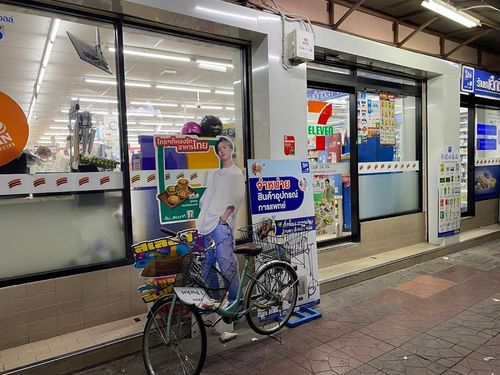
Khao San’s 24/7 reset button: ice‑cold A/C, ham‑cheese toasties, All Café iced lattes, water for 7–14 THB, and late‑night supplies from snacks to sunscreen—right by Rikka Inn.
Khao San Road
Attractions
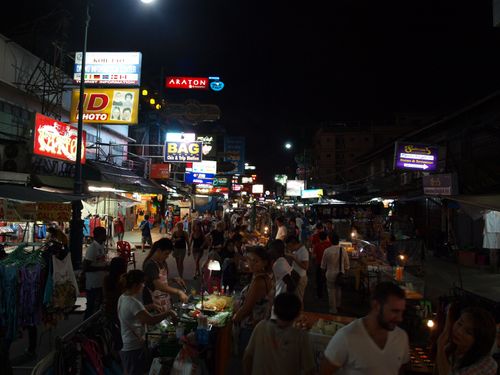
Bangkok’s backpacker carnival: curbside bars, live bands and DJs from 3pm–2am (midnight Sun). Street eats are cheap — pad thai 70–100 THB, mango sticky rice 60–100 THB. Come for wild people-watching; duck into Rambuttri for a calmer beer.
More Khao San Road Guides
- Bangkok to Chiang Mai by Bus: Day vs Overnight Options, Comfort, and Booking Tips
- Bangkok to Chiang Mai by Bus: Overnight Routes, Comfort, Stops, and Best Booking Tips
- Bangkok to Chiang Mai by Minivan: When It Makes Sense, Costs, and Where to Book
- Bangkok to Chiang Mai by Train vs Bus vs Flight: Which Option Is Best for Your Trip?