
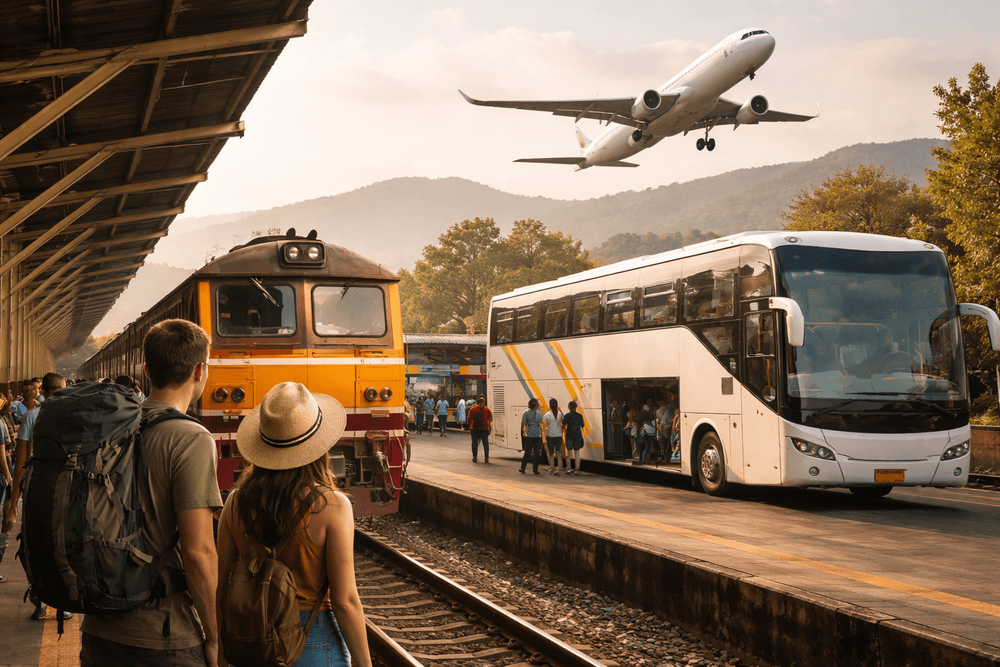
Bangkok to Chiang Mai by Train vs Bus vs Flight: Which Option Is Best for Your Trip?
Bangkok to Chiang Mai train vs bus vs flight—times, costs, comfort, and insider tips to pick the best route for your budget and schedule.
We step out from the blast of {{place:7-Eleven:text}} AC onto Phra Athit Road and feel that Bangkok heat slap our cheeks like a wok flare—hello again, city we love. We’ve got Chiang Mai on the brain and a backpack that still smells faintly of boat noodles. The big question: Bangkok to Chiang Mai train vs bus vs flight—which ride will treat us right this time?
Let’s break it down the way we actually travel here: honest costs in baht, where the stations actually are, what the seats really feel like at 3 AM, and how much time we lose (or win) in transfers. We’ll keep it sanuk—fun—without sugarcoating the crowds, delays, and the occasional farang shuffle at Mo Chit.
The Bangkok to Chiang Mai Train vs Bus vs Flight Showdown
Bangkok to Chiang Mai is one of Thailand’s classic routes—roughly 700 km. Every option gets you there; the trick is finding the one that fits your budget, body, and schedule.
Quick take
- Train: 10–13 hours. Comfy sleepers, scenic, slow. Day and overnight options.
- Bus: 9–11 hours. Frequent, cheap, surprisingly plush in VIP classes, chilly AC.
- Flight: 1h15m in the air. Fastest door-to-door if you time the transfers right.
We’ll go deep below, but if you want more nuts-and-bolts comparisons after this, bookmark these in-depth roundups:
- Bangkok to Chiang Mai by Train vs Bus vs Flight: Which Travel Option Is Best?
- Bangkok to Chiang Mai: The Best Ways to Travel
- Bangkok to Chiang Mai by Train vs Plane vs Bus: The Best Route for Your Budget and Schedule
Trains: Overnight lullabies and sunrise rice fields
If we’ve got time, we take the train. There’s a rhythm to it—the clack of the tracks as we roll past Ayutthaya’s spires, tamarind trees flicking the window, dawn breaking somewhere outside Lampang. And the Chiang Mai arrival—cooler air, mountain silhouettes—feels earned.
How long and how comfy
- Time: Typically 10–13 hours. Day trains run 8–9-ish hours on paper but often add wiggle; night sleepers average 11–13 hours.
- Comfort: Second-class AC sleepers are the sweet spot—curtained bunks, soft ride, actual sleep. First-class cabins (two-berth with a door) are great for couples or families who want privacy. Daytime seats are fine for a budget view-fest, but 10+ hours upright can test our patience.
What it costs (rough ballpark)
- Third-class fan seat: 200–400 THB (long, basic, no frills).
- Second-class AC seat: 500–900 THB.
- Second-class AC sleeper: about 850–1,300 THB (upper is usually a bit cheaper than lower).
- First-class sleeper (two-berth cabin): ~1,600–2,200 THB per person depending on train/date.
Prices swing with train type (Special Express vs Rapid), berth (upper/lower), and demand. Holiday weeks spike.
Where to board in Bangkok
- Most intercity Northern Line trains to Chiang Mai depart Krung Thep Aphiwat Central Terminal (a.k.a. Bang Sue Grand Station), directly linked to MRT Blue Line. Allow 20–30 minutes to navigate this big, modern terminal.
- Many services also stop at Don Mueang station—handy if you’re near the old airport (DMK). Always check your ticket; a few schedules can shift.
Arrival is at Chiang Mai Railway Station in Wat Ket, about 3 km east of Tha Phae Gate.
Luggage and logistics
- Luggage: Generous. We’ve rolled on with 60L backpacks no problem. Keep valuables with you; large bags go in overhead racks or at carriage ends.
- Food: Snack carts and a dining car on most long trains, but we still pack som tam chips and water from the station 7‑Eleven.
- Sleep: Lower berths feel wider and darker; bring earplugs and a light sweater—the AC can bite.
Who we recommend trains for
- Night owls who’d rather pay to sleep than to sit.
- First-timers who want the “Thailand by rail” romance.
- Families snagging a first-class cabin for privacy.
- Anyone who hates airports.
Downsides? Delays happen, and bathrooms late at night can be… let’s say “character-building.” But waking up to northern hills and rolling into Chiang Mai with a coffee from the platform stall makes it worth it.
Buses: The quiet workhorse from Mo Chit to the mountains
Buses don’t get Instagram love, but they deliver. Think reclining seats, blankets, a movie you won’t finish, and a midnight stop at a garishly lit rest plaza where everyone queues for noodles.
How long and how comfy
- Time: 9–11 hours. Overnight is most popular; you sleep some, you drift some.
- Comfort: “VIP 24/32-seat” classes are our jam—wider seats, more legroom, onboard WC. Standard and first-class coaches are fine, just tighter.
What it costs
- Standard/First class: ~400–700 THB.
- VIP/“VIP 24/32”: ~700–1,100 THB.
Pay a bit more for the better seat. Your knees will thank you around Nakhon Sawan.
Where to board in Bangkok
- Official departures leave from Bangkok Bus Terminal (Chatuchak), a.k.a. Mo Chit 2—north of Chatuchak Park. It’s big, busy, and honest about it.
- Travel agencies on Khao San Road will happily sell you “VIP” tickets; some are fine, some are resold seats that start with a shuttle to Mo Chit. If we’re picky about seat class, we buy directly at Mo Chit.
You arrive at Chiang Mai Arcade Bus Terminal (Terminal 2/3), about 4 km east of the Old City.
Luggage and logistics
- Luggage: 20 kg-ish in the hold is typical, with a small bag onboard. Tag your bag and keep the stub.
- Food and stops: Usually one big 20–30 minute stop at a service plaza; some lines include a simple meal coupon.
- Temperature: AC can be set to “Arctic.” Socks and a hoodie save lives.
Who we recommend buses for
- Budget travelers who still want a recline and onboard toilet.
- Last-minute bookers who missed sleeper berths.
- Folks staying near Mo Chit or Chatuchak who don’t want to cross the city twice.
Downsides? Night bus bathrooms are serviceable, not spa-like; roadworks can slow things; and motion-sickness folks may prefer rail.
Flights: Up, down, and in time for khao soi
When time is tight, we fly. It’s hard to argue with a 1 hour 15 minute hop and a bowl of khao soi at lunchtime on Nimman.
How long and how comfy
- Time: 1h10m–1h20m in the air; add 60–90 minutes on each side for transit, check-in, and security. Door-to-door, plan 3.5–5 hours.
- Comfort: Standard short-haul economy. Low-cost carriers (LCCs) sell seats, bags, and snacks a la carte; full-service airlines include a checked bag and a drink.
What it costs
- Promo LCC fares: ~1,000–2,500 THB one way (no checked bag).
- Typical LCC fares: ~1,500–3,500 THB.
- Full-service airlines: ~1,800–4,500 THB including a checked bag.
- Peak/last-minute: 3,500–6,000+ THB.
Add-ons: Checked bags on LCCs usually cost ~300–600 THB per 15–20 kg each way if purchased in advance; more at the airport.
Where to fly from and land
- Bangkok airports: Don Mueang (DMK) is home to most LCCs (AirAsia, Thai Lion Air, Nok Air). Suvarnabhumi (BKK) hosts full-service carriers and some LCCs (Thai Airways, Bangkok Airways, Thai VietJet).
- Chiang Mai International Airport (CNX) is delightfully close—about 3–4 km from the Old City.
Luggage and logistics
- Luggage: 7 kg cabin allowance on most LCCs; weigh-ins are common. Full-service carriers usually include 20–30 kg checked.
- Timing: Early morning DMK lines can snake; online check-in saves us.
Who we recommend flights for
- Time-pressed travelers on a tight itinerary.
- Anyone connecting onward internationally.
- Light packers snagging promo fares.
Downsides? Airport faff, potential baggage fees, and the climate impact. If you’ve got an extra half-day, the train is kinder to the planet and the soul.
Costs, booking, and how planning (or winging it) changes the game
Booking windows and sell-out risk
- Trains: Sleeper berths for weekends and holidays can sell out days or weeks ahead. Official ticket sales typically open well in advance (commonly 30–90 days depending on service). If you want a lower berth or a first-class cabin, don’t dither.
- Buses: More flexible. You can often buy same day at Mo Chit, though VIP classes for preferred times can fill.
- Flights: Prices hinge on demand. Book 1–3 weeks ahead for midweek deals outside Thai holidays; school breaks and festivals spike fast.
How flexible you need to be
- Lowest train fares require taking whatever berths remain; being cool with an upper bunk helps.
- For buses, leaving an hour earlier or later can be the difference between standard and VIP.
- Flights reward odd hours—midday or late-night departures are often cheaper.
Luggage limits in a nutshell
- Train: Generous and rarely policed unless you roll up with a furniture set.
- Bus: 20 kg in the hold is a good working assumption; oversized bags may get side-eye or a small fee.
- Flight: The strictest. Factor in bag fees before declaring a cheap fare a win.
Getting there and away: terminals, transfers, and real-world time
In Bangkok
- Krung Thep Aphiwat Central Terminal (Bang Sue): Ride the MRT Blue Line to Bang Sue Station; follow signs into the cavernous hall. From Khao San/Soi Rambuttri, budget 30–50 minutes by taxi/Grab depending on traffic.
- Mo Chit Bus Terminal: Don’t confuse the BTS Mo Chit station with the terminal—they’re not the same place. From BTS/MRT Chatuchak, it’s a 10–15 minute taxi or bus ride to the big terminal north of the park. From Banglamphu (Khao San/Phra Athit), 30–60 minutes by taxi/Grab depending on time of day.
- Airports: DMK connects via the SRT Red Line commuter train and expressways; BKK connects via the Airport Rail Link (ARL) at Phaya Thai and Makkasan. Taxi from Old City to either airport can be 30–70 minutes; rain can make it longer.
In Chiang Mai
- Railway Station (Wat Ket): 3 km east of Tha Phae Gate. Red songthaews (shared “red trucks”) hover outside—expect 50–80 THB per person to the Old City, more for private hire. Grab is ~100–180 THB depending on time.
- Arcade Bus Terminal: 4 km east of the Old City. Same red trucks—50–100 THB shared; Grab 100–200 THB.
- CNX Airport: Close enough to feel the prop wash. Airport taxis, Grab, or red trucks get you to the moat in 15–25 minutes. Fares usually 120–200 THB depending on route and traffic.
Pro tip: If we’re landing late and want to hit the ground running, we book a guesthouse inside the Old City moat so we can walk to breakfast at Somphet Market.
Who should pick what
Best for budget travelers
- Bus (VIP/First) typically offers the lowest price-to-comfort ratio at 700–1,100 THB.
- Train second-class seat can be cheaper, but 10+ hours upright isn’t everyone’s idea of fun. Third-class is cheapest but punishing.
- Flights can be cheap with a promo, but baggage tips the scales fast.
Best for real sleep and a story to tell
- Train second-class AC sleeper (lower berth) is our go-to. First-class cabin if you crave privacy or travel with kids.
Best for families
- First-class train cabins keep little wanderers contained.
- Flights are easy with strollers and shorter attention spans.
Best for time-pressed visitors
- Flight wins. If you’ve got just a few days up north, burn rubber—er, jet fuel—and go eat khao soi.
Best for first-time Thailand travelers
- Train or flight. The train feels iconic; the flight keeps the itinerary snappy.
Best for those staying around Khao San/Phra Athit
- Train is fine—grab a taxi to Krung Thep Aphiwat and you’re set.
- Bus can be easy if you buy at Mo Chit directly; Khao San agencies add a transfer step.
- Flights from DMK are convenient if you’re already north of the river.
Pros and cons at a glance (with the gritty bits we tell our friends)
Train
- Pros: Sleep horizontally; scenic; social; eco-friendlier; luggage lenient.
- Cons: Slow; potential delays; popular berths sell out; bathrooms can be rough by morning.
Bus
- Pros: Cheap; frequent; VIP seats comfy; terminals near town on both ends.
- Cons: AC set to penguin mode; road fatigue; rest-stop roulette; motion sickness possible.
Flight
- Pros: Fastest; tons of daily options; good for tight schedules.
- Cons: Airport time and fees; luggage limits; less relaxing than you hoped at 5 AM in DMK security.
How we choose (and where we crash)
- If we’ve got a free evening and want to roll into Chiang Mai with a sunrise, we book a second-class lower berth and a cup of instant coffee for dawn.
- If our wallet’s feeling light but we still want a recliner and a blanket, we go VIP bus from Mo Chit and bring a hoodie.
- If we’re stacking temples, markets, and mountains in 48 hours, we fly mid-morning and save our patience for the Sunday Walking Street.
Staying the night before you leave? Around Banglamphu (Khao San, Phra Athit) we like to keep it simple—walkable to the river, quick hop to a taxi, and late-night noodles on Soi Rambuttri to send us off. In Chiang Mai, we often base inside the moat the first night, then slide to Nimman for coffee and co-working.
Know before you go: tickets, scams, and small wins
- Ticket sources: Stick to official counters and credible agents. On Khao San Road, you’ll hear “VIP” a lot; ask the seat layout and class before paying. For trains, official ticket offices and reputable platforms are your friend.
- Holiday crunch: Thai holidays (Songkran in April, Loy Krathong/Yi Peng in Nov, school breaks) turn prices up and seats scarce. Book ahead.
- Seat strategies: Train lower berths sleep best; on buses avoid the back row; on flights, aisle mid-cabin makes for faster exits at CNX.
- Food hacks: Pack snacks—service stops can be chaos. In Bangkok, stock water and munchies at the station 7‑Eleven before boarding. In Chiang Mai, reward yourself with a bowl of khao soi on arrival.
- Safety: Keep valuables on you, especially on buses where big bags ride in the hold. On trains, we loop a strap through the rack for peace of mind.
The bottom line: match the ride to your style
- Choose the train if the journey is part of your Thailand story and you value a real bed over raw speed.
- Choose the bus if your baht count matters most and you want a direct, late-night departure without airport hassle.
- Choose the flight if time is tight and you’d rather be at Wat Phra Singh by noon than swapping travel tales in a dining car.
We’ll be honest: we default to the sleeper train when we can. There’s nothing like nodding off south of Ayutthaya and waking to mist over northern rice fields. But if we’re chasing a sunset on Doi Suthep, we’ll take the 10:00 flight and be slurping khao soi by lunch. See you up north—save us a seat at the market and a mango sticky rice for dessert.
Related Hotels & Places
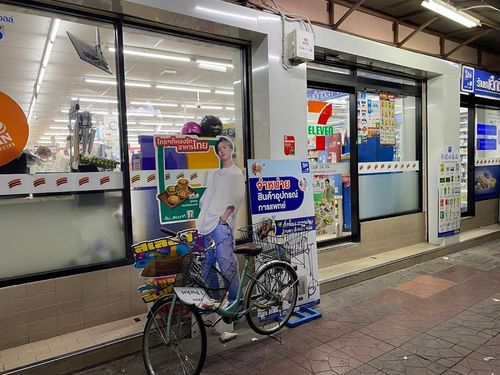
7-Eleven
Shops
Khao San’s 24/7 reset button: ice‑cold A/C, ham‑cheese toasties, All Café iced lattes, water for 7–14 THB, and late‑night supplies from snacks to sunscreen—right by Rikka Inn.
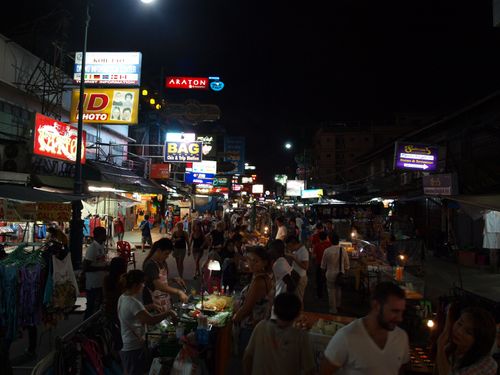
Khao San Road
Attractions
Bangkok’s backpacker carnival: curbside bars, live bands and DJs from 3pm–2am (midnight Sun). Street eats are cheap — pad thai 70–100 THB, mango sticky rice 60–100 THB. Come for wild people-watching; duck into Rambuttri for a calmer beer.
More Khao San Road Guides
- Bangkok to Chiang Mai by Train vs Bus vs Flight: Which Route Is Best for Your Trip?
- Bangkok to Chiang Mai by Train vs Plane vs Bus: Which Way Is Best for Your Budget, Time, and Comfort?
- Bangkok to Chiang Mai by Train vs Bus vs Flight: Which Trip Is Best for Your Budget and Schedule?
- Bangkok to Chiang Mai by Flight vs Train vs Bus: Which Option Is Best for Your Trip?