Bangkok Temple Run for Wheelchair Users: Accessible Ways to See Wat Pho, the Grand Palace, and Golden Mount from Khao San Road
Wheelchair-first temple run from Khao San: step-light routes to Wat Pho, the Grand Palace, and the Golden Mount base—real tips, shade hacks, and transit that works.
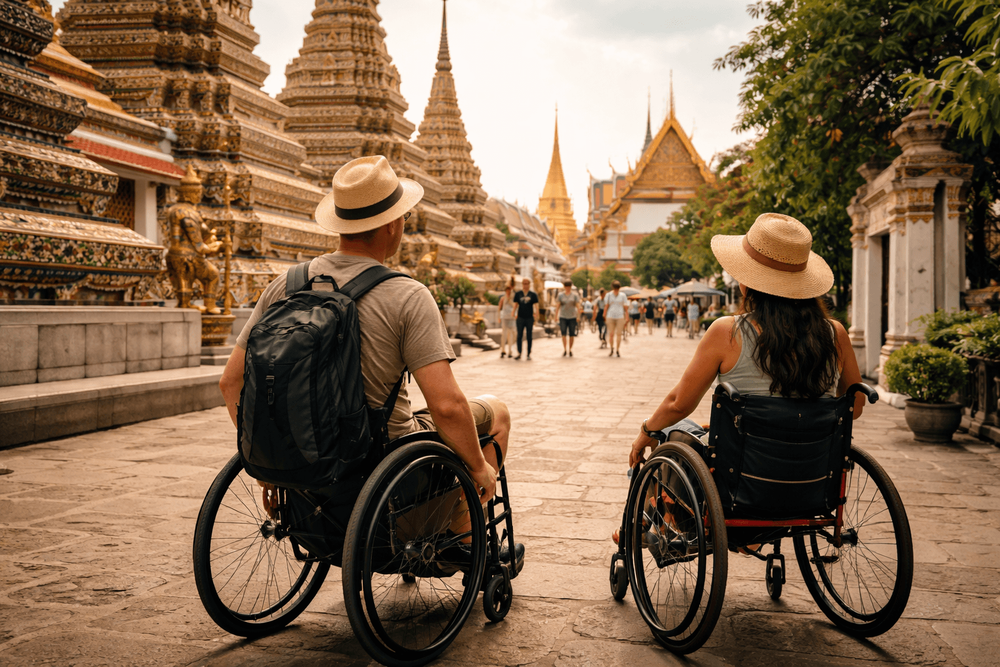
We roll out from Khao San just after the monks’ alms—street sweepers hosing down the soi, incense curling from a spirit house, the bass from last night’s bar finally giving up the ghost. It’s already warm, the kind of Bangkok heat that wraps you like a hot towel, and the blast of AC from 7-Eleven is pure mercy. This is our bangkok temple run wheelchair game plan—realistic, step‑savvy, and focused on what we can actually see and enjoy without turning the day into an obstacle course.
What Accessibility Really Looks Like Around Bangkok’s Big Temples
Bangkok is sanuk—fun—but it’s also a city of cracked sidewalks, surprise curbs, and creative gradients. Around Wat Pho, the Grand Palace, and the Golden Mount (Wat Saket), expect:
- Sidewalks and curbs: Patches of smooth tile, then a sudden step or drain. Ramps exist in places, but lips at thresholds and street-to-sidewalk height gaps are common. We often stick to the road edge when traffic is slow—eyes up for motos.
- Entrances: Main gates are wide; secondary gates can be quieter and sometimes flatter. Ticket windows are usually ground-level, but counters can be high—don’t be shy about asking staff to step out.
- Ramps and surfaces: You’ll find some proper ramps and a lot of “Bangkok ramps” (steep boards). Corridors are usually wide; thresholds at temple doors can be a few centimeters high.
- Crowds: Midday tour groups turn courtyards into a school of fish. We aim for early morning or late afternoon.
- Shade and rest: Courtyards can be blazing. Look for cloisters, sala pavilions, and the blessed fan breeze under a bodhi tree.
Set expectations and the whole day feels easier. We’re not trying to conquer every ubosot. We’re here to soak in the art, the glittering chedi, the saffron flow of daily ritual.
The Bangkok Temple Run Wheelchair Route (From Khao San)
We’ll keep distances short, surfaces manageable, and breaks strategic. Think of this as the best step‑light loop from Khao San and Soi Rambuttri.
Stop 1: Wat Pho (Wat Phra Chetuphon Wimon Mangkhalaram Rajwaramahawihan)
- Why start here: Mornings are cooler and calmer; the gold of the Reclining Buddha glows soft. Vendors near Tha Tien are still brewing strong cha yen.
- Access notes: The temple grounds are generally flat with a mix of smooth tile and a few lips at thresholds. Main courtyards are rollable. Some buildings require a small step up; staff often have portable ramps or will guide you to the lowest threshold. Viewing the Reclining Buddha is possible from the long hall aisles; a couple of short thresholds may need a quick lift assist.
- Rest stops: Shady cloisters ring the courtyards. There are toilets onsite; accessible stalls vary—confirm locally. If you need a cool‑down, Yodpiman Riverwalk (near Pak Khlong Talat) has flat promenades, elevators, and reliable bathrooms.
- Dress and shoes: You’ll remove shoes to enter certain halls. Bring a light shoe bag and socks or wipes.
If you want deeper, step‑aware planning before you roll, we’ve mapped out low‑stair strategies here: Accessible Bangkok Temple Run from Khao San Road: Wheelchair-Friendly Routes, Rest Stops, and Easy-Access Tips.
Stop 2: The Grand Palace and Wat Phra Kaew (Emerald Buddha)
- Why go: It’s the big show—sparkling prangs, mirrored mosaics, and ceremonial pomp. Even a partial visit is unforgettable.
- Access notes: The ticketing area and outer courts are broad and paved. Expect some ramps and some thresholds. Certain inner structures and galleries have steps; much of the Emerald Buddha precinct is viewable from the courtyard even if the sanctum itself involves stairs. Security and attendants are used to mobility questions—ask about the flattest gate in use that day.
- Crowds and timing: Hit it early or late. Shade is limited; umbrellas are okay in courtyards. Large groups thin out near closing.
- Facilities: Staff can point you to closer toilets; accessible stalls exist in newer blocks but aren’t universal—confirm locally.
For more step‑free route choices from Khao San to the palace zone, tap our wheelchair‑first outline: Accessible Bangkok Temple Run: Wheelchair-Friendly Routes to Wat Pho, the Grand Palace, and Golden Mount from Khao San Road.
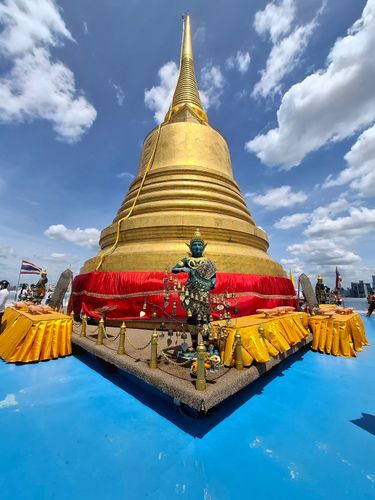
Stop 3: Wat Saket (The Golden Mount) — What’s Realistic
- The hilltop chedi is famous for its 300-ish steps and breezy views. That climb is not wheelchair‑friendly. Treat the summit as optional.
- What we can enjoy: The base temple grounds are flat and pleasant with shrines, bells, and shade. The canal (khlong) nearby gives that old‑Bangkok vibe. If skyline views are a must, consider a nearby elevator‑equipped cafe or rooftop around Ratchadamnoen Klang Road for your sunset fix.
- If energy is fading: Swap Golden Mount for a riverside glide along Phra Athit Road; Santichaiprakan Park has flat paths and a breezy fort lookout right by the Chao Phraya.
Want more low‑stair alternates and rest stop spacing between these three? We keep a mobility‑focused rundown here: Bangkok Temple Run for Accessibility: Wheelchair, Stroller, and Low-Walking Options from Khao San Road.
Getting Between Temples Without the Hassle
We keep transport simple and shade‑seeking.
- Metered taxi: Easiest door‑to‑door option from Khao San to Wat Pho (10–15 min off‑peak). Short hops in the old city are usually inexpensive; fares swing with traffic and detours. Drivers may try flat‑rate; the meter is typically cheaper.
- Ride‑hailing (Grab/Bolt): Handy for pickup pins at quieter corners of Soi Rambuttri or Phra Athit Road. You can message drivers about wheelchair space; most sedans fit a folding chair in the trunk.
- Accessible vans: Pre‑book if you need a ramp vehicle; pricing varies widely. Expect per‑trip or half‑day rates—ask for photos of the ramp and measurements.
- Tuk‑tuks: Sanuk for short photo ops, but loading can be awkward and there’s no shade. We usually skip with a wheelchair unless the driver is game to help and the chair folds small.
- River boats: Many Chao Phraya Express piers involve steps or steep metal ramps with gaps. Tha Tien and Tha Chang vary with tides; conditions change by the hour. If you try it, go off‑peak and scout first. Otherwise, stick to the road.
Best times to move: Early morning (7:30–9:30) and after 3:30 pm. Midday sun + tour buses = sweat and squeezes.
Heat, Crowds, Restrooms, and Rituals: Wheelchair‑Smart Tips
- Hydrate like a local: 7‑Eleven is your hydration HQ—cold water, electrolyte drinks, and that heavenly AC blast. We toss a couple of small bottles in a side pouch.
- Shade strategy: Courtyards fry at noon. Aim halls and cloisters first, then the open chedi. Carry a mini umbrella for moving shade.
- Clothing and etiquette: Knees and shoulders covered for palace and major wats. Lightweight pants or a sarong in your bag keeps guards smiling. Speak softly inside prayer halls.
- Shoes off, wheels on: If you prefer not to roll bare tires inside a hall, many attendants are fine with you viewing from the doorway threshold. Keep socks handy if transferring.
- Restrooms: Temple toilets range from basic to modern. For reliably accessible stalls, look to newer public buildings, riverwalks, and big cafes. Around Khao San/Phra Athit, large coffee chains, the National Museum Bangkok area, and riverfront malls tend to be the safest bets—still, confirm locally.
- Tickets and counters: Some counters are tall; ask staff to step around. Carry cash for small temples and a card for bigger complexes where contactless is more common now.
- Scams and touts: If someone outside the Grand Palace says it’s “closed,” it almost never is. Smile, sawadee, and roll on.
Know Before You Roll
- Surfaces change block to block—when in doubt, the road shoulder is often smoother than the sidewalk. Move slowly, watch for tuk‑tuks.
- Bring a small threshold ramp if you have one; it turns a 3–5 cm lip into a non‑event.
- Pack cooling towels, a power bank, and a rain cover for the chair—Bangkok clouds don’t warn you.
- Don’t try to do “everything.” One great hall and two courtyards beats four rushed sites any day.
Planning Help: Guides, Helpers, and Real‑Time Checks
- Local guide/helper: A fluent Thai‑speaker who can scout entrances and negotiate curbs is worth their weight in mango sticky rice. If a friend can’t join, consider a private guide or a student helper for a few hours.
- Call ahead: Temple phone numbers change, but a quick call the morning of your visit can confirm which gate is open and where the flattest approach is.
- Adapt to stamina: Heat drains batteries—yours and your chair’s. Keep the day modular: Wat Pho + lunch, reassess, then palace, maybe Golden Mount base only.
- Recharge points: Cafes along Maha Rat Road and Phra Athit Road are our go‑tos for AC and sockets.
Quick Plan
- Day 1: Khao San Road → Wat Pho → Grand Palace/Wat Phra Kaew → Wat Saket (Golden Mount base) → Khao San Road; ~6–8 km total; 20–35 min drive time across segments off‑peak; key stops: Reclining Buddha hall, palace outer courts; overnight base: Khao San/Phra Athit area
- Optional Day 2 (easy pace): National Museum → Phra Athit Park/Santichaiprakan → Riverwalk cafes; ~4–5 km; 15–25 min across segments; overnight base: Khao San/Old City
ASCII route: Khao San → Wat Pho → Grand Palace → Wat Saket → Khao San
Costs at a Glance (THB)
Last checked: Oct 2026
- Fuel (Gasohol 95): ~36–45 THB/liter typical Bangkok range; confirm locally.
- Segment fuel estimates (if self‑drive):
- Khao San → Wat Pho (~2.5 km): ~10–20 THB
- Wat Pho → Grand Palace (~1 km): ~5–10 THB
- Grand Palace → Wat Saket (~2.5 km): ~10–20 THB
- Wat Saket → Khao San (~1.7 km): ~5–15 THB
- Notes: Real costs depend on traffic and car efficiency.
- Tolls: 0 THB within Old City (no expressways needed for this route).
- Attraction fees (per person; foreigners):
- Wat Pho: commonly in the 150–300 THB range; confirm locally.
- Grand Palace/Wat Phra Kaew: commonly around 500 THB; confirm locally.
- Wat Saket: often in the 50–200 THB range; confirm locally.
- Parking (per night near Khao San/Old City): ~100–300 THB at private lots; confirm signage onsite.
Booking Pathways
- Car rental: Compare rental deals at https://www.rentalcars.com
- Hotels: Browse options near Khao San with accessibility filters at https://www.booking.com
- Attraction tickets/tours: Check skip‑the‑line and private temple tours at https://www.klook.com
Verification
- We avoid exact prices/hours unless we can confirm across at least two recent sources (official temple pages, Tourism Authority of Thailand updates, and on‑the‑ground checks). Where not fully verified, we provide safe ranges and note “confirm locally.” Conditions at piers, gates, and surfaces can change day‑to‑day due to tides, events, or renovations—always recheck the morning of your visit.
When to Call It a Day (And Where to Celebrate)
After the palace glitter, we drift back along Phra Athit Road, the river breeze sneaking through the trees, and find a café with strong Thai tea and blessed AC. If we’re still rolling at sunset, a flat stroll in Santichaiprakan Park delivers golden light on the water without a single step. Tomorrow’s another day—Wat Arun Ratchawararam Ratchawaramahawihan across the river or maybe just the best boat noodles under the Rama VIII Bridge. Bangkok’s not going anywhere, and neither are we.
EVAL_DATA
- quick_plan: true
- costs_block: true
- booking_pathways: true
- verification_citations_or_ranges: true
Further step‑free route ideas starting from Khao San if you want to plan variants:
Related Hotels & Places
7-Eleven
Shops
Wat Phra Chetuphon Wimon Mangkhalaram Rajwaramahawihan
Temples
Yodpiman Riverwalk
Shops
The Grand Palace
Attractions
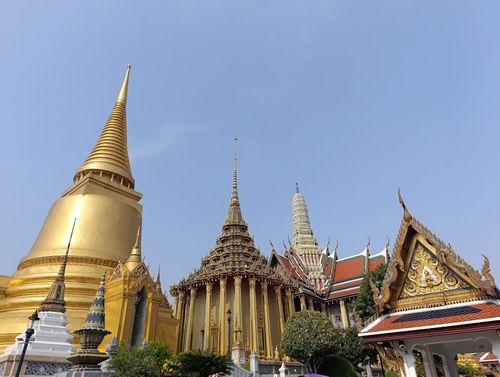
Bangkok’s royal showpiece a short hop from Khao San: glittering Wat Phra Kaew, Ramakien murals, and gold-on-gold rooftops. Go 8:30am to dodge the heat, dress modestly, and boat to Tha Chang for the prettiest arrival.
Wat Phra Kaew
Temples
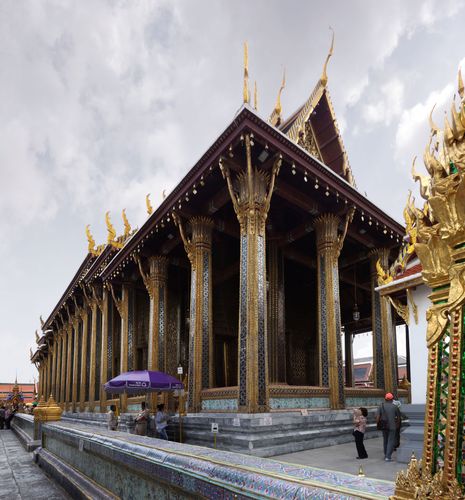
Bangkok’s holiest temple inside the Grand Palace. Go early (8:30am–3:30pm). Buy the 500 THB ticket at Na Phra Lan Rd gate. Dress code enforced. Marvel at Ramakien murals and the tiny Emerald Buddha whose robes change with the seasons. 10–15 minutes’ walk from Khao San.
Wat Saket Ratchawora Mahawihan
Temples
National Museum Bangkok
Attractions
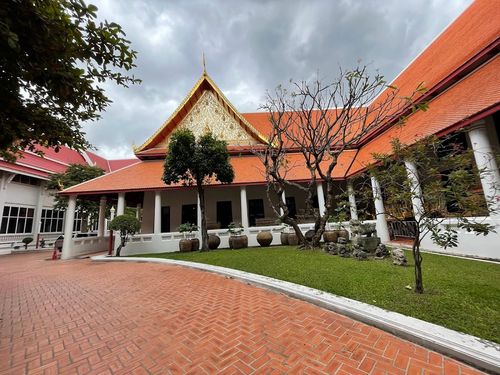
Thailand’s story in one stop: royal funeral chariots, the Buddhaisawan Chapel’s murals and Phra Buddha Sihing, plus halls of khon masks and musical instruments. 10‑minute walk from Khao San. Open Wed–Sun, 8:30am–4pm.
Wat Arun Ratchawararam Ratchawaramahawihan
Temples
More Khao San Road Guides
- Accessible Bangkok Temple Run: Wheelchair-Friendly Routes to Wat Pho, the Grand Palace, and Golden Mount from Khao San Road
- Bangkok Temple Run for Accessibility Needs: Wheelchair, Mobility, and Low-Stair Planning for Wat Pho, the Grand Palace, and Golden Mount
- Bangkok Temple Run for Accessibility: Wheelchair, Stroller, and Low-Walking Options from Khao San Road
- Bangkok Temple Run for Limited Mobility Travelers: Step-Free Planning for Wat Pho, the Grand Palace, and Golden Mount from Khao San Road