
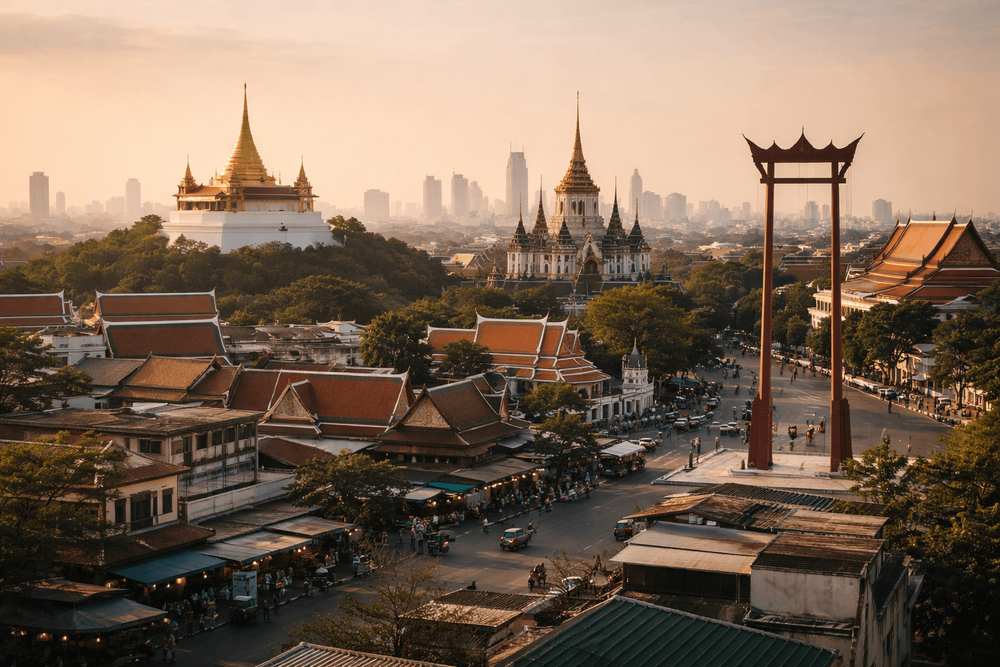
Bangkok Temple Run with Wat Saket, Loha Prasat, and the Giant Swing from Khao San Road
Walk a perfect Old Bangkok loop: Wat Saket’s views, Loha Prasat’s spires, and the Giant Swing — all an easy stroll from Khao San, with food stops and route tips.
We slip out of the Khao San bubble just after sunrise, when Soi Rambuttri is still rubbing sleep from its eyes and the air hasn’t turned into soup yet. Iced coffee sweats through a plastic cup, a tuk-tuk coughs to life, and we set off toward the Golden Mount’s gleaming stupa — the first point in our wat saket loha prasat giant swing triangle through Old Bangkok. Bells will ring, incense will curl, and our calves will bargain with us on every stair. This loop is classic Rattanakosin: close-set temples, old shophouses, and the kind of street food that makes us forget about schedules.
Wat Saket, Loha Prasat, and the Giant Swing: Where They Sit and Why They Matter
All three stops live in Bangkok’s old city (Rattanakosin), within striking distance of Khao San Road.
- Wat Saket (the Golden Mount): South of Khao San, a 20–25 minute walk from Banglamphu. The temple’s man-made hill and gilded chedi pop above the low-rise skyline near Phan Fa Lilat Bridge and the Saen Saep khlong (canal).
- Loha Prasat (Wat Ratchanatdaram): A 10–12 minute walk west of Wat Saket, set just off Ratchadamnoen Klang Avenue near Democracy Monument, with a squared, tiered spire forest that looks like a metal crown.
- The Giant Swing (Sao Chingcha): A tall red teak frame standing in front of Wat Suthat, another 10 minutes southeast from Loha Prasat along Bamrung Mueang Road. You can’t miss it — it’s a crimson exclamation mark against the sky.
Together, these three paint a picture of Bangkok’s layers: Buddhist devotion at Wat Saket and Loha Prasat, Brahmin-Hindu court ritual remembered by the Giant Swing, and everyday life buzzing around all of it.
The Stories Behind the Stones
Wat Saket (Golden Mount)
Climbing the Golden Mount is a rite of passage — 300-plus shallow steps spiraling up a cool, shaded path, past rows of bells we can’t resist tapping. The story starts with King Rama III, who tried to build a grand chedi here in the 19th century; the soft ground collapsed. Later kings stabilized the mound, and under Rama V the brilliant chedi we see today was completed, crowned with a relic of the Buddha. Each November, the temple fair during Loy Krathong turns the hill into a carnival of twinkling lights, food stalls, and chanting — peak sanuk with a sacred core.
From the top, the panorama is a Bangkok time machine: the prang of Wat Arun to the west, the Democracy Monument to the north, and an ocean of shophouse roofs. We’ll spot our next stop, too — Loha Prasat’s dark spires pricking the horizon.
If you want deep specifics on tickets, steps, and temple etiquette from Khao San, skim our Wat Saket guide later: Wat Saket (Golden Mount) Guide: Climb, Views, Tickets, and Temple Etiquette from Khao San Road.
Loha Prasat (Wat Ratchanatdaram)
Loha Prasat means “Metal Castle,” and once we’re standing in its courtyard, the name clicks. Built in 1846 under King Rama III as part of Wat Ratchanatdaram (a temple dedicated to his granddaughter, Princess Somanass), the structure takes inspiration from ancient Sri Lankan and Indian precedents. Its 37 metal-tipped spires symbolize the 37 virtues toward enlightenment, and the plan is a monk’s maze — concentric galleries, meditation niches, and a central spire you can usually climb for a close-up of the latticed ironwork and a quiet view across the old town.
It’s one of a kind; there were once others like it in Asia, but today Bangkok’s Loha Prasat is the only complete example standing. If Wat Saket is all golden glow and carnival energy, Loha Prasat is cool geometry and hush — perfect for catching our breath.
The Giant Swing (Sao Chingcha) and Wat Suthat
The red frame in front of Wat Suthat isn’t decorative. For more than a century, Brahmin priests used the Giant Swing in a royal ceremony (Triyampawai/Lo Chingcha) to reenact a Hindu myth: they’d swing high to grab a bag of coins with their teeth, honoring Shiva and the cosmic balance at harvest’s start. It was dangerous — the ritual was halted in 1935 after too many injuries — but the memory remains in that scarlet silhouette. The current teak pillars were replaced in the 2000s, but the swing still stuns at sunset when the sky turns mango-orange.
While we’re here, Wat Suthat’s main viharn is worth a look if time allows: long, echoing halls, exquisite murals, and a seated Buddha serene as a still pond. The swing is free, the temple is ticketed.
Practicalities: Hours, Fees, Dress Code, and Getting Around
Here’s what we need to know before our flip-flops hit those tiles. Opening hours and fees can change — treat these as typical and double-check on the day.
Opening Hours and Entrance Fees
- Wat Saket (Golden Mount): Usually 7:30–19:00. Foreign visitor ticket around 100 THB for the Golden Mount; temple grounds below are free. Thai citizens typically free. Sunset gets busy; mornings are cooler and calmer.
- Loha Prasat (Wat Ratchanatdaram): Typically 8:00–17:00. Entry often by donation (20–40 THB suggested) to access the galleries and central spire. The courtyard and surrounding halls are free to wander respectfully.
- Giant Swing: Outdoor monument, free anytime. Wat Suthat next door usually opens roughly 8:30–21:00 with a foreign visitor fee around 100 THB.
Cash is king at donation boxes and small kiosks; keep a pocketful of coins and small bills.
Dress Code and Temple Etiquette
- Cover shoulders and knees; no crop tops or super-short shorts. Light pants or a wrap skirt are our friends in Bangkok heat.
- Remove shoes and hats before entering ordination halls (ubosot) and viharns; point your feet away from Buddha images.
- Keep voices low, avoid stepping over people during prayers, and skip flash photography inside halls.
If you want a refresher on do’s and don’ts, we break it down here: Wat Saket (Golden Mount) Visitor Guide: Climb, Views, and Temple Etiquette from Khao San Road.
Getting Between the Three Sites (and From Khao San)
- From Khao San/Soi Rambuttri to Wat Saket: Walk 20–25 minutes via Phra Athit Road and Phra Sumen Fort toward Phan Fa Lilat Bridge, or cut south on Tanao and Bamrung Mueang Roads. A tuk-tuk will quote us 100–200 THB; negotiate to 80–120 THB depending on traffic and your smile. Grab car is easy if we’re melting.
- Wat Saket to Loha Prasat: Walk 10–12 minutes west via the Phan Fa junction and past Mahakan Fort Park; Loha Prasat sits at Wat Ratchanatdaram just off Ratchadamnoen Klang. It’s a shaded, pleasant walk in the morning.
- Loha Prasat to the Giant Swing: Head southeast along Bamrung Mueang Road for about 10 minutes; the Swing rises in front of Wat Suthat like a beacon.
Public transport options:
- Canal boat (Khlong Saen Saep): Phan Fa Lilat Pier sits right by Wat Saket. If we’re coming from Pratunam or Sukhumvit, the boat is a fast, cheap ride (11–20 THB) that dodges traffic. Watch your step at the pier — slippery when wet.
- Buses on Ratchadamnoen Klang: Lines like 15 and 47 often roll past Democracy Monument toward Bamrung Mueang and the Giant Swing. Routes shift; check the Transit app or Google Maps in real time.
If we’re plotting the Wat Saket leg specifically from Khao San, bookmark this for details on routes and timing: How to Visit Wat Saket (Golden Mount) from Khao San Road: Tickets, Climb, Hours, and Best Time to Go.
Pro tip on tuk-tuks: If a driver offers a “special temple tour” for suspiciously cheap (20–40 THB), it usually includes detours to gem shops or tailor kickbacks. Sanuk for them, not for us — politely decline and keep walking.
Streets, Snacks, and Side Quests Nearby
Old Bangkok is best on foot, with pauses for snacks and shade. Between these three sights we’ll pass some of the city’s most characterful streets.
Ban Bat — The Monk’s Alms Bowl Village (near Wat Saket)
A few sois west of Wat Saket, Ban Bat still hand-hammers monk alms bowls the old way. We’ll hear the ring of metal on metal as craftsmen shape the shining halves, then weld and polish them. It’s respectful to watch, chat, and buy if something speaks to you. Mornings to mid-afternoon are most active.
Nang Loeng Market and Soi Nakhon Sawan
Ten minutes north of Wat Saket, Nang Loeng is a living food museum: old-school curry rice (khao gaeng), clay-pot baked goods, and iced chrysanthemum tea to cut the heat. Many stalls wind down by 14:00–15:00; go for an early lunch.
Bamrung Mueang — The Monk Supply Street
Between Loha Prasat and the Giant Swing, Bamrung Mueang is lined with Buddha statue foundries, saffron robe shops, and gilding supply stores. The smell is part brass polish, part incense, part motorcycle exhaust. We drift, point, and try not to buy a life-size Buddha we can’t fit in our carry-on.
Soi Dinso, Pad Thai, and Dessert
- Soi Dinso, just off Democracy Monument, is breezy with coffee spots and moo ping grills sending pork-sweet smoke into the air.
- On Maha Chai Road near the Giant Swing, a certain legendary pad thai spot fires up woks from late afternoon to midnight — expect queues, flying eggs, and a theatrical squeeze of fresh orange juice on the side.
- If it’s a sugar crash emergency, the old-school milk-and-toast cafes on Dinso Road will carry us home: thick slices slathered in kaya or condensed milk, plus Thai iced tea strong enough to wake a statue.
Wat Suthat Interiors and Quiet Corners
If the sun is punishing, Wat Suthat is a cool, echoing refuge. The murals are museum-grade; the cloisters ring with a low hum. Outside, the swing square is photogenic, but mind the traffic — scooters appear from nowhere. For a breather, Mahakan Fort Park near Phan Fa offers shade beneath white-walled ramparts.
Build Your Route: Half-Day or Full-Day from Khao San
We’re keeping it tight enough for a morning, but juicy enough to stretch to a full day if we’re feeling it.
Half-Day (Morning Focus)
- 07:30 – Coffee in Banglamphu. Grab an iced anything and a bottle of water from 7-Eleven (that blast of AC is a blessing). Dress temple-appropriate.
- 08:00 – Walk or tuk-tuk to Wat Saket. Start the climb before the sun gets mean. Ring a few bells for luck at the top and soak in the city view.
- 09:15 – Wander Ban Bat (optional). A 15-minute detour west of Wat Saket to see alms bowls being made.
- 10:00 – Walk to Loha Prasat. Drop a small donation, climb the central spire, and take a slow lap through the galleries.
- 11:00 – Stroll along Bamrung Mueang to the Giant Swing. Snap the obligatory photo under the red pillars. If you’ve got another 30–45 minutes, pop into Wat Suthat.
- 12:00 – Lunch. Nang Loeng Market (if it’s still open), Soi Dinso curry rice, or keep it simple with noodles on Maha Chai Road. We earned this.
Costs we’re likely looking at: 100 THB (Wat Saket) + 20–40 THB (Loha Prasat donation) + 0 THB (Swing) + 100 THB (optional Wat Suthat) + snacks/transport. Call it 300–500 THB all-in depending on how hungry and how tuk-tuk-happy we are.
Full-Day (Add-ons and Sunset)
- Start the same as above.
- Early afternoon – Explore the Rattanakosin Exhibition Hall (air-con history fix) or meander Ratchadamnoen for architecture and people-watching.
- Late afternoon – Coffee on Phra Athit Road, then circle back to Wat Saket for golden hour. Sunset from the Golden Mount hits different — the city glows like a kiln.
- Evening – Pad thai on Maha Chai Road or a street-stall khao gaeng feast near Democracy Monument. If the legs still work, we walk home along the river by Phra Sumen Fort.
For more angles on choosing temples and building a bigger old-town day, we lay out comparisons here: Wat Phra Kaew vs Wat Pho vs Wat Saket: Which Bangkok Temple Is Best for Your Khao San Road Day Trip?. And if you end up linking this loop with Wat Pho, these transport notes help: Wat Pho to Wat Saket by Public Transport: The Best Bus, Ferry, and Walk Connections from Khao San Road.
Navigational Notes and Safety Sanity Checks
- Hydration: Bangkok doesn’t play. Refill water at 7-Eleven and look for clay jars of free drinking water inside temple courtyards (use your own bottle).
- Footwear: Slip-on shoes make “off-on-off-on” easy. We tuck a pair of ankle socks in our bag for hot tiles.
- Crossings: Use zebra crossings and keep your head on a swivel. Scooters have their own rules.
- Scams: “Temple closed” lines are common near major sights. If in doubt, we peek for ourselves or ask a monk or guard.
- Weather: If it pours, Bamrung Mueang’s awnings let us keep moving mostly dry. In monsoon months, carry a light poncho.
Where to Base Yourself
If we’re doing a lot of old-city wandering, staying near Khao San/Soi Rambuttri makes the most sense — we can walk to all three stops and retreat to a pool when the afternoon hits 35°C. We look for spots with shade, decent AC, and breakfast that starts early so we can beat the crowds. No need to overthink it: the old town rewards proximity more than polish.
The wat saket loha prasat giant swing Triangle, One More Time
Three distinct vibes within a few blocks: the climb-and-views of Wat Saket, the meditative geometry of Loha Prasat, and the photo-ready Giant Swing with Wat Suthat behind it. We’ll sweat, snack, and see Bangkok from above and within. Start early, carry small bills, and let the city set the pace. Next clear morning, we’ll be right there with you at the first bell.
Where to stay
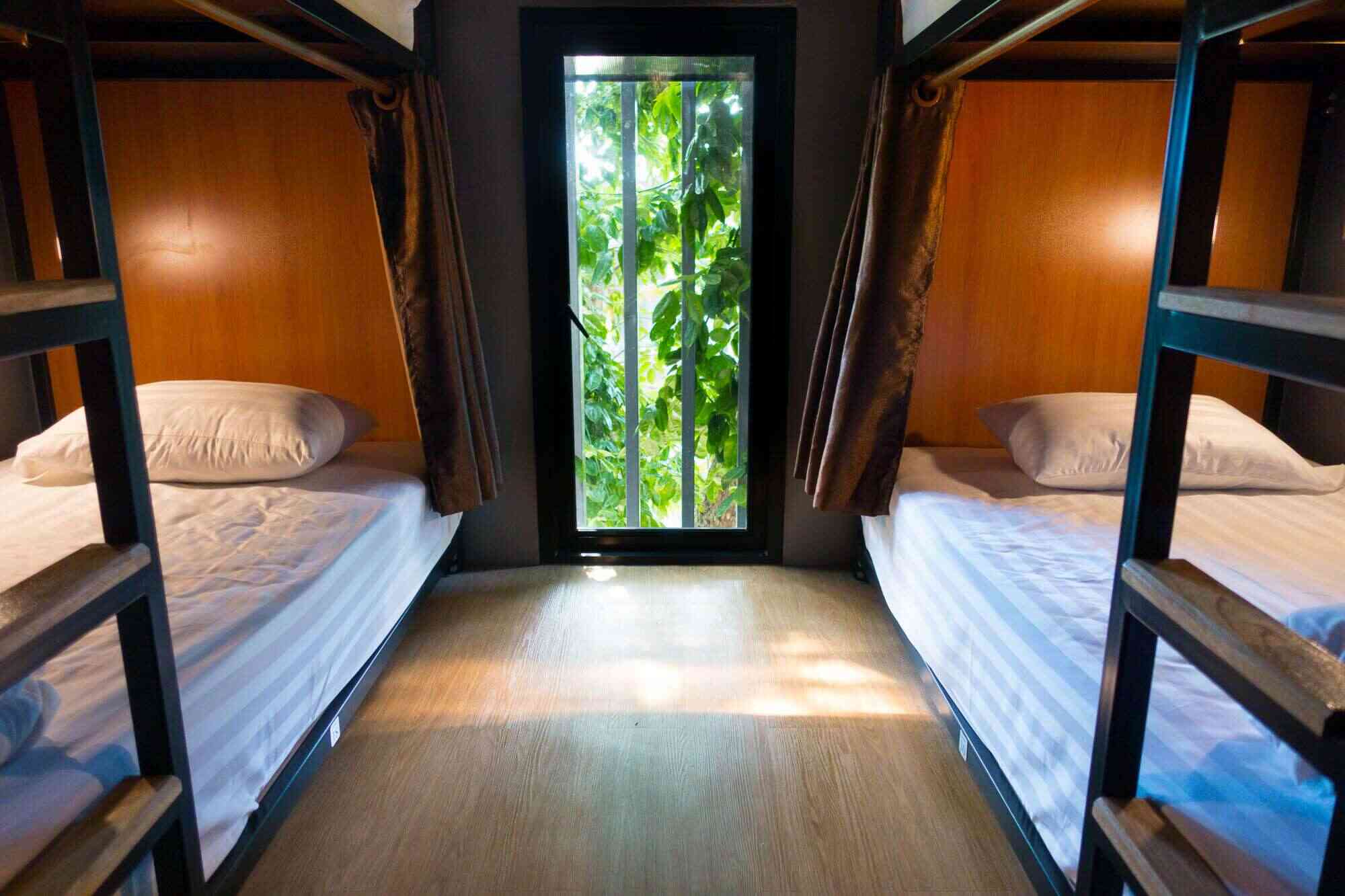
Stays we list in Khao San Road. Each hotel page has an Expedia booking link where one is available.

Related places
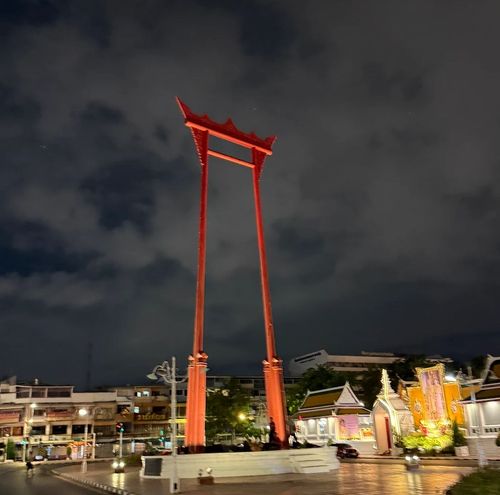
The Giant Swing
Attractions
Bangkok’s scarlet Giant Swing towers outside Wat Suthat—free to visit, open all day, and best at sunset. Pair it with the temple across the street, then graze Dinso Road’s street food. A quick tuk‑tuk or 20‑minute walk from Khao San.
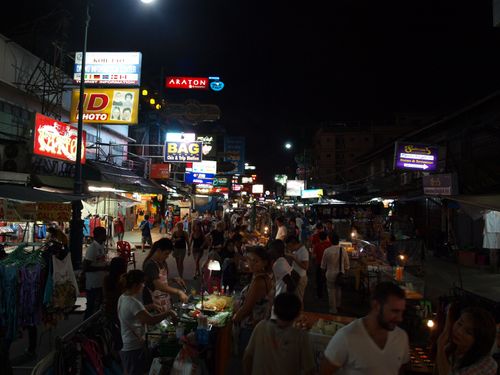
Khao San Road
Attractions
Bangkok’s backpacker carnival: curbside bars, live bands and DJs from 3pm–2am (midnight Sun). Street eats are cheap — pad thai 70–100 THB, mango sticky rice 60–100 THB. Come for wild people-watching; duck into Rambuttri for a calmer beer.
Phra Sumen Fort
Attractions
1783 riverfront fort on Phra Athit with white battlements, park breezes, and killer sunset views over Rama VIII Bridge. Free entry; best from 5–7pm before the gates close at 9pm.
Staying near Khao San Road? Compare Khao San Road hotels with Expedia booking links.
Flights to Bangkok
Compare flight options on Expedia.
More Khao San Road Guides
- Bangkok Temple Run for Families: Wat Pho, Grand Palace, and Golden Mount from Khao San Road
- Bangkok Temple Run with an Early Start from Khao San Road: Beat the Heat at Wat Pho, the Grand Palace, and Golden Mount
- Bangkok Temple Run in Reverse: Golden Mount, Wat Pho, then the Grand Palace from Khao San Road
- Bangkok Temple Run with Wat Saket: A Khao San Road Guide to the Golden Mount and Nearby Old City Stops