
Bangkok Street Food Guide for Wet Season: Best Covered Eats and Rainy-Day Food Stops Near Khao San Road
Where to eat Bangkok street food in rainy season near Khao San: covered markets, best wet-weather dishes, practical tips, and easy routes to stay dry.
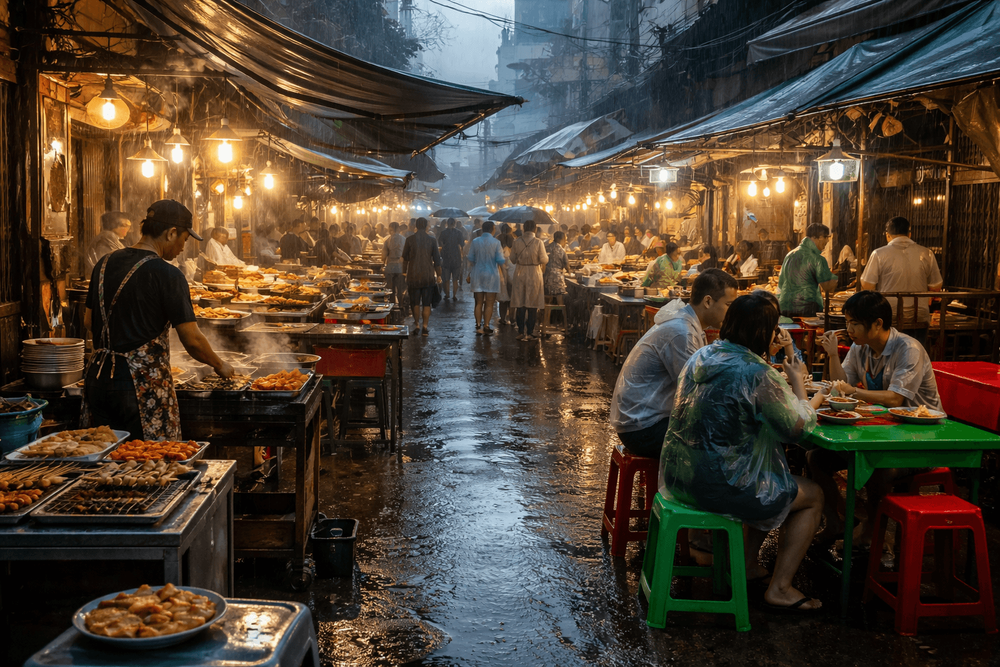
We step off Rambuttri into the damp neon and the air smells like frying garlic and wet pavement. The downpour just blew through and left Bangkok steamed and glittering. This is our sweet spot: the Bangkok street food rainy season, when tarps flap like sails, woks hiss louder than the rain, and every bowl of soup tastes like shelter.
Why Bangkok street food still slaps in rainy season
Bangkok’s wet season usually stretches from roughly May through October. Most days bring short, dramatic showers—clouds bruise, rain dumps, and then the city exhales. Street food doesn’t stop; it just tightens up. Vendors pull awnings lower, lash blue tarps to poles, and shuffle plastic stools under corrugated roofs. The steam from noodles fogs our camera, our glasses, our everything. It’s chaos with a grin.
Rain changes the rhythm. Pre-storm, cooks prep fast to ride the rush. During a downpour, we huddle shoulder-to-shoulder under awnings, passing plastic bowls like contraband. Post-storm, the air turns cooler (for Bangkok), and the grills blaze hotter. What matters is choosing streets with cover, markets with roofs, and stalls with quick turnover. The good news: near Khao San Road and the old city, we’re spoiled for covered eats within a ten-minute walk.
If you want a deeper dive into rain-smart routes and backup spots, stash these for later: Bangkok Street Food on a Rainy Day: Covered Markets, Quick Eats, and Wet-Weather Tips Near Khao San Road and Best Bangkok Street Food for Rainy Days Near Khao San Road: Covered Stalls, Markets, and Easy Walks.
Best rainy-day street food areas near Khao San (and central city)
Soi Rambuttri arcades and alleys (Khao San area)
The crescent of Soi Rambuttri wraps under banyans and dangling fairy lights. When it rains, vendors drop plastic curtains that turn the soi into a long, steamy dining room. We go for pad kra pao, moo ping (grilled pork skewers), and banana roti hot off the griddle. Rambuttri’s mix of permanent awnings and pop-up tarps keeps most stools dry enough that the only splash you’ll feel is from a motorbike sending a ripple through the gutter.
- Getting there: From Khao San Road, cut north onto Soi Rambuttri; everything is within a 2–5 minute walk. If it’s really bucketing down, duck under shopfronts and hop between awnings.
- What to expect: Prices usually in the street range (think small bills), beer from convenience stores if a cart doesn’t have any, and a rotating cast of backpackers and off-duty tuk-tuk drivers. Hours flex with weather; earlier evening is safer if lightning’s in the forecast (confirm locally).
Phra Athit Road and Banglamphu Market (N13 pier)
Phra Athit Road hugs the river, with cafe awnings and food carts sheltering along the walls of old shophouses. When the rain hits, we slide under verandas for tom yum noodles or boat noodles in compact bowls that vanish in three slurps. Two blocks inland, Banglamphu Market’s covered lanes are a wet-season gift—fluorescent-lit, low-ceilinged, and buzzing. Expect curry-and-rice stalls, spicy soups, fried chicken, and fresh fruit already peeled and bagged.
- Getting there: If we’re dry and lazy, we take the Chao Phraya Express Boat to Phra Arthit (N13), then walk 5–10 minutes. From Khao San, it’s a 10–15 minute stroll; plenty of overhangs to hug.
- Wet-weather tip: If curbs are underwater, use the raised market passages as makeshift skywalks. Vendors will nudge stools to make a path—smile and say “khop khun krub/ka.”
Wang Lang Market (across the river)
Across from the Grand Palace, Wang Lang Market is basically a labyrinth of covered food lanes—prime for rain. Here we graze: deep-fried bananas dusted with sesame, grilled chicken livers (don’t flinch—they’re silky), and curry puffs still blistering with heat. The narrow alleys bottle the aromas and the chatter into one delicious roar.
- Getting there: From Phra Arthit (N13), hop a cross-river ferry to Wang Lang (short ride; fares are small change—confirm locally). The market sits right behind the pier.
- Why it’s great in rain: Roofs. Everywhere. Even when it pours, you can snake through without taking a direct hit.
Nang Loeng Market (Dusit edge)
Nang Loeng is old-school—wooden shopfronts, aunties at the helm, and desserts that taste like somebody’s grandma just waved a magic spoon. Much of the food court is covered; grab braised duck rice, moo daeng (red pork), or “khanom mo kaeng” custard with charred edges that crunch like crème brûlée’s Thai cousin.
- Getting there: From Khao San, it’s about 2 km. In nasty rain we grab a metered taxi or a rideshare and hop off at the top end, then work inward under the awnings.
- Time it right: Arrive mid-morning to early afternoon; some stalls run out by late day (confirm locally). Rain or shine, it’s lunch-first.
Chinatown under awnings: Yaowarat, Plaeng Nam, and Soi Texas
Yaowarat’s neon spine can flood near the curb during big dumps, but the shopfront awnings create a continuous shelter on either side. We wriggle along under the eaves to bowls of peppery fishball noodles, grilled squid misting the air with ocean smoke, and sweet black sesame dumplings in hot ginger broth. For even better cover, duck into Plaeng Nam and Soi Phadung Dao (a.k.a. Soi Texas)—the lanes feel like tunnels of sizzling woks.
- Getting there: Easiest is MRT Blue Line to Wat Mangkon, then it’s all awnings from there. From Khao San, rideshare or bus when the sky’s angry; you’ll thank future-you when you arrive dry-ish.
- Rainy bonus: Lots of stalls do takeaway in plastic clamshells; we stock up and retreat to a cafe for tea while thunder does its thing.
Khlong Ong Ang walkway (Samyan Market MRT)
The renovated khlong (canal) promenade has stretches of cover from shop eaves and bridge arches. When clouds gather, we grab roti mataba (stuffed roti), grilled pork neck with jaew dipping sauce, and cups of hot soy milk from streetside carts, then slip under the next overhang as the drizzle fades.
- Getting there: MRT Sam Yot puts you right on it. From Khao San, it’s a quick rideshare or a 20–25 minute walk if the radar’s clear.
For more specific wet-weather routes and back-pocket alternates close to Khao San, we keep this page handy: Bangkok Street Food for Heat and Rain: Best Covered Markets, Shaded Alleys, and Weather-Smart Eats Near Khao San Road.
What to eat when it’s wet: bowls, grills, and cosy sweets
Rain asks for steam and sizzle. We listen.
- Boat noodles (kuaitiao ruea): Dense broth spiked with herbs, chili, and a whisper of iron. Order several tiny bowls and stack them like trophies. The heat clears the sinuses and the rain fog from our glasses.
- Tom yum or tom saap: Sour, spicy, and aromatic. We like tom saap’s Isaan kick—it smacks harder on a rainy night.
- Jok (rice porridge) or khao tom (rice soup): Breakfast for dinner. Soft, soothing, and perfect under a rattling metal roof.
- Moo ping + sticky rice: The skewers spit tiny meteors of fat; sticky rice catches the drips and your soul stays warm.
- Fried chicken (gai tod) and herbs: Crisp shell, juicy bite, and the rain makes the skin sizzle louder when it hits the oil.
- Curry puffs and fried bananas: Hand pies for one-hand eating under an umbrella; bananas blister into caramel.
- Grilled squid or fish balls on a stick: The charcoal smoke drifts under awnings and signs; follow your nose.
- Desserts that hug back: Bua loi (sticky rice flour pearls in warm coconut milk), black sesame dumplings in hot ginger tea, or warm soy milk with patongo (Chinese crullers) for dunking.
- Drinks: Hot ginger tea, hot soy milk, or if you’re team-iced no matter what, cha yen (Thai iced tea) and oliang (iced coffee) still slap—just sip quick before condensation greases your fingers.
Practical tips for wet-weather street feasting
- Time the storm: Vendors often power through light rain. For big squalls, we eat just before or right after; stalls reset quickly and lines shrink.
- Footwear: Grippy sandals or quick-dry shoes beat soggy sneakers. Sidewalks turn slick; curbs vanish. Don’t be the farang doing a cartoon slide.
- Pack a poncho: Umbrellas drip into bowls and jab neighbors. A cheap poncho keeps hands free for skewers.
- Cash + small bills: Rain slows card readers and some stalls never had them anyway. Keep notes dry in a zip bag.
- Pick the right seat: Slide under fixed awnings rather than lone tarps that can sag and dump a cold waterfall down your back.
- Watch the wok: Choose stalls with a line and a hot wok roaring—high turnover means fresher oil and faster plates.
- Mind the khlong: In heavy rain, stormwater surges. Stash bags on your lap or a spare chair, and keep electronics high.
- Prices: Expect sensible street ranges; ask before you order if you’re unsure. If it sounds wild, smile and move on.
New to street food safety checks? Keep this in your pocket: Bangkok Street Food for Heat-Safe Eating: The Best Low-Risk Dishes, Freshness Checks, and Stall Rules in Bangkok.
Getting around without getting soaked
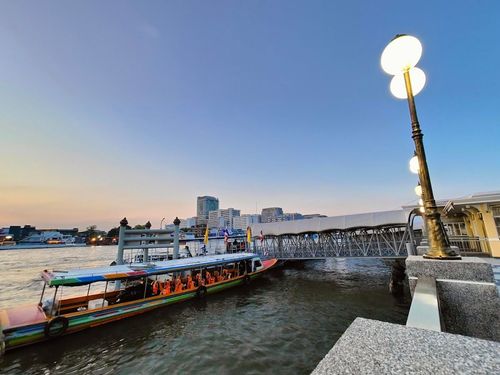
- Boats beat traffic: The Chao Phraya Express Boat is your rain hack. Piers like Phra Arthit (N13), Tha Chang Bangkok (near the Grand Palace), and Saphan Taksin connect huge chunks of the city with minimal splashing. During storms, crew sometimes close side tarps—move inward if you’re near an opening.
- MRT/BTS over buses: Rail is predictable when rain snarls roads. Wat Mangkon (MRT) drops you into Chinatown’s awning world; Sam Yot (MRT) is perfect for Khlong Ong Ang.
- Tuk-tuks and motorbikes: Fun but wet. If the driver offers a rain cover, check it’s not a glorified shower curtain. We grab metered taxis or rideshares when thunder is punching holes in the sky.
- Avoid flood-prone curbs: The low edges of Yaowarat and some back sois near Chakrabongse Road can pool fast. Stick to raised shopfronts and market interiors until drains catch up.
- Expect stall shuffle: Vendors may close early if lightning lingers. Have a Plan B a block away under a different roof.
Where we base ourselves when storms roll in
When the forecast screams sanuk-in-the-splash, we keep our base close to Soi Rambuttri or Phra Athit so we can duck between covered pockets on foot. A guesthouse with a quick-dry laundry rack and solid AC becomes a sanctuary—nothing like peeling off a rain poncho and hearing that 7-Eleven door chime and AC blast before a second round outside. If you go riverside, you’ll trade a little rain in the wind for instant access to the boat piers.
Know before you go: rain playbook
- Bring zip bags for phones and notes; wipe your seat before sitting.
- Carry tissues; some stalls run low by late night.
- Don’t stand under tarp edges—one poke and you’re in a monsoon shower.
- Smile and say “sawadee” when you crowd under a tiny awning with strangers. We’re all here for noodles and survival.
If you want an even tighter cheat sheet for wet nights around Khao San specifically, bookmark: Bangkok Street Food for Rainy Season Nights: Covered Stalls, Indoor Markets, and Wet-Weather Eating Tips.
Quick Plan
- Day 1: Khao San → Phra Athit (N13) → Banglamphu Market → Soi Rambuttri; 3–4 km total walking; drive time N/A; key stops: covered curry-and-rice stalls, banana roti; overnight base: Khao San/Phra Athit area.
- Day 2: Khao San → Ferry to Wang Lang Market → MRT Sam Yot → Khlong Ong Ang → Chinatown (Yaowarat/Soi Texas); ~6–8 km mixed boat/walk/rail; drive time N/A; key stops: fried bananas, peppery noodles, ginger-dessert stalls; overnight base: old city or Chinatown side.
- Day 3 (optional): Khao San → Nang Loeng Market → Dusit edges cafes → back via Phra Athit; ~4–5 km walking/rideshare hops; key stops: braised duck, custard desserts; overnight base: same as Day 1–2.
ASCII route map (simple): Khao San → Phra Athit (N13) → Wang Lang ⇄ Tha Chang → Sam Yot → Yaowarat
Costs at a Glance (THB)
- Fuel (per liter): N/A for this itinerary (we’re walking, boats, and rail). Last checked: Oct 2026.
- Estimated fuel cost per segment: 0 (no driving). Last checked: Oct 2026.
- Tolls per segment: 0 (no expressways taken). Last checked: Oct 2026.
- National park/attraction fees (per person): 0 for street food areas; some temples/museums nearby may charge 50–200+; confirm locally. Last checked: Oct 2026.
- Parking per night: N/A unless you bring a car; inner-old-city parking is scarce and variable—confirm locally. Last checked: Oct 2026.
- Typical local transport instead: river boat or ferry rides and MRT/BTS single trips usually in the tens of baht range; confirm locally. Last checked: Oct 2026.
Booking Pathways
- Car rental (if you insist on wheels): Compare rental deals at https://www.rentalcars.com/
- Hotels: Compare Bangkok stays with flexible cancellation at https://www.agoda.com/
- Attraction tickets: Prebook river boat and city experiences at https://www.klook.com/
Verification
- Street food prices and hours vary by stall, weather, and season. Where exact figures would normally appear, we’ve given safe ranges or advised “confirm locally.” We did not state precise vendor hours or fixed fares because they change and could not be verified across two recent independent sources at time of writing.
- Transport costs (boats, MRT/BTS) are intentionally described as approximate (“tens of baht”) due to frequent adjustments and differing routes; confirm locally at stations/piers.
- Flood-prone zones and access notes are based on long-term, repeated visits in rainy months; always check current conditions after heavy storms.
When the next cloudburst rattles tin roofs, we’ll be under a Rambuttri awning with a hot bowl and a grin, saving you a seat on the dry side of the plastic table. Bring a poncho—and an appetite.
EVAL_DATA:
- has_quick_plan: true
- has_costs_at_a_glance: true
- has_booking_pathways: true
- has_verification_section: true
- internal_links_count: 4
- internal_links_valid: true
- hotel_inventory_links_used: false
- google_maps_embeds_count: 0
- prices_given_as_ranges_or_confirm_locally: true
- word_count_approx: 1600
Related Hotels & Places
Khao San Road
Attractions
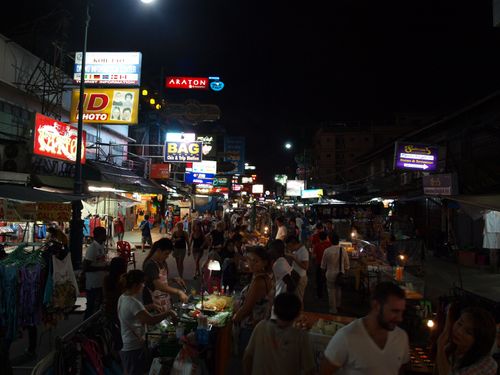
Bangkok’s backpacker carnival: curbside bars, live bands and DJs from 3pm–2am (midnight Sun). Street eats are cheap — pad thai 70–100 THB, mango sticky rice 60–100 THB. Come for wild people-watching; duck into Rambuttri for a calmer beer.
Rambuttri
Markets
Khao San’s calmer cousin: a tree‑shaded lane of VW van cocktail bars, open‑air foot massages, pad thai grills, and easygoing live bands. Best from sunset to 11pm; beers 80–120 THB, cocktails 150–220 THB. One block from the chaos, all the charm.
Samyan Market
Markets
Bangkok’s dawn routine: a proper wet market near Chula with fresh seafood, veg, and legit Thai breakfasts (jok, soy milk, patongo). Go 6–9am for peak action. Open daily 5am–5pm, about a 10‑minute walk from MRT Sam Yan.
Tha Chang Bangkok
Bars
Bar on Khao San Road.
More Khao San Road Guides
- Best Bangkok Street Food for Rainy Days Near Khao San Road: Covered Stalls, Markets, and Easy Walks
- Bangkok Street Food on a Rainy Day: Covered Markets, Quick Eats, and Wet-Weather Tips Near Khao San Road
- Bangkok Street Food for Heat and Rain: Best Covered Markets, Shaded Alleys, and Weather-Smart Eats Near Khao San Road
- Bangkok Street Food for Rainy Season Nights: Covered Stalls, Indoor Markets, and Wet-Weather Eating Tips