
Bangkok Street Food Drinks Guide: Best Thai Beverages to Try at Stalls and Night Markets
Sip your way through Bangkok: Thai iced tea, o-liang, coconut water, sugarcane, and herbal coolers. Where to find them, what to pay, and how to order like a local.
We’re wedged between a pad kra pao wok spitting chili and a cart pumping ice like a snowstorm, clutching a plastic bag of neon-orange cha yen that’s sweating harder than we are. This is the moment Bangkok street food drinks make sense: the city is hot, loud, gloriously chaotic, and a cold, sweet sip is your reset button. If you want to drink like a local, this guide to Bangkok street food drinks will have us ordering with confidence from Khao San Road to Yaowarat Chinatown Heritage Center, dodging the tourist traps and zeroing in on the stalls that actually deliver sanuk in a cup.
Data Freshness + Pricing:
- Prices are approximate and in THB.
- Last checked: June 2026.
- Happy hour and promo details change frequently—confirm locally.
Popular Bangkok street food drinks to try
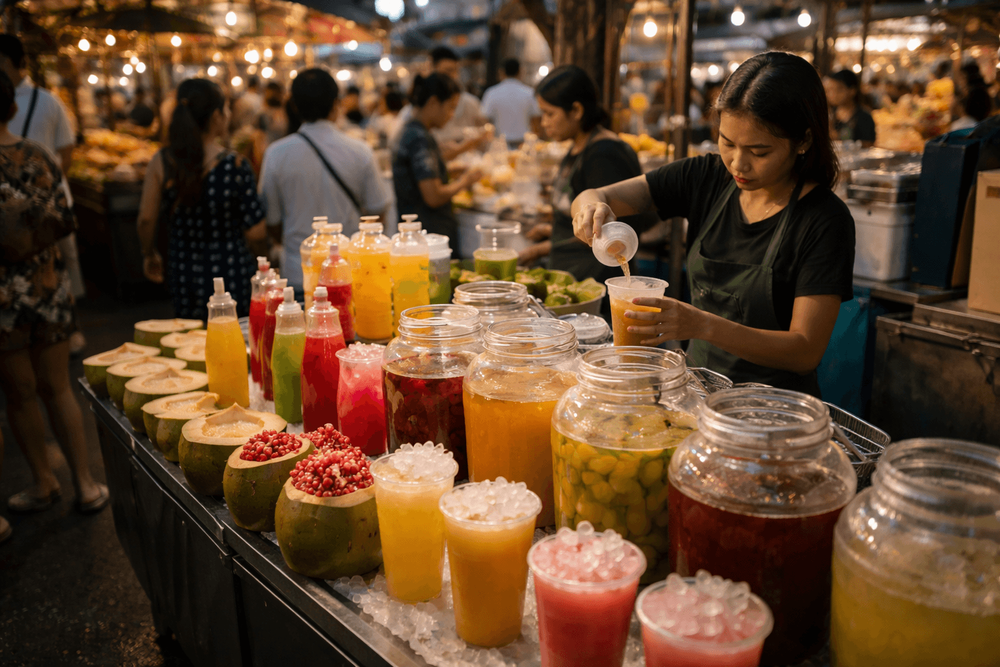
Bangkok doesn’t do subtle refreshment. Expect bright flavors, clinking ice, and tall cups that bead with condensation instantly. Here’s what we reach for on the street.
Thai Iced Tea (cha yen)
That vivid orange isn’t a filter; it’s strong black tea steeped with spices, sweetened with condensed milk, and softened with evaporated milk. It’s creamy, floral, and a touch tannic—the perfect backup singer for chili bombs. Expect approx. 30–50 THB from a sidewalk cart, 40–70 THB at markets. Ordering tip: say “mai waan” (not sweet) or “waan noi” (a little sweet) if you don’t want a sugar rush.
Thai Iced Coffee (kafe yen) and Black Iced Coffee (o-liang)
Kafe yen is robust, slightly smoky, sweet, and milky—Thailand’s answer to an iced latte with attitude. O-liang is the no-milk cousin: dark, roasty, poured over ice with a whisper of sugar. Prices hover around approx. 30–55 THB. If we’re by Victory Monument after slurping boat noodles, o-liang is our cooldown.
Lime Iced Tea (cha manao)
Sweet, tannic tea cut with fresh lime, bright enough to slice through deep-fried anything. Look for giant jars with floating limes. Approx. 25–45 THB. Pair it with pad thai or grilled chicken and sticky rice.
Fresh Coconut Water (nam maphrao)
You’ll hear the thwack as the vendor cracks the green coconut. Nothing beats the naturally chilled sweetness and soft spoonable flesh. Street price is approx. 30–60 THB for a whole coconut; pre-poured bottles at markets run 40–80 THB. Pro move: ask for “mai sai nam khaeng” (no ice) if it’s already cold.
Sugarcane Juice (nam oi)
Pressed to order with a squeal of rollers. It’s grassy, honeyed, and unbelievably refreshing on a 38°C afternoon. Around Yaowarat, look for the old-school steel press. Expect approx. 25–50 THB.
Roselle (nam krajeab)
A ruby hibiscus cooler—tart, cranberry-like, with a floral finish. Great with salty, fatty snacks. Approx. 20–40 THB in a plastic cup or bag.
Chrysanthemum (nam kek huay)
Golden, lightly sweet, soothing. Imagine herbal tea over ice. We grab this with street-side Chinese-style roast duck or pork buns in Chinatown. Approx. 20–40 THB.
Bael Fruit Tea (nam matoom)
Amber, caramel-tinged, slightly smoky. You’ll often see it in big glass jars at day markets. Approx. 20–40 THB.
Lemongrass Drink (nam takrai)
Citrusy without the sour, clean and cooling. Ideal with grilled pork skewers (moo ping). Approx. 25–45 THB.
Butterfly Pea with Lime (nam anchan manao)
Instagram loves it; so do we. Indigo turns bright violet when lime hits. Floral, lightly sweet, and very Bangkok. Approx. 30–60 THB.
Longan Juice (nam lamyai)
Honeyed and mellow with a gentle dried-fruit aroma. Try it with Isan-style grilled chicken. Approx. 25–45 THB.
Grass Jelly Drink (chao kuai)
Herbal jelly cubes wobbling in a mildly sweet tea. Cooling and less sugary than it looks. Approx. 25–45 THB.
Soy Milk (nam tao hoo)
Night-owl comfort in a cup. You’ll see hot and iced versions, sometimes with barley or ginkgo nuts. Perfect with late-night dough fritters (pa tong go). Approx. 20–40 THB.
Green Milk Tea (cha khiao yen)
If you want a matcha vibe, this Thai take leans sweeter, with condensed milk richness. Approx. 30–55 THB.
Fruit Shakes and Fresh Juices
Blenders thwacking ice are your beacon. Mango, watermelon, pineapple, passion fruit—order single-fruit or mix-and-match. Most stalls will add syrup unless you say “mai waan.” Approx. 40–80 THB, more if you add yogurt or extra fruit.
Where to find the best stalls for Bangkok street food drinks
The good stuff hides in plain sight—by ferry piers, office-block lunch rushes, and night markets that bloom at dusk. We chase crowds and clatter.
Khao San Road, Soi Rambuttri, and Phra Athit
Touristy? Yep. But between the bass thump and buckets, the drink carts here work hard. For cha yen, o-liang, and fruit shakes, cruise Soi Rambuttri in the late afternoon when the umbrellas unfurl. Prices are a touch higher at night—think approx. 40–70 THB. If you’re bunking around here, we like staying on a quiet soi off Rambuttri so we can roll out for a coconut water before the heat sets in.
- Getting there: River boat to Phra Athit Pier, or buses/tuk-tuks if you’re already in Old Town.
Tip: If buckets are your thing, read this first: Bangkok Bucket Drinks: Where to Find, Prices & Safety Tips.
Chinatown (Yaowarat Road)
Evening is showtime. Stalls pop up from the Chinatown Gate (Odeon Circle) down Yaowarat Road and into side sois like Plaeng Nam. Watch for sugarcane presses, chrysanthemum coolers, and longan juice. We like to start near the big red gate around 6 pm, slurp a nam krajeab, and then graze. Expect approx. 25–60 THB per drink.
- Getting there: MRT Wat Mangkon (Exit 1 or 3) puts you right in it.
Wang Lang Market (Siriraj side)
Across the river from the Grand Palace, Wang Lang is a sensory blast: steaming curries, blaring boat horns, and rows of herbal drinks—bael fruit, roselle, lemongrass—lined up in glass jars. Great for daytime sipping. Approx. 20–40 THB.
- Getting there: Hop the cross-river ferry from Tha Chang or Phra Athit. It’s a 5-minute ride and part of the fun.
JODD FAIRS (Rama 9)
Bangkok’s current night-market darling. Beyond the fried squid and grilled wagyu-on-a-stick, you’ll find Thai milk tea with boba, butterfly pea lemonades, and coconut shakes with outrageous toppings. Slightly pricier: approx. 50–100 THB.
- Getting there: MRT Phra Ram 9, Exit 2. Follow the crowd.
Chatuchak Weekend Market
Heat, crowds, and a thousand reasons to hydrate. Fresh coconuts, fruit shakes, and classic tea-coffee carts dot the main walkways. Aim for morning or late afternoon to avoid meltdown. Approx. 30–70 THB.
- Getting there: BTS Mo Chit or MRT Chatuchak Park/Kamphaeng Phet.
Silom lunch rush (Soi Convent, Sala Daeng)
Office workers swarm the drink carts between 11:30 am and 1:30 pm—always a good sign. O-liang and cha manao are our go-tos here. Approx. 25–45 THB.
- Getting there: BTS Sala Daeng or MRT Si Lom.
Victory Monument
Circle the khlong and footbridges after a bowl (or three) of boat noodles. Strong o-liang and lime tea keep the slurp train rolling. Approx. 25–40 THB.
- Getting there: BTS Victory Monument; stalls scatter under the skywalk and along the canal.
Pak Khlong Talat (Flower Market)
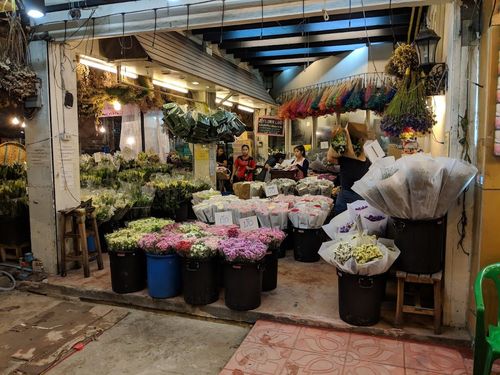
Open late and fragrant even at 2 am. Hot soy milk and chrysanthemum tea taste extra good when the night breeze whips the scent of jasmine garlands down Chakphet Road. Approx. 20–40 THB.
- Getting there: MRT Sanam Chai, then a short walk; or river boat to Memorial Bridge and stroll.
If you’re basing yourself near Old Town, being within a short stumble of Phra Athit and Soi Rambuttri means iced tea and coconut water are never more than a tuk-tuk honk away. Over in Silom or Sukhumvit, we like stays near BTS stations so we can hop between office-hour carts and night markets without melting in traffic.
For more nighttime nibbling with your sips, see our Bangkok Night Street Food Guide: Best Late-Evening Stalls, Markets, and Snacks After Dark. First-timer figuring it out? Start here: Bangkok Street Food for First-Time Visitors: What to Order, How to Eat, and Where to Go Beyond Khao San Road.
How to spot fresh, safe, high-quality drinks
Bangkok’s heat is real, and so is the sugar. Both are fine—if the vendor respects the basics.
- Follow the crowd: Busy stalls turn ingredients fast. If office workers or school kids are queued up, you’re golden.
- Check the ice: Clear, cube ice usually comes from commercial plants and is safer than cloudy block shards chipped on-site. Cups should be filled with tongs, not bare hands.
- Watch the milk: Condensed and evaporated milk should be in clean cans or squeeze bottles with lids. If dairy’s been sitting open in direct sun, move on.
- Fruit on demand: For shakes and juices, we want fruit cut to order or stored cold. Browning fruit, warm blenders, or sticky cutting boards are red flags.
- Water source: Tea and coffee concentrates should be brewed that day and kept covered. Look for lidded containers and clean strainers.
- Cup hygiene: A quick rinse station is common, but we prefer single-use cups with lids or our own reusable tumbler. If the vendor’s cups are being dunked in murky water, skip.
- Taste test first: If you’re unsure about sweetness, say “waan noi” or “mai waan,” take a sip, and ask for a top-up if needed. Most vendors are happy to adjust.
We also carry a small reusable cup and metal straw. Most vendors will pour straight into it with a smile, and some knock 5–10 THB off for skipping the plastic (not guaranteed, but it happens).
Drink pairings with Bangkok street food
We don’t believe in rules, just happy combos. Here are pairings that never miss.
- Spicy noodles (tom yum, boat noodles): O-liang or cha manao. The bitter roast or citrus twang clears the chili fog.
- Grilled meats (moo ping, gai yang, pork neck): Lemongrass drink or sugarcane juice—both cut fat and play nice with smoke.
- Fried snacks (spring rolls, fried chicken, crispy pork): Roselle (nam krajeab) for tart relief; chrysanthemum if you want gentle and floral.
- Pad thai or pad see ew: Thai iced tea. That creamy sweetness calms the wok-charred edges and chili flakes.
- Isan staples (som tam, larb, sticky rice): Coconut water is our desert-island pick—cooling, hydrating, slightly sweet. Lime soda also slaps here.
- Chinatown seafood (oysters, crab fried rice, grilled squid): Cha manao or chilled chrysanthemum to keep the brine bright.
- Curry and rice (green, red, panang): Cha yen if you like creamy contrast; longan juice if you want honeyed, subtle balance.
- Late-night sweets (mango sticky rice, pa tong go): Hot soy milk (nam tao hoo) with dough fritters; butterfly pea lemonade if you’re still roasting from the day.
If you’re budgeting your feast, match our sipper picks with this handy primer: Bangkok Street Food by Budget: What to Eat for 50, 100, and 200 Baht.
Prices, ordering tips, and Thai phrases
Bangkok street drink prices shift with location, cup size, and add-ons. Here’s what to expect.
- Classic teas/coffees (cha yen, kafe yen, o-liang, cha manao): approx. 25–55 THB
- Herbal coolers (roselle, chrysanthemum, bael, lemongrass): approx. 20–45 THB
- Fresh coconut (whole): approx. 30–60 THB
- Sugarcane juice: approx. 25–50 THB
- Fruit shakes/juices: approx. 40–80 THB (add-ons like yogurt/tapioca pearls can push it to 90–120 THB)
Street ordering moves we use daily:
- Start with the drink name, then sweetness and ice level. Vendors love clarity, even if your tones are chaos.
- Say the size last: “kaew lek” (small cup) or “kaew yai” (big cup). Not every stall has sizes, but many do.
- To-go is default. If you have a reusable cup, hold it up and say “sai nai kaew krub/ka” (put in the cup, please).
Useful phrases (phonetic):
- Cha yen / Kafe yen / O-liang — Thai iced tea / Thai iced coffee / Black iced coffee
- Cha manao — Lime iced tea
- Nam maphrao — Coconut water
- Nam oi — Sugarcane juice
- Nam krajeab — Roselle drink
- Nam kek huay — Chrysanthemum drink
- Nam matoom — Bael fruit tea
- Nam takrai — Lemongrass drink
- Nam anchan manao — Butterfly pea with lime
- Waan noi — A little sweet
- Mai waan — Not sweet
- Mai sai nam khaeng — No ice
- Nam khaeng nit noi — A little ice
- Kaew lek / Kaew yai — Small / Large cup
- Tao rai? — How much?
- Khop khun krub/ka — Thank you (male/female speaker)
Payment: Cash rules (20s and 10-coin stacks are handy). Some stalls accept Thai QR PromptPay, but as farang without local banking, we keep it simple with cash.
Know before you sip
- Heat tax: Drinks melt fast. If we’re walking far, we ask for “nam khaeng nit noi” so it doesn’t water down instantly.
- Sugar watch: The default is dessert-level sweet. Saying “waan noi” changes your whole day.
- Peak hours: Office lunch (11:30 am–1:30 pm) and night-market prime time (6–10 pm) mean fresh batches and better turnover.
- Plastic reality: Most drinks come in cups or hanging bags with rubber bands. Bringing your own cup cuts waste and sometimes saves a few baht.
- Rain plan: Monsoon downpours (May–Oct) shutter some carts temporarily. Duck under a 7-Eleven awning for that blessed AC blast and wait it out.
One last sip
When the sun leans low over Phra Athit and the river breeze finally remembers us, we grab a lemongrass drink at Wang Lang, hop the ferry, and let the city’s heat unwrap. Tomorrow we’ll chase sugarcane on Yaowarat and soy milk at the flower market—Bangkok street food drinks in hand, always a step ahead of the sweat.
Related Hotels & Places
Khao San Road
Attractions
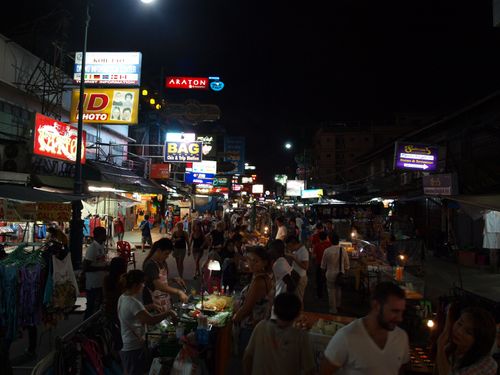
Bangkok’s backpacker carnival: curbside bars, live bands and DJs from 3pm–2am (midnight Sun). Street eats are cheap — pad thai 70–100 THB, mango sticky rice 60–100 THB. Come for wild people-watching; duck into Rambuttri for a calmer beer.
Yaowarat Chinatown Heritage Center
Attractions
Inside Wat Traimit by Chinatown Gate, this tidy museum charts Yaowarat’s Chinese roots with bilingual displays, period photos and short films. Open Tue–Sun 8:30am–4:30pm; closed Mon. Pair it with the Golden Buddha upstairs.
Pak Khlong Talat (Flower Market)
Markets
Bangkok’s 24‑hour flower market by Memorial Bridge. Best after midnight when trucks unload orchids, marigolds, roses and fragrant jasmine garlands. Photogenic, lively, and easy to reach from Khao San for a late‑night wander.
More Khao San Road Guides
- Bangkok Street Food for Drinks Pairings: Best Snacks with Beer, Cocktails, and Late-Night Hangouts
- Bangkok Street Food Night Market Guide: Best Stalls, Hours, and What to Order
- Bangkok Street Food for Heat and Humidity: What to Order, When to Go, and How to Eat Comfortably
- Best Thai Street Snacks to Try in Bangkok: Sweet, Crispy, and Grab-and-Go Favorites