
Bangkok Floating Market Food Guide: What to Eat, When to Go, and Which Markets Are Worth It
A local’s guide to Bangkok floating market food—what to eat, when to go, and which markets are worth it, from Khlong Lat Mayom to Amphawa.
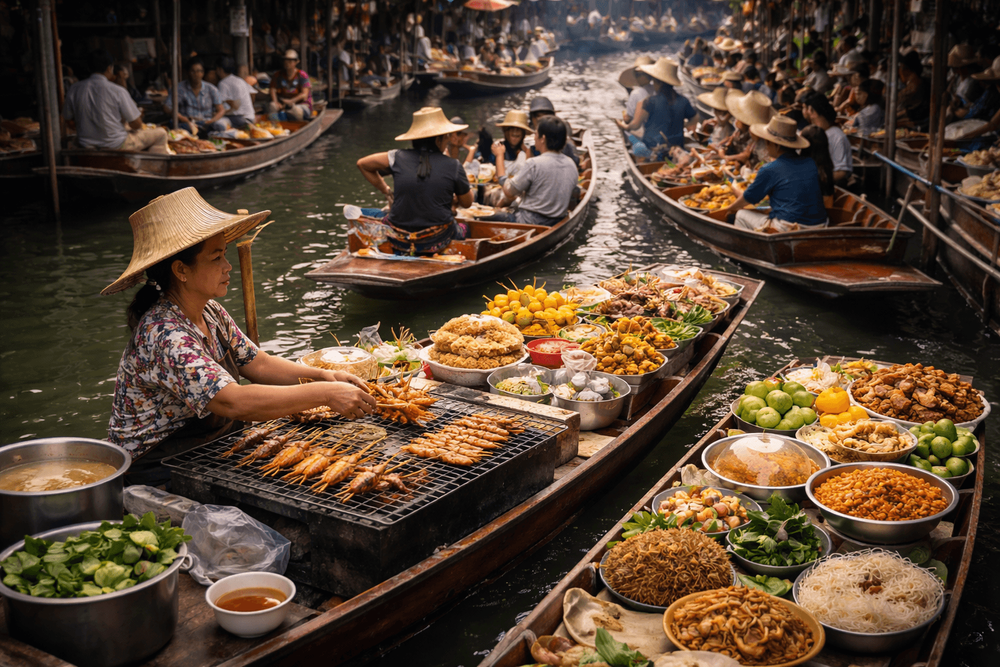
We’re hunched on a wobbling wooden bench, knees grazing the canal, as a grandma in a straw hat steadies her paddle with one hand and flips squid on a charcoal brazier with the other. The air is a tangle of lemongrass steam, grilled river prawn smoke, and the sweet rot of overripe durian from a passing boat. This is Bangkok floating market food: the sizzle doesn’t come from a shophouse wok on Sukhumvit, it comes from the khlong itself.
Data Freshness + Pricing:
- Prices are approximate and in THB.
- Last checked: June 2026.
- Happy hour and promo details change frequently—confirm locally.
What Makes Bangkok Floating Market Food Different
Street food in the city is fast—metal stools on a soi, wok bangs like fireworks, and a bill that shows up before you’re done slurping. Bangkok floating market food moves on water time. Boats are kitchens, counter seats are rickety planks along the pier, and the whole scene peaks on weekends when families cruise in to graze. You’ll still find classics—boat noodles, grilled pork skewers, mango sticky rice—but there’s a heavier lean toward freshwater seafood, coconut-based desserts, and regional snacks hauled in from nearby orchards and salt farms.
Compared to city stalls, floating markets usually:
- Open mainly on weekends or mornings (some, like Amphawa, go late afternoon into night).
- Feature more seafood (prawns, squid, snakehead fish) grilled from boats.
- Showcase hyper-local produce—coconut sugar, pomelos, nipa palm treats—from the surrounding canals.
- Expectation of a slower sit-down: we order from a boat, then wait while the tide of other orders ebbs.
It’s not all postcards. Heat reflects off the water, crowds pack narrow walkways, and a few markets are more farang sideshow than farmer’s exchange. We embrace the chaos, keep a cold coconut within arm’s reach, and chase the good stuff where locals actually eat.
Must-Try Bangkok Floating Market Food and Drinks
Bowls and Mains
- Boat noodles (kuai tiao ruea): Peppery broth, herbs, optional pork blood that gives the soup its depth. Tiny bowls, big flavor. Price: approx. 20–40 THB per bowl; we order 2–3.
- Grilled river prawns (goong yang): Split, charred, and dunked in puckering seafood nam jim. Price: approx. 300–600 THB per platter depending on size.
- Snakehead fish (pla chon pao): Salt-crusted and grilled whole, flesh flaking into a pile of herbs and lettuce with fiery dip. Price: approx. 180–320 THB.
- Hoy tod: Oyster or mussel crisp pancake—crispy edges, custardy middle, a fistful of beansprouts. Price: approx. 80–150 THB.
- Khanom jeen: Fresh rice noodles with curry sauces (green, nam ya fish curry, or crab). Price: approx. 50–90 THB.
Skewers, Snacks, and Small Bites
- Moo ping: Caramelized pork skewers glossed with coconut sugar. Price: approx. 15–25 THB per stick.
- Miang kham: DIY leaf wraps with toasted coconut, lime, ginger, chilies, and sweet-salty sauce. Price: approx. 50–100 THB.
- Hua mok: Steamed curry custard with fish, fragrant with kaffir lime. Price: approx. 50–80 THB.
- Fried bananas and taro (kluay/taro tod): Hot, shattering crust, perfect walking snack. Price: approx. 30–50 THB.
- Khanom buang: Crispy Thai “tacos” with meringue and shredded egg yolk (foi thong) or coconut. Price: approx. 20–40 THB.
Sweets and Desserts
- Mango sticky rice (khao niew mamuang): Market mangoes are often ridiculously ripe. Price: approx. 60–120 THB.
- Coconut ice cream: Often served in a coconut shell with sticky rice or peanuts. Price: approx. 30–60 THB.
- Khao lam: Sticky rice roasted in bamboo with coconut cream. Price: approx. 60–100 THB per tube.
- Lod chong/nam kathi: Pandan noodles in palm sugar syrup with shaved ice and coconut milk. Price: approx. 30–50 THB.
Drinks on a Hot Day
- Fresh coconut: Your best friend by noon. Price: approx. 30–60 THB.
- Thai iced tea/coffee (cha yen/oliang): Sweet, creamy, and dangerously chuggable. Price: approx. 25–50 THB.
- Butterfly pea lemonade, sugarcane juice, or roselle (nam krajeab): Bright, floral, and refreshing. Price: approx. 25–50 THB.
Pro tip: At the busier piers, stalls will pass a bamboo pole with a basket at the end—drop your cash, they swing back your change and a hot plate. Sanuk.
Bangkok Floating Market Food: The Best Markets (and What to Eat There)
Khlong Lat Mayom (Taling Chan, Bangkok)
- Vibe: Our go-to for a first-timer. Not too far from the city, genuine community energy, and an absurd amount of food. Walkways are on land, but boats still cook and shuttle around.
- What to eat: Boat noodles; miang kham; grilled river prawns; coconut ice cream; grilled snakehead fish; piles of fresh herbs and veg from orchard sellers.
- Hours: Sat–Sun approx. 9:00–16:00.
- Getting there: Grab from the Old Town or BTS Bang Wa, then a 15–25 min ride. Expect approx. 120–220 THB each way by taxi/Grab depending on traffic.
Taling Chan Floating Market (Bangkok)
- Vibe: Small, easy to navigate; wooden platforms along the canal with boat kitchens tied up and a live music corner on weekends.
- What to eat: Seafood platters off the grill, hoy tod, boat noodles, and coconut-based sweets.
- Hours: Sat–Sun approx. 8:00–17:00.
- Getting there: MRT Blue Line to Bang Khun Non, then a 10–20 min taxi. Expect approx. 80–160 THB by Grab from there.
Bang Nam Phueng (Phra Pradaeng “Green Lung,” Samut Prakan)
- Vibe: A shaded, leafy community market looping through Bang Krachao. More land market than floating, but canals thread through and the food is stellar.
- What to eat: Khanom jeen with nam ya fish curry; herbal sausages; grilled squid; rare orchard fruits; coconut pancakes (khanom krok).
- Hours: Sat–Sun approx. 8:00–16:00.
- Getting there: BTS Bang Na → short taxi to Bang Na pier → cross by ferry to Bang Krachao (approx. 5–10 THB) → rent a bicycle (approx. 80–120 THB) to roll to the market.
Amphawa Floating Market (Samut Songkhram)
- Vibe: Late afternoon to night, lantern-lit bridges, seafood boats working overtime; very popular with Thais on weekends.
- What to eat: Grilled river prawns, squid, mussels, coconut sugar sweets, and boat noodles. Post-dinner, consider a firefly boat ride.
- Hours: Fri–Sun approx. 15:00–21:00 (arrive before sunset for golden-hour snacks).
- Getting there: Minivan from Bangkok Southern Bus Terminal (Sai Tai Mai) to Amphawa or Samut Songkhram (approx. 90–140 THB per person, 1.5–2.5 hours). Or combine with the Maeklong Railway Market (train to Maeklong, then a short local ride to Amphawa).
Damnoen Saduak (Ratchaburi)
- Vibe: The photogenic one you’ve seen on postcards—and the most touristy. Still fun if you go early and focus on the food.
- What to eat: Coconut ice cream, boat noodles, crispy spring rolls, and grilled seafood.
- Hours: Daily, best 7:00–10:00 before the tour buses.
- Getting there: Minivan from Sai Tai Mai (approx. 90–140 THB per person). On-site boat tours are common; verify route and cost before boarding—typical private boats run approx. 800–1,500 THB per boat depending on duration and negotiation.
Tha Kha (Samut Songkhram)
- Vibe: Sleepy and old-school, with wooden paddled boats and local aunties selling coconut sugar and herbs. The most “still a community market” feel.
- What to eat: Palm sugar syrup treats, grilled fish, seasonal fruits, and simple noodle bowls.
- Hours: Weekends and certain lunar days (traditionally the 2nd, 7th, 12th days of the waxing/waning moon), early morning to noon.
- Getting there: Pair it with Amphawa—short taxi/Grab between them (approx. 120–220 THB).
Kwan Riam (Min Buri, Bangkok)
- Vibe: Canalside market straddling two temples (Wat Bampen Nuea and Wat Bang Peng Tai) with bridges connecting both sides. Wider food variety, including plenty of halal options from the local community.
- What to eat: Boat noodles, southern Thai curries over rice, halal grilled chicken and biryani, plus lots of desserts.
- Hours: Sat–Sun approx. 7:00–17:00.
- Getting there: Taxi/Grab from central Bangkok (40–70 minutes depending on traffic). Expect approx. 200–380 THB each way.
Practical Tips: When to Go, How to Order, Hygiene, Prices, Crowds
When to go
- Bangkok-side markets (Khlong Lat Mayom, Taling Chan, Bang Nam Phueng): Go early—arrive 9:00–10:00 for milder sun and shorter lines.
- Amphawa: Aim for 16:00–18:00 to eat at sunset and linger as the lights switch on. Weekends only.
- Rainy season (May–Oct): Brief downpours are normal. Bring a light rain jacket; stalls usually keep cooking.
If you’re a breakfast hunter, floating markets pair well with an early start—then graze all morning. For more AM inspiration, see our Bangkok morning food coverage here: Bangkok Morning Street Food Guide: Best Breakfast Stalls, Markets & Early Eats.
How to order like we belong
- Point-and-smile works. If there’s a laminated menu, circle your choices and hold up fingers for quantity.
- Spice sanity: Say “mai phet” for not spicy, “phet nit noi” for a little spicy. If you love heat, “phet mak.”
- Seating quirks: At busy piers, you might be handed a number or colored tokens; sit and your plates will find you.
- Pay per stall: There’s rarely a central bill. Keep small notes (20s, 50s, 100s) handy; ATMs sit near entrances but can be limited.
What to expect for prices
- Noodles and rice dishes: approx. 40–90 THB.
- Grilled seafood plates: approx. 150–600 THB depending on size/species.
- Snacks: approx. 20–60 THB.
- Sweets and drinks: approx. 25–120 THB.
Want to calibrate your appetite against your wallet? We break down common street food costs here: Bangkok Street Food by Budget: What to Eat for 50, 100, and 200 Baht.
Hygiene without the hand-wringing
- Follow the locals: Busy boats flip food fast, which means fresher ingredients.
- Cooked-to-order beats pre-cooked on hot days; watch temps and choose sizzling grills or bubbling pots.
- Ice is generally safe at reputable markets; if unsure, order sealed bottles.
- Hand wipes and sanitizer help—some piers have wash stations but not always soap.
More common-sense tips here: Bangkok Street Food Safety Guide: How to Choose Clean, Fresh Stalls Like a Local.
Crowds, scams, and other realities
- Crowds: Narrow walkways bottleneck midday. Eat early, then stroll when the lunch rush fades.
- Boat tours: Confirm length, route, and total price before stepping in. Clarify “per boat or per person?”
- Overeating tax: We graze in rounds. Share plates so you don’t cash out on the first prawn.
- Cash is king: Some vendors take QR payments, but don’t count on it.
If you’re curious about Bangkok’s after-dark feasting (Amphawa counts), we’ve mapped late-night habits here: Bangkok Street Food Night Market Guide: Best Stalls, Hours, and What to Order.
Culture: Eating on the Khlong, Monks, and Market Rhythms
Floating markets grew from necessity—canals were highways. Boats ferried produce, coconut sugar, and fish; food was cooked on-deck because that’s where the customers were. You’ll still see the choreography today: a vendor anchoring with a foot, a charcoal fan fanning the grill, a bamboo pole trading cash for curry.
Early mornings at some markets, locals offer alms to monks gliding past in saffron robes—bags of rice, curry, and fruit passed quietly from pier to boat. It’s worth arriving early to watch or participate (dress modestly, shoulders and knees covered, and keep it respectful). You’ll also taste the patchwork of nearby communities: Mon-influenced sweets in Phra Pradaeng, palm sugar specialties in Samut Songkhram, and orchard-heavy snacks across Taling Chan.
Language isn’t a barrier to a full belly. A grin, a wai (palms together), and the magic word “aroi” (delicious) go a long way. Markets are about sanuk—fun. You’re part of the show the second you perch on a plank with a dripping prawn.
Getting There and Logistics
- From Khao San/Old Town: Grab to Khlong Lat Mayom or Taling Chan is the simplest (approx. 120–220 THB each way depending on traffic). For Amphawa/Tha Kha/Damnoen Saduak, head to Bangkok Southern Bus Terminal (Sai Tai Mai) for minivans (approx. 90–140 THB per person). Travel times are traffic-sensitive: 25–45 minutes inside Bangkok; 1.5–2.5 hours to Samut Songkhram/Ratchaburi.
- From Sukhumvit/Sathorn: BTS to Bang Wa or MRT to Bang Khun Non cuts the taxi leg before jumping in a Grab to the market (approx. 80–160 THB for that last hop).
- Combine trips: Do Maeklong Railway Market in the morning, snack, then roll to Amphawa for a dusk seafood binge. If hiring a driver, agree on a flat day rate (approx. 1,800–2,800 THB for a car) and itinerary.
- Footwear: Slosh-proof sandals or sneakers you don’t baby. Walkways can be wet.
- Sun and bugs: Hat, sunscreen, and light repellent. The canal breeze helps, but the sun still bites.
We usually base ourselves near the river the night before a market run so the morning taxi is short and the air feels cooler. If you need a pool to recover from the heat, you’ll find plenty of mid-range stays along the Chao Phraya that offer exactly that without the rooftop markup—ask locally and compare before you book.
Quick Price Guide for Floating Market Food
- Boat noodles: approx. 20–40 THB per bowl.
- Grilled river prawns: approx. 300–600 THB per plate.
- Pla chon pao (grilled snakehead): approx. 180–320 THB.
- Hoy tod: approx. 80–150 THB.
- Khanom jeen with curry: approx. 50–90 THB.
- Moo ping: approx. 15–25 THB per skewer.
- Coconut ice cream: approx. 30–60 THB.
- Mango sticky rice: approx. 60–120 THB.
- Iced tea/coffee: approx. 25–50 THB.
Final Bite: Our Shortlist and How We Do It
If it’s your first time chasing Bangkok floating market food, we’d line it up like this: Khlong Lat Mayom for the win (easy, delicious, not a circus); Taling Chan if you want small and mellow; Amphawa when you crave seafood smoke and twinkle lights; Tha Kha when you want the auntie-at-the-oar version of the story. We go early, share plates, and save a last slot for coconut ice cream on the walk out.
Next Saturday, we’ll be at Khlong Lat Mayom by 10, elbows on the pier and a plate of grilled prawns parked between us. Find us by the hiss of the charcoal and the stack of empty noodle bowls—bring small bills and an appetite.
More Khao San Road Guides
- Bangkok Street Food Guide to Dry Markets and Fresh Markets: Where to Eat Beyond the Night Market Scene
- Bangkok Street Food at Local Markets: Best Fresh and Wet Markets for Affordable Eats
- Bangkok Street Food at Tourist Landmarks: What to Eat Near the Grand Palace, Wat Pho, and Along the River
- Bangkok Street Food Night Market Guide: Best Stalls, Hours, and What to Order